

BC Human Rights
This tag collects decisions, rulings, and legal interpretations issued by the BC Human Rights Tribunal that relate to public education, disability discrimination, exclusion, and systemic inequity. It highlights cases where school district actions were challenged under the Human Rights Code, especially those involving disabled, Indigenous, or otherwise marginalised students. Posts in this category explore the legal reasoning, implications for policy and practice, and connections to collective punishment and institutional accountability.
-

Education assistants and the infrastructure of exclusion
Between 2014 and 2023, education assistants in British Columbia filed more than four times as many violence-related injury reports with WorkSafeBC than teachers, a disproportion that exposes the material reality of who absorbs classroom harm where support has been systematically withdrawn. According to WorkSafeBC data referenced in Want to Improve Schools? Education Assistants Have Ideas, teaching assistants…
-

When the system refuses to repair itself: external complaint options that actually exist
You have tried everything inside the building, climbed every rung of the internal complaint ladder, watched your carefully documented concerns disappear into administrative silence or get redirected back to the very people who created the harm in the first place. You are exhausted, your child is still being excluded or denied accommodations or subjected to…
-
The equilibrium of refusal: what a decade of legal spending reveals about BC schools
Between 2012 and 2022, British Columbia’s Schools Protection Program spent $4,420,252.58 responding to human rights claims filed against public schools, according to this FOI release. Of that total, $752,525.34 went to indemnity—settlements and compensation paid to claimants. The remaining $3,635,085.21 funded legal defence. The ratio is precise: for every dollar spent remedying harm, the system…
-

What BC spends to avoid accountability
The numbers arrived in a single-page response to a freedom of information request. Between January 2022 and February 2024, British Columbia’s Schools Protection Program—the provincial insurance mechanism that shields school districts from liability—spent $1,340,772.33 responding to discrimination claims filed against public schools. Of that sum, $252,000 went to settlements or indemnity payments across sixteen resolved…
-

Human Rights Tribunal complaints are designed to exhaust
There is a silent calculus embedded in every human rights complaint: how much of your energy, your time, your composure, and your life force are you willing to lose in order to gain a largely symbolic victory. For those of us who have faced institutional harm the question is often whether we can survive the…
-

The legal playbook every parent needs
When your child’s education is on the line, every conversation with a school team feels like walking a tightrope: you want collaboration, but you also carry the weight of knowing that human rights are not polite suggestions — they are legal obligations owed to your child. And here’s the truth: the minute you bring up the Human…
-
When schools say a child went from “zero to sixty”
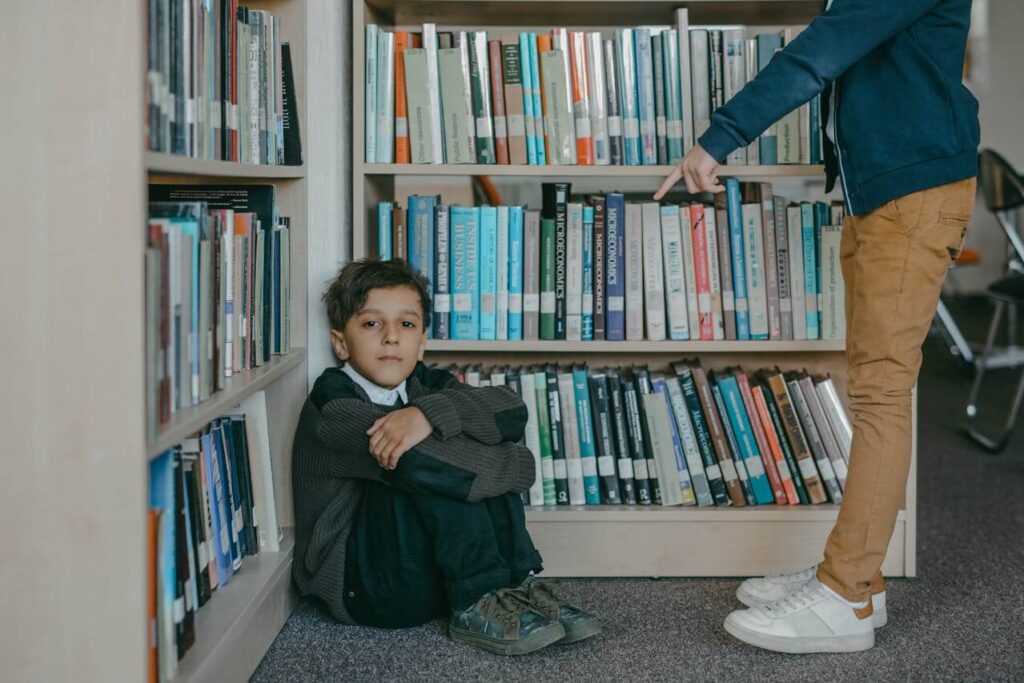
Let’s rip the mask off this polite, professional charade: when schools say a child went from “zero to sixty,” they are lying to protect themselves. They are covering for the adults who ignored every warning, missed every signal, and left a child to be harassed, baited, and humiliated until their nervous system screamed for survival.…
-

Disgusted with myself: how school advocacy erodes self-compassion
Some days I feel my own face harden, the jaw locking and the air leaving my lungs in a clipped exhale, the eyes narrowing into a refusal that feels like muscle memory. It is the same recoil I have seen across the meeting table, the same signal that too much has been brought into the…
-

The path to justice: legal versus public record
The courts may offer compensation, but rarely truth. The legal path demands silence in exchange for settlement. The public path asks you to speak while you’re still bleeding. Neither is easy. But only one builds a record that helps the next family survive.
-
Right to no discrimination
Every child has the right to learn and belong at school without being treated unfairly because of who they are. In British Columbia (B.C.), this Right to No Discrimination means public schools must welcome all students on equal terms, regardless of their race, Indigeneity, colour, ancestry, place of birth, religion, family background, sex, sexual orientation, gender identity, disability,…
-

A landmark case for educational justice in BC
The May 2025 decision from the BC Human Rights Tribunal in Parent obo Student v. BC Ministry of Education and another, 2025 BCHRT 112 carries profound implications for families fighting systemic discrimination in education—particularly those challenging collective punishment, exclusion, and partial-day attendance programs imposed on disabled students. While the complaint against the Ministry was dismissed, the Tribunal…
-
Recent BCHRT decisions expose systemic failures
After reading through a couple of of the recent BC Human Rights Tribunal findings, here are some thoughts: Ongoing delays erode trust Several rulings show how procedural deadlines and scheduling gaps thwart families seeking essential supports. In one decision the Tribunal dismissed parents’ allegations about inadequate consultation and discontinued specialist services because the events in 2017 and 2018 fell…