
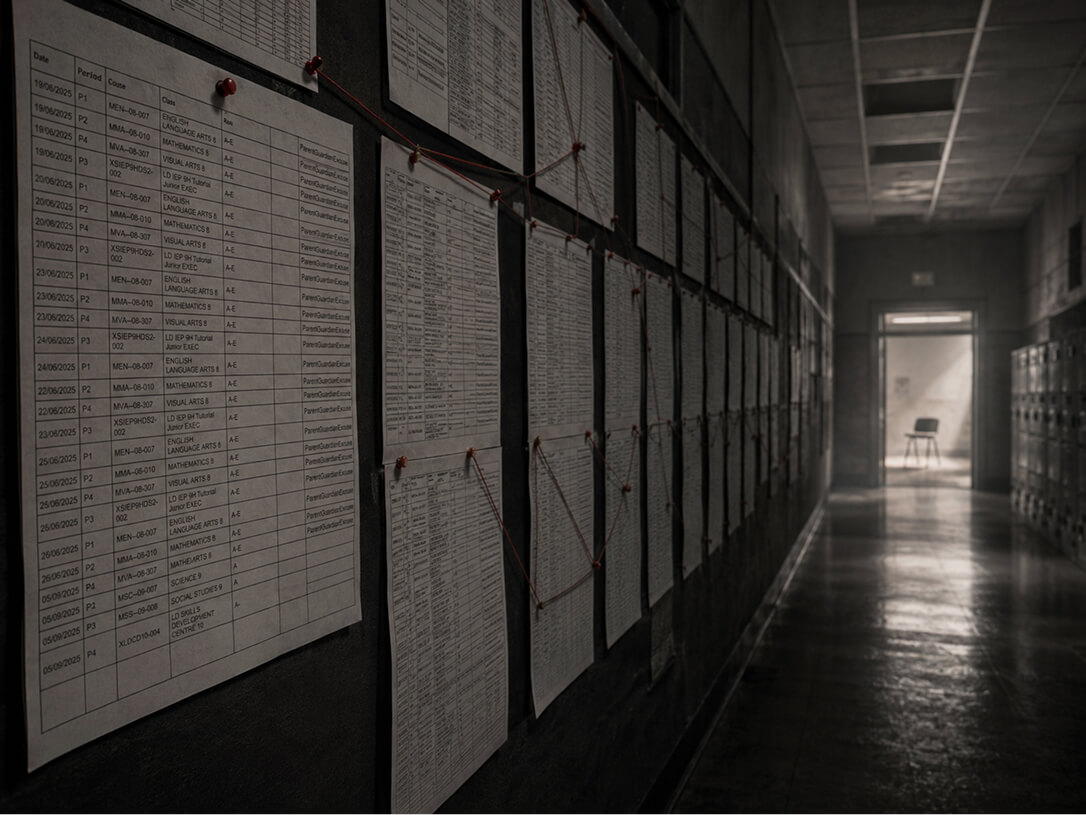
Classroom Exclusion
Informal or undocumented removal from class—such as hallway work, buddy rooms, or repeated “take-a-break” demands—often targeting students with unmet support needs.
-
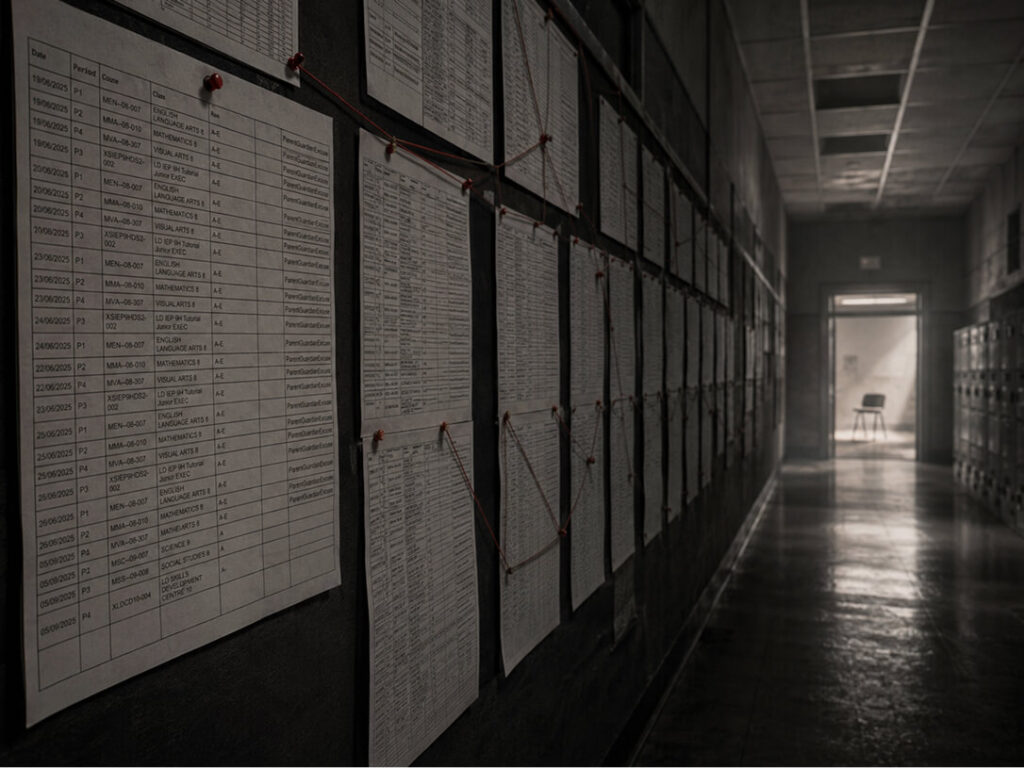
ParentGuardianExcuse: no excuse for exclusion in BC schools
The reason column in my son’s permanent record is mostly blank. When a reason survives, it’s ParentGuardianExcuse.
-

Sooke School District (SD62) secondary schools: a neurodiversity-informed policy critique
The Sooke School District secondary code of conduct opens with the steady, reassuring cadence of a district reading its own values back to itself: schools are “places for safe, purposeful learning,” conduct is “a shared responsibility of students, staff, parents / guardians and the broader community,” and every member carries an obligation to “support learning,”…
-
Exclusion tracker: what 6,783 reports are telling us
The numbers arrived quietly, published in an interim report from the National Exclusion Tracker — five months of data collected since the tracker expanded from a BC-only tool to a national one, capturing the experiences of families across eleven provinces and territories. 6,783 reported incidents of exclusion from K–12 education since September. 68% of them…
-

When advocacy stops being collaboration
You’re dealing with a school district, and a recognition is starting to settle: advocacy will not going to be easy! Meetings feel uncomfortable in ways you cannot yet fully name. Promises dissolve between conversations. Your child’s needs remain unmet despite repeated requests. Decisions appear to be made elsewhere. Something about the process feels designed to…
-

Navigating school meetings without losing your mind
School meetings occupy a particular kind of hell where institutional power performs collaboration while enacting control, where districts convene parents to discuss their child’s struggles without acknowledging the system produces those struggles through inadequate accommodation, and where the meeting itself functions less as problem-solving forum than as liability management theatre, generating documentation that protects the…
-

Inclusive schooling solutions
I have spent years documenting institutional harm. Documentation feels natural to me, perhaps because my professional background as solution architect and business analyst. Professionally, I’m used to solving problems, but in education, not having classroom experience, I feel very clear that I can say what works for my kid, but I can’t say what works…
-

Champlain Heights Annex School (VSB SD39): a neurodiversity-informed conduct critique
Champlain Heights Annex School’s Code of Conduct promises a safe, inclusive, equitable, welcoming, nurturing, and healthy school environment. The document aligns explicitly with Vancouver School Board’s District Student Code of Conduct (AP 350), affirms the BC Human Rights Code, and structures behavioural expectations through a three-level consequence framework extending from classroom redirection to formal suspension.…
-
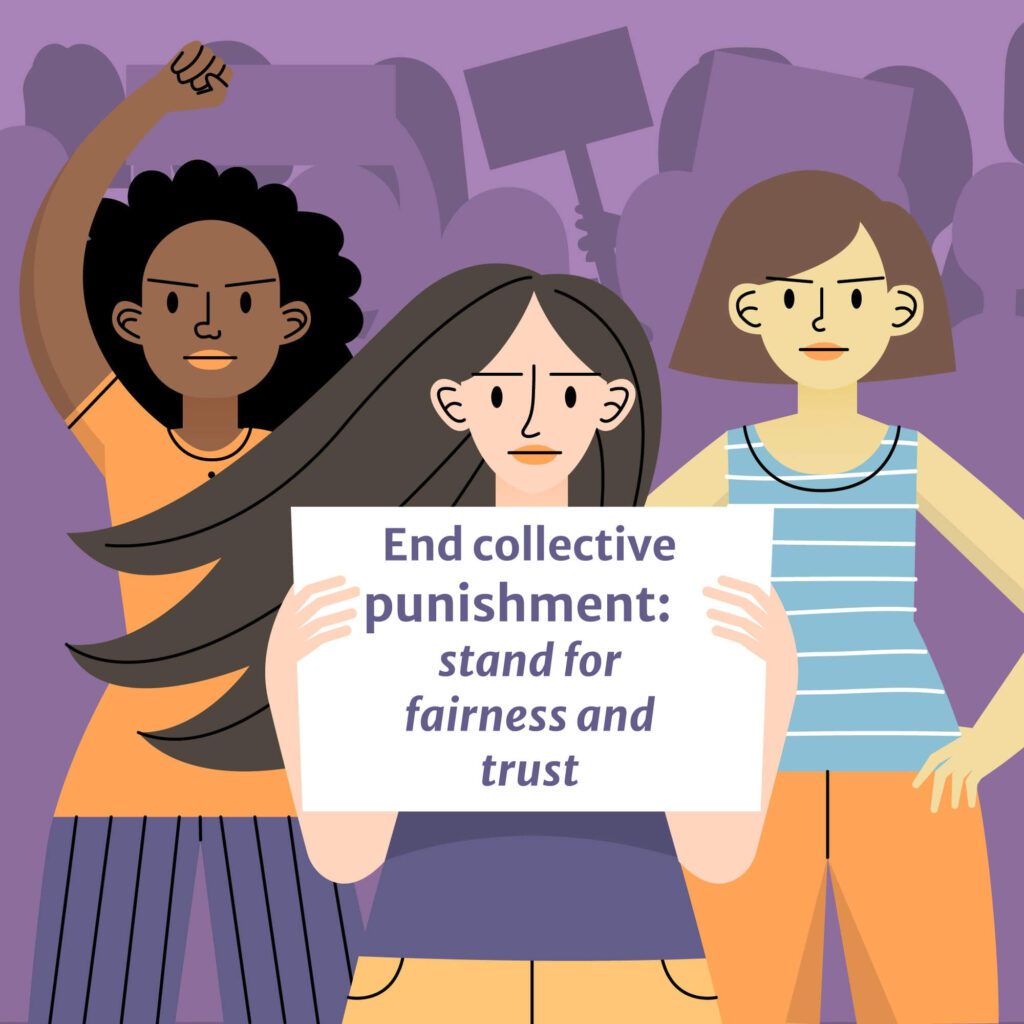
The internet has spoken: collective punishment in schools is wrong
When teachers punish entire classrooms for the actions of one student—when recess disappears because someone talked, when rewards vanish because someone forgot homework, when privileges evaporate because one child disrupted the lesson—students recognise the injustice immediately, and they name it with precision that educators often lack. Across TikTok, Instagram, and Reddit, students, parents, and teachers…
-

Lord Beaconsfield Elementary School (SD39 Vancouver): a neurodiversity-informed policy critique
Lord Beaconsfield Elementary School’s Code of Conduct, reviewed June 19, 2024, presents itself as a framework for creating a “safe, inclusive, equitable, welcoming, nurturing, and healthy school environment.” The document employs the language of care, respect, and community while constructing a disciplinary architecture that presumes neurotypical development, rewards compliance, and positions disability as exceptional deviation…
-

What research says about school conduct codes and disabled students
This explainer summarises what a small but influential group of scholars have shown about school discipline policies, student codes of conduct, and how these frameworks disproportionately harm disabled and neurodivergent students. It draws especially on the work of Catherine K. Voulgarides, Russell J. Skiba, Daniel J. Losen, David Osher, and Edward Fergus. Where possible, citations…
-
Rocky Mountain School District (SD) inclusion education update
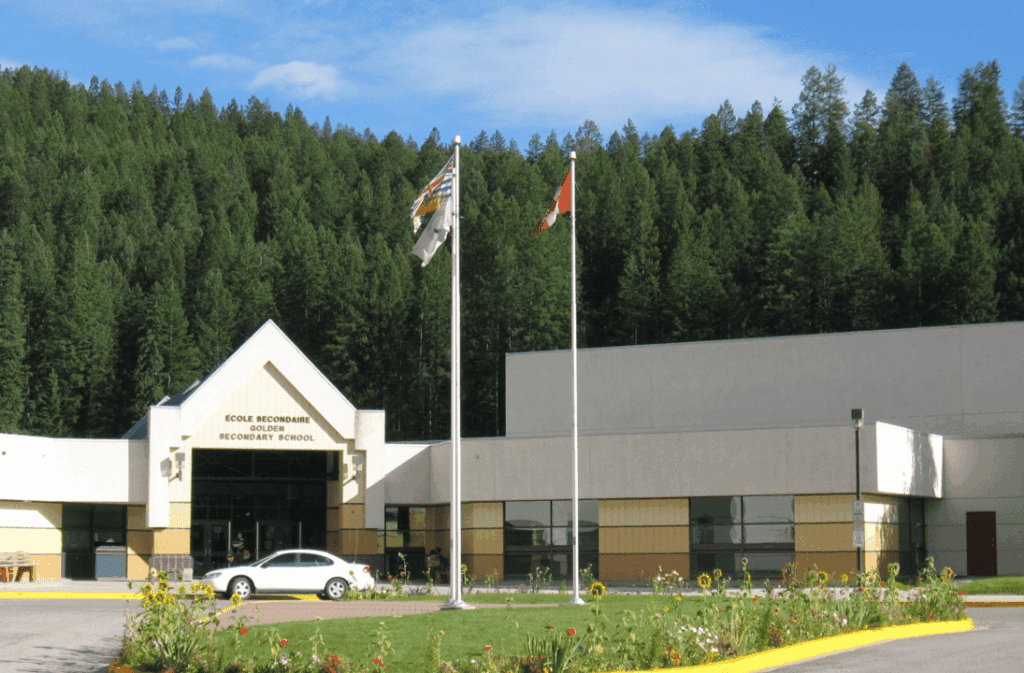
I found an update in the October 14, 2025 board meeting package, starting on page 45. The update opens by outlining the provincial model so trustees and families understand the constraints shaping services. BC uses a model created more than twenty years ago, which places most learning support funding into the general per-student allocation. Only…
-

Pacific Heights Elementary School (SD36): a neurodiversity-informed policy critique
The Pacific Heights Elementary Code of Conduct positions the school as a community of “learners (curiosity, humility, engagement, wonder, delight, creativity, collaboration, passion)” and emphasises “care for self, others, and the environment,” framing positive relationships as “foundational to learning.” This aspirational preface signals a relational ethos. Yet the operational sections reveal a blend of restorative…
-
North Surrey Secondary (SD36): a neurodiversity-informed policy critique
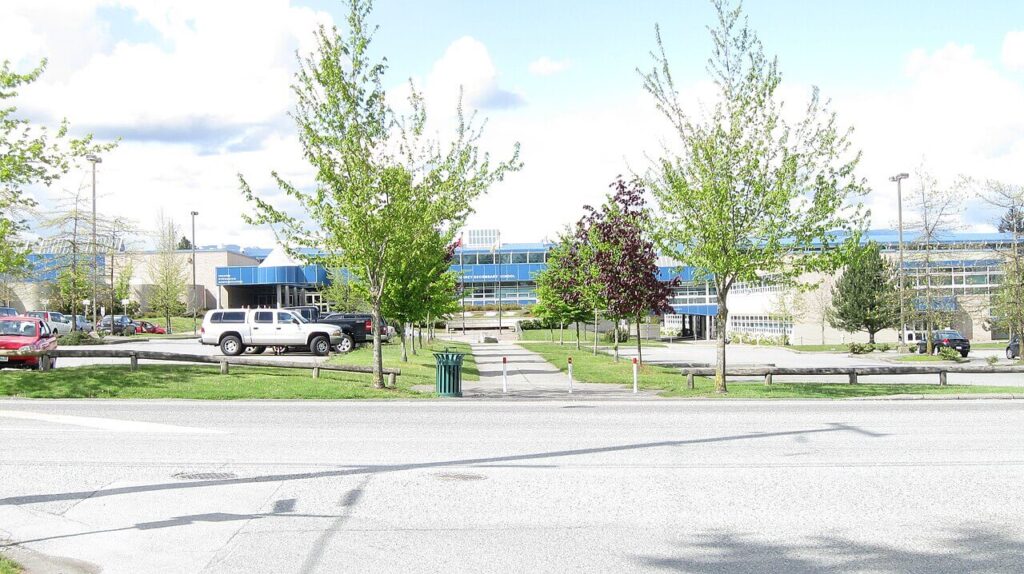
North Surrey Secondary’s 2024–25 Parent/Student Handbook presents itself as a practical guide to daily school operations, but its conduct code reveals a disciplinary framework anchored in behavioural control, punctuality, and compliance. Its language reflects a pre-neuroscience understanding of student behaviour, one that frames regulation as obedience, distress as misconduct, and support as conditional upon conformity.…
-

North Okanagan-Shuswap (SD83): a neurodiversity-informed policy critique
School District 83’s Policy 310 Student Code of Conduct, amended December 14, 2021, presents itself as a framework for “safe, respectful, and inclusive learning and working environments for all members of its school communities.” The policy commits to restorative approaches, acknowledges that consequences should be “preventative and restorative in nature,” and states explicitly that “appropriate…
-

Advocacy in BC schools: a comprehensive guide for parents
When your child experiences harm in a British Columbia public school—when they are excluded, punished unjustly, denied accommodations, or subjected to practices that violate their dignity—you enter a landscape designed to exhaust rather than resolve, to defer rather than repair, to protect institutional reputation rather than protect children. This guide maps that terrain, naming the…
-

Serpentine Heights Elementary (SD36): a neurodiversity-informed policy critique
Serpentine Heights presents its Code of Conduct as an affirmation of safety, inclusion, and communal care. The opening commitments describe a school that values belonging, co-constructed routines, and dignity for every learner, offering a vision of education rooted in relational safety and shared citizenship (p. 1) . This framing gestures toward a caring culture, one…
-

They keep moving the goalposts while our kids pay the price
It began with a phone call that felt like a lifeline. A new teacher was coming, they said, and maybe this would be the one to understand. We clung to that hope. We paid for another assessment, scheduled more therapy, spent weekends in waiting rooms and weekdays in meetings where the promise of change hovered…
-
When schools say a child went from “zero to sixty”
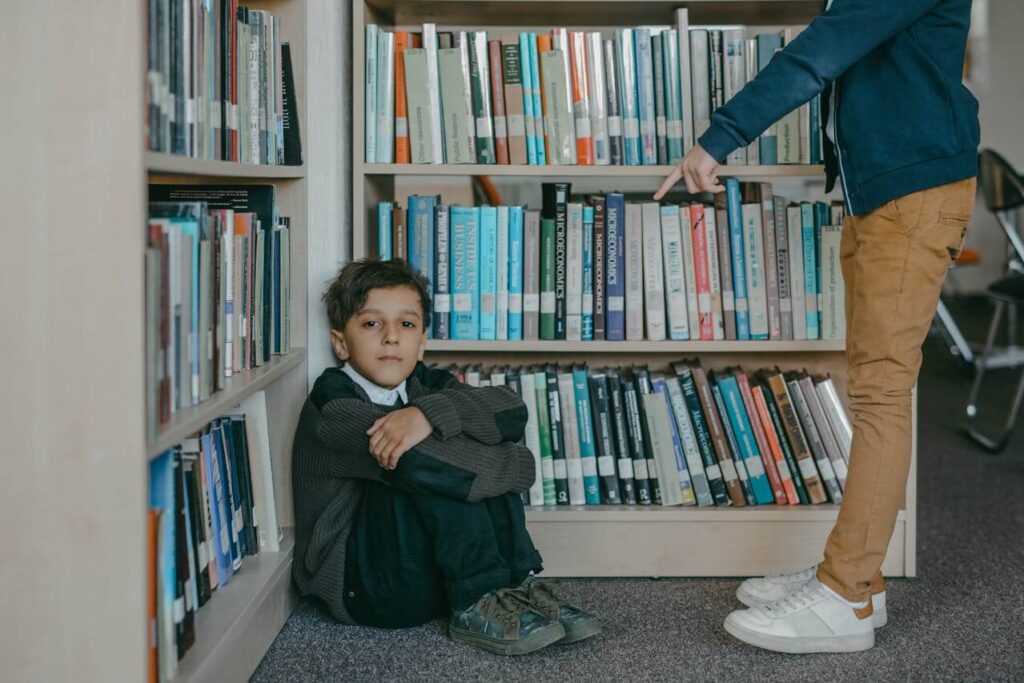
Let’s rip the mask off this polite, professional charade: when schools say a child went from “zero to sixty,” they are lying to protect themselves. They are covering for the adults who ignored every warning, missed every signal, and left a child to be harassed, baited, and humiliated until their nervous system screamed for survival.…
-

Why do teachers punish the whole class for one student?
Collective punishment is when a group is made to face the same consequence because of the actions of one person or a small number of people. In school, this can mean the entire class loses recess, an activity is cancelled, or privileges are taken away because of something one student did. The rules are applied…
-

Why schools use collective punishment to stay in control
Some of our articles speak in a more academic voice, especially when we’re naming systems that silence or harm. This is a sister essay to Collective punishment: how schools displace guilt, erase harm, and preserve the collective, written as a more accessible entry point for readers who are newer to the topic or looking for…