
Education Assistant (EA) and Student Support Assistant (SSA)
Education assistants (EAs) and student support assistants (SSAs) provide direct, hands-on support to students with diverse learning needs, disabilities, and behavioural requirements in British Columbia schools. These workers—overwhelmingly women, often holding post-secondary credentials—manage crisis intervention, deliver accommodations, facilitate inclusion, and absorb violence at rates far exceeding teachers, yet occupy a legal and professional grey zone: they carry responsibility for student safety without statutory duty of care, work under conditions requiring specialized skills without mandatory provincial training standards, and perform labour essential to inclusive education while remaining systematically excluded from planning, decision-making, and adequate compensation. This tag collects writing on how education assistant precarity functions as infrastructure for exclusion—when the adults tasked with making inclusion possible earn poverty wages, rotate across multiple classrooms without planning time, receive minimal preparation for complex behavioural support, and burn out or leave mid-year, disabled students lose access, schools resort to removal rather than accommodation, and the relational continuity inclusion requires becomes structurally impossible. Understanding education assistant working conditions is essential to understanding why BC schools exclude disabled students: precarity is not incidental to exclusion but enables it, absorbing the pressure that would otherwise force districts to acknowledge the gap between inclusive education policy and exclusionary practice.
-
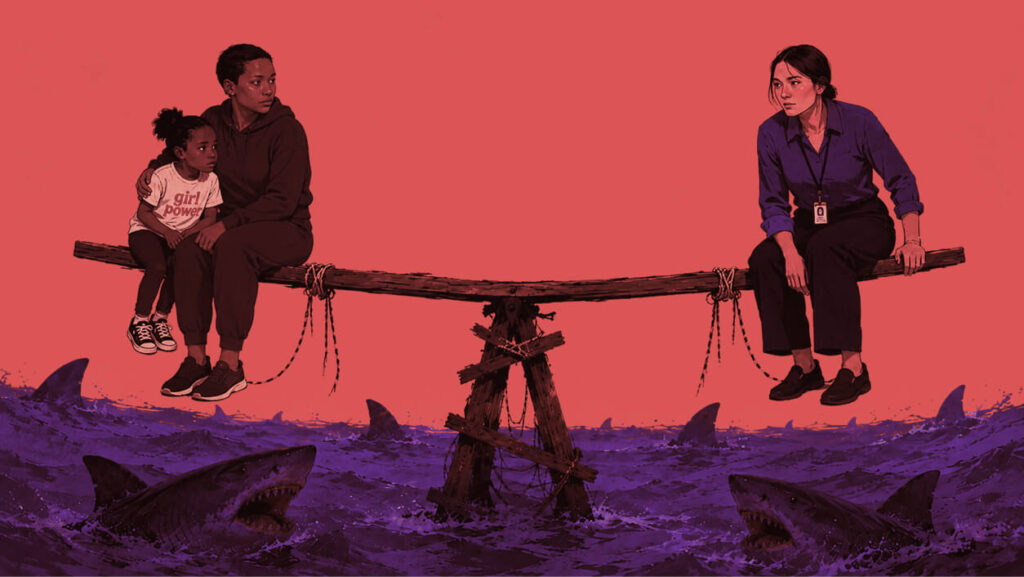
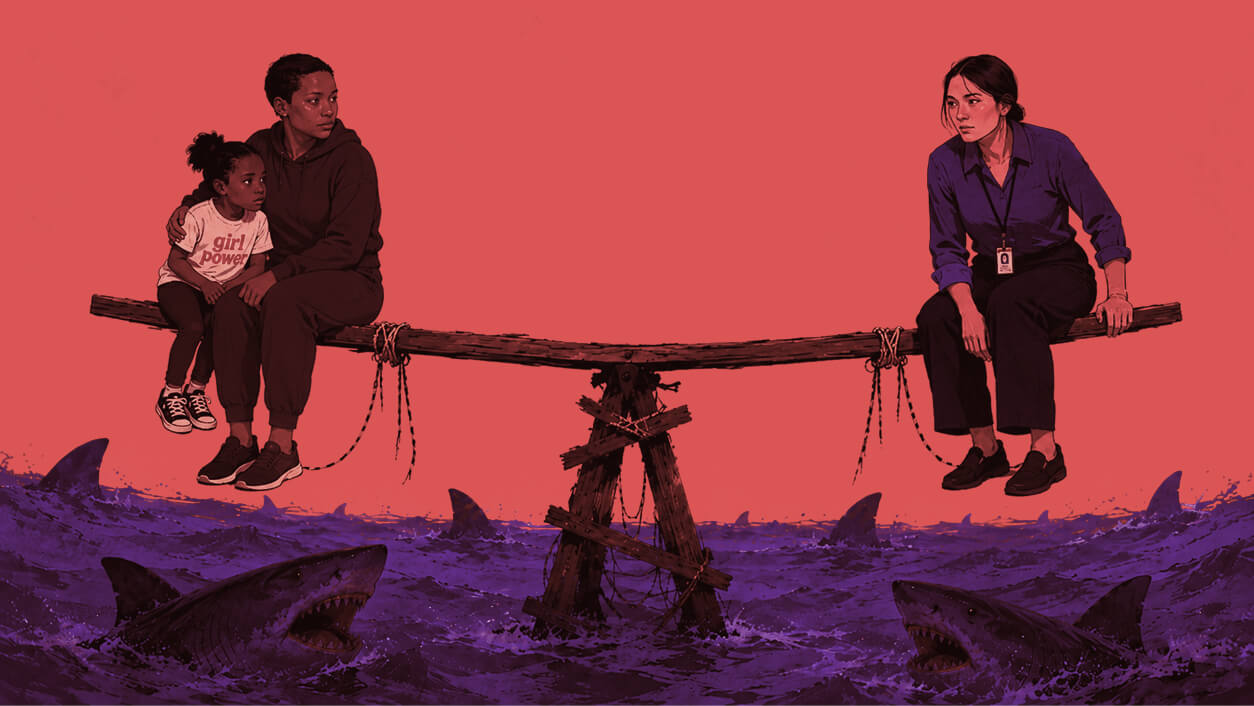
On opposite sides of the same door in BC schools
Families and teachers are describing the same failure from two positions inside it. The system survives by keeping them from recognising each other.
-

Education assistants and the infrastructure of exclusion
Between 2014 and 2023, education assistants in British Columbia filed more than four times as many violence-related injury reports with WorkSafeBC than teachers, a disproportion that exposes the material reality of who absorbs classroom harm where support has been systematically withdrawn. According to WorkSafeBC data referenced in Want to Improve Schools? Education Assistants Have Ideas, teaching assistants…
-

The economics of abandonment
When districts exclude children from school, the funding does not follow the child home. The money remains captured within institutional accounts, redirected toward students who attend, while parents absorb the cost of providing education systems are legally required to deliver. I’ve reduced my income multiple times over the years, rarely being able to work full-time…
-

Material witness: objects and architecture in the exclusion of disabled children
When schools perform inclusion while enacting exclusion, the evidence accumulates in objects and spaces, in the material culture of neurodivergent childhood, in the things that were meant to help but became instruments of control, in the architecture that promised safety but delivered abandonment. These are the objects that witnessed what happened to my children in…
-
The affective architecture of room clears
Room clears should be rare. In adequately resourced classrooms with sufficient staffing, with educational assistants trained in co-regulation, with adults who understand that compliance is not wellness and frozen silence is not calm, most crises could be prevented or held without architectural intervention. But British Columbia schools operate under manufactured scarcity, austerity politics disguised as…
-

Teachers deserve compensation commensurate with the complexity of their labour
The research confirms what every parent already knows: teaching requires orchestrating dozens of simultaneous human variables inside conditions designed to foreclose success, and the work demands relentless cognitive precision, emotional attunement, and adaptive improvisation across every minute of every day. A classroom contains children processing information at radically different speeds, carrying wildly disparate skill foundations,…
-

The ethics of counting crisis
I have been packing boxes between paragraphs, writing this series while selling my home—a process shaped by exclusion and the loss of stability that followed my children’s experiences in the Vancouver School District. I approach this work from a lifelong love of data and technology, aware that the same tools I value can create harm…
-

Counting crisis: data, distrust, and the false choice between safety and inclusion
Across British Columbia, the launch of Surrey DPAC’s Room Clear Tracker has ignited a storm of debate among parents, educators, and disability advocates. Some view it as a necessary step toward transparency; others fear it will reinforce stigma or justify segregation. Beneath the surface of this argument runs a deeper fracture—between those who seek safety…
-

Controversy over Room Clear Tracker
When we first shared the launch of Surrey’s Room Clear Tracker, we saw it as a potential step toward long-overdue transparency. For many families, including my own, the absence of data about classroom evacuations has preserved the illusion of safety while concealing the scale of harm. The idea that someone, finally, was counting felt like…
-
Surrey parents launch classroom crisis tracking tool
In Surrey, British Columbia, a new parent-led initiative is bringing long-needed visibility to a silent crisis in public education: classroom evacuations when a student experiences distress. The Surrey District Parents Advisory Council (DPAC), in partnership with the Surrey Teachers’ Association and CUPE 728, has launched a tool to track these classroom clearings, documenting how often…
-

The price of belonging
Every few months, another glowing feature appears about a private school that has “redefined education.” This time, the subject is Kenneth Gordon Maplewood School in North Vancouver, described as a haven for neurodiverse learners. The article reads like an advertisement for a better world—a place where every child is understood, supported, and seen. It describes…
-

Protecting the ledger over the learner: operationalising scarcity in BC School Districts
British Columbia’s public schools are mandated to provide inclusive education for all students, but they do so in a context of chronic resource scarcity. Scarcity in education means there are not enough funds, staff, skills, or services to fully meet all student needs. School districts have had to develop strategies to manage and ration what they do…
-

Urgent behaviour intervention teams in major BC school districts
Across British Columbia, many school districts have developed internal teams or programs designed to respond to urgent behavioural situations—such as elopement, aggression, or significant dysregulation—particularly when students are perceived as posing a safety risk or disrupting the learning environment. While these interventions are often framed as supportive or inclusive, families report that they can feel…
-

Why we keep returning to collective punishment
This site is about collective punishment, so naturally we have to write about it on a fairly regular basis and it’s become an interesting experience of returning again and again. Every time we write about collective punishment, it feels like tracing a wound the system keeps trying to call a scar—something old, something resolved, something…
-

A billion-dollar empire and children still in portables
The Vancouver School Board owns 223 properties worth more than $9.5 billion—schools, office lots, apartment units, and even a shopping mall (Postmedia, 2025). And yet every year, we are told there is not enough money to hire enough education assistants. Not enough to renovate a broken bathroom. Not enough to build a school where children…
-

The afterlife of austerity
When public institutions are forced to survive under prolonged austerity, something deeper than budgets begins to break—something in the connective tissue of trust, of care, of the quiet, ordinary belief that systems exist to serve people. The myth of resilience—the comforting story we tell ourselves about teachers with hearts of gold and staff who always…
-

On the impossible grace expected in a district appeal meeting
My daughter Jeannie sat in the school hallway for seven months, refusing to go into the classroom until her support needs were met. I filed an appeal in November, and finally—just after spring break—we were meeting to discuss a potential resolution. She’d been through hell last school year, with a boy picking on her and…
-

The right amount of agony in BC schools
After watching my children endure eight years of institutional failure, eight years of exclusion disguised as discipline and support withheld under the language of inclusion, I have come to several conclusions. Certain forms of suffering—like being agonised inside—do not draw support because they do not disrupt the adult’s flow, do not demand intervention with noise…
-

A costly legal habit at the Vancouver School Board
As families fight for inclusive education and basic classroom support, the Vancouver School Board is pouring millions into legal fees—more than triple what it spent just a few years ago. Public records reveal a dramatic spike in payments to Harris & Company, the district’s longtime law firm, coinciding with a high-profile property lawsuit and growing…
-

What would it really cost to fix the problem?
We talk so much about the cost of inclusion—as if it’s indulgent, optional, something that must be justified—but we rarely talk about the cost of exclusion. And those costs are everywhere: in emergency rooms, in overburdened case files, in classrooms where distress goes unseen. When schools can’t support disabled students, families fall apart trying to…