When districts exclude children from school, the funding does not follow the child home.
The money remains captured within institutional accounts, redirected toward students who attend, while parents absorb the cost of providing education systems are legally required to deliver.
I’ve reduced my income multiple times over the years, rarely being able to work full-time because of their decisions.
The district retains my son per-pupil allocation plus intensive support designation funding. My daughter attends about half, but they get the full funding.
I receive nothing except the work exclusion creates.
This represents deliberate resource extraction disguised as accommodation. Districts claim they lack capacity to serve complex students, manufacture crises positioning children as unsafe, implement partial schedules and room clears until families capitulate to home instruction.
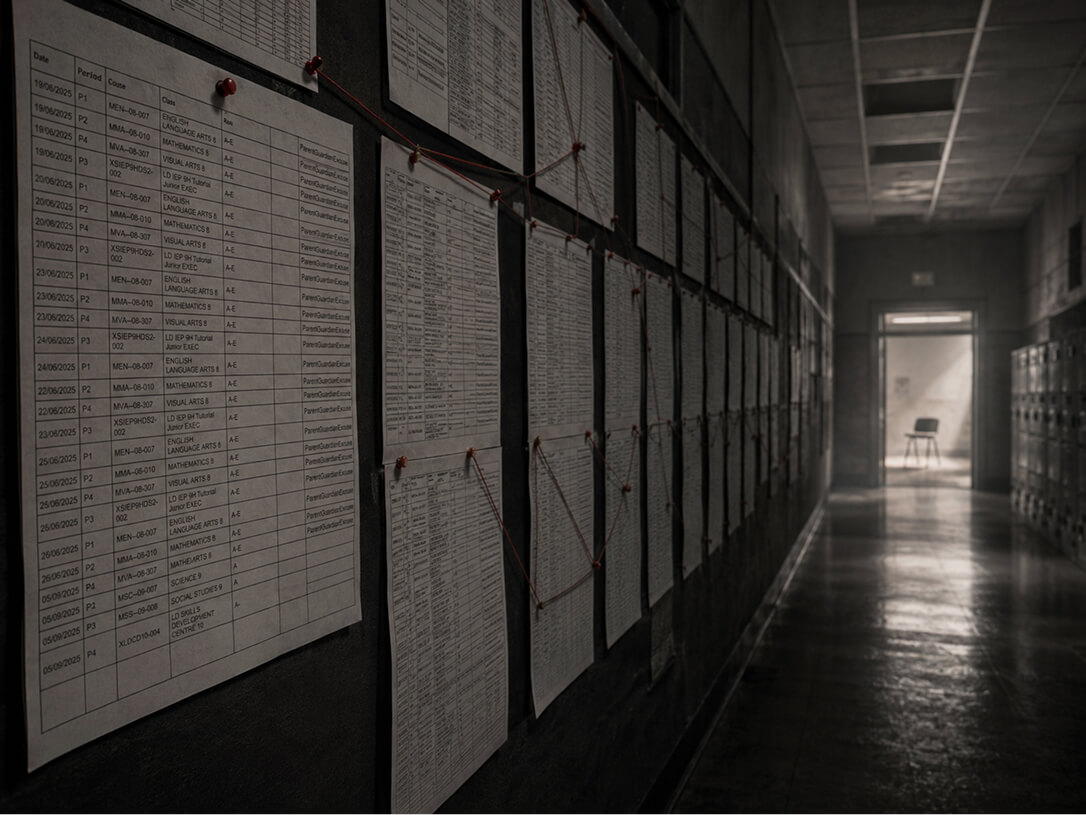
Throughout this process, funding continues flowing to districts based on enrolment regardless of whether children receive education. The per-pupil amounts calculate from October headcounts. Intensive designation funding arrives annually. Money moves from provincial coffers to district accounts while children remain home, parents remain unpaid, and education remains undelivered.
-

I only asked for gentleness: on parenting a PDA child in a punishing world
There is a certain kind of child—intuitive, emotionally articulate, wired with a startling perceptiveness…
So why not distributed learning?
The distributed learning infrastructure exposes the administrative choice to make parent compensation impossible. Districts transfer funding to online platforms, homeschool support programs, alternate settings—resources flow easily between institutional actors.
Parents navigating these programs discover bureaucratic mazes requiring applications, approvals, spending justifications, reimbursement documentation.
Each requirement assumes administrative capacity that exclusion itself destroys. When your child cannot attend school and you lose income to provide supervision districts should supply, you do not possess bandwidth to submit itemised receipts and justify each expense against eligibility criteria. The friction is intentional. The system demonstrates resources exist while ensuring families cannot access them under conditions of crisis.
Wage theft
Meanwhile, the actual costs compound. Lost salary represents only direct income. Missed promotions calculate differently—career trajectory altered, pension contributions reduced, professional development opportunities foreclosed. The long-term economic impact of exclusion extends beyond the years children remain home. Parents who leave employment to manage exclusion discover gaps on resumes, skills atrophied, networks dissolved, and nervous systems compromised. Re-entry into professional work after years of unpaid educational labour becomes its own challenge. Districts capture funding for the duration of exclusion. Parents absorb permanent economic damage.
The math maths. My son’s designation brings ~twenty-three thousand dollars annually in complex support funding. His per-pupil allocation adds seven thousand. Thirty thousand dollars flows to the district each year he remains enrolled, whether he attends or not, whether he receives services or not, whether the district fulfils its legal obligations or not. I lose thousands in salary minimum to provide the education and supervision he should receive at school. The district gains thirty thousand. I lose similar, working at 80% of full time. The sixty-thousand-dollar gap marks the profit extracted from exclusion.
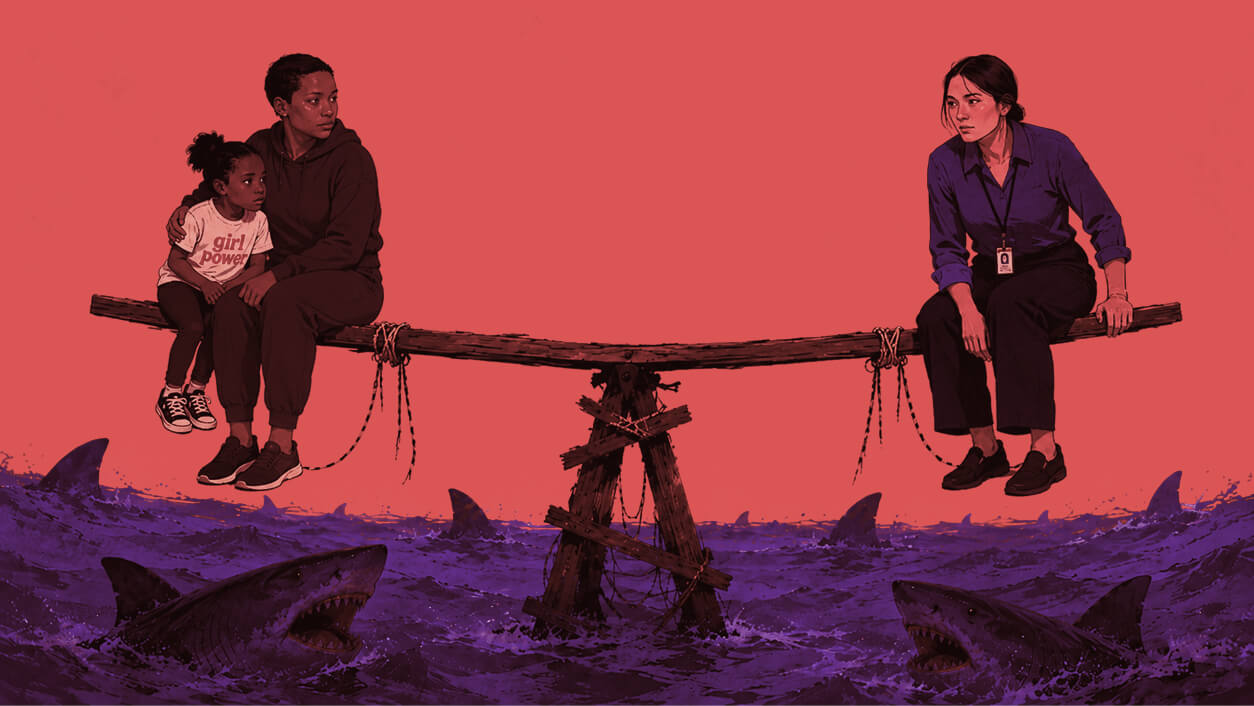
This operates identically to systems that refuse to compensate family caregivers while paying institutional actors. Governments demonstrate capacity to fund care by directing resources toward foster parents, group homes, respite workers earning forty dollars hourly. Resources flow easily when recipients are institutionalised. Bureaucracy appears when families seek compensation. Education systems follow the same model—funding moves efficiently between districts and alternate programs while parents navigate administrative friction designed to prevent access. Both systems engineer the same choice: surrender your child to institutional settings that receive payment, or collapse under unpaid labour.
What education means after institutional violence
The district would measure my son’s learning through curriculum outcomes, grade-level benchmarks, standardised assessments. These metrics assume school provides education rather than harm.
For a child who spent years monitoring for threat in environments that punished his neurology, who experienced room clears as hunting, who learned that expressing distress brings isolation rather than support, education looks different.
- Learning to breathe without scanning for danger is education.
- Discovering that home offers safety rather than waiting for the next crisis is education.
- Understanding that his body’s signals deserve attention rather than suppression is education.
- The unschooling I provide—allowing him to recover from institutional violence, to rebuild trust in his own experience, to explore interests without performance pressure—constitutes the most critical education he has ever received.
Districts refuse to recognise this learning because it exposes what school actually taught him: that he is unwelcome, that his needs are burdensome, that his distress warrants punishment.
Recovering from these lessons requires time, safety, and the absence of institutional surveillance. I
provide these conditions without compensation while the district retains funding premised on delivering education.
The irony sharpens into cruelty—the institution that taught my son to fear learning continues profiting from his enrolment while I perform the actual educational work of helping him remember that learning can feel joyful.
The ethical witness
When I allow him to sleep when his body demands rest rather than forcing attendance, when I validate his perception that school felt dangerous because school was dangerous, I provide education the district never offered.
This education does not produce data for ministry reporting.
It does not advance him through grade levels.
It does not prepare him for standardised testing.
But, it restores his capacity to exist without constant vigilance, to trust adults who say they will keep him safe, to recognise that his particular mind deserves accommodation rather than correction.
Learning that he is loved without condition, that his value does not depend on compliance, that he deserves care simply because he exists—this knowledge forms the foundation all other learning requires. School taught the opposite. School taught him that love arrives contingent on performance, that value must be earned through suppressing his neurology, that care flows only to children who can mask their distress and meet behavioural expectations. Unlearning these lessons, replacing them with truth about his inherent worth, represents educational work of staggering importance.
Kelly Oliver argues that subjectivity itself requires witnessing—that we become subjects capable of recognising our own inner lives through being recognised by others as persons whose testimony matters.
Schools refused to witness my son.
They positioned his distress as behaviour requiring correction, his testimony about harm as manipulation requiring management, his requests for accommodation as demands requiring refusal.
The institutional response taught him that his inner life held no weight, that his perception of reality could be dismissed, that expressing his truth brought punishment rather than recognition.
Just a Parent
Witnessing him do nothing is doing something. When I sit with him in silence, when I allow time to unfold without productivity demands, when I receive his communication about what he needs without requiring institutional justification, I provide what Oliver calls response-ability—the ethical recognition that creates conditions for subjectivity. My son learns that his inner experience deserves attention, that his testimony about his own life holds authority, that he exists as a subject whose particular way of being merits respect rather than remediation.
I perform this work without compensation while the district retains funding. The economic injustice compounds the ethical violence. Schools deny children the witnessing they require, exclude them when they cannot sustain institutional demands, retain the resources meant to support them, and leave parents to perform the work of restoring what exclusion destroyed. Witnessing my son’s recovery, supporting his gradual reconstruction of trust in his own experience, receiving his testimony about what he needs—this labour deserves recognition as the skilled, intensive, ethically critical education it represents.
-

The moral cost of leaving children in fight-or-flight
Robin was eleven the day he fell and came up swinging. It was recess,…
The district cannot capture this learning in their accountability frameworks. They cannot measure the educational value of a child who stops steeling himself when an adult approaches, who begins initiating conversation about topics that interest him, who sleeps through the night without nightmares about school. These outcomes matter more than any curriculum benchmark. They represent education at its most fundamental—learning that he deserves to exist as himself, that his body’s signals are trustworthy, that the world can hold space for his particular way of being.
My son learns daily. He learns about topics that captivate him, pursues questions that emerge from genuine curiosity rather than curriculum requirements, develops skills at his own pace without the artificial timeline of grade progression.
More critically, he learns that he can trust his own mind, that his interests have value, that he does not need to perform neurotypicality to deserve care. He learns that his mother will choose him over systems that demand his compliance. He learns that home means safety, that his particular rhythms deserve respect, that the adults responsible for his wellbeing believe him when he names his experience. This learning will serve him far longer than any worksheet completed under duress in a classroom that positioned his neurology as defect requiring remediation.
Today, I saw a notification that he logged into Khan Academy. When I asked him why, he said because he wanted to check out a course on Linux, ‘but it wasn’t very good.’ This from a child who only started teaching himself Linux a few months ago.
-

Debility versus disability: what the system cannot acknowledge
My son Robin took to bed two weeks before March break. He had been…
The legal case for compensation
The legal obligation remains clear. Districts must provide education to all students. When districts exclude children, they breach statutory duty while retaining the funding that statutory duty generates.
Parents who absorb the work of education during hours designated for school instruction perform labour districts are obligated to provide. This labour deserves compensation equivalent to what districts would spend if they fulfilled their responsibilities.
Current structures position this compensation as impossible. Districts claim they already transferred funding to distributed learning programs, already made resources available through homeschool support, already demonstrated good faith by maintaining enrolment. The transferred funding sits in accounts requiring grant applications. The available resources demand documentation families in crisis cannot produce. The maintained enrolment generates continued per-pupil payments. At no point does money reach parents directly. At no point does the system recognise that exclusion creates work requiring wages.
The contrast with how districts pay their own staff sharpens the analysis. Education assistants receive hourly compensation. Teachers receive salaries. District administrators process payments efficiently. When parents provide equivalent labour—supervision, educational programming, behaviour management, therapy coordination, trauma recovery support—payment becomes bureaucratically complex, restricted, delayed, or simply unavailable. This is not administrative necessity. This is structural refusal to recognise parent labour as work deserving wages.
-

Human Rights Tribunal complaints are designed to exhaust
There is a silent calculus embedded in every human rights complaint: how much of…
What families actually need is immediate salary replacement plus hourly rates for educational labour calculated at what districts pay education assistants. Not reimbursement requiring documentation. Not restricted funds demanding pre-approval. Not grants positioned as generosity rather than compensation for work performed. Direct payment recognising that when districts exclude children or don’t accommodate them well, parents absorb duties that generate cost measured in lost income, foregone promotions, professional damage, and the daily work of providing education during hours schools should serve students.
The demand requires no new infrastructure. Districts already process payments. Provinces already fund per-pupil allocations and intensive designations. The money exists. The administrative capacity exists. What prevents direct parent compensation is ideological commitment to institutional capture of resources combined with refusal to recognise family labour as work requiring wages.