

Safety Plans
Safety plans frame institutional responses to disabled children’s distress as protective intervention, documenting procedures for managing moments when the child’s behaviour is determined to pose risk to themselves, peers, or staff. The plans appear in IEP meetings as collaborative problem-solving, presented to families as evidence the school takes their child’s needs seriously, yet the mechanisms authorised within safety plans—room clears, physical restraint, seclusion, immediate parent pickup, partial day attendance—function as pre-approved exclusion that allows schools to remove disabled children from educational spaces without acknowledging the removal as discipline.
The language of safety obscures the reality that these plans rarely make disabled children safer; they make schools more comfortable with exclusionary responses to disability, providing administrative cover for practices that would otherwise require justification as punishment. A safety plan that authorises staff to clear the classroom treats the disabled child’s presence among peers as conditional, something that can be revoked when adults determine the child has crossed the threshold into unmanageability. A safety plan that includes physical restraint gives institutional permission for adults to control a child’s body in moments of distress, framing force as care and treating the child’s autonomy as negotiable when their behaviour becomes illegible to neurotypical interpretation.
Families experience safety plans as the moment the school stops trying to include their child and starts managing the liability their child’s disability represents, the point where accommodation language shifts to risk mitigation and the child becomes a problem requiring containment protocols rather than a student requiring support.
-

Why I won’t stop in 2026
The principal used collective punishment against my child almost two years ago, and yet I remain unreconciled to what she did. People suggest moving on, starting fresh, forgiving. Schools are obsessed with ‘fresh starts,’ framing each September as reset opportunity, as though institutional harm dissolves at arbitrary calendar boundaries. My daughter carries what happened in…
-
On acceptable levels of harming children
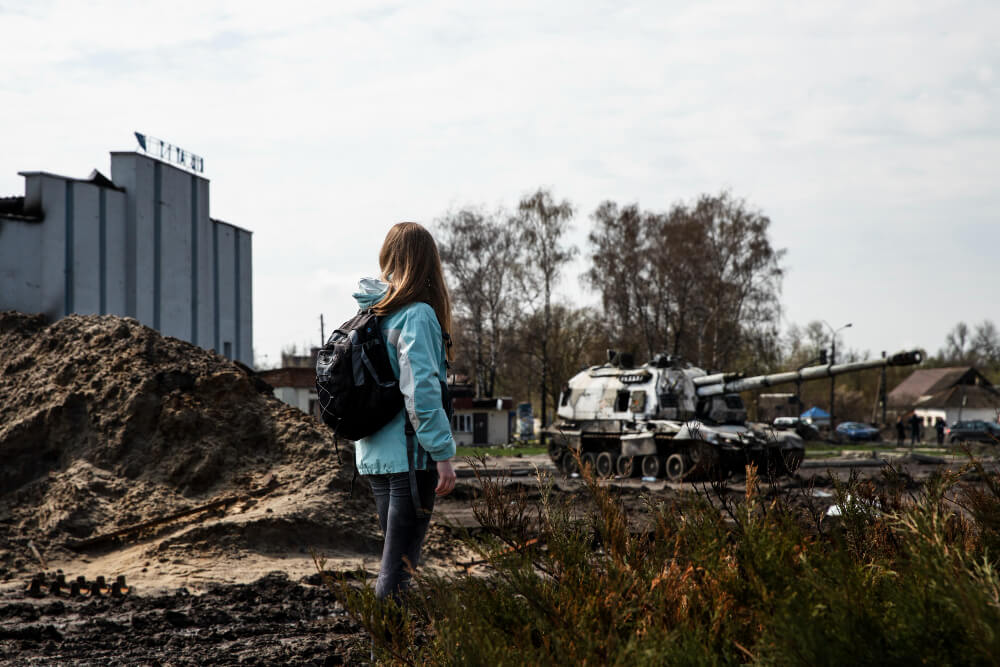
2024 marked the highest number of grave violations against children in armed conflict since monitoring began, and BC simultaneously experienced record complaints to the Human Rights Tribunal for education discrimination—both phenomena share infrastructure: scarcity ideology masquerading as resource constraint, bureaucratic mechanisms that document harm while enabling its continuation, systems that ask what amount of violence…
-

B.C. teacher who pushed elementary school student gets 1-day suspension
“A B.C. teacher who pushed an elementary school student she believed had insulted her mother has agreed to a one-day suspension and remedial education. Jeven Kaur Gill agreed to the punishment in a consent resolution agreement with B.C.’s Commissioner for Teacher Regulation last month, which was published on the commissioner’s website Tuesday.” CTV News The…
-

Exhaustion as governance in BC education
The spears came out fast when news broke that Coquitlam School District had spent $38,000 on a professional development retreat at Harrison Hot Springs—sharp, righteous, aimed directly at teachers who dared to spend two days somewhere pleasant while children sat in hallways, while families scrambled to find care for kids sent home at noon because…
-

How FESL enables ongoing exclusion of disabled children
In 2020, the British Columbia Ministry of Education and Child Care brought into force the Framework for Enhancing Student Learning, a policy architecture ostensibly designed to guide the province’s approach to continuous improvement in public education, with particular attention to improving equity for Indigenous students, children and youth in care, and students with disabilities or diverse…
-
The affective architecture of room clears
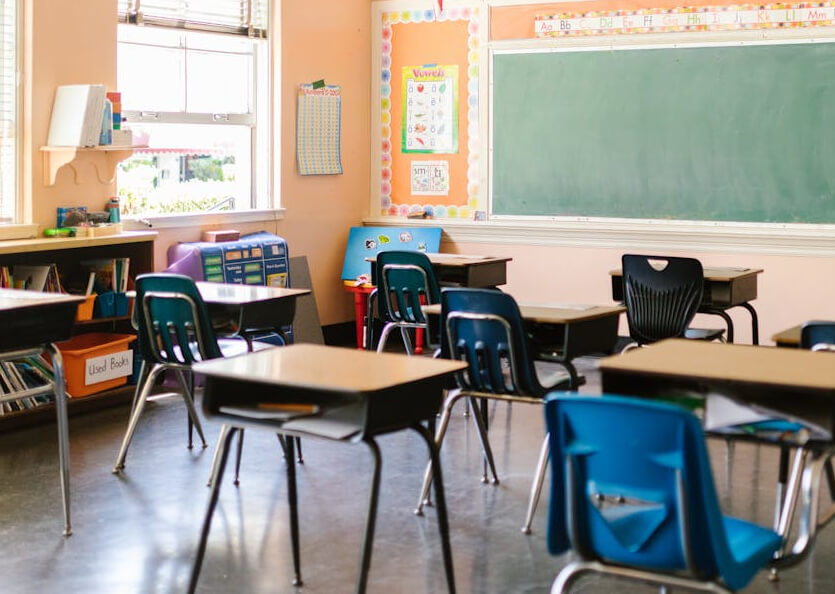
Room clears should be rare. In adequately resourced classrooms with sufficient staffing, with educational assistants trained in co-regulation, with adults who understand that compliance is not wellness and frozen silence is not calm, most crises could be prevented or held without architectural intervention. But British Columbia schools operate under manufactured scarcity, austerity politics disguised as…
-

The architecture of absence data in Canada
A CBC investigation maps the landscape of what we choose to measure and what we choose to obscure, revealing a system where the simple act of knowing why children disappear from classrooms becomes an exercise in bureaucratic endurance calibrated toward opacity rather than understanding. The cost of transparency The investigation documents a routine that families, journalists, and…
-
When delay becomes policy: British Columbia’s strategic abandonment of disabled students
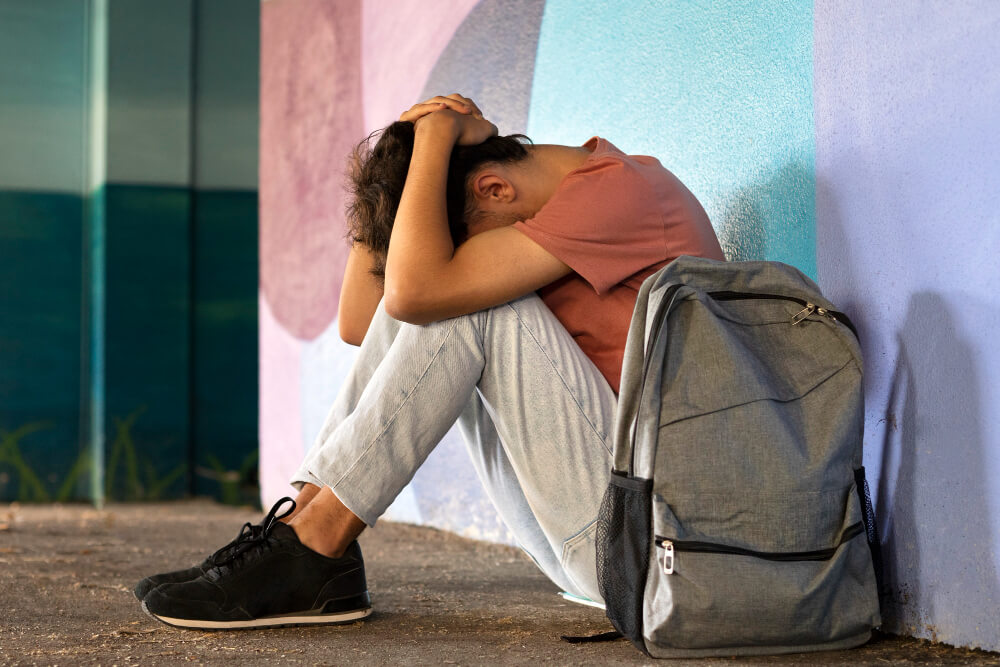
In 2018, an independent panel reviewed how British Columbia funds kindergarten through grade twelve education and recommended a prevalence model for special education funding, a shift that would allocate resources based on statistical prevalence of disability within the general student population rather than on individual diagnostic designation. The proposal threatened to expose what the existing system carefully…
-
VSB’s accessibility plan: more marketing than meaningful change
The Vancouver School Board has released its Accessibility Plan for 2025–2028, a document that positions itself as a forward-looking commitment to equity, belonging, and barrier removal, offering warm assurances about inclusion while presenting a polished institutional narrative that feels carefully tuned for public confidence rather than rooted in the depth of community experience. Families who…
-

The behaviourist spine of BC’s urgent-response systems
In Urgent behaviour intervention teams in major BC school districts I shared research which identified the intervention teams in many of the larger districts in BC, describing their processes and roles, mostly in the language that they describe their services. This essay attempts to analyse those systems through a disability-justice lens, revealing how roles, processes,…
-
A guide to avoiding the most common mistakes in inclusive-education policy reform
Across British Columbia, school districts are refreshing handbooks, conduct codes, safety plans, and “inclusive education” frameworks—possibly in the shadow of the Ombudsperson’s systemic investigation into exclusion. These documents signal responsiveness, yet many still recreate the same structural conditions that generate exclusion in the first place. For example, Cariboo-Chilcotin School District 27’s Inclusive Education Parent Handbook,…
-

SD83 publicly acknowledges Ombudsperson investigation and releases updated exclusion procedure
School District 83 (North Okanagan-Shuswap) has released one of the most transparent updates to date on the BC Ombudsperson’s province-wide investigation into student exclusion. The district’s October 21, 2025 Regular Board Meeting agenda includes a full briefing under the heading Equity, Diversity, and Inclusion — Ombudsperson: Student Exclusion from School, and the details offer an unusually clear picture…
-

District exclusion reasons
A review of exclusion records from New Westminster (SD40) and Southeast Kootenay (SD5) reveals a consistent pattern: the stated reasons for exclusion drift toward biography, circumstance, and administrative decisions rather than the educational factors that legitimately shape access to full-time schooling. The records describe personality traits, incidental details, and complex life contexts, while offering limited…
-

What the BC government wants us to see: data and public education
Governments build their authority through the quiet choreography of information, and educational systems refine this practice into a disciplined structure where the presence of data becomes a symbol of competence while the absence of certain measurements becomes a strategy that protects institutional dignity, and across decades of policy and public communication the pattern of what…
-

Incident Ipsum: decoding the bureaucratic poetry of school emails
It began, as so many things do, with a friend forwarding an email she could hardly parse. The first message made little sense; the follow-up from a case manager arrived dense with jargon, couched in performative empathy, and copied unnecessarily to a wider audience. The tone was professional. The effect was punitive. The email accomplished…
-

North Okanagan-Shuswap (SD83): a neurodiversity-informed policy critique
School District 83’s Policy 310 Student Code of Conduct, amended December 14, 2021, presents itself as a framework for “safe, respectful, and inclusive learning and working environments for all members of its school communities.” The policy commits to restorative approaches, acknowledges that consequences should be “preventative and restorative in nature,” and states explicitly that “appropriate…
-

Advocacy in BC schools: a comprehensive guide for parents
When your child experiences harm in a British Columbia public school—when they are excluded, punished unjustly, denied accommodations, or subjected to practices that violate their dignity—you enter a landscape designed to exhaust rather than resolve, to defer rather than repair, to protect institutional reputation rather than protect children. This guide maps that terrain, naming the…
-

Urgent behaviour intervention teams in major BC school districts
Across British Columbia, many school districts have developed internal teams or programs designed to respond to urgent behavioural situations—such as elopement, aggression, or significant dysregulation—particularly when students are perceived as posing a safety risk or disrupting the learning environment. While these interventions are often framed as supportive or inclusive, families report that they can feel…
-
No good news on government K-12 page
The BC k-12 portal promises inclusion, yet broken links and missing disability guidance reveal gaps in safety and access.
-
Safety plans, billion-dollar scripts, and the harm they keep in place
When a parent hears the words safety plan, there is often a breath held in the chest — a brief hope that the school has recognised the reality of the child’s distress, that they have stepped back to consider what would truly help, that they are inviting the parent to build something together that will let…