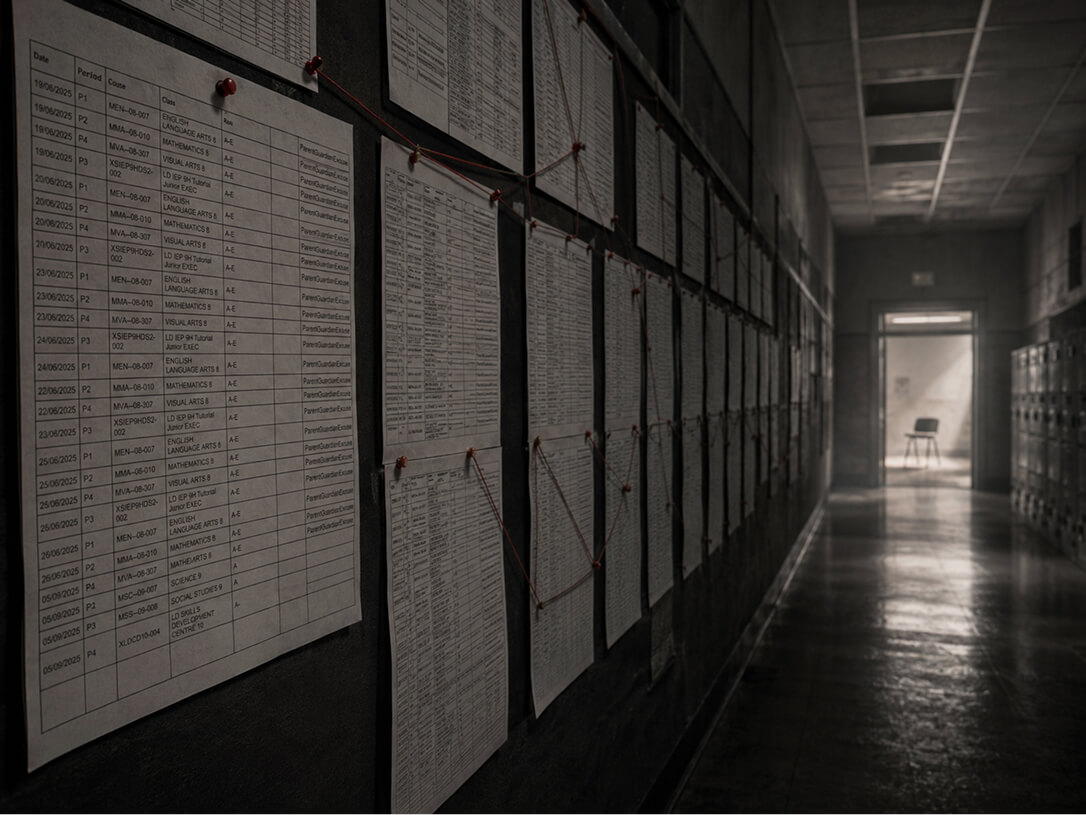
The principal used collective punishment against my child almost two years ago, and yet I remain unreconciled to what she did. People suggest moving on, starting fresh, forgiving. Schools are obsessed with ‘fresh starts,’ framing each September as reset opportunity, as though institutional harm dissolves at arbitrary calendar boundaries. My daughter carries what happened in her nervous system and we are still living the impact of the principal’s choice.
I write because my brain gives me no choice about remembering. Hyperphantasia maintains 4K fidelity across years—the principal’s micro-expressions during that meeting remain as vivid as this morning’s breakfast, administrative scripts replay with complete sensory detail, the exact configuration of my children’s faces during their exclusion plays on endless loop whether I summon these memories or not.
Neurotypical memory obligingly degrades more efficiently, allowing time to soften sharp edges until past events acquire dreamlike quality permitting release. My brain dallies, keeping recordings regardless of conscious preference or therapeutic encouragement. I can talk therapy, tap, recite mantras, journal, take hallucinogens, and still my memories persist like earworms. Don’t even get me started on having Mariah Carey’s “All I Want For Christmas Is You” stuck in my head. I want it out… “More than you could ever know.”

The social expectation that I should stop dwelling assumes brains defragment trauma the way hard drives move infrequently accessed files to remote storage, reducing them to compressed summaries safely distant from present consciousness. Other people forget by simply trying to think about other things. I achieve relief through opposite methodology: I must process to cellular level, must examine until unbearable specifics resolve into recognisable patterns, must understand genetic similarity across systems until I comprehend complete taxonomy mapped permanently on my consciousness.
I must know how basically well meaning people can do these atrocious things.
Just a Parent
The sharp words—those particular phrases administrators deployed, the exact bureaucratic euphemisms disguising exclusion as support—these maintain cutting capacity until I examine them microscopically, until I trace how this principal’s casualness instantiates broader authorisation mechanisms operating wherever power deploys violence while claiming care.
-
On acceptable levels of harming children
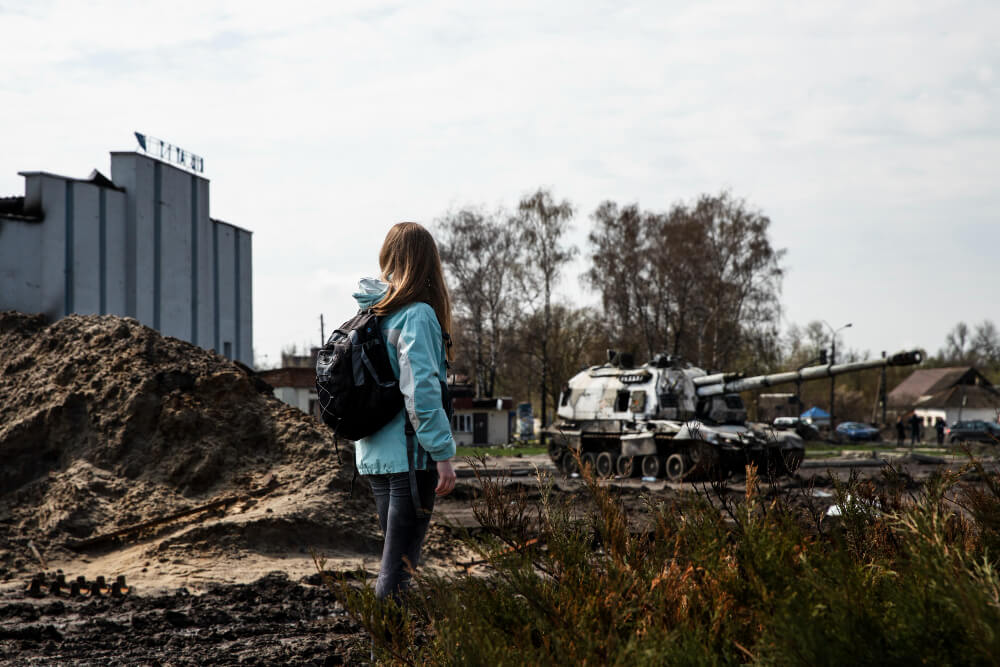
2024 marked the highest number of grave violations against children in armed conflict since monitoring began, and BC simultaneously experienced record complaints to the Human Rights Tribunal for education discrimination—both phenomena share infrastructure: scarcity ideology masquerading as resource constraint, bureaucratic mechanisms that document…
This year I wrote 430 essays. I built policy analyses, interactive network visualisations revealing accommodation denial patterns, resources documenting systematic exclusion across sixty BC districts.
I continue because my brain offers no pathway toward comfortable forgetting, because moving on assumes resolution occurred, harm ended, accountability materialised, systems learned and adjusted. Kids bounce back. The principal faced no consequence. District policies enabling her choices remain unchanged. Disabled students continue encountering room clears, partial schedules, safety plans functioning as exclusion mechanisms while administrators insist these serve student wellbeing. My continued attention reveals the gap between what schools claim—student-centred, inclusive, trauma-informed—and what they deploy when disabled children’s needs conflict with institutional convenience.
The advocate
Systems engineer their own impunity by ensuring those with deepest knowledge inevitably age out before accumulating sufficient collective power to force accountability. School districts maintain permanent institutional memory spanning decades. Parents fragment across individual crisis moments, learning our children’s specific situations while building expertise that becomes irrelevant once our children graduate or we exhaust ourselves from sustained combat.
The average tenure of activated education advocates measures three to five years—long enough to understand our individual district’s mechanisms, insufficient for building collective capacity rivalling bureaucracies designed to outlast individual resistors through strategic patience.
Districts tolerate endless individual accommodation requests because these exhaust parents while leaving structures unchallenged. Systematic documentation, comparative policy analysis, public testimony connecting local harm to broader violence patterns—these interventions destabilise performances that school harm emerges from unfortunate individual circumstances rather than deliberate systemic design.
-

A thousand cranes, a thousand truths
When I was a little girl, I folded cranes. Hundreds of tiny, meticulous, brightly patterned creatures, each creased into being by the stubborn, lonely determination of a child who could sense that the world was coming undone and wanted, somehow, to hold it…
Roadmap
I’m targeting one million words, drawing on childhood memories of folding one thousand paper cranes as ritual for processing unbearable experiences. That project taught me how accumulated testimony transforms suffering into something bearable through patient repetition of small precise acts toward numerical threshold holding transformative capacity.
Every time I try writing about Collective Punishment in Schools again, I must admit I feel sick of the exercise. I have written a lot. But pushing through that discomfort to try going a layer deeper has predictable outcome: I learn something new. When I stop learning something new, I will stop. Or if my kids are done with school and I’m ready to move on.
What I know with certainty: I continue while my children navigate systems that demonstrated capacity for casual cruelty, while memory maintains 4K access to everything harmful, while processing remains incomplete, while the principal’s authorisation to harm continues operating across BC schools, while other families need infrastructure revealing that their isolation reflects systematic design rather than individual failure. The work feels compulsory rather than optional, emerges from cognitive architecture and ethical commitment simultaneously, constitutes both survival mechanism and political intervention.
My analysis reveals an architectural truth: these systems are designed for denial, designed for despair, designed to exhaust.
Just parent
Exclusion mechanisms masquerade as support structures, accountability frameworks protect institutions rather than students, procedural complexity functions as barrier rather than protection, resource inadequacy operates as manufactured condition rather than material constraint. The design operates at every scale—individual accommodation requests exhaust parents while leaving policies intact, complaint processes demand energy families no longer possess, documentation requirements multiply beyond reasonable capacity, appeals stretch across timelines exceeding children’s remaining school years. What appears as bureaucratic inefficiency actually constitutes systematic engineering, transforming institutional violence into parents’ failure to navigate complexity, repositioning exclusion as natural consequence rather than deliberate choice, ensuring those harmed exhaust themselves pursuing remedies designed never to arrive. Schools depend on families believing the labyrinth represents good-faith effort toward resolution rather than architecture specifically constructed to prevent accountability from ever materialising.
This essay describes topics that emerged in navigating this experience.
-

The principal’s casualness reveals authorisation to harm
When a principal cancelled my daughter’s volleyball game with bureaucratic ease, her comfort while causing harm revealed systematic institutional authorisation.
Institutional mechanisms of exclusion
My analysis reveals how schools operationalise exclusion through seemingly neutral administrative practices—room clears, partial schedules, safety plans, modified programming. These mechanisms function as collective punishment disguised as individualised support, behaviour management masquerading as accommodation, educational deprivation framed as therapeutic intervention.
Key conclusions: Exclusion operates through systematic design rather than unfortunate individual circumstances; administrative language obscures rather than describes actual practices; what schools call “support” frequently constitutes punishment; therapeutic discourse enables violence by repositioning institutional choices as natural consequences of student behaviour.
See:
- On acceptable levels of harming children
- The principal’s casualness reveals authorisation to harm
- The affective architecture of room clears
-

Epistemic silencing of disabled children’s primary caregivers
Epistemic silencing in BC schools discredits mothers’ knowledge, reframes advocacy as aggression, and erases disabled children’s pain, leaving families punished for truth.
Policy infrastructure enabling harm
BC’s educational policy framework creates conditions permitting systematic exclusion while maintaining inclusion rhetoric. The Framework for Enhancing Student Learning, district codes of conduct, school board policies like SD27 Policy 390, search and seizure provisions—these policies engineer accountability gaps, establish performance management infrastructure without performance standards, position disabled students as threats requiring management rather than children requiring accommodation. The analysis reveals how provincial frameworks coordinate with district policies to produce predictable patterns of exclusion while distributing responsibility so diffusely that accountability becomes structurally impossible.
Key conclusions: Policy architecture deliberately creates conditions for exclusion while appearing to mandate inclusion; provincial frameworks establish unfunded mandates ensuring implementation failure; accountability mechanisms protect institutions rather than students; districts exploit policy ambiguity to authorise practices they simultaneously claim to prohibit.
See:
- How BC’s FESL enables ongoing exclusion of disabled children
- Too afraid to see: why the BC government doesn’t track exclusion
- Neurodiversity-informed Conduct Code Critique
- When delay becomes policy: British Columbia’s strategic abandonment of disabled students
Comparative district analysis
Examining sixty BC districts reveals how exclusion mechanisms replicate across jurisdictions using remarkably similar language, justifications, and procedural frameworks. The comparative work demonstrates that what individual families experience as isolated incidents reflect coordinated systematic design, that districts learn exclusion tactics from each other, that professional networks circulate strategies for managing difficult parents and resisting accommodation demands. This documentation provides evidence base for understanding local harm as instantiation of provincial patterns rather than jurisdiction-specific failures.
Key conclusions: Exclusion patterns replicate systematically across BC districts regardless of size, location, or resources; administrative scripts circulate through professional networks; districts coordinate responses to ombudsperson investigations and tribunal decisions; what appears as local practice reflects provincial coordination.
See:
- Take action on your school
- Collective punishment in BC school districts
- Collective punishment in Canadian schools
Theoretical frameworks connecting school exclusion to systematic violence
Applying scholarly work examining genocide, torture, necropolitics, and debility politics to elementary school discipline reveals shared architecture across contexts involving systematic harm against vulnerable populations. Sara Ahmed’s concepts about complaint as diversity work, Jasbir Puar’s analysis of debility production, Achille Mbembe’s necropolitics, Elaine Scarry’s examination of pain’s resistance to language—these frameworks illuminate how casualness operates as governance technology, how institutions banalise violence through routine administration, how therapeutic discourse disguises deliberate cruelty, how systems engineer exhaustion to maintain control.
Key conclusions: School exclusion shares structural features with other forms of systematic violence despite different scales; casualness about harm reveals authorisation mechanisms; institutions depend on victims’ inability to articulate suffering; exhaustion functions as governance strategy; what appears as individual administrator failure reflects systematic design.
See:
- On children, war, and remembrance
- Debility is not a diagnosis: What Jasbir Puar helps us see about invisible harm in BC schools
- Debility versus disability: what the system cannot acknowledge
- Designed to exhaust
- Exhaustion as governance in education systems
Economic logic structuring educational violence
BC’s funding decisions reveal how scarcity ideology engineers exclusion, how procurement choices shape ideological commitments, how resource allocation demonstrates actual priorities contradicting inclusion rhetoric. The shelved prevalence-based special education funding model, the automatic Classroom Enhancement Fund allocations, the Ministry contracts with non-neurodiversity-affirming consultants, the district spending patterns prioritising compliance over accommodation—these financial mechanisms create conditions ensuring inclusion fails while permitting administrators to blame insufficient resources they actively chose not to secure.
Key conclusions: Scarcity operates as ideology rather than material constraint; funding decisions reveal actual priorities; systems engineer resource inadequacy to justify exclusion; procurement shapes practice more than policy; districts possess resources they strategically decline to deploy for accommodation.
See:
- BC’s shelved prevalence-based funding reveals priorities
- Classroom Enhancement Fund’s automatic allocation versus special education
- Ministry spending on non-neurodiversity-affirming consultants
- What would it actually cost to fix the problem
- Scarcity logic as governance strategy
Maternal testimony and emotional interiority
The personal essays examine how institutional violence registers in family life, how children carry harm in their nervous systems, how parental advocacy extracts costs measured in exhaustion and grief and rage, how bearing witness constitutes both survival mechanism and political act. These pieces centre emotional truth as epistemological resource, refuse therapeutic pressure to minimise suffering, insist that naming pain precisely serves justice better than comfortable euphemism, demonstrate how private testimony becomes public evidence when systems prefer silence.
Key conclusions: Emotional precision constitutes political methodology; maternal rage carries epistemic authority systems want suppressed; bearing witness serves purposes beyond personal healing; private suffering reveals systematic patterns when documented; institutions recoil from pain they cause when forced to encounter it directly.
See:
- Looking in the mirror is hard: maternal rage and institutional cowardice
- The poison of silence: on complicity, healing, and speaking the truth
- Poise as pedagogy
- The unseen wounds of advocacy: caregiver burnout, moral injury, and embodied grief
-

Institutional gaslighting of caregivers
You refuse to forget, because forgetting would mean abandoning your child’s reality—and you have already watched too many adults do that with a straight face and a professional tone. You refuse to downplay what has happened, because the harm is not theoretical—it lives…
Legal frameworks and accountability gaps
BC’s human rights framework, Charter protections, ombudsperson investigations, complaint mechanisms—these structures promise accountability while systematically failing to deliver it. My analysis reveals how legal processes exhaust families, how districts weaponise procedural complexity, how accountability mechanisms protect institutions rather than students, how rights become meaningless without enforcement, how systems engineer conditions where pursuing justice costs more than absorbing harm.
Key conclusions: Legal frameworks create the appearance of accountability while permitting continued violation; procedural complexity functions as barrier rather than protection; districts exploit power asymmetries throughout complaint processes; rights require enforcement mechanisms currently absent; exhaustion serves governance strategy preventing families from pursuing available remedies.
See:
- Human Rights Tribunal complaints are designed to exhaust
- Shining a legal light on advocacy conversations
- Designed for denial: the architecture of accommodation refusal
- When delay becomes policy: British Columbia’s strategic abandonment of disabled students
-
Shattered pathways of parent advocacy in BC’s public schools
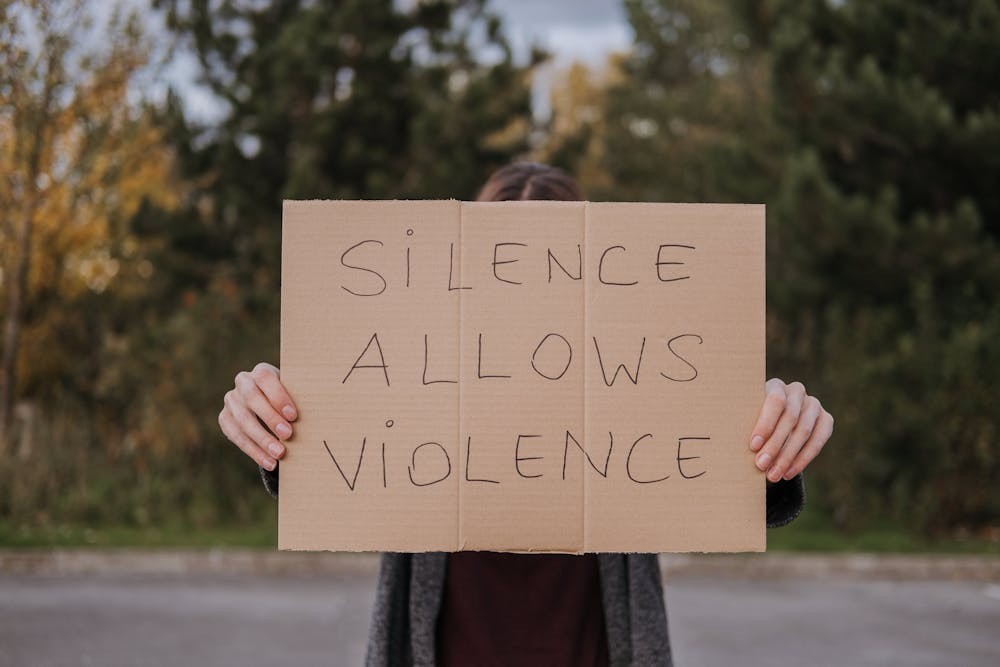
It’s time to riot in the streets. We have tried everything else and our children are still being hurt. The existing systems of appeal and escalation are ineffective, more focused on preserving the institution than delivering justice. It’s time to end the engineered…
Advocacy infrastructure and collective resistance
Building documentation systems, creating interactive visualisations, developing letter generators and strategy builders, connecting families across jurisdictions, maintaining comprehensive policy archives—this technical and organisational work addresses how parent advocates might counter institutional advantages, how knowledge transfers across cohorts despite limited tenure, how collective capacity builds when coordination remains informal, how movements emerge through accumulated individual contributions despite structural impediments preventing sustained organisation.
Key conclusions: Individual documentation serves collective purposes when publicly accessible; technical infrastructure enables pattern recognition at scale; knowledge transfer requires deliberate architecture; movements build through distributed contributions rather than centralised coordination; volunteer advocacy faces sustainability challenges requiring creative solutions.
See:
- Why I’m tracking exclusions no one else is measuring
- From trauma to topology: the grotesque work of quantifying institutional denial
- The architecture of absence data in Canada
- District exclusion reasons
Neurodivergent epistemology and cognitive difference
Autistic hyperphantasia, pattern recognition capacity, sensory processing differences, executive function variations, PDA profiles—these neurological realities shape both how harm registers and how advocacy proceeds. The essays examine how neurodivergent perception enables pattern recognition systems depend on remaining invisible, how cognitive differences requiring accommodation in children become analytical assets in parents, how neurodivergent epistemology threatens institutions comfortable with neurotypical forgetting, how processing requirements others pathologise as dwelling constitute survival mechanisms adapted to cognitive architecture maintaining everything in permanent high resolution.
Key conclusions: Neurodivergent cognition enables advocacy impossible for neurotypical processing; hyperphantasia serves justice when systems depend on witnesses forgetting; pattern recognition constitutes political methodology; cognitive differences shape both harm experience and resistance capacity; what systems pathologise as dwelling constitutes necessary processing for brains refusing compression.
See:
- The truth shall set us free: healing from institutional violence in BC public schools
- How do you live with yourself
- On euphemisms, PDA, and the rebranding of autism
- I only asked for gentleness: on parenting a PDA child in a punishing world
Looking toward 2026
In 2026, I will keep writing, toward the goal of one million words or my children’s graduation, whichever threshold arrives first. Each essay folds another crane toward numerical completion, each database entry extends systematic documentation, each framework application deepens theoretical understanding, each policy analysis reveals additional patterns.