
Safety Plans
Safety plans frame institutional responses to disabled children’s distress as protective intervention, documenting procedures for managing moments when the child’s behaviour is determined to pose risk to themselves, peers, or staff. The plans appear in IEP meetings as collaborative problem-solving, presented to families as evidence the school takes their child’s needs seriously, yet the mechanisms authorised within safety plans—room clears, physical restraint, seclusion, immediate parent pickup, partial day attendance—function as pre-approved exclusion that allows schools to remove disabled children from educational spaces without acknowledging the removal as discipline.
The language of safety obscures the reality that these plans rarely make disabled children safer; they make schools more comfortable with exclusionary responses to disability, providing administrative cover for practices that would otherwise require justification as punishment. A safety plan that authorises staff to clear the classroom treats the disabled child’s presence among peers as conditional, something that can be revoked when adults determine the child has crossed the threshold into unmanageability. A safety plan that includes physical restraint gives institutional permission for adults to control a child’s body in moments of distress, framing force as care and treating the child’s autonomy as negotiable when their behaviour becomes illegible to neurotypical interpretation.
Families experience safety plans as the moment the school stops trying to include their child and starts managing the liability their child’s disability represents, the point where accommodation language shifts to risk mitigation and the child becomes a problem requiring containment protocols rather than a student requiring support.
-
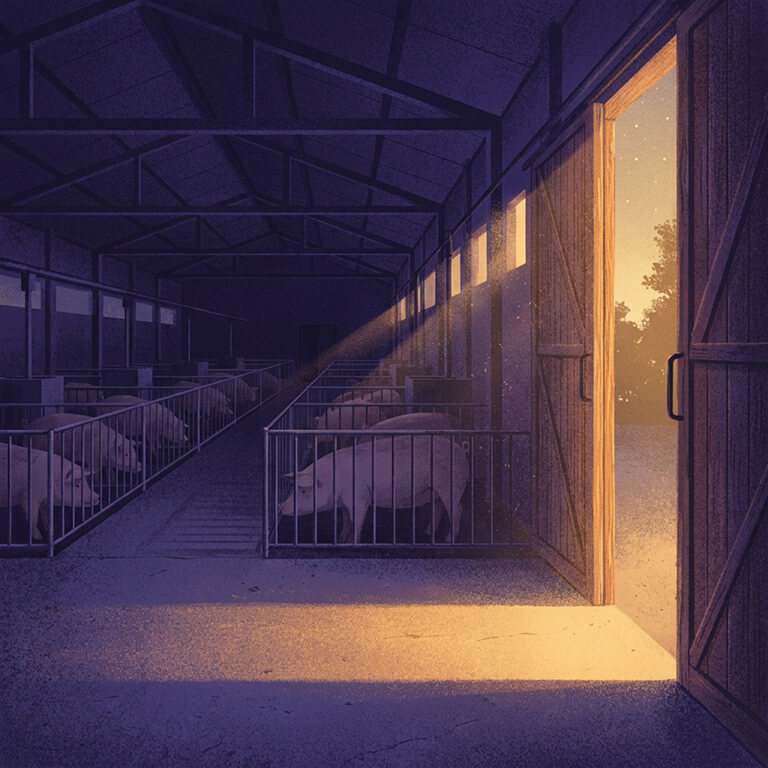
The barn, not the mother
A version of you existed before all this, and she would have been horrified. She would have watched you zip up that backpack, drive them to school, walk them to the door, and she would have known what you were doing: handing your child directly to the building that will hurt them today. Maybe the…
-

Sooke School District (SD62) secondary schools: a neurodiversity-informed policy critique
The Sooke School District secondary code of conduct opens with the steady, reassuring cadence of a district reading its own values back to itself: schools are “places for safe, purposeful learning,” conduct is “a shared responsibility of students, staff, parents / guardians and the broader community,” and every member carries an obligation to “support learning,”…
-
Exclusion is economically irrational and the hidden costs of refusing accommodation
BC schools spend more money refusing accommodation than providing it. Learn when hiring a lawyer becomes the only fiscally rational choice for your family.
-

What 8 years of advocacy took from our family
I advocate because I love my children and I want them to be well. Because I know the accommodations they require are entirely tenable, requiring only modest shifts in how adults think and respond. Because it is unbearable to watch them be slowly debilitated by a system that insists their needs are excessive and their…
-
The business process trap
I’m a business analyst by trade, so I naturally wanted to understand how things work in schools, but resist the temptation to let schools draw you in!!! School districts speak a language designed to obscure accountability, using administrative complexity as armour against obligation, converting urgent need into bureaucratic procedure, and replacing immediate legal duty with…
-
Navigating school meetings without losing your mind
School meetings occupy a particular kind of hell where institutional power performs collaboration while enacting control, where districts convene parents to discuss their child’s struggles without acknowledging the system produces those struggles through inadequate accommodation, and where the meeting itself functions less as problem-solving forum than as liability management theatre, generating documentation that protects the…
-
Ministry regulations on physical restraint and seclusion in BC schools
Physical restraint and seclusion are permitted in British Columbia schools under the Ministry of Education and Childcare guidelines—despite being widely described as last-resort safety measures. When schools restrain or isolate disabled children, districts often cite the Provincial Guidelines on Physical Restraint and Seclusion in School Settings (2015) to claim compliance. Parents are told the intervention…
-
How BC education policy discourse positions institutional refusal as neutral fact
This is a methodological critique examining how dominant policy analysis systematically erases the institutional practices that produce educational exclusion while appearing rigorous, neutral, and evidence-based. Understanding this analytical apparatus matters because it shapes what counts as legitimate evidence in meetings, what research administrators cite to justify program decisions, and what policy recommendations achieve political traction.…
-

Inclusive schooling solutions
I have spent years documenting institutional harm. Documentation feels natural to me, perhaps because my professional background as solution architect and business analyst. Professionally, I’m used to solving problems, but in education, not having classroom experience, I feel very clear that I can say what works for my kid, but I can’t say what works…
-

Champlain Heights Annex School (VSB SD39): a neurodiversity-informed conduct critique
Champlain Heights Annex School’s Code of Conduct promises a safe, inclusive, equitable, welcoming, nurturing, and healthy school environment. The document aligns explicitly with Vancouver School Board’s District Student Code of Conduct (AP 350), affirms the BC Human Rights Code, and structures behavioural expectations through a three-level consequence framework extending from classroom redirection to formal suspension.…
-

When your child has problems at school in BC: a guide for newcomer parents
On the surface, BC schools seem to welcome diversity, but the day-to-day experience of parents negotiating with schools for access tells another story. This plain language guide is meant to demystify access.
-

Education assistants and the infrastructure of exclusion
Between 2014 and 2023, education assistants in British Columbia filed more than four times as many violence-related injury reports with WorkSafeBC than teachers, a disproportion that exposes the material reality of who absorbs classroom harm where support has been systematically withdrawn. According to WorkSafeBC data referenced in Want to Improve Schools? Education Assistants Have Ideas, teaching assistants…
-

BCTF lobbies for changes to new literacy screening mandate
The BC Ministry of Education and Child Care announced a new mandate this week requiring literacy screening for all kindergarten students beginning in the 2025–26 school year, expanding to K–3 students the following year. The British Columbia Teachers’ Federation published their response, which deserves careful attention. No budget for implementing literacy screening Everyone can see…
-

Scapegoats for austerity: BC education funding excludes disabled children
BC education funding scapegoats disabled children, using collective punishment and performative inclusion to divide parents and maintain austerity.
-
Partial-day schooling as systemic violation: new research confirms what parents already know
The Journal of Inclusion and Disability published research this month documenting what families living through exclusion have been saying for years: partial-day schooling operates as institutional marginalisation, transforming policy failure into individual deficit while schools claim to serve students they are systematically denying education. Gordon Porter and Andrea Cameron’s article examines partial-day schooling across Canadian…
-
School discipline in British Columbia: what parents of disabled children need to know
In British Columbia, school discipline is usually described as a neutral, even benevolent process. Brochures reassure parents that discipline is not punishment, that it teaches self-control, and that consequences help children learn responsibility. The Vancouver School Board’s Discipline at Home and School guide follows this script exactly. It explains that: On paper, this sounds reasonable.…
-
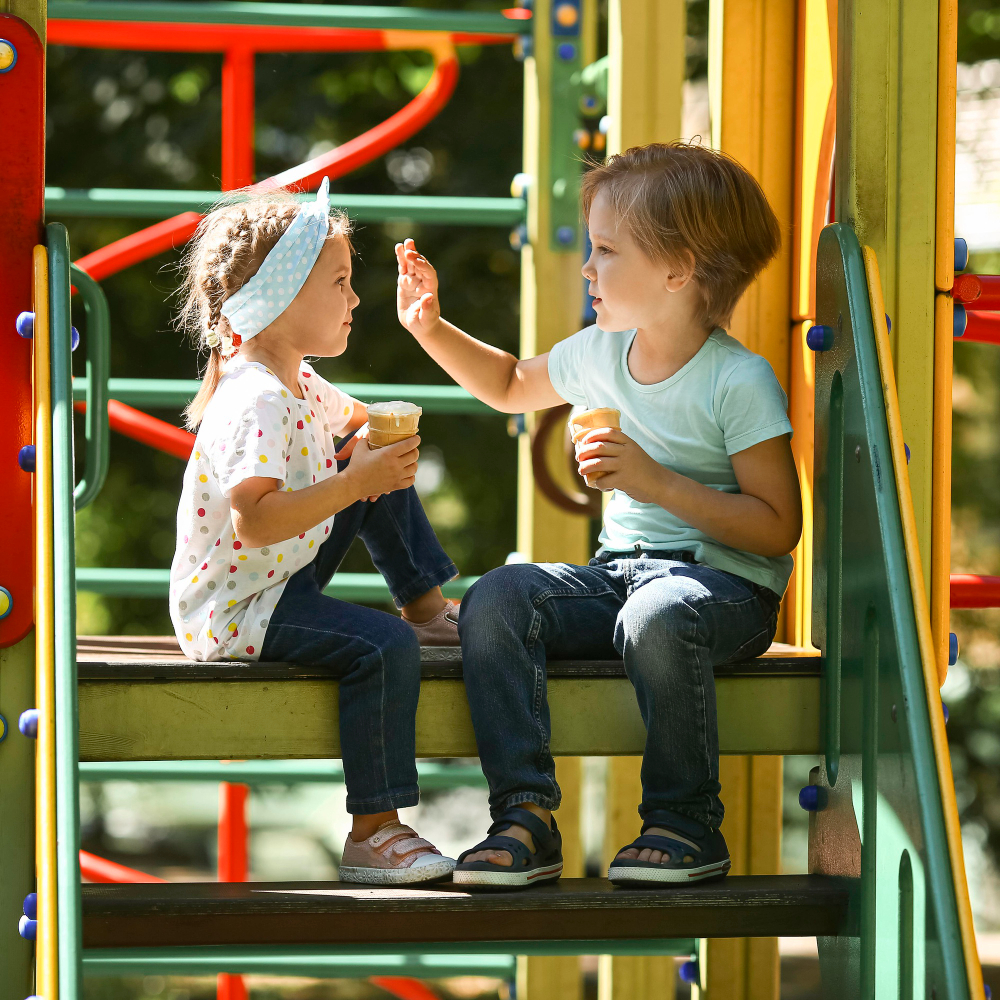
Manitoba’s “positive behaviour agreements” and BC’s PBIS infrastructure
Jillian Enright identifies the central contradiction in Manitoba Education Minister Tracy Schmidt’s 2025 announcement of “positive, student-centred approaches” grounded in what the province calls positive behaviour agreements: these agreements present themselves as collaborative documents created between students and staff, yet the power imbalance renders genuine collaboration structurally impossible, leaving students to validate pre-determined behavioural expectations…
-
VSB’s FESL report: the aesthetics of performative accessibility
An analysis of how VSB’s FESL report performs inclusion through language and process while avoiding measurement, accountability, and material change.
-

Lord Beaconsfield Elementary School (SD39 Vancouver): a neurodiversity-informed policy critique
Lord Beaconsfield Elementary School’s Code of Conduct, reviewed June 19, 2024, presents itself as a framework for creating a “safe, inclusive, equitable, welcoming, nurturing, and healthy school environment.” The document employs the language of care, respect, and community while constructing a disciplinary architecture that presumes neurotypical development, rewards compliance, and positions disability as exceptional deviation…
-
The equilibrium of refusal: what a decade of legal spending reveals about BC schools
Between 2012 and 2022, British Columbia’s Schools Protection Program spent $4,420,252.58 responding to human rights claims filed against public schools, according to this FOI release. Of that total, $752,525.34 went to indemnity—settlements and compensation paid to claimants. The remaining $3,635,085.21 funded legal defence. The ratio is precise: for every dollar spent remedying harm, the system…