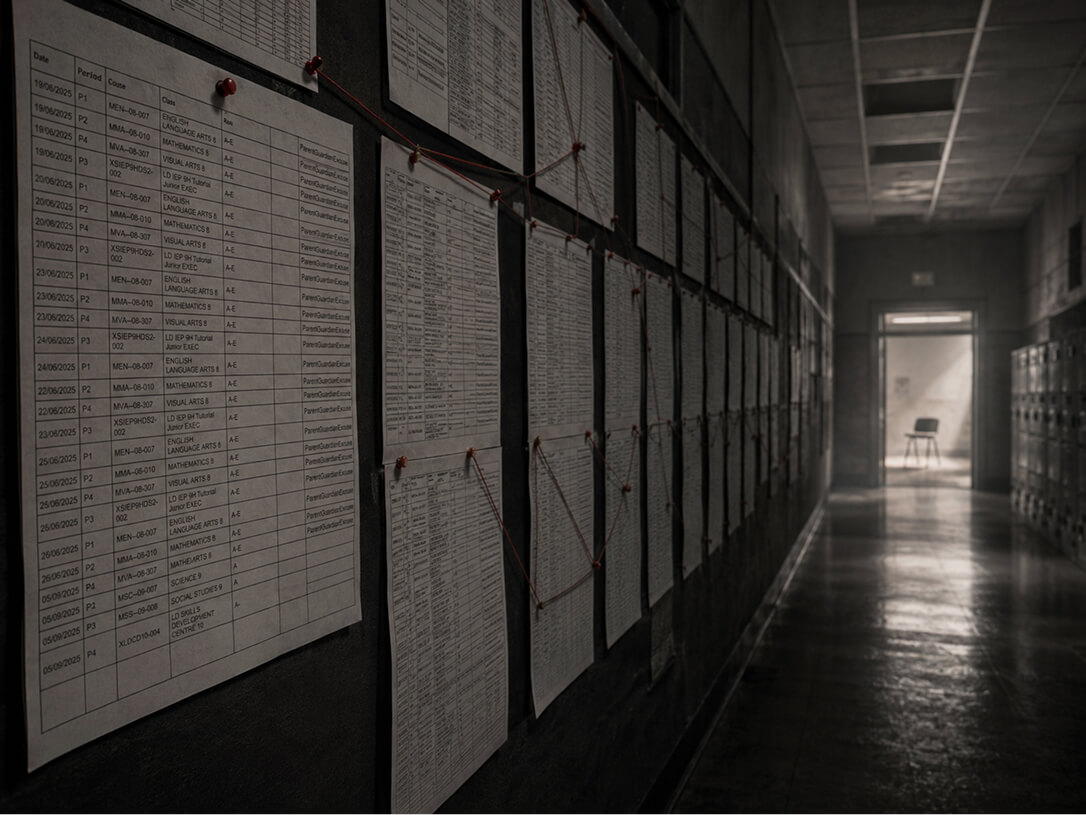
The Impact of Recess on Chronic Stress Levels in Elementary School Children illuminates the profound violence embedded in recess cancellation as punishment, revealing how schools manufacture chronic physiological harm under the guise of behaviour management.
The findings demonstrate that children receiving forty-five minutes of daily recess exhibited hair cortisol concentrations significantly below both pre-pandemic normative values and their peers receiving only thirty minutes—a mere fifteen-minute differential producing measurable chronic stress reduction. Their hair encoded the stress they had lived through during the three months preceding sample collection, capturing cortisol secretion that occurred weeks and months before researchers arrived at their schools.
The control group children, restricted to thirty minutes daily, exhibited cortisol levels significantly elevated above healthy baselines, their bodies registering three months of accumulated physiological distress. These children were not experiencing acute deprivation; they received what many districts would consider adequate recess time. Yet their stress biomarkers told a different story entirely.
Removal of recess as punishment
When schools weaponise recess withdrawal as disciplinary response, they do not simply remove fifteen minutes of play. They engineer chronic stress in developing bodies, imposing measurable harm that persists across months. The research demonstrates that even modest reductions in outdoor play opportunities produce significant elevations in cortisol concentration—the body’s primary stress hormone, intimately connected to cardiovascular disease, immune suppression, cognitive impairment, and mental health deterioration across the lifespan. Children denied recess as punishment experience this harm not as occasional acute stress but as sustained physiological assault, their endocrine systems registering the deprivation as ongoing threat.
Schools frequently justify recess cancellation through appeals to accountability, claiming that temporary deprivation teaches responsibility or motivates compliance. This study exposes such reasoning as fundamentally incoherent. The physiological harm accumulates over three-month windows, making “temporary” withdrawal meaningless in stress biology terms. A child denied recess twice weekly experiences not discrete episodes of minor inconvenience but sustained elevation in chronic stress markers. The body cannot distinguish between recess withheld for punishment and recess withheld for test preparation or inclement weather; it registers only the accumulating deprivation, encoding the harm in hair cortisol that researchers can measure months later.
The study’s findings on physical activity mechanisms illuminate why recess cancellation produces such profound harm. Researchers note that intervention children achieved significantly higher physical activity levels throughout the day, with each fifteen-minute recess period providing opportunities for movement, stress discharge, and autonomic nervous system regulation. Recess functions not as leisure but as physiological necessity—a structured intervention that allows developing nervous systems to process accumulated stress through embodied play. Cancelling recess for punishment removes this regulatory mechanism precisely when children most need it, forcing them to manage behavioural expectations and emotional demands without the physiological support their bodies require. The cruelty operates at cellular level, demanding compliance from nervous systems deliberately deprived of their primary stress management tool.
-
Revoking recess as a form of collective punishment
Rules intended for safety become instruments of collective punishment when they erase unstructured play from the school day, compounding distress for children who rely on movement, predictability and sensory regulation. this post examines the disproportionate impact on neurodivergent learners and proposes targeted interventions…
Collective punishment
The collective punishment dimensions deepen this violence substantially. When entire classrooms or groups lose recess due to one child’s behaviour—or due to adults’ perception of group inadequacy—schools distribute physiological harm across bodies that bear no responsibility for the triggering incident. The study’s methodology cannot capture this specific mechanism, but its findings on baseline stress levels illuminate what collective punishment produces at scale: populations of children whose bodies encode sustained stress from institutional decisions to withdraw the precise intervention this research identifies as protective.
Individual children cannot consent to having their endocrine systems placed under stress load because their classmate misbehaved or their teacher felt overwhelmed. Parents cannot meaningfully advocate against collective punishment when schools frame recess cancellation as routine classroom management rather than health intervention. The study’s findings expose this framing as deliberately misleading. Schools implementing collective punishment knowingly impose chronic stress on children’s bodies, using physiological harm as disciplinary mechanism while denying parents and students language to recognise the violence being enacted.
Gender impact
The gendered findings warrant particular attention in collective punishment contexts. Girls in the control group exhibited higher cortisol concentrations than boys, suggesting heightened stress vulnerability or differential response to recess restriction. When schools cancel recess collectively, they may inadvertently impose disproportionate physiological harm on girls, whose bodies appear more responsive to play deprivation. The intervention group data showed this pattern reversing, with girls demonstrating lower cortisol when adequate recess was protected—suggesting that sustained access to outdoor play may offer particular stress protection for female children. Collective punishment regimes erase this nuance entirely, distributing harm without consideration of differential impact.
Impact on disabled children
The research team’s exclusion criteria deserve scrutiny. They did not exclude children with anxiety disorders, ADHD, or those taking psychotropic medications, instead removing only outliers falling beyond two standard deviations from group means. This methodological choice means the sample likely included children already experiencing stress-related diagnoses, making the findings even more concerning. If children with existing mental health conditions benefited from increased recess to the degree that their cortisol remained in healthy ranges, then recess deprivation as punishment specifically targets those most vulnerable to stress-related harm. Schools punishing disabled children through recess cancellation impose physiological assault on bodies already managing heightened stress loads, engineering precisely the conditions that exacerbate their underlying conditions.
Social implications
The social implications compound the physiological harm. The researchers emphasise that recess provides essential opportunities for peer communication, emotional processing, and relational skill development—interactions that buffer against isolation-related anxiety and stress. Collective punishment severs these connections, transforming the classroom into a site of shared deprivation where children cannot access the peer support that might help them process the very conflicts that triggered the punishment. Schools manufacture isolation as disciplinary response, then express surprise when children’s stress levels and behavioural difficulties escalate. The study demonstrates that even healthy children with no psychiatric diagnoses report increased anxiety and decreased attention when deprived of regular social connection—making collective punishment a mechanism that produces the precise conditions schools claim to be addressing through discipline.
Post-pandemic context
The study’s post-pandemic context adds another dimension. Children in the intervention group, despite returning from COVID isolation to reduced recess minutes (dropping from sixty to forty-five minutes daily), still exhibited cortisol levels below pre-pandemic norms. This finding suggests that pandemic disruption to school routines and social connection produced baseline stress elevations that adequate recess helped mitigate.
Schools implementing collective punishment in post-pandemic contexts thus compound existing stress load, denying children the precise intervention that might help them recover from isolation trauma. The violence of this choice becomes particularly stark when understanding that control group children—receiving what many districts would consider acceptable recess time—showed significantly elevated chronic stress compared to pre-pandemic healthy samples.
The study’s limitations paradoxically strengthen its implications for collective punishment analysis. Researchers collected data only in fall, noting that spring collection might reveal elevated stress related to standardised testing pressure. This methodological gap suggests that the control group’s elevated cortisol may actually underestimate chronic stress levels across the full academic year. If children exhibit elevated stress in fall—before testing season intensifies, before winter illness peaks, before end-of-year exhaustion accumulates—then collective punishment implemented throughout the year compounds already substantial physiological burden. Schools cancelling recess in spring, when stress markers likely peak, impose harm on bodies already operating at elevated baseline stress, potentially pushing vulnerable children past thresholds where chronic stress translates into diagnosable mental health conditions or physical illness.
Conclusion
The study’s implications for behaviour management policy are unambiguous. If fifteen minutes of additional daily recess produces measurable reductions in chronic stress, then recess cancellation cannot be justified as pedagogically sound practice under any circumstances. Schools claiming to support student wellbeing while simultaneously using recess deprivation as punishment reveal fundamental incoherence in their stated values. The research demonstrates that adequate recess functions as health intervention, not optional enrichment—making its withdrawal comparable to denying children access to water, nutrition, or medical care. No ethical framework permits institutions to inflict measurable physiological harm on children as behaviour management strategy.
The research demonstrates what disability justice advocates have long insisted: behaviour management strategies that deprive children of movement, play, and social connection constitute violence, not pedagogy. The study quantifies this violence through cortisol analysis, making visible what schools prefer to keep hidden. Children’s bodies register recess deprivation as threat, encoding the harm in measurable biomarkers that persist across months. Collective punishment distributes this threat across entire groups, manufacturing populations of stressed children whose developing nervous systems cannot distinguish between individual and collective responsibility, who experience only the sustained absence of the outdoor play their bodies require for healthy stress regulation.
Schools must reckon with these findings not as interesting preliminary data but as evidence of ongoing harm. Every instance of recess cancellation, every collective punishment regime, every behaviour management system that treats outdoor play as privilege rather than necessity produces measurable physiological damage in children’s bodies. The study offers schools clear evidence and straightforward intervention: protect daily recess as non-negotiable health requirement, ensure adequate duration regardless of behavioural incidents or schedule pressures, and abandon disciplinary practices that weaponise children’s physiological needs. Until schools make these changes, they cannot claim to support student wellbeing while simultaneously implementing policies proven to elevate chronic stress. The contradiction is not theoretical; it is encoded in children’s hair, measurable and undeniable.
-

When the bell rings but the doors stay shut: why withholding recess is a breach of children’s rights
Few topics ignite as much debate as the cancellation of recess. Threads often begin with a frustrated parent describing how an entire class lost recess because of one student’s behaviour, or a teacher recounting the expectation to withhold outdoor play for incomplete work.…