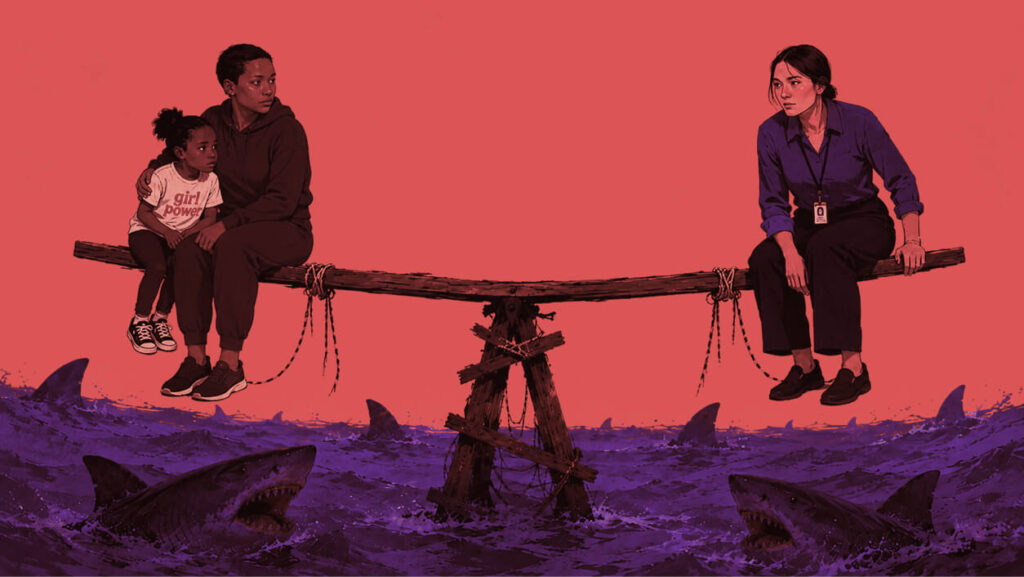
Does your child have behaviour problems at school? Does the school want to make a “safety plan”? Are you worried about what will happen?
This guide will help you understand your rights. It will help you get support for your child.
You are not alone
Many parents feel confused when the school talks about behaviour problems. The school uses words you might not know. They have meetings with many people. You might feel scared or worried.
You have rights. Your child has rights. This guide will help you understand what to do.
Step 1: Get help from an advocate
An advocate is a person who helps you talk to the school. They know the rules. They can come to meetings with you. They can help you write letters.
InclusionBC has advocates who help parents for free.
Email them: advocacy@inclusionbc.org
Tell them:
- Your child’s name and age
- Your school’s name
- What problems are happening
They will help you.
Step 2: Understand your rights in school meetings
The school might want to have a meeting about your child. You have rights in these meetings.
You can bring someone with you
You do not have to go to meetings alone. You can bring:
- A friend
- A family member
- An advocate
- Anyone who can help you
Tell the school before the meeting: “I am bringing someone to help me.”
You can have an interpreter
If English is not your first language, you can ask for an interpreter. The school must provide one.
Tell the school: “I need an interpreter. I speak [your language].”
The school must give you copies
The school must give you a copy of any paper about your child. This includes:
- Safety plans
- Behaviour plans
- Meeting notes
- Any other documents
If they do not give you copies, ask for them. Send an email that says: “Please send me a copy of [name of document].”
You must agree before they make changes
The school cannot make a “safety plan” without your permission. You must understand the plan. They cannot finalise a plan, if you do not agree to it.
If you do not understand the plan, say: “I do not understand this plan. Please explain it to me.”
If you do not agree with the plan, say: “I do not agree with this plan.”
You can say no.
Step 3: Write everything down
It is very important to write down what happens. This creates a record. You might need this record later.
What to write down:
- Date and time of every meeting
- Who was at the meeting
- What people said
- What decisions were made
- How your child is doing
Send emails after meetings
After every meeting, send an email to the school. Write what you remember from the meeting.
Example: “Dear [Principal’s name],
Thank you for meeting with me today. This is what I remember from our meeting:
- We talked about [topic]
- You said [what they said]
- I said [what you said]
- We agreed to [what you agreed]
Please send me a copy of [any documents they mentioned].
Thank you, [Your name]”
Save all emails
Save every email the school sends you. Save every email you send to the school. Put them in a special folder.
Can I record meetings?
You have the legal right to record meetings in Canada without telling anyone. It’s called “one party consent”–you are the one party that consents. That means other people don’t need to agree or be told they are being recorded.
Schools often feel uncomfortable if they know you are recording, but if you don’t share the recording with them and use it only for your own understanding, it is legal and helpful in case you are scared and struggle to take notes. Download Otter.ai (free app), start recording before you enter the school, and keep your phone face down on the desk. Otter will transcribe the conversation to text for the first 45 minutes of any meeting for free.
Step 4: Ask for a designation
A “designation” is a special label that says your child needs extra help at school.
What is an H designation?
An H designation is for children who have:
- Behaviour challenges
- Mental health needs
- Learning differences
- Other disabilities
Usually when there is not a formal ‘diagnosis’ but your kid needs extra help at school H designation is a good place to start. When your child has an H designation, they get an IEP.
What is an IEP?
IEP means “Individualised Education Plan.” It is a written plan that says:
- What help your child needs
- Who will help your child
- What goals your child will work on
An IEP is very important. It gives your child the right to get help.
How do you get a designation?
You ask the school for it. The school looks at this checklist to decide: https://www2.gov.bc.ca/assets/gov/education/administration/kindergarten-to-grade-12/independent-schools/se_cat_chklst.pdf
Your child needs to have support from outside the school. This means support from a doctor or therapist. Ask your doctor or clinic for a letter stating your child needs extra support.
What if you don’t have a designation yet?
Ask for a Student Learning Plan (SLP). This is a simpler plan that still helps your child.
An SLP says what help your child needs, like:
- Extra help in the morning
- Check-ins 3 times per day
- Extra time to move between activities
- A quiet place to calm down
- Breaks when needed
Tell the school: “My child needs a Student Learning Plan.”
Step 5: Go to the doctor
You need a doctor to write down that your child needs help. This is called “documentation.”
What to do:
- Make an appointment with your family doctor
- If you don’t have a doctor, go to a walk-in clinic
- Tell the doctor: “My child is having problems at school. The school says they have behaviour problems (or whatever they say is the problem). My child needs support.”
What the doctor will do:
The doctor will:
- Talk to you about your child
- Maybe talk to your child
- Write notes in your child’s file
- Maybe refer you to a specialist
- Maybe put you on a waitlist for assessment
You don’t need a full assessment right away
For an H designation, you just need to show that your child is getting outside support. Being on a waitlist counts. Having a doctor’s appointment counts.
The school just needs to know: “This child is seeing a doctor about these problems.”
Step 6: Go to Child and Youth Mental Health
Child and Youth Mental Health (CYMH) is a government service. They help children who have:
- Behaviour challenges
- Mental health problems
- Emotional difficulties
- Family stress
What is a drop-in?
A drop-in is a time when you can go to CYMH without an appointment. You just show up. You talk to someone. They will help you.
Find drop-in times here: https://www2.gov.bc.ca/gov/content/health/managing-your-health/mental-health-substance-use/child-teen-mental-health/mental-health-intake-clinics#intakeclinics
What happens at a drop-in:
- You go to the CYMH office
- You tell them about your child’s challenges at school
- They ask you questions
- They set up an appointment for an assessment
- They tell you what services they can offer
This gives you more documentation to show the school.
Step 7: Get help if you are new to Canada
If you are new to Canada, you can get extra help.
ISSofBC (Immigrant Services Society of BC) helps newcomers. They have a Newcomers Services Program.
They can help you with:
- Learning English
- Understanding how schools work in Canada
- Finding other services
- Connecting with your community
Website: https://issbc.org/our-programs-service/bc-nsp/
They understand what it is like to be new to Canada. They can help you in your language.
Important things to remember
Your child has the right to go to school
Every child in Canada has the right to education. The school cannot take this away because of behaviour problems.
You are the expert on your child
You know your child better than anyone. The school needs to listen to you.
You can ask questions
If you don’t understand something, ask. Say: “Please explain that again. I don’t understand.”
You can take your time
If the school wants you to sign something, you can say: “I need time to think about this. I will tell you my answer tomorrow. Please email me a copy.”
You do not have to decide right away.
You can change your mind
If you agree to something and then change your mind, you can tell the school: “I changed my mind. I don’t agree to this anymore.”
You deserve respect
The school staff should treat you with respect. If they are rude or mean, you can complain. Talk to the principal. If the principal doesn’t help, talk to the school district office.
What to do if things get worse
Sometimes schools do not give children the help they need. Sometimes they try to make children go home early. Sometimes they suspend children.
If this happens:
File a complaint
You can file a complaint with:
- The school principal
- The school district office
- The BC Ombudsperson
- The BC Human Rights Tribunal
An advocate can help you do this.
Keep fighting for your child
Don’t give up. Your child deserves an education. Keep asking for help. Keep writing emails. Keep going to meetings.
You are doing the right thing by fighting for your child.
Where to get more help
InclusionBC
- Email: advocacy@inclusionbc.org
- They help parents advocate for their children
Immigrant Services Society of BC
- Website: https://issbc.org
- They help newcomers understand Canadian systems
Child and Youth Mental Health
You can do this
Remember:
- Get an advocate
- Bring someone to meetings
- Write everything down
- Ask for a designation
- Go to the doctor
- Don’t give up
Your child is lucky to have you fighting for them.
Resources for families
-
Shining a legal light on advocacy conversations
How to speak from a foundation of human rights while staying grounded in care. Firm, quietly defiant responses for families navigating school denial,…
-

The 123s of advocacy strategy
These strategies are practical steps you can take to help your child access support—whether you’re just starting out or navigating a complex situation.