In British Columbia, school discipline is usually described as a neutral, even benevolent process. Brochures reassure parents that discipline is not punishment, that it teaches self-control, and that consequences help children learn responsibility.
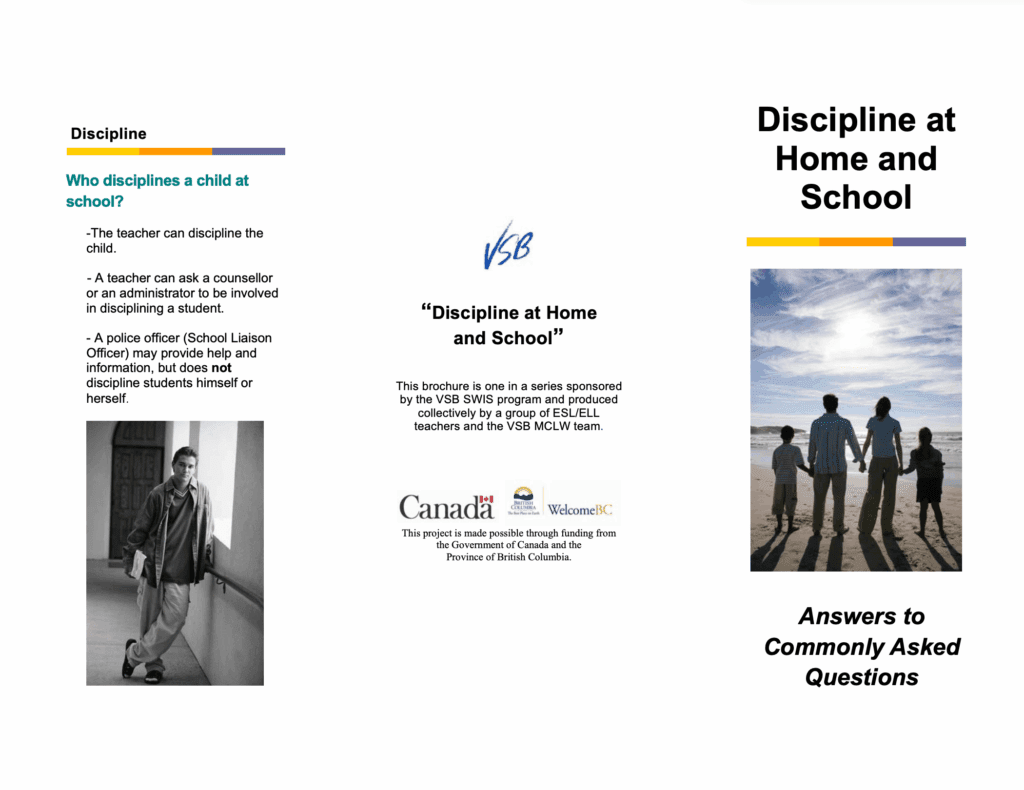
The Vancouver School Board’s Discipline at Home and School guide follows this script exactly. It explains that:
- Discipline is about learning self-control, not fear
- Physical punishment is abuse and never allowed
- Schools have rules, and rule-breaking has consequences
- Serious rule-breaking leads to more serious consequences
On paper, this sounds reasonable.
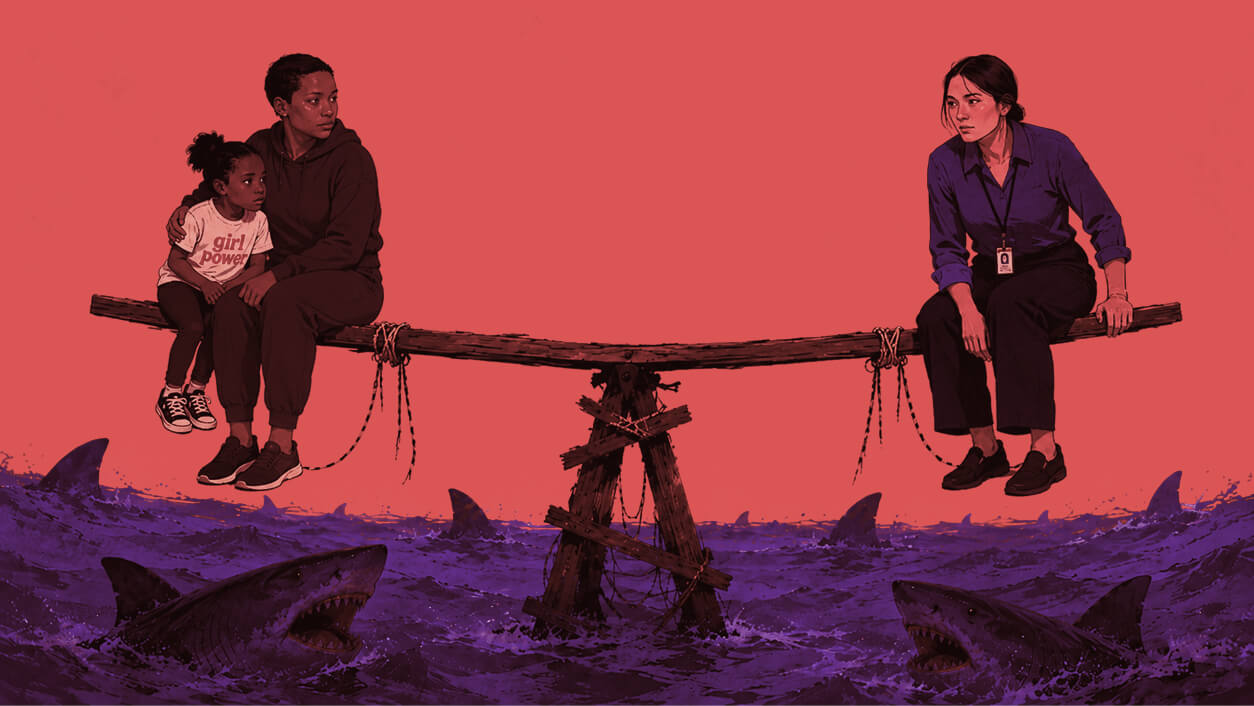
For many disabled children, however, “discipline” does not function as learning. It functions as exclusion—the steady withdrawal of access to education until the child is no longer meaningfully included at all.
This article explains how that happens, why it is illegal, and how parents can recognise discipline that has crossed into discrimination.
The official story: discipline as learning
According to school policy, discipline is meant to:
- Help children develop self-control
- Teach that actions have consequences
- Support social responsibility
- Maintain safe and orderly environments
This framework assumes a child who can:
- Regulate their nervous system on demand
- Understand unspoken social rules
- Tolerate noise, crowds, transitions, and sensory overload
- Comply even when accommodations are missing
That child is imagined as universal.
They are not.
What discipline means when your child Is disabled
For disabled children—especially autistic children, children with ADHD, anxiety, trauma histories, or sensory disabilities—school discipline often becomes punishment for disability itself.
Common “disciplinary” practices include:
- Room clears when a child is in distress
- Shortened school days framed as “modified schedules”
- Suspensions for behaviours everyone agrees are disability-related
- Repeated removals from class for “disruption”
These are not neutral consequences. They are elimination strategies.
Instead of asking why a child is distressed, schools remove the child.
Instead of fixing inaccessible environments, schools reduce attendance.
Instead of providing support, schools withdraw education.
Why this is illegal (even if schools say it’s normal)
Disabled children in BC are protected by multiple overlapping laws:
1. Canadian Charter of Rights and Freedoms (Section 15)
- Disability is a protected ground
- Discrimination does not need to be intentional
- Schools discriminate when they fail to accommodate
The Supreme Court confirmed this in Moore v. British Columbia (Education).
2. BC Human Rights Code
- Public education is a “service”
- Policies that harm disabled students—even if applied to everyone—are discriminatory unless justified by undue hardship
- Behaviour arising from disability cannot be punished without accommodation
3. School Act
- Every child has a right to access the provincial education program
- Education is a right, not a privilege
- Access cannot be reduced based on disability
Yet schools routinely violate these protections while insisting they are “just managing behaviour.”
When discipline becomes exclusion
Discrimination rarely arrives all at once. It creeps in gradually.
Watch for these warning signs:
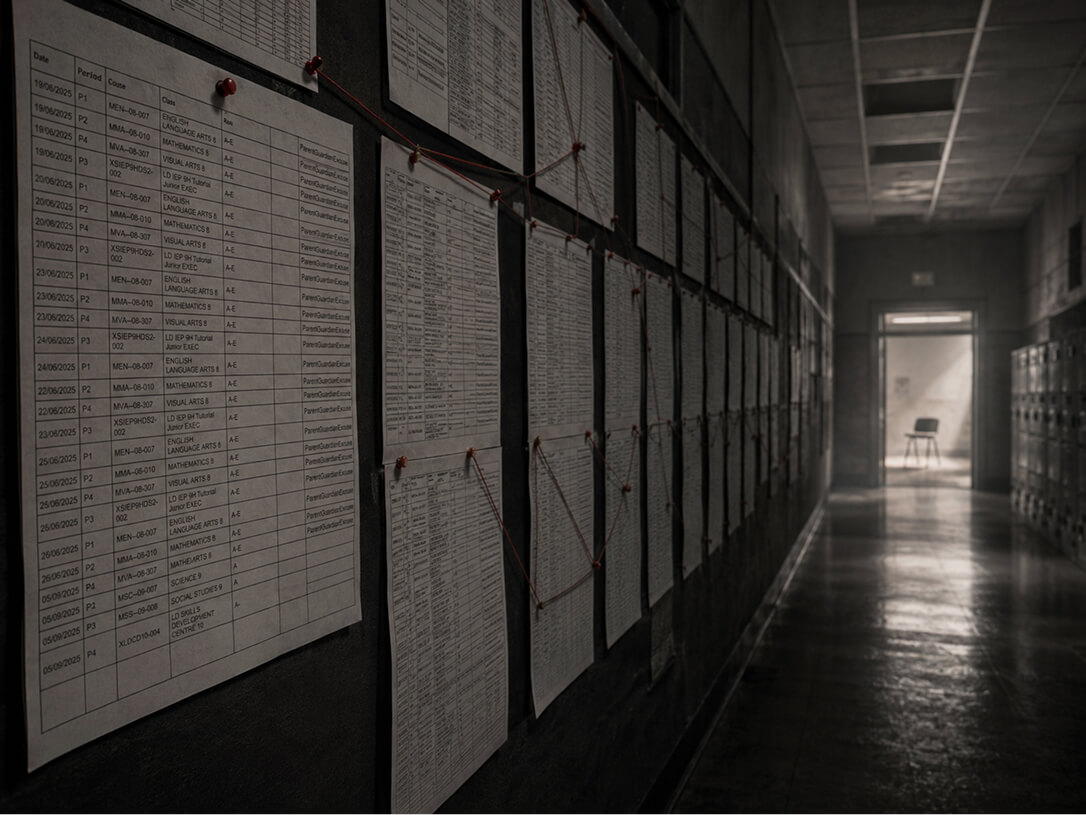
🚩 Room Clears
- All students in the class cleared when child is dysregulated
- Distress treated as disruption
- Learning time lost repeatedly
- Child often feels humiliated
- Insufficient examination of what support was needed to avoid the dysregulation
🚩 Shortened Days
- Framed as “supportive” or “temporary”
- Many delays in restoration to full time
- Conditional on behaviour improving, often without sufficient/sustained support
🚩 Suspensions
- For meltdowns, impulsivity, or shutdowns
- Often acknowledged as disability-related
- Still justified as “teaching consequences”
Under human rights law, all of these are service reductions—and service reductions for disability are presumed discriminatory.
Safety plans and behaviour contracts: coercion in disguise
Schools often escalate to “safety plans” or “behaviour contracts” after a crisis.
These plans typically:
- List prohibited behaviours
- Specify consequences
- Require parental signatures
- Condition return to school on compliance
They shift responsibility away from the school and onto the child and family.
You have the right to say:
- No to behaviour contracts that ignore accommodations
- No to plans that prioritise compliance over access
- No to documents that make your child responsible for systemic failure
How to document what’s happening
Documentation turns “this feels wrong” into evidence.
Keep records of:
- Every removal from class
- Every shortened day
- Every suspension
- Every accommodation request
- Every refusal or delay
Write down:
- Dates
- Who was present
- What was said
- What was promised
Pay attention to phrases like:
- “Not ready for full days”
- “Safety risk”
- “Can’t cope”
- “Needs to earn access back”
These phrases often signal discriminatory reasoning.
-
Why I’m reviewing school codes of conduct
To the student who found this page because you typed something scared or confused or angry into a search bar—something like “are teachers allowed to take away recess?” or “can I be suspended for a meltdown?” or “why did my teacher say I…
When schools suggest removal
Eventually, schools may suggest:
- District programs
- Alternative placements
- Online learning
- Homeschooling
- “Temporary” medical leave
These are framed as helpful options. Legally, they are last resorts—and only after genuine accommodation has been exhausted.
You are not required to agree.
Your child has the right to:
- Inclusive education
- Full-time access
- Appropriate accommodations
- The least restrictive environment
The school has the obligation to provide these before proposing segregation.
The Bottom Line
When schools describe discipline as learning, ask:
- Learning for whom?
- At whose expense?
- With what supports in place?
If discipline results in less education, less access, or less inclusion for a disabled child, it is no longer discipline.
It is discrimination.
And you are allowed to name it as such.
Resources for families
-

Shining a legal light on advocacy conversations
How to speak from a foundation of human rights while staying grounded in care. Firm, quietly defiant responses for families navigating school denial,…
-

The 123s of advocacy strategy
These strategies are practical steps you can take to help your child access support—whether you’re just starting out or navigating a complex situation.