
Ableism
Not ignorance, but infrastructure. Not unkindness, but system design.
Ableism, in this project, refers not to occasional slurs or awkward moments of exclusion, but to the full apparatus of policies, practices, and professional logics that define disabled people as deviations to be managed, corrected, or contained. It is embedded in classroom reward charts, IEP timelines, access gatekeeping, and behaviour charts. It is built into online forms, staff training scripts, and the very architecture of “inclusive” processes that function without us. The pieces collected under this tag expose the mechanics of ableism as it operates through design, deference, and denial—while insisting on something better than awareness: structural accountability.
-
On opposite sides of the same door in BC schools
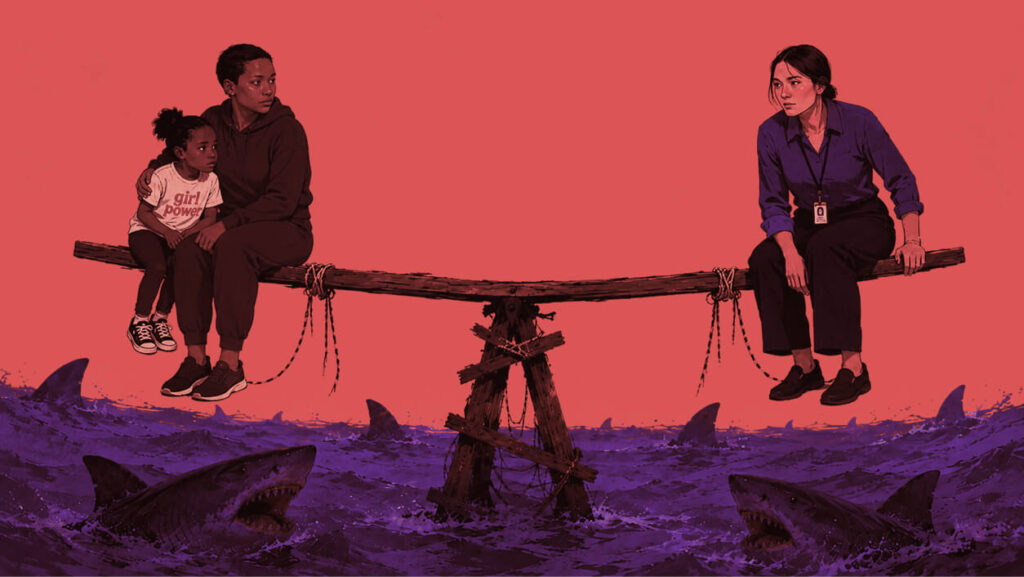
Families and teachers are describing the same failure from two positions inside it. The system survives by keeping them from recognising each other.
-

Too many tongues: how schools turn caregiver testimony into threat
How schools turn caregiver testimony into threat — and why the monstrous advocate is made by the institution that fears her memory.
-

My Ollie is missing a lot of school
My Ollie has barely left his room since he came home exhausted from school one day last spring. He slept twenty-three hours a day for months. He barely spoke for months and had difficulty with basic hygiene. School chronically withdrew the supports he needed and pushed him to mask and comply until his nervous system…
-

Exclusion is economically irrational and the hidden costs of refusing accommodation
BC schools spend more money refusing accommodation than providing it. Learn when hiring a lawyer becomes the only fiscally rational choice for your family.
-

What 8 years of advocacy took from our family
I advocate because I love my children and I want them to be well. Because I know the accommodations they require are entirely tenable, requiring only modest shifts in how adults think and respond. Because it is unbearable to watch them be slowly debilitated by a system that insists their needs are excessive and their…
-

When improvement tolerates death: why schools must stop the line
Education systems insist they are engaged in continuous improvement. They invoke cycles, frameworks, data dashboards, and action plans to demonstrate seriousness and care. But children are killing themselves in every district, every year. Disabled children are being excluded, isolated, placed in hallways, sent home early, or left to deteriorate while plans are written. The question…
-

The business process trap
I’m a business analyst by trade, so I naturally wanted to understand how things work in schools, but resist the temptation to let schools draw you in!!! School districts speak a language designed to obscure accountability, using administrative complexity as armour against obligation, converting urgent need into bureaucratic procedure, and replacing immediate legal duty with…
-
Manufacturing acceptable loss: why parents must resist education’s factory logic
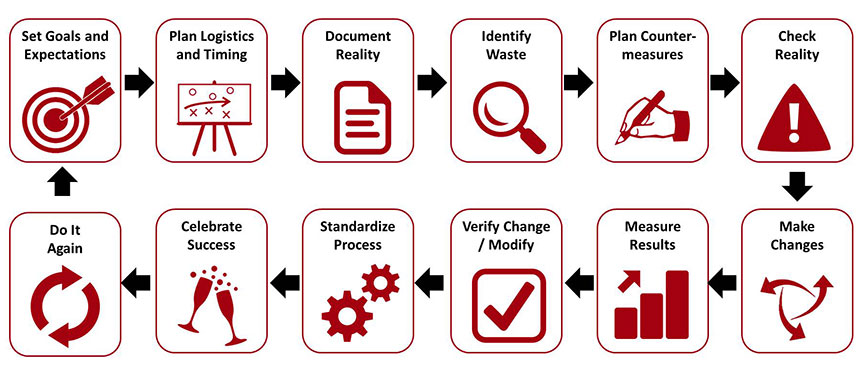
Districts describe their work using the language of continuous improvement, capacity building, resource optimisation, and evidence-based allocation—borrowing terminology from industrial production systems designed to manufacture widgets efficiently, to minimise waste, to maximise throughput, to tolerate predictable defect rates within acceptable margins. This vocabulary reveals the underlying logic: education systems increasingly operate as though children are…
-

25 things you can ask for on your child’s IEP
Individualised Education Plans (IEPs) in BC carry significant weight even though they are not legally binding contracts. Schools have policy obligations to follow them, they serve as evidence in Human Rights Tribunal complaints, and they document what your child needs to access their education. The language matters. The framing matters. What gets written shapes what…
-

Scapegoats for austerity: BC education funding excludes disabled children
BC education funding scapegoats disabled children, using collective punishment and performative inclusion to divide parents and maintain austerity.
-

The cost of saying ‘change costs nothing’
Long before it became common sense, the spherical shape of the Earth was already known. Astronomers, mathematicians, and navigators across multiple ancient cultures—within the Hellenic world, in ancient India, in Islamic scholarship—had measured the Earth’s curvature, calculated its circumference with remarkable accuracy, and built navigational systems that depended on that knowledge. This was not speculative…
-

When schools ask disabled children to accept being hurt
I used to have a pretty good dialogue with my kids, before they experienced a lot of institutional harm. The conversations flow less freely now and less seldom, but back then, we chatted a lot and I often recorded the conversations, for proof, having experienced enough gaslighting from the district to know I wouldn’t be…
-

School discipline in British Columbia: what parents of disabled children need to know
In British Columbia, school discipline is usually described as a neutral, even benevolent process. Brochures reassure parents that discipline is not punishment, that it teaches self-control, and that consequences help children learn responsibility. The Vancouver School Board’s Discipline at Home and School guide follows this script exactly. It explains that: On paper, this sounds reasonable.…
-

When children write the rules
The teacher’s letter arrives home with careful reassurances about fairness, dignity, and professional expertise, yet embedded within its polite paragraphs sits a fundamental contradiction: the rules governing this seventh-grade classroom emerged from the crowdsourced preferences of twelve-year-old children rather than from pedagogical research or developmental understanding. Ah yes, the wisdom of crowds—particularly effective when the…
-

When provincial bodies dismiss parental expertise: POPARD, sticker charts, and the refusal of heterogeneity
In the previous essay, I examined neuroimaging research demonstrating that autism and ADHD are not internally homogeneous diagnostic categories but rather contain multiple neurologically distinct subgroups, often with opposite patterns of brain structure alterations relative to controls. The Pecci-Terroba study reveals what categorical intervention logic refuses to accommodate: diagnosis alone cannot determine whether a specific…
-

Three contexts, one experience: why autism debates fracture
The fracture happens before anyone finishes speaking. One person describes autism as neurological difference observable through brain imaging and cognitive testing; another person describes autism as diagnostic category that unlocks resources within rationed systems; a third person describes autism as lived experience of navigating a world built around neurotypical assumptions about communication, sensory processing, and…
-

The return of functioning labels: How austerity turns advocacy into competition
A parent recently posted about profound autism, describing the experience of having her son’s reality erased when people say that “profound autism” doesn’t exist. Her frustration is legitimate—parents of children with intensive, lifelong support needs face profound institutional abandonment, and “profound autism” names a reality that deserves recognition and resources. But her post also illustrates…
-

A multi-lens analysis of accommodation denial in BC Schools
When the school handed me a garbage bag filled with jackets at the end of the year, it was evidence of a failed executive function accommodation. When I was handed a box containing hundreds of dollars of fidgets, it was evidence of a regulation accommodation that had been denied. There’s a lot of reasons an…
-

Why teachers cannot be trusted to explain accommodation denial
When my daughter reported that boys were harassing her through the bathroom door and the principal responded by telling her to return to class, the institutional response positioned her as the unreliable narrator—the one whose testimony required verification, whose distress could be minimised, whose understanding of harm could be dismissed as misperception or oversensitivity. Disabled…
-

Material witness: objects and architecture in the exclusion of disabled children
When schools perform inclusion while enacting exclusion, the evidence accumulates in objects and spaces, in the material culture of neurodivergent childhood, in the things that were meant to help but became instruments of control, in the architecture that promised safety but delivered abandonment. These are the objects that witnessed what happened to my children in…