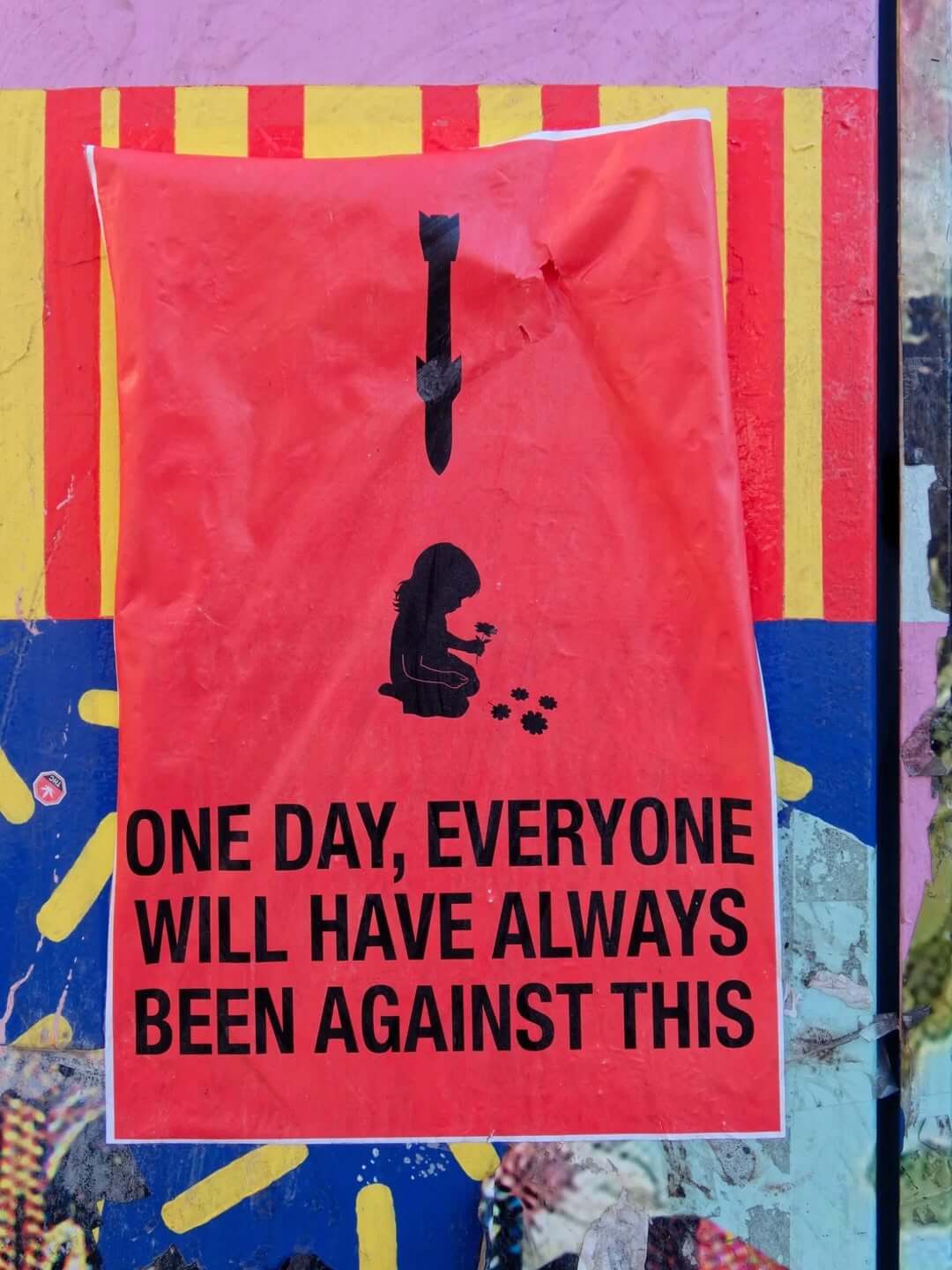
There is a piece of street art circulating depicting a small child crouched beneath a descending bomb, gathering flowers from the ground, and beneath her the words: one day, everyone will have always been against this. That phrase — “one day, everyone will have always been against this” — comes from Omar El Akkad, reflecting on how societies later rewrite their position on atrocities once it’s safe to do so.
I have been quiet for a month, which is the longest I have gone without writing since I began this project more than a year ago, and the silence was not chosen so much as it was arrived at, the way exhaustion arrives — gradually, then completely, like a tide you watched from a distance until it was at your throat.
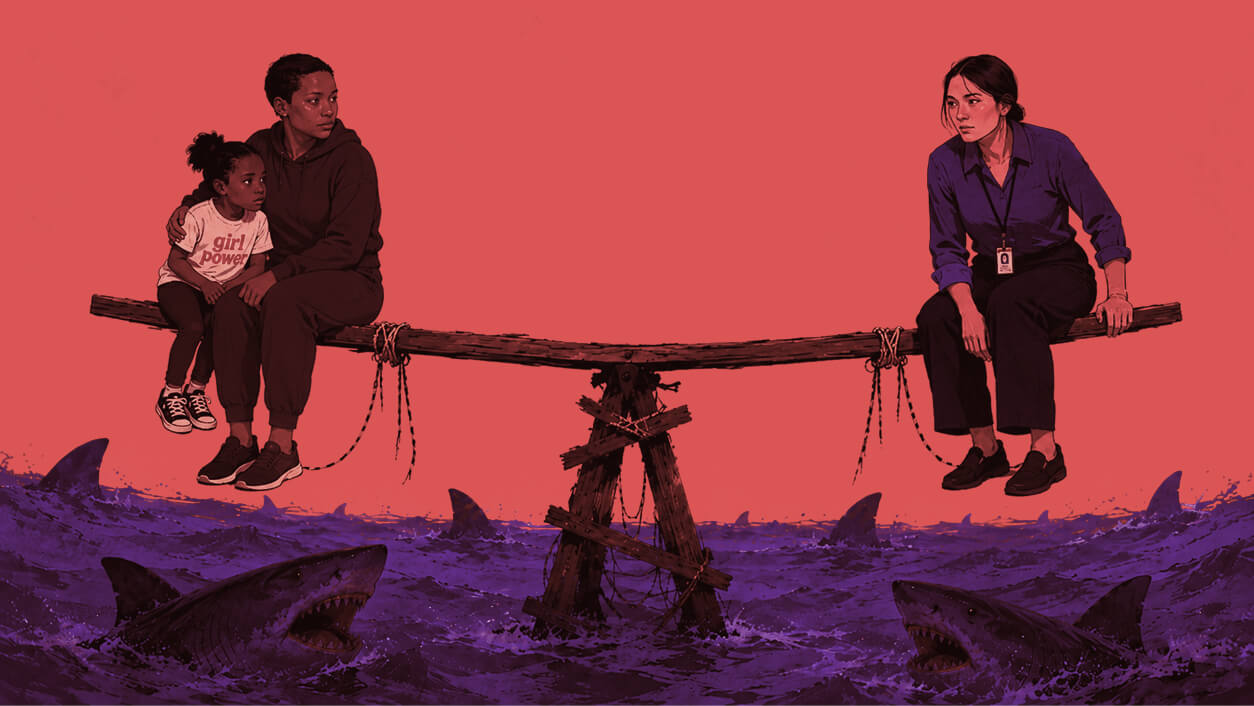
Watching the illegal war perpetrated by the United States and Israel in the Middle East has been heartbreaking. The way violence towards children is normalised in war has always gutted me, the scale of it, the images, the impossibility of looking and the impossibility of turning away. But I am also reminded that there is a quiet war against disabled children in British Columbia that has also been normalised — carried out through paperwork and policy language and the steady administrative reduction of a child’s right to belong, until the disappearance itself becomes unremarkable.
The architecture of slow removal
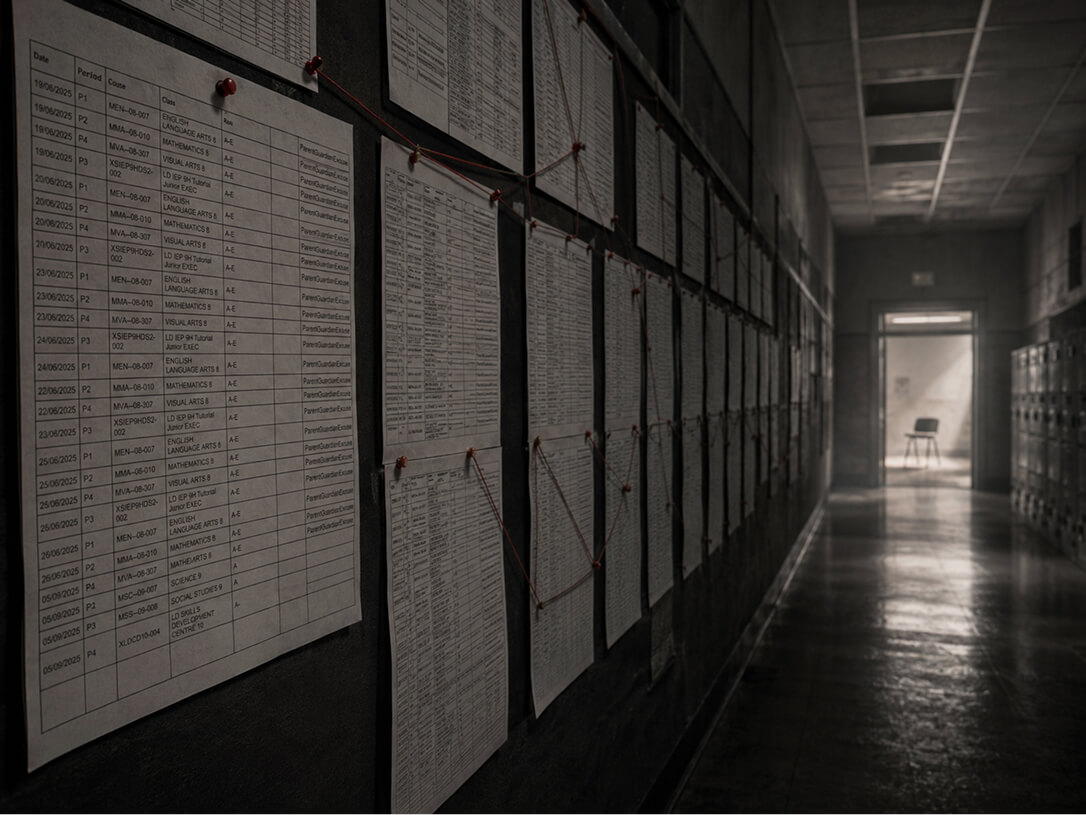
What we document at End Collective Punishment in Schools is often not dramatic. It is procedural. It is the reduction of a child’s school day to two hours, then one, then none, accomplished through meetings and paperwork and the steady, administrative language of support and safety. It is the room clear that empties a classroom of every other child so that one distressed, disabled student sits alone in the wreckage of an environment that was never built to hold them. It is the parent who is told, in carefully worded emails, that the school is doing everything it can, while everything it can looks remarkably like doing nothing at all, slowly, until the family leaves.
This is not crisis. This is strategy.
Jasbir Puar writes about debility as a condition distinct from disability — the deliberate production of populations who are worn down, made precarious, kept in a state of diminished capacity that serves the interests of the systems responsible for their care.
My family has been made precarious, and I am worn down.
What I have witnessed, across district after district, in hundreds of parent testimonies, is the machinery of debility operating inside institutions that describe themselves as inclusive. The slow erosion of access, the attrition of parental capacity, the quiet administrative violence of delay and deflection and containment dressed in the vocabulary of best practice.
The exhaustion is the strategy
There is a time when you are young and in love and you have babies and the world feels like it is expanding exponentially, every milestone a doorway into something larger, every dream for them a room you are already furnishing in your mind. And then the school calls, and then the meetings begin, and then the emails arrive in language so careful it takes you hours to understand what is actually being said, and your reality contracts — the opportunities close off, the invitations stop coming, the future you imagined for your child narrows and narrows until you can feel it shrinking in your chest.
You change. You become someone who reads policy documents at midnight and pens angry emails. You are less interesting now and people ask what you are doing to pamper yourself and you feel furious and feel like you must hide your true self.
And then you watch debility take hold in your child’s body, in their reluctance to leave the house, in the way they stop talking about school, in the shame that settles into a seven-year-old who has learned that their presence is a problem. And you realise that what you are witnessing is not a failure of education but the social determinants of health reshaping your child’s life in real time — that their future is changing and contracting, and that the system responsible for their flourishing is the system producing their diminishment.
Like Canary Collective was saying in Risk Assessment and Liability Management: The Hidden Function of Complaints, exhaustion is the strategy. When a family is ground down to the point where they can no longer attend another meeting, file another complaint, draft another letter to a superintendent who will acknowledge their concerns without addressing them, the system has accomplished precisely what it was designed to accomplish. The child is gone. The file is closed. The record, if it exists at all, reflects a family who disengaged.
This is how social death operates: through the withdrawal of belonging so gradual that each individual step appears reasonable, even caring, while the cumulative effect is the elimination of a child from the public institution tasked with their education. You are welcome here, the system says, as long as you are quiet, compliant, manageable. And when you are none of those things, because you are seven and autistic and the world is loud and no one has provided the accommodations your human rights entitle you to, then you are not expelled.
The revisionism is already underway
One day, the educators who watched will say they always knew it was wrong. The administrators who managed the files will describe themselves as constrained by a system they wished they could have changed. The trustees who voted to approve budgets that systematically underfunded the services disabled children required will express their deep commitment to inclusion. The ministers who redesigned funding models to reduce access will speak movingly about the importance of every child.
We have seen this before. As I discussed in Every bureaucracy overvalues secrecy and undervalues the inevitability of exposure, institutions that suppressed the Bryce Report, that buried mortality data for decades, that fought every disclosure until the weight of evidence became impossible to contain — those same institutions now fund reconciliation programming and publish land acknowledgements as though transparency had always been their intention. The sea change arrived, and everyone repositioned themselves as though they had been swimming toward it all along.
It will happen here, too. One day, the exclusion of disabled children from BC’s public schools will be legible as what it is, and the people who administered it will speak as though they had always been against it.