Imagine being told your child needs a treatment.
Then imagine learning that the research used to sell that treatment was written, overwhelmingly, by people who make money from the treatment continuing.
Now imagine that most of those researchers said they had no conflict of interest.
That is the problem sitting underneath ABA.
A new Psychology Today article highlights a 2026 update to Bottema-Beutel’s research on conflicts of interest in ABA autism intervention journals. The findings are not subtle.
- 78% of authors were paid ABA providers or consultants.
- 93% of studies had at least one author with conflict of interest.
- Only 8% of studies disclosed any conflicts.
- And 93% of statements claiming “no conflict” were false.
The evidence base ABA defenders cite as proof that ABA “works” was built, in large part, by people with direct financial stakes in ABA’s survival — while most of the field’s conflict disclosures told the public there was nothing to see.
This is not a minor paperwork problem. It is bad science.
A conflict of interest does not automatically mean every study is fake. It does mean the field has to answer serious questions. Who decided what counted as success? Who chose the outcomes? Who decided compliance, eye contact, reduced “challenging behaviour,” or outward normalisation should be treated as improvement? Who decided autistic distress, masking, trauma, autonomy, burnout, and long-term psychological harm were secondary or invisible?
And who got paid when the numbers came out in ABA’s favour?
-

Bad medicine: ABA is a poison in the bloodstream of public education
The evidence is no longer merely emerging. It is converging. A national study of privately insured…
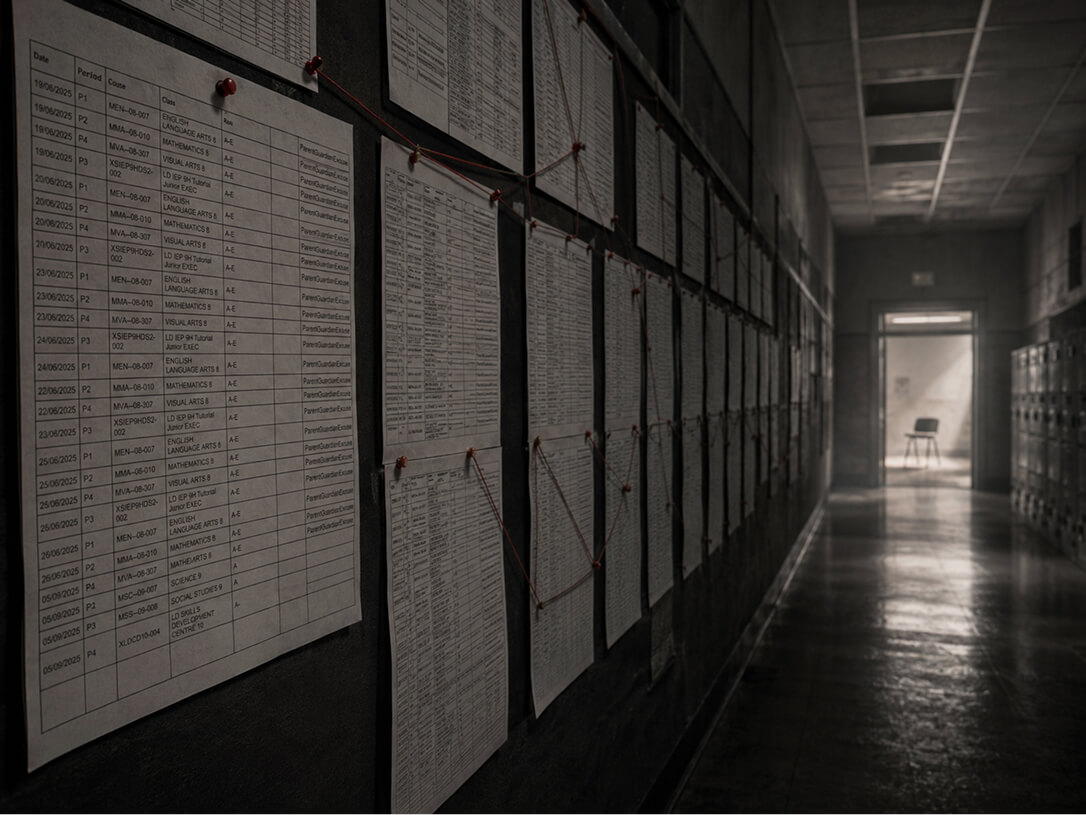
ABA’s logic has seeped into public education. It appears in PBIS systems, behaviour charts, compliance-based IEP goals, “expected behaviour” scripts, safety plans, and documentation that converts distress into defiance. Once that logic enters schools, children are not understood as communicating unmet needs. They are managed as behavioural problems.
That is how a child’s panic becomes “non-compliance.”
That is how sensory overwhelm becomes “refusal.”
That is how trauma responses become “aggression.”
That is how a disabled child gets pushed out of school while the paperwork says the system was providing support.
This is the poison in the bloodstream of public education. ABA is not just a therapy model. It is a way of seeing children — especially autistic and disabled children — through the lens of control. It rewards adults for producing visible compliance, even when that compliance comes at the cost of safety, trust, identity, and self-protection.
And now we have yet another warning that the evidence used to defend this system was not produced from neutral ground.
Five years ago, the field was put on notice. Journals had time to fix this. Researchers had time to disclose. Institutions had time to ask harder questions. Instead, the numbers barely moved.
So the next time someone says ABA is “evidence-based,” the question should be:
Whose evidence? Whose profit? Whose child paid the price?
-

Why sticker charts fail
Sticker charts and other incentive-based systems promise to motivate children through tangible rewards, yet they too often undermine genuine engagement by teaching students to focus on external validation rather than on the inherent value of learning or participation. When a child’s behaviour is…