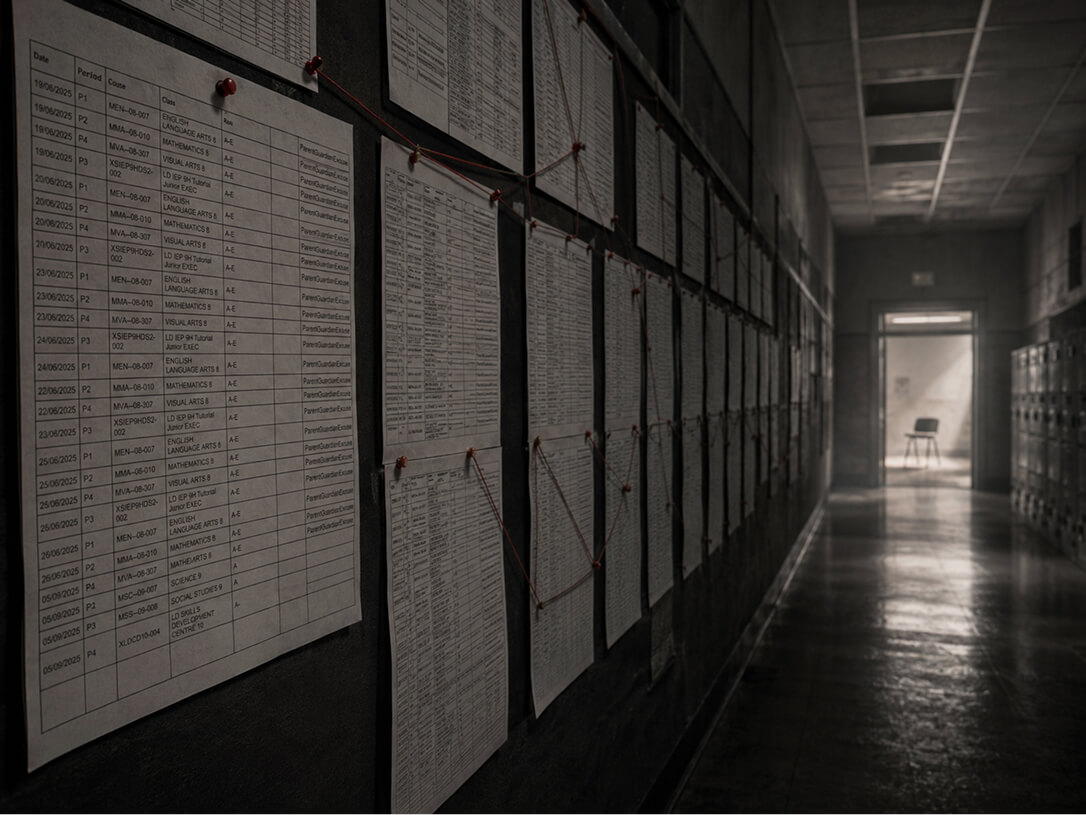
Children already know collective punishment is unfair
A teacher sees one student break a rule and keeps the whole class in from recess. Every parent has heard a version of this story. A 2024 study in Social Development asked the children themselves what they make of it — and the answer is clear. By age six, children judge collective punishment as unfair, and they hold the teacher responsible for choosing it.
The study is Thomas, Kelsey and Vaish (2024), “No one is going to recess: How children evaluate collective and targeted punishment”.
What the researchers did
Seventy-two children aged 4 to 7 took part in classroom scenarios where they were students in a pretend school. Each child got a sticker for coming to class. Then someone broke a rule — drew on the wall, poured paint on the floor — and the teacher responded in one of three ways:
- Targeted punishment: only the rule-breaker lost their sticker.
- Collective punishment: everyone lost their sticker, including the participating child, because of one student’s actions.
- Baseline: everyone broke the rule, and everyone lost their sticker.
This design matters. Earlier research asked children to judge punishments happening to other people. Here, the children were inside the punishment — their own sticker was taken. That is the position every child in a real classroom occupies.
What they found
- Children judge collective punishment as unfair — and the judgment is principled. The 6- and 7-year-olds rated collective punishment as unfair while rating targeted punishment as fair. Crucially, they also rated the baseline scenario as fair: when the whole group broke the rule, punishing the whole group was fine. This rules out the easy dismissal that children simply hate losing things. Children accepted group punishment when the group had earned it. They objected specifically when one child’s actions cost everyone else. Their reasoning centred on who deserved the consequence. Even the 4- and 5-year-olds rated collective punishment in the unfair range.
- The cost lands on the teacher. At both ages, children shared fewer resources with a teacher who punished the whole class than with a teacher who punished only the rule-breaker. The older children said directly that the punishment was the reason. Collective punishment damaged the child–teacher relationship, and the children could explain why.
- The peer-pressure rationale fails. Teachers sometimes defend collective punishment on the theory that classmates will pressure the rule-breaker to behave. The study found no support for this. Children rated the rule-breaking peer the same whether the punishment was targeted or collective. Their view of the peer tracked the rule-breaking; their view of the teacher tracked the punishment. The resentment went up the hierarchy, toward the adult who chose the sanction — and stayed there.
-
Revoking recess as a form of collective punishment
Rules intended for safety become instruments of collective punishment when they erase unstructured play from the school day, compounding distress for children who rely on movement, predictability and sensory regulation. this post examines the disproportionate impact on neurodivergent learners and proposes targeted interventions…
Why this matters for BC classrooms
Collective punishment remains routine in BC schools: whole-class recess loss, group privilege removal, activities cancelled for everyone because of one child’s behaviour. These practices are often defended as efficient classroom management or community-building. This study shows they achieve the opposite. Children experience them as injustice, they trust the teacher less afterward, and the supposed benefit — peers enforcing the rules — fails to appear.
The children in this study were 4 to 7 years old. They already understood deservingness. When a teacher punishes thirty children for the actions of one, the classroom is full of small jurists who have already ruled against her.
Limits of the study
The sample was 72 children in one US university town, predominantly white and from highly educated families, responding to pretend scenarios. The authors note that children in more collectivist cultures may judge group punishment differently, and that real classrooms carry relationships the lab strips out. The study measures how children evaluate these punishments; documenting the harm they do in real schools is separate work.
What it establishes is enough: children’s own moral reasoning condemns collective punishment early, clearly, and for the right reasons.
Read the study: No one is going to recess: How children evaluate collective and targeted punishment (Thomas, Kelsey & Vaish, 2024, Social Development)
-

Collective punishment: how schools displace guilt, erase harm, and preserve the collective
One of the things that was so traumatising about the collective punishment that was callously perpetrated against my daughter was the light and evasive tone of the…