

Legal and ethical
Includes the laws, policies, complaint routes, records, oversight bodies, and accountability tools families use to challenge exclusion, discrimination, delay, denial of accommodation, and procedural harm in schools.
-
12 ways to tell when a crisis at school is really a failure of support, supervision, or repair
The hardest moments to navigate are often the ones that happen in seconds—but have been building for months. A single moment can change everything. A shove on the playground. A child running out the door. A sharp word or a sudden slap. To someone looking in from the outside, these moments can seem like they…
-
Why schools use collective punishment to stay in control
Some of our articles speak in a more academic voice, especially when we’re naming systems that silence or harm. This is a sister essay to Collective punishment: how schools displace guilt, erase harm, and preserve the collective, written as a more accessible entry point for readers who are newer to the topic or looking for…
-
Why outspoken mothers face retaliation for advocacy in BC schools
Some of our articles speak in a more academic voice, especially when we are naming systems that silence or harm within BC schools. This is a sister essay to Epistemic silencing of disabled children’s primary caregivers, written as a more accessible entry point for readers who are newer to the topic or looking for clarity…
-
Flourishing as an ethical imperative
Like many of you, I caught CBC’s Ideas episode the other day, where philosopher Angie Hobbs spoke about the ancient Greek concept of eudaimonia—a term sometimes translated as happiness or welfare, but more richly understood as human flourishing. In a world flooded by crisis, it may seem indulgent or impractical to contemplate the good life,…
-
Coercive proceduralism, bandwidth theft, and the colonisation of neurodivergent childhood
Families of neurodivergent children are often coerced into endless therapy to access school support—yet the harm lies in the institution, not the child. This essay explores how coercive proceduralism and bandwidth theft turn care into compliance, and why rest, not more intervention, may be the most honest path to healing.
-
Procedural policing of pain: what happens if I keen?
Keening—the sad, piercing wails often heard at a funeral for a child—is a human expression, older than the rules we follow or the schools we enter. It is what happens when grief overwhelms language, when memory floods muscle, when there is nothing left but pain. It is not shouting. It is not rage directed at…
-

7 signs your child (or you) is being positioned as the problem to preserve the group
When a parent becomes too precise, too prepared, or too emotionally honest, the school system may cast them—or their child—as the problem. This essay outlines seven signs that scapegoating is being used to preserve group harmony at the cost of justice, with particular attention to how this dynamic unfolds in British Columbia public schools.
-
The compliance economy
In their article Of Sinners and Scapegoats: The Economics of Collective Punishment, J. Shahar Dillbary and Thomas J. Miceli argue that collective punishment emerges not merely as a failure of precision or fairness, but as a deliberate mechanism for preserving internal group cohesion. The scapegoat, must be non-random, visible, and different, and their suffering must be…
-
The goodwill ledger: how schools calculate inclusion allotments
Schools in British Columbia keep an invisible ledger—one that tracks not just budgets, but emotions, tone, and perceived worthiness. Families who ask too clearly, too often, or on behalf of more than one child are quickly marked as overdrawn. This essay continues the meditation from Of Sinners and Scapegoats, tracing how goodwill becomes a currency,…
-
Collective punishment: how schools displace guilt, erase harm, and preserve the collective
One of the things that was so traumatising about the collective punishment that was callously perpetrated against my daughter was the light and evasive tone of the principal. She said that the punishment had to be “swift.” I frequently wondered about the choice to psychologically wound disabled children while treating the infliction of that wound…
-
How do school staff survive while upholding systems that cause harm?
Freyd’s betrayal trauma theory (1996) starts with the idea that trauma is more psychologically destabilising when it comes from someone—or some system—you are dependent on and trust. Abuse by a stranger wounds, but abuse by a parent, partner, or caregiver fractures the psyche at a deeper level because it requires a split: I must ignore what…
-

Maternal grief, public ritual, and the refusal to behave at the IEP table
I have walked into these rooms again and again—across years, with new principals, new case managers, additional complaints filed, subsequent appeals launched, IEPs dusted off and redrafted in the same language that failed last time. The faces change but the ritual remains. Seven professionals already seated, already laughing, already casually shaking off their last meeting…
-
Looking in the mirror is hard: maternal rage and institutional cowardice
I searched for literature that affirms what I know in my body—that maternal rage can be righteous, grounded, and deeply linked to the betrayal of public institutions. But what I found instead was an avalanche of studies examining how maternal anger harms children. The field catalogues the psychological effects of maternal yelling, tracks the correlations…
-

Epistemic silencing of disabled children’s primary caregivers
Epistemic silencing in BC schools discredits mothers’ knowledge, reframes advocacy as aggression, and erases disabled children’s pain, leaving families punished for truth.
-
Still Left Out: a must read for exhausted parents, furious caregivers, and anyone surviving the system
if you’ve ever felt gaslit by the system with all the false positivity and lip service and you want to read something that validate your concerns, Still Left Out: Children and Youth with Disabilities in B.C.—published in 2023 by the Representative for Children and Youth is among the most searing, clear-eyed, and useful reports in…
-
Post-COVID rise of blended classrooms in BC elementary schools
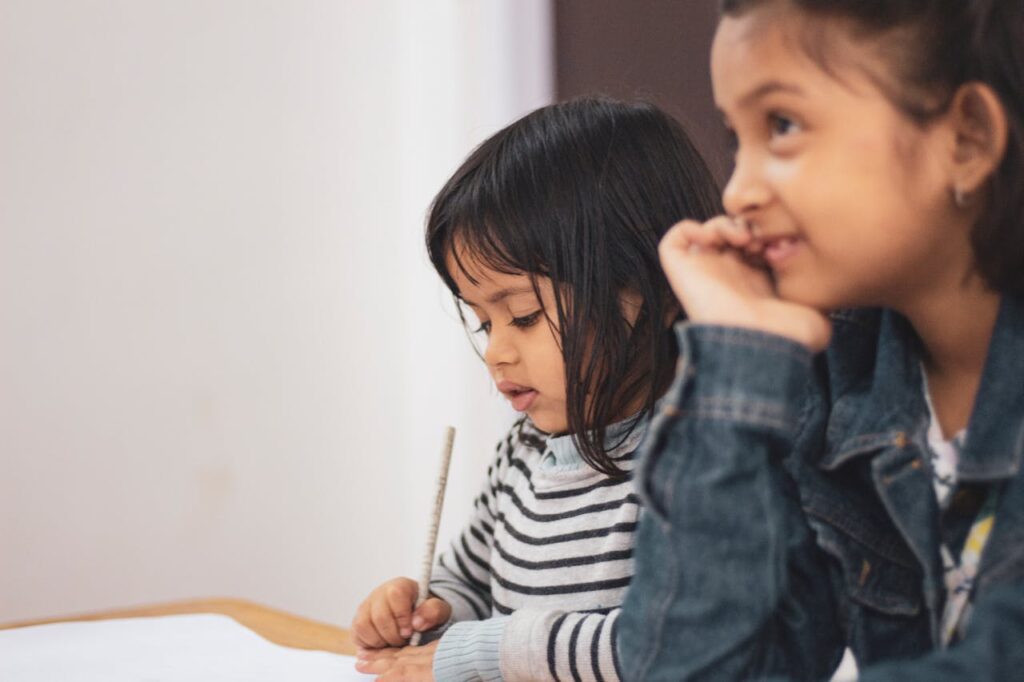
In British Columbia’s elementary schools, multi-grade or “blended” classes (where students from different grade levels learn together) have become more prevalent in the post-COVID period. Educators report that shifting enrolment patterns and funding pressures after the pandemic have led schools to organise more combined-grade classes than before www2.gov.bc.ca. The increase in split classes is largely driven…
-
How schools weaponise growth against disabled students
In the architecture of public education, few concepts are more universally praised—or more fatally misunderstood—than independence. Cloaked in progressive language about agency, resilience, and growth, the independence mandate is often wielded less as a vision for liberation than as a strategy of withdrawal. For disabled students, particularly those who have learned to endure, mask, or…
-
Joy is rationed for disabled kids in school
When disabled children are excluded from field trips, they are being punished for their needs. These joyful, formative experiences become conditional—offered only to those who mask well, follow rules, and cause no disruption. In British Columbia, this widespread practice violates both law and conscience. Inclusion that ends when the bus departs is not inclusion at…
-
Thriving beyond survival: neurodivergence, environment, and disability justice
Every person’s ability to thrive is deeply shaped by their environment. None of us are our best self in a room starved of oxygen – in other words, even the healthiest individual would struggle in an inhospitable setting. This truth is magnified for neurodivergent people (such as autistic, ADHD, or otherwise neurologically atypical individuals) who often face…
-
Why families feel betrayed when they finally reach the school board
An editorial reflection and response to The Canary Collective’s July 29 post When families reach the end of their rope with a school—when they’ve tried everything they can think of and their child is still suffering—the next instinct is often to go higher. In British Columbia, that usually means the Board of Education. The assumption, deeply…