
Legal and ethical
Includes the laws, policies, complaint routes, records, oversight bodies, and accountability tools families use to challenge exclusion, discrimination, delay, denial of accommodation, and procedural harm in schools.
-
A billion-dollar empire and children still in portables
The Vancouver School Board owns 223 properties worth more than $9.5 billion—schools, office lots, apartment units, and even a shopping mall (Postmedia, 2025). And yet every year, we are told there is not enough money to hire enough education assistants. Not enough to renovate a broken bathroom. Not enough to build a school where children…
-

Disgusted with myself: how school advocacy erodes self-compassion
Some days I feel my own face harden, the jaw locking and the air leaving my lungs in a clipped exhale, the eyes narrowing into a refusal that feels like muscle memory. It is the same recoil I have seen across the meeting table, the same signal that too much has been brought into the…
-
When “I hate you” becomes a reflex: understanding PDA, nervous system overwhelm, and emotional repair
Parenting a child with PDA (Pathological Demand Avoidance) demands a kind of relational agility that many of us were never taught. This post explores how communication—tone, language, and emotional presence—can be reimagined as care. There are moments in parenting—especially with children whose autonomy is sensitive and whose nervous systems are already carrying the charge of…
-
On toxic positivity, rationed support, and the betrayal of collaboration
“At the head of the table is almost always the school principal. Not a neutral facilitator, but a gatekeeper balancing limited resources, district priorities, and political pressures.” That sentence from Canary Collective landed in my body like a gavel. It captured what years of documentation, grief, strategic disillusionment, and moral injury have etched into my…
-

How schools plan to fail autistic girls while pretending to support them
In January 2025, my daughter’s school closed her Urgent Intervention Plan with a calm, administrative gesture that belied the violence of what had taken place—not only in the school hallways, but in the documentation itself. It came wrapped in phrases like gradual re-entry, verbal reinforcement, and classroom reintegration, but what it really contained was a careful distortion of…
-

Vancouver School Board’s Urgent Intervention Process – purpose, process, and controversy
The Urgent Intervention Process (UIP) – formerly known as the Multi-Interdisciplinary Support Team (MIST) – is a Vancouver School Board (VSB) initiative designed to provide rapid support for schools dealing with students with extremely challenging behaviours or acute needs. The program was expanded in the mid-2010s as part of VSB’s special education support model, with the stated goal…
-
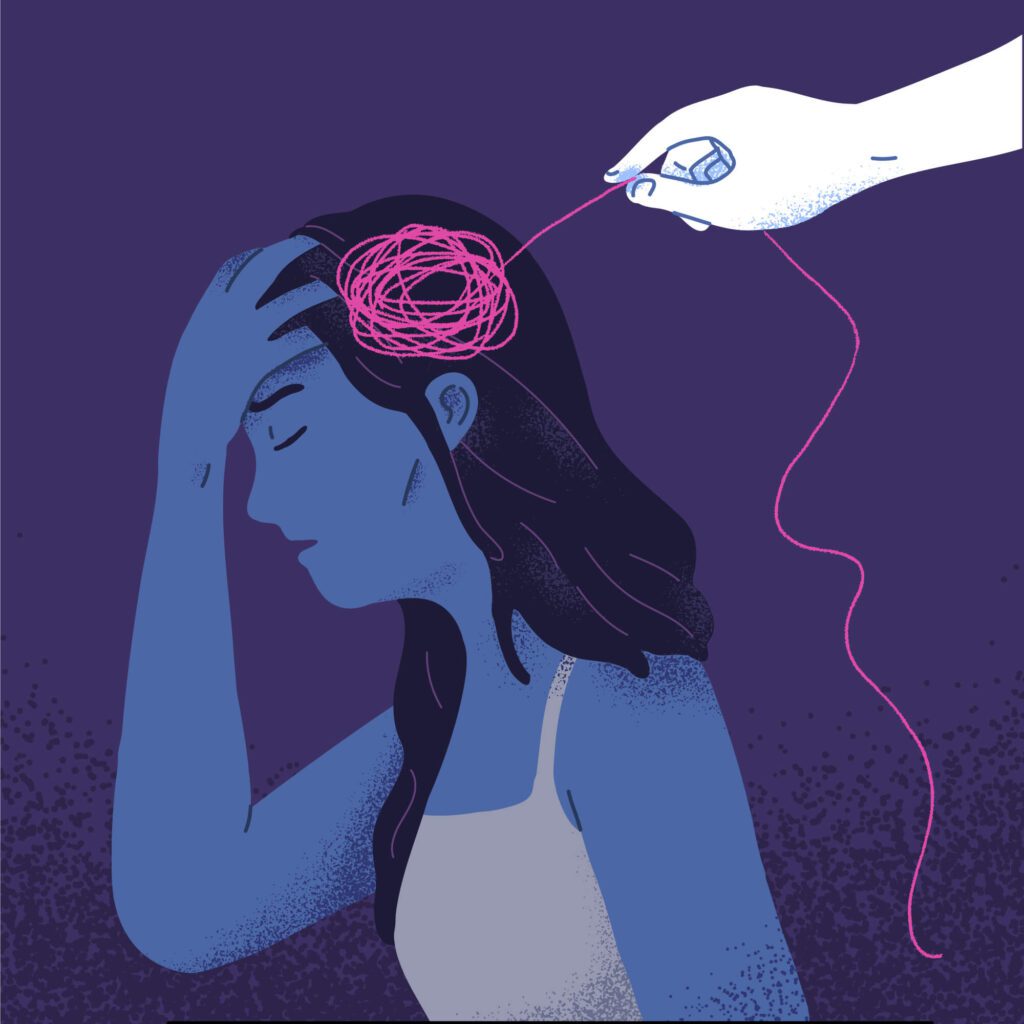
The unseen wounds of advocacy: caregiver burnout, moral injury, and embodied grief
Caregiver burnout in BC schools reflects moral injury and systemic betrayal, as mothers fight exclusion and harm while advocating for disabled children.
-
Compliance discourse vs. disability justice in BC’s education system
Official VSB documents reveal an emphasis on student compliance and disciplinary consequences, with little mention of disability accommodations. For example, the VSB’s District Code of Conduct underscores “a fair and consistent range of consequences, including suspension and change in educational programming, for student misconduct” media.vsb.bc.ca. The Code enumerates expected student behaviours and infractions (e.g. attending regularly,…
-
Shining a legal light on advocacy conversations
How to speak from a foundation of human rights while staying grounded in care. Firm, quietly defiant responses for families navigating school denial, delay, or deflection—centred on Kim Block’s Summer Series on the duty to accommodate. Each tip translates legal obligation into everyday language, illuminating the difference between disagreement and discrimination.
-

Against our will: When ‘support’ becomes institutionalised coercion
I said no. I said it plainly, early, repeatedly. I said it in writing, I said it on the phone, I said it from a place of trembling grief and exhausted clarity. I said it as a mother who had already tried everything. I said it after describing the diagnostic framework, after explaining what worked,…
-
“For your own good”: How schools punish children through food, control, and bodily discipline
Through curriculum, posters, reward systems, and lunchroom rules, schools encode a silent but relentless message: that certain bodies are dangerous, excessive, or deviant. Fat children are positioned as futures to be prevented. Neurodivergent children whose eating diverges from the norm are framed as problems to be solved. The desk that squeezes, the poster that moralises,…
-

Non-coercive, trauma-informed alternatives to PBS/ABA in BC schools
Positive Behaviour Support (PBS) and Applied Behaviour Analysis (ABA) are behaviourist approaches widely used in schools to manage student behaviour. However, a growing chorus of neurodivergent advocates, educators, and researchers highlight that these methods often prioritise compliance and “normalising” behaviour over student well-being rcpsych.ac.uk. By focusing on making neurodivergent children appear neurotypical (meeting neuronormative standards), traditional PBS/ABA can…
-

We’re exploring remedies for discrimination — and we want your feedback
We know that students with disabilities experience disproportionate harm in BC schools. We know that many families carry stories of exclusion, silence, loss, and survival — stories that have never been formally acknowledged, let alone repaired. We believe that no remedy can be effective unless it begins by listening. We’re considering a larger investigation into…
-

On the impossible grace expected in a district appeal meeting
My daughter Jeannie sat in the school hallway for seven months, refusing to go into the classroom until her support needs were met. I filed an appeal in November, and finally—just after spring break—we were meeting to discuss a potential resolution. She’d been through hell last school year, with a boy picking on her and…
-
Collective punishment in schools: How humiliation undermines emotional safety and learning
In classrooms around the world, students are sometimes punished for the misbehavior of others. One student breaks a rule, and the entire class loses a privilege. This practice – known as collective punishment – persists even though it is broadly recognised as unjust. In fact, collective punishment is explicitly banned under Article 33 of the Geneva Conventions…
-

The right amount of agony in BC schools
After watching my children endure eight years of institutional failure, eight years of exclusion disguised as discipline and support withheld under the language of inclusion, I have come to several conclusions. Certain forms of suffering—like being agonised inside—do not draw support because they do not disrupt the adult’s flow, do not demand intervention with noise…
-

The history of this website
What began as one mother’s refusal to accept the institutional cruelty of collective punishment has grown into a vast, strategic, and emotionally searing archive—a living infrastructure of truth-telling and resistance, built from grief, fuelled by clarity, and shared in solidarity with every family navigating harm inside a system that punishes children for being disabled.
-
Debility is not a diagnosis: What Jasbir Puar helps us see about invisible harm in BC schools
There is a category of harm that most institutions do not name, do not track, and do not treat—because doing so would require them to admit that they caused it. This kind of harm accumulates in the body slowly, like sediment, until what once looked like coping becomes collapse. It is the product of chronic…
-

On masking and self regulation
One of the most surprising and disorienting lessons I’ve learned—through parenting neurodivergent twins, through surviving the school system alongside them, and through slowly unmasking myself—was this: You can’t fake regulation You cannot breathe slowly enough, sit still enough, or smile warmly enough to convince a child you are calm when your nervous system is in…
-

On the tyranny of majoritarian sentiment
in 2021, The Vancouver School Board commissioned a third-party firm, Argyle, to engage students, families, educators, and community organisations in a trauma-informed review of its School Liaison Officer (SLO) program, which placed uniformed police in schools. The study found that while many respondents were unfamiliar with the program or viewed it positively, the research found…