
Legal and ethical
Includes the laws, policies, complaint routes, records, oversight bodies, and accountability tools families use to challenge exclusion, discrimination, delay, denial of accommodation, and procedural harm in schools.
-
The affective architecture of room clears
Room clears should be rare. In adequately resourced classrooms with sufficient staffing, with educational assistants trained in co-regulation, with adults who understand that compliance is not wellness and frozen silence is not calm, most crises could be prevented or held without architectural intervention. But British Columbia schools operate under manufactured scarcity, austerity politics disguised as…
-

The architecture of absence data in Canada
A CBC investigation maps the landscape of what we choose to measure and what we choose to obscure, revealing a system where the simple act of knowing why children disappear from classrooms becomes an exercise in bureaucratic endurance calibrated toward opacity rather than understanding. The cost of transparency The investigation documents a routine that families, journalists, and…
-

Justice and dignity too expensive for BC NDP
In 2018, experts told BC exactly how to fix special education funding. The government has spent five years “consulting” instead. Meanwhile, your child sits in hallways. The 192% problem nobody wants to fund Between 2015 and 2024, autism designations in BC schools exploded by 192%. Total student enrolment? Up just 11.6%. The province knows this. They…
-

When delay becomes policy: British Columbia’s strategic abandonment of disabled students
In 2018, an independent panel reviewed how British Columbia funds kindergarten through grade twelve education and recommended a prevalence model for special education funding, a shift that would allocate resources based on statistical prevalence of disability within the general student population rather than on individual diagnostic designation. The proposal threatened to expose what the existing system carefully…
-
VSB’s accessibility plan: more marketing than meaningful change
The Vancouver School Board has released its Accessibility Plan for 2025–2028, a document that positions itself as a forward-looking commitment to equity, belonging, and barrier removal, offering warm assurances about inclusion while presenting a polished institutional narrative that feels carefully tuned for public confidence rather than rooted in the depth of community experience. Families who…
-

Teachers deserve compensation commensurate with the complexity of their labour
The research confirms what every parent already knows: teaching requires orchestrating dozens of simultaneous human variables inside conditions designed to foreclose success, and the work demands relentless cognitive precision, emotional attunement, and adaptive improvisation across every minute of every day. A classroom contains children processing information at radically different speeds, carrying wildly disparate skill foundations,…
-

Children as witnesses in institutional spaces
Children do not match the institutional fantasy of the perfect witness. Schools expect crisp chronology, tidy sequencing, and emotion-free narration. What children offer is perception—sharp, immediate, and grounded in the sensory truth of what happened. I learned this when my daughter was still in elementary school, when a playground supervisor grabbed her arm, twisted it…
-
Government funding for education fails to keep pace with known needs
The Education and Childcare Estimate Notes 2025 reveal a province experiencing an enormous rise in disability designations while preparing the minister with polished assurances that gesture toward progress, equity, and commitment, and this dual presentation of crisis beneath a veneer of stability creates a document that tells two stories at once: one whispered in the…
-

Positive behavioural interventions and supports: a behaviourist rebrand
Positive behavioural interventions and supports circulates through British Columbia’s public schools with a gentle, polished confidence, offering administrators the comfort of matrices and fidelity tools, offering families soothing language about positivity and predictability, and presenting itself as an enlightened evolution of schoolwide discipline, yet what I see each time I study its structure is the…
-
The behaviourist spine of BC’s urgent-response systems
In Urgent behaviour intervention teams in major BC school districts I shared research which identified the intervention teams in many of the larger districts in BC, describing their processes and roles, mostly in the language that they describe their services. This essay attempts to analyse those systems through a disability-justice lens, revealing how roles, processes,…
-

Why the SD23 suspensions report matters for exclusion analysis
While I was looking for more disclosures from school districts to the Ombudsperson, I stumbled on this older document that summarises suspensions in School District 23. The document offers a valuable complement to the exclusion data disclosed by other districts, because it reveals how disciplinary frameworks operate alongside accommodation-framed removals, and this pairing creates a…
-

What research says about school conduct codes and disabled students
This explainer summarises what a small but influential group of scholars have shown about school discipline policies, student codes of conduct, and how these frameworks disproportionately harm disabled and neurodivergent students. It draws especially on the work of Catherine K. Voulgarides, Russell J. Skiba, Daniel J. Losen, David Osher, and Edward Fergus. Where possible, citations…
-
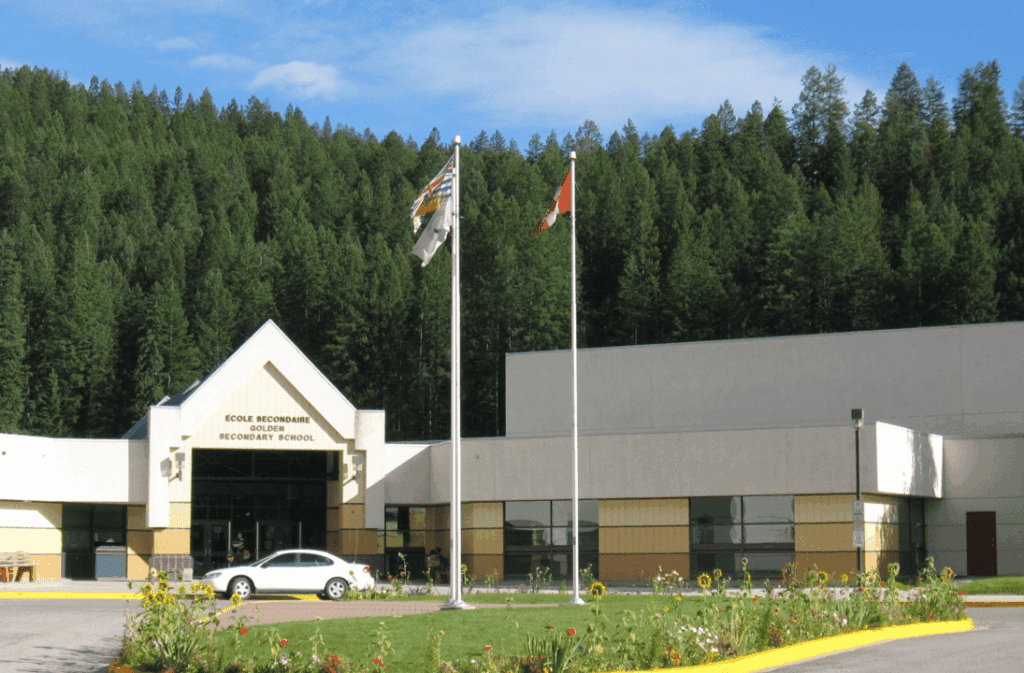
Rocky Mountain School District (SD) inclusion education update
I found an update in the October 14, 2025 board meeting package, starting on page 45. The update opens by outlining the provincial model so trustees and families understand the constraints shaping services. BC uses a model created more than twenty years ago, which places most learning support funding into the general per-student allocation. Only…
-

New science on punishment and rewards
A growing body of research from 2023–2025 offers a transformative account of how children learn, regulate, and respond to school environments, because these studies converge on a striking and deeply consequential insight: children learn through stability, safety, and relational reward, while punitive systems generate emotional distress, behavioural escalation, and institutional inefficiency, particularly for neurodivergent and disabled students…
-
Pacific Heights Elementary School (SD36): a neurodiversity-informed policy critique
The Pacific Heights Elementary Code of Conduct positions the school as a community of “learners (curiosity, humility, engagement, wonder, delight, creativity, collaboration, passion)” and emphasises “care for self, others, and the environment,” framing positive relationships as “foundational to learning.” This aspirational preface signals a relational ethos. Yet the operational sections reveal a blend of restorative…
-
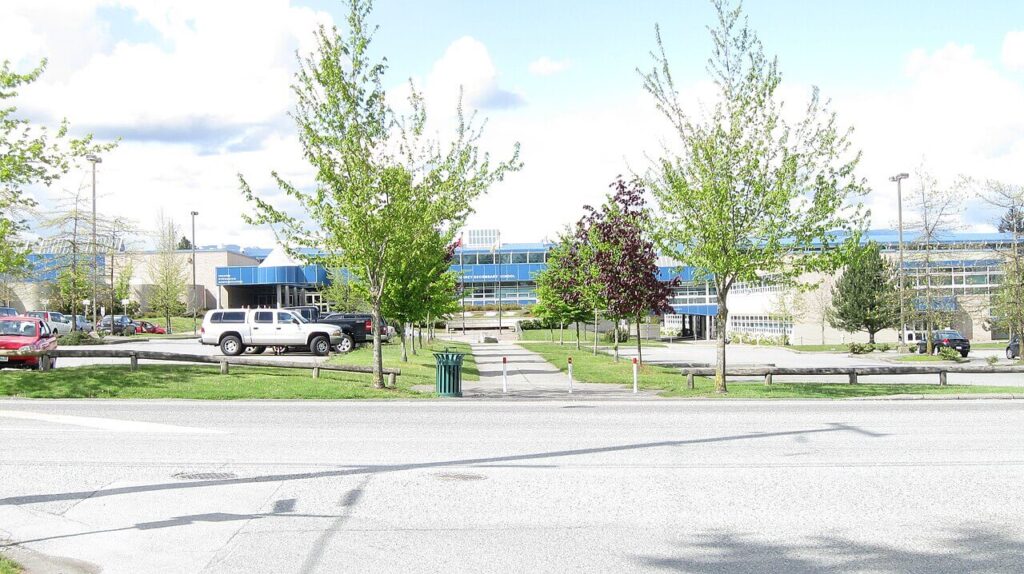
North Surrey Secondary (SD36): a neurodiversity-informed policy critique
North Surrey Secondary’s 2024–25 Parent/Student Handbook presents itself as a practical guide to daily school operations, but its conduct code reveals a disciplinary framework anchored in behavioural control, punctuality, and compliance. Its language reflects a pre-neuroscience understanding of student behaviour, one that frames regulation as obedience, distress as misconduct, and support as conditional upon conformity.…
-

Why the evolving understanding of childhood terrifies systems built on scarcity
Children now arrive at school shaped by homes that honour physiology over performance, autonomy over obedience, and co-regulation over fear, and this shift grows from a decade of relational neuroscience, trauma literacy, sensory understanding, and disability justice that families have absorbed far more quickly than schools, which leaves discipline ideology standing on crumbling ground because…
-
Neural evidence exposes the steep cost of sacrificing vulnerable children to punitive myths
Neural evidence from Altered Neural Responses to Punishment Learning in Conduct Disorder offers a precise account of how punitive school discipline collides with the neurodevelopmental profiles of vulnerable children, because the study shows that punishment learning relies on the anterior insula’s capacity to transform discomfort into behavioural adjustment, and this capacity expresses irregular patterns in the children…
-
Punishment is not a good learning tool
In Altered Neural Responses to Punishment Learning in Conduct Disorder, researchers examined how young people learn from punishment and reward using fMRI and computational modelling, and the findings show that punishment-based approaches produce weak and unreliable learning signals in a significant subset of youth. The study followed 174 young people (ages 9–18) who completed a…
-

Why disabled kids are missing more school than peers
Tara Carman recently wrote an article about rising absences from school and suggested that the trend may be linked to a growing mental health crisis: Why are so many kids calling in sick for school? That explanation captures part of the reality, yet it overlooks a parallel and far more specific pattern that many families…