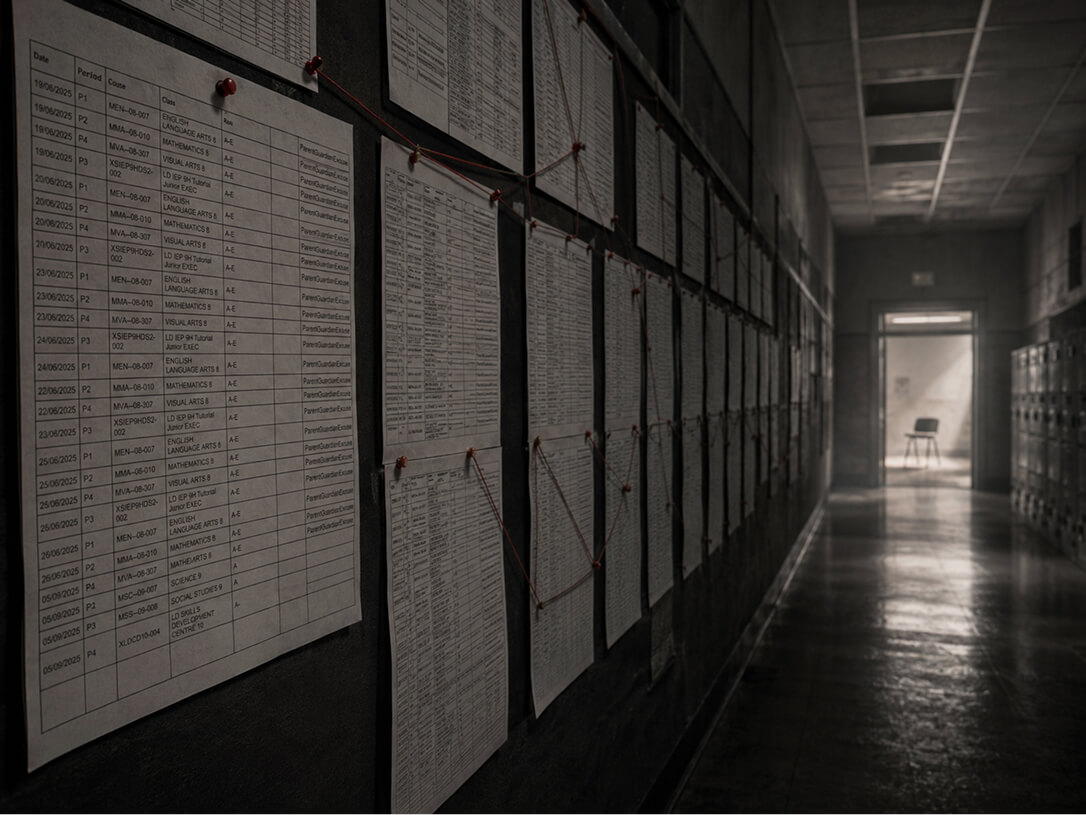
A safety plan is supposed to be a documented, temporary response to a specific, identified risk—a tool for coordinating care when a student’s wellbeing or the wellbeing of others requires immediate attention and structured support; in practice, safety plans in BC schools function as instruments of exclusion, justifying the removal of children from classrooms, the reduction of instructional hours, and the imposition of coercive conditions on families, all without the procedural safeguards that would apply to suspension or expulsion, and all while avoiding the language that would trigger parental rights to appeal or challenge.
What safety plans are meant to be
A legitimate safety plan addresses a concrete, time-limited safety concern through coordination, documentation, and support—never through punishment disguised as protection; it should be written, shared with parents in full, reviewed at regular intervals (typically weekly or biweekly during active implementation), aligned with any existing IEP, and focused on prevention and skill-building rather than removal or restriction.
A safety plan might include strategies such as identifying triggers, teaching self-regulation skills, ensuring access to a trusted adult, modifying sensory environments, or coordinating communication between home and school; it should use the least intrusive measures necessary, prioritise the student’s continued access to education, and include a clear plan for phasing out interventions as the student’s capacity and context stabilise.
The School Act grants schools authority to maintain safe learning environments, but it does not create standalone “safety plan” authority that permits indefinite exclusion, involuntary partial schedules, or the denial of instruction; safety plans operate in a legal grey zone precisely because they sound protective, reasonable, and temporary—even when they function as none of these things.
How safety plans are misused in BC schools
Families across British Columbia report that safety plans are used to:
- Remove a child from class without formal suspension. The child is sent home “for the day” or “until we meet,” but no suspension paperwork is issued, no appeal rights are triggered, and the removal becomes indefinite through repetition and delay.
- Impose partial schedules as a condition of attendance. Parents are told their child can return “once a safety plan is in place,” but the safety plan itself reduces access to education—shortened days, late starts, early dismissals, or exclusion from specific activities—with no timeline for restoration of full instructional hours.
- Shift responsibility onto families without providing services. The safety plan requires parental supervision, one-on-one support at home, or withdrawal from school pending external assessments, effectively offloading the school’s duty to educate onto families who lack resources, time, or legal authority to compel district action.
- Avoid documenting decisions that would create accountability. Because safety plans are framed as collaborative and temporary, schools often resist putting them in writing; when documentation does exist, it uses vague language (“until behaviour improves,” “when we feel it’s safe,” “as long as necessary”) that forecloses clarity, appeal, or review.
When a safety plan results in loss of instructional time, denial of access to peers or curriculum, or pressure on families to accept conditions they did not consent to, it functions as disguised exclusion—exclusion that escapes legal scrutiny precisely because it is never called what it is.
Why safety plans are so difficult to challenge
Safety plans occupy a rhetorical and procedural void that makes them nearly impossible to contest in real time; they sound reasonable, they invoke the language of care, and they position resistance as reckless or adversarial—what parent wants to oppose their child’s “safety”?
But safety plans are not neutral; they encode assumptions about whose safety matters (staff over students), whose behaviour requires management (disabled children over institutional failures), and whose needs can be deferred indefinitely (the child’s right to education over the district’s capacity constraints); they allow schools to avoid naming what they are doing (excluding a student) while requiring families to accept responsibility for solving problems the school created or failed to address (lack of training, inadequate staffing, absence of meaningful accommodation).
Parents are told “this is just a safety plan,” but they experience outcomes that resemble suspension, expulsion, or segregation—outcomes that would require formal process, written justification, and opportunities for appeal if they were named honestly.
What parents can do
If your child has been subjected to a safety plan that reduces access to education, ask for the following in writing:
- The specific safety concern the plan is meant to address
- The legal authority under which the plan is being imposed
- The duration of the plan and the criteria for ending it
- The services, supports, or accommodations being provided during the plan
- The instructional alternatives being offered if the child is removed from class or placed on a partial schedule
If the school cannot or will not provide this documentation, the safety plan is functioning as informal exclusion, and you have grounds to challenge it under the School Act, the Human Rights Code, and potentially the Charter.
Frame your advocacy in rights-based language from the outset; safety plans that deny education are not accommodations—they are violations.
-
Safety plans, billion-dollar scripts, and the harm they keep in place
When a parent hears the words safety plan, there is often a breath held in the chest — a brief hope that the school has recognised the reality of the child’s distress, that they have stepped back to consider what would truly help, that…