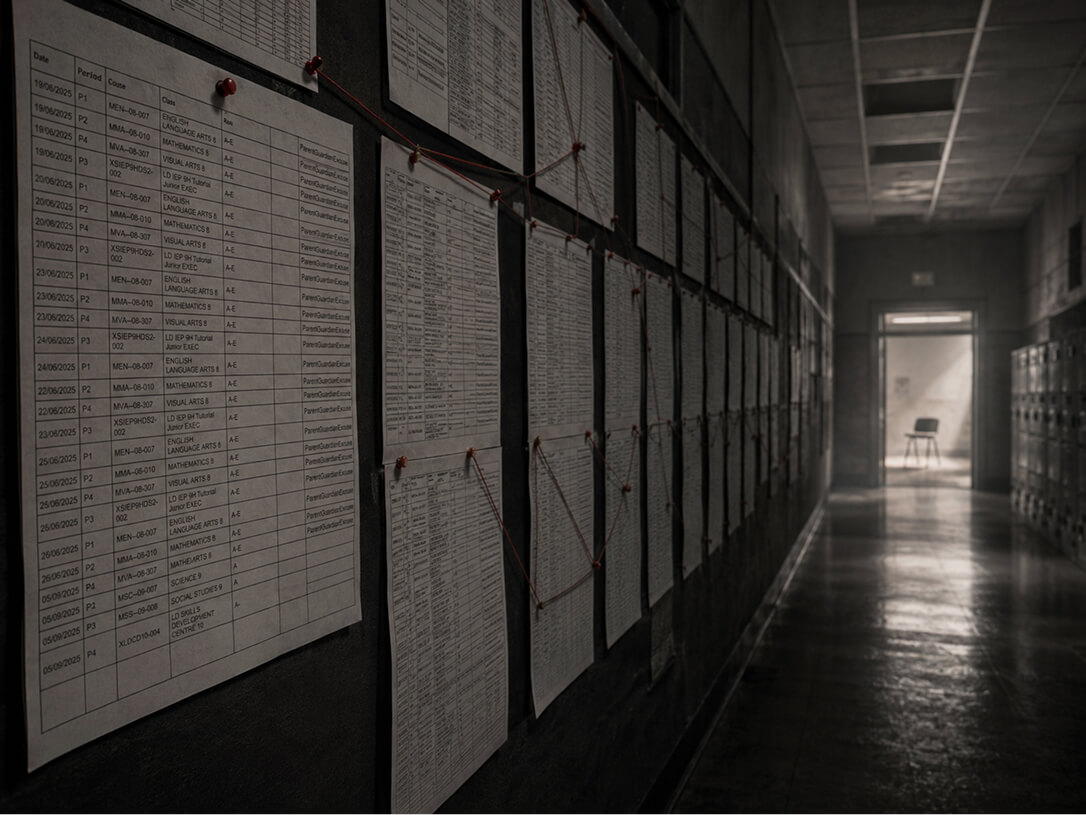
There is a lot of discussion right now about B.C.’s new inclusive education funding checklists.
Some of that discussion is useful. The forms have changed. Some requirements that were previously buried in the Ministry manual are now printed directly on the checklists. That may change how consistently districts document what they are doing.
But families need to be very careful about the frame.
Human rights supersede administrative procedures
A funding checklist is the district’s business process. It is not a human-rights test for your child.
The Ministry needs districts to document certain things before they can report students in particular categories and claim supplemental funding. Fine. That is work the district has to do. It does not follow that your child somehow has no right to support until every box on the district’s administrative form has been checked.
This is the business process trap.
A parent says: My child is disabled and cannot meaningfully access school this way.
The institution replies: Here is how our designation process works.
And suddenly the parent is spending Saturday night reading funding manuals, comparing assessment requirements, learning categories, and trying to establish whether the school completed the right paperwork.
Oops. Their business process is showing.
The actual human-rights question is different. Schools are public services. Where disability is creating a negative effect on a child’s access to education, schools have a duty to take reasonable steps to accommodate it. The BC Human Rights Tribunal describes the issue for disabled students as meaningful access to educational services.
That does not mean every requested accommodation must be provided exactly as requested. It does mean “we cannot claim this designation” is not, by itself, an answer to “how will you remove this disability-related barrier?”
Funding categories are just that
The funding story is also routinely flattened. Supplemental inclusive education funding is allocated to boards, not placed in an individual child’s account, and it sits within a much larger provincial funding system.
This is where documentation asymmetry becomes powerful.
The school’s forms, eligibility rules, staffing processes, and funding codes are treated as objective facts that families must organise themselves around.
Meanwhile, the child’s exhaustion, inability to attend, sensory distress, masking, shutdown, loss of functioning at home, or escalating fear of school can be treated as subjective family information requiring ever more verification.
The institution’s paperwork becomes reality.
The child’s experience becomes evidence still under review.
We have seen this pattern before. Families are required to keep proving need while institutions explain process. The more fluent we become in their administrative machinery, the easier it is to forget that their machinery was never the thing our children were supposed to have access to. Education was.
So yes, learn about the new checklists if it helps you advocate. We are analysing them too.
But do not let somebody hand you their internal compliance problem and convince you that it belongs to your child.
If a school says:
“Your child doesn’t meet the designation criteria.”
A useful response is:
“I understand that may affect the district’s funding or reporting process. What disability-related barrier have you identified, and what are you putting in place to address it?”
If they return to the checklist, return to the child.
If they return to funding, return to the child.
If they explain how difficult the paperwork is, you can sympathise.
And then return to the child.
Their job is to manage their business processes. Your job is to advocate for your child.