For years, families have been told that schools are inclusive, that supports are needs-based, that ministries are working together, and that children will not be left behind—a cascade of institutional reassurance designed to function as substitute for material reality, the kind of language Sara Ahmed describes as non-performative, words that announce commitment precisely because they do not have to enact it.
The structure tells a different story. Schools are underfunded. Autism funding is being redesigned in a way that ends the current diagnosis-based program, and many level 1 and level 2 autistic children appear likely to lose access to the kind of direct, predictable support their families have relied on—because the province has decided that narrowing eligibility is easier than expanding the funding envelope to meet the population whose growth it has already documented.
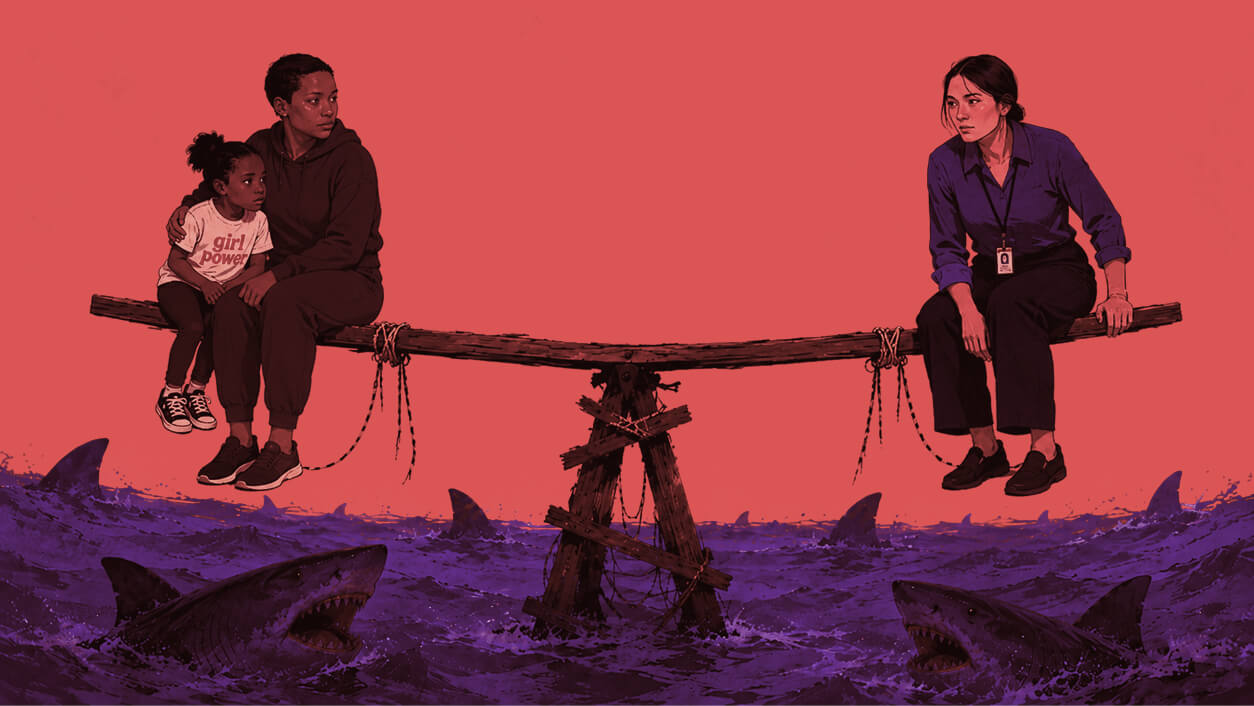
That is a transfer of public responsibility onto private households, which is to say: a transfer onto women, who are expected to absorb what the province will refuse to fund, who become the unpaid infrastructure holding disabled children inside a system that was never built to include them in the first place.
The province knows need is rising
The government must acknowledge what its own data shows. The Ministry of Education and Child Care’s materials show that autism designations in BC public schools rose by more than 192% between 2015/16 and 2024/25, while overall enrolment rose by only 11.6%—a rate of growth so steep that any claim of unexpected pressure reads as cynical.
The same materials acknowledge that savings from declining enrolment are expected to be offset by growth in higher-cost student categories, especially inclusive education designations, which means the Ministry already knows that the needs in classrooms are rising faster than the funding model was built to carry and that the existing structure is inadequate.
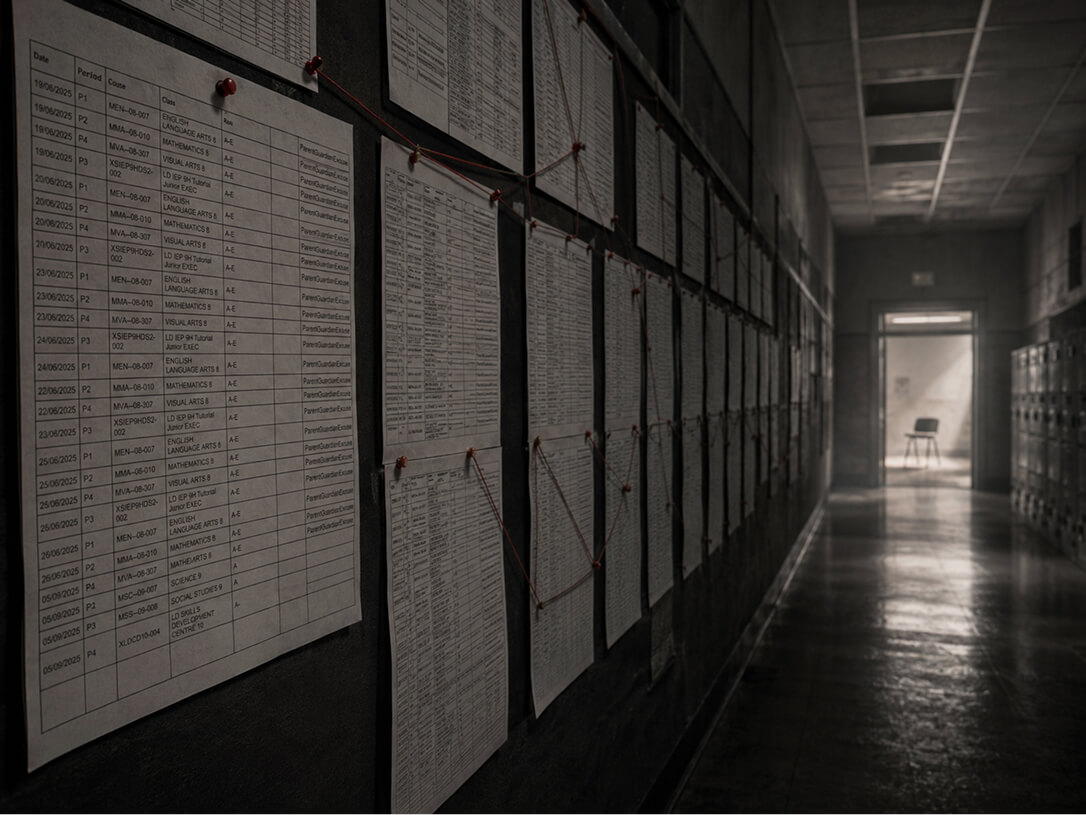
That matters because autism funding is being changed inside a school system already stretched by disability-related need and inadequate staffing, where educational assistants are shared across multiple children, where learning support is rationed, where behaviour is managed through removal rather than accommodation, and where absence becomes the quiet administrative record of exclusion.
Families are trying to keep children regulated enough, supported enough, and connected enough to access school at all—the baseline threshold of inclusion the province keeps deferring until budgets improve.
When a government knows the autistic population is growing faster than the funding structure can absorb, it has three choices:
- expand the funding envelope to meet documented need,
- redesign the model so it actually delivers what children require to participate, or
- narrow who qualifies, to balance their budget.
The BC NDP is choosing the third option, which moves costs off government books and onto the bodies and labour of women.
Reducing autism funding shifts autism need
The province has announced that the existing autism funding program will be replaced by the new BC Children and Youth Disability Benefit and Disability Supplement—language that frames this as expansion when the material reality for many families will be loss.
Government materials say autism funding begins transitioning in July 2026 and ends on March 31, 2027, which means families currently relying on predictable support have nine months to twelve months before that entitlement disappears, replaced by a needs-assessment process that subjects disabled children to the kind of gatekeeping that has always functioned to ration access rather than guarantee it.
The new benefit will provide $6,500 or $17,000 per year for children with significant and/or complex support needs, while a separate income-tested supplement of up to $6,000 per year is expected to begin in July 2027 for families whose children qualify for the federal Disability Tax Credit—a benefit structure that makes support contingent on functional severity, income level, and federal eligibility rather than treating disability support as a social good the province funds because disabled children have the same right to participation as anyone else.
The province frames this as fairness because some children with other disabilities have been excluded from direct funding, and that part is real—BC has long failed many children who are not autistic but still have significant support needs, and expanding support across diagnoses is necessary.
But fairness means funding the full need; taking predictable support away from one group of disabled children to partially fund another is managed scarcity, positioning one marginalised group’s gain as requiring another’s loss rather than acknowledging that the problem has always been inadequate public funding.
The answer to inequity is funding the full population of children whose needs the province has already documented, whose existence in classrooms is empirically visible in the Ministry’s own designation data.
Under the new model, children with the highest functional needs may qualify for the direct Disability Benefit—and “may” is doing significant work in that sentence, because eligibility will depend on needs assessment, documentation, interpretation, and administrative discretion, all of which introduce delay, demand labour from families, and create opportunities for denial that did not exist under diagnosis-based entitlement.
AutismBC’s fact sheet describes level 1 and level 2 autistic children as potentially eligible through a needs assessment pathway if they have significant functional needs, but “potentially eligible” differs sharply from entitled, and “significant functional needs” is the kind of subjective threshold that systems use to ration access by defining need narrowly enough that most children fall just outside it.
For families whose children are autistic but do not meet the new threshold for the direct benefit, the fallback may be an income-tested supplement, community-based services that may or may not exist where the family lives, or nothing meaningful enough to replace what is being lost. That is managed reduction dressed up as programme redesign, the kind of policy transformation that announces itself as fairness while quietly producing loss for the families who can least afford to absorb it.
Level 1 and level 2 means the child still needs support
One of the most dangerous assumptions embedded in this debate is that level 1 or level 2 autism means a child can manage without funded support—an assumption that reveals how little the people designing these policies understand about the relationship between diagnostic categorisation and lived disability. The DSM’s severity levels describe the amount of support required; they measure observable presentation, they reflect what evaluators see in clinical settings rather than what children endure in under-resourced classrooms where sensory overload, social demand, and executive function pressure accumulate across hours until the child who looked fine at 9 am is in meltdown by noon.
A child may speak fluently and still be unable to tolerate the sensory, social, and executive-function demands of school without support. A child may appear academically capable and still melt down after masking all day, their competence purchased at a cost the school never has to see because it happens at home, in the car, in the hours after dismissal when the performance of neurotypicality finally collapses. A child may qualify as “medium need” on paper and still be the child whose mother is leaving work three afternoons a week because the school cannot keep them there, whose educational access depends entirely on whether a parent can be reached by phone, whose inclusion is contingent on someone else’s unpaid flexibility.
A child may look manageable to a budget table and still require counselling, communication support, occupational therapy, assistive technology, or skilled adult support to participate safely and meaningfully—and “safely” here means psychological safety as well as physical safety, the right to learn without being harmed by an environment that treats neurodivergence as behaviour requiring correction rather than difference requiring accommodation.
This is exactly where public systems fail autistic children most predictably. They wait until distress becomes visible—until the child is crying, running, refusing, melting down—then treat the crisis as proof of individual pathology rather than evidence that support was withheld too long, that the system itself produced the harm it now points to as justification for exclusion.
Removing or reducing predictable funding from level 1 and level 2 autistic children just delays support until the cost is larger, the child is more distressed, and the family has already absorbed the damage—which is bad policy if the goal is actually supporting children, but perfectly coherent policy if the goal is moving costs off public budgets and onto private households while maintaining the fiction that schools are inclusive and services are available and no one is being left behind.
Schools are already struggling
The province says supports and funding provided by the education system are not affected by the CYSN changes, and that inclusive education policies and processes remain unchanged—a statement so detached from material reality that it functions as evidence that the people making these decisions have never sat through a school meeting where a child’s need is described in the language of impossibility, where parents are told the child requires more support than the school can provide, where the gap between policy promise and classroom reality is so stark that families learn to stop asking for what their child is entitled to because asking only produces more documentation of how the system cannot meet the need it is legally required to meet.
That is precisely the problem. Families are living inside a school system where support is rationed, where educational assistants are stretched across multiple children, where learning support is thin, where behaviour is managed through removal rather than accommodation, and where absence becomes the quiet record of exclusion—because schools are under-resourced, because the staffing levels required to include disabled children cost money, and because the province has chosen to under-fund the system while simultaneously announcing that inclusive education policies remain unchanged, as though policy could substitute for the actual people and hours and training required to make inclusion real.
The Ministry’s own budget materials acknowledge rising inclusive education designations and recognise that growth in higher-cost student categories is consuming any savings from enrolment decline, which means the system is already telling government that the existing model cannot carry current need, let alone absorb new pressure from families losing direct autism support outside school. So when the province reduces predictable autism funding while leaving school funding structures unchanged, it is pushing more unmet need into classrooms that are already under-resourced, then treating the inevitable failures—the partial days, the calls home, the suspensions, the safety plans that function as managed exclusion—as evidence of individual children’s complexity rather than as evidence of systemic underfunding.
And when schools cannot meet that need, the child is sent home, which is how disability gets privatised.
“Community services” are a substitute requiring navigation, luck, and time
The province also points to expanded community-based services, including behaviour supports, mental health supports, navigation, and early intervention, framing these as the infrastructure that will replace direct autism funding for children who no longer qualify for the Disability Benefit. Government says it is investing $80 million over three years to expand community-based services by more than 40%, which sounds substantial until you consider that this investment has to cover autistic children losing funding plus all children with disabilities who were previously excluded, and that community services—however well-intentioned—differ fundamentally from direct funding, from a family being able to choose a provider, schedule therapy, buy communication tools, maintain a support plan that fits the child’s actual life rather than the programme model the government happens to fund.
Community services can be valuable when they exist where the family lives, have capacity when the child needs them, are appropriate for the child’s disability, are culturally safe, are available outside school hours, require minimal navigation to access, and operate without multi-month waitlists—and that is a lot of conditions for a service to meet, which is why direct funding matters, why entitlement matters, why the shift from “you are eligible because your child has this diagnosis” to “you might be eligible if your child’s functional needs are significant enough and if services exist in your area and if you can navigate the system well enough to access them” is a fundamental transfer of risk and labour from the state onto families.
Families have heard “services will be available in the community” before. Too often, that means the service exists in theory, in a city three hours away, with a waitlist, with narrow criteria, with no transportation, or with a programme model that does not match the child’s needs—and when families cannot access what does not exist, the failure gets recorded as family choice or lack of follow-through rather than as system failure, which is how states disappear unmet need from their own accountability structures while continuing to announce that services are available and no one is being left behind.
Rights are protected by enforceable access, by entitlements that cannot be administratively narrowed, by funding structures that make support predictable rather than contingent—and the shift from diagnosis-based autism funding to needs-assessed disability benefits is a shift from entitlement toward discretion, which means a shift from rights toward charity, from what children are owed toward what families can successfully advocate for if they have the time, knowledge, language, and endurance to fight for it.
This is how public costs become women’s unpaid labour
When support is removed from a child, the work moves. It moves to the parent who reduces hours because therapy now has to be patched together manually, who spends evenings filling out forms, gathering reports, appealing decisions, trying to prove that a child who “only” has level 1 or level 2 autism is still disabled enough to deserve support, as though disability were a performance families had to perfect before the state would recognise it as real. It moves to the parent who gets the school call at 10:15 am, who leaves work when the child is sent home, who absorbs the meltdown after a failed day, who becomes case manager, therapist, advocate, transportation planner, behaviour support worker, and legal researcher because the services that should exist either do not exist or cannot be accessed quickly enough to prevent the harm the child is already experiencing.
That parent is usually the mother—predictably, structurally, because care work is gendered, because women are expected to flex, reduce, leave, absorb, and because the systems that depend on women’s unpaid labour never have to name that dependence as long as mothers keep showing up to do the work the state refuses to fund.
This is the gendered reality behind underfunding, the material truth that policy language works so hard to obscure. Governments cut, narrow, delay, and redesign. Systems call it efficiency. Women call it another unpaid job—and it is unpaid because the work is invisible to the people making budget decisions, because the labour required to keep a disabled child in school, to navigate systems that were built to exclude them, to absorb the failures that schools document but never fix, is work that happens in private, in homes, in the gaps between policy promises and material reality, and therefore registers as something other than a public cost the province should be tracking.
But it is a public cost. The need persists when the funding disappears; it just gets moved off the government’s books and onto the bodies, time, and economic security of the families least able to carry it. Sara Ahmed writes about how institutions distribute damage, how harm gets unevenly absorbed, and this is exactly what she means—the province is redistributing need by narrowing autism funding, pushing it onto mothers whose labour the state treats as infinite, whose economic participation gets sacrificed so that disabled children can remain tenuously included in systems that were never funded adequately enough to include them in the first place.
The BC NDP cannot claim to support women while building child-serving systems that depend on women’s unpaid labour to function. It cannot claim to support disabled children while narrowing direct support for autistic children whose needs are real but may not meet the highest threshold. It cannot claim to support public education while leaving schools to absorb rising disability-related need without the staffing, funding, and accountability required to provide full-day access to the children already there.
The NDP should fund need, period
The NDP’s political problem is that the party is trying to solve one inequity by creating another, narrowing access for autistic children instead of expanding the funding envelope to meet the full population of disabled children whose existence in BC schools is documented, whose needs are baseline requirements for participation.
Children with other disabilities should have had direct support all along. But autistic children should keep their predictable support while government builds the broad, properly funded disability system it failed to create in the first place—and framing this as fairness, as necessary redesign, as modernisation of an outdated programme obscures the material reality that what is being modernised here is cost-shifting, rationing, the administrative infrastructure required to make denial look like policy rather than abandonment.
A rights-based model would start from the real population of children who need support, from the budget required to meet that need. It would fund schools to provide actual access—the staffing levels and training and physical supports required to include disabled children in classrooms without sending them home when their needs exceed what under-resourced schools can manage. It would preserve direct funding where children and families rely on it, because predictability matters, because entitlement matters, because the shift from diagnosis-based support to needs-assessed gatekeeping is a transfer of risk from the state onto families who are already absorbing more than they should have to carry.
It would expand eligibility for children with other disabilities while maintaining support for autistic children, because the problem has always been inadequate public funding and a political unwillingness to tax wealth at rates sufficient to provide the social infrastructure a just society requires.
It would track exclusion, partial days, attendance loss, and unmet need as system outcomes rather than treating them as family problems, because when disabled children lose access to school the system has failed, and that failure should be measured, reported, and made visible in ways that make governments answerable for the harm their funding decisions produce.
It would stop pretending that shifting costs into households is the same as saving money, because the public cost persists when the province narrows eligibility—it returns later as school refusal, family poverty, caregiver burnout, emergency mental health demand, child welfare involvement, lost tax revenue, disability claims, and legal complaints. The work still has to be done. The question is whether the province will fund that work publicly, as part of its responsibility to disabled children, or continue quietly shifting it onto women and calling that reform.
-

My Ollie is missing a lot of school
My Ollie has barely left his room since he came home exhausted from school one day last spring. He slept twenty-three hours a day for months. He barely spoke for months and had difficulty with basic hygiene. School chronically withdrew the supports he…
Stop the cost-shift
The BC NDP should stop privatising the cost of disability support—stop treating women’s unpaid labour as the elastic resource that absorbs every gap between policy promise and public funding, stop narrowing eligibility and calling it fairness when what it produces is loss for the families who can least afford to absorb it.
It should properly fund schools for the disabled students who are already there, because inclusion is a legal obligation the province is required to meet regardless of budget convenience. It should maintain direct, predictable autism support for level 1 and level 2 autistic children who need it, because diagnostic category does not determine suffering and support need should be recognised as real before families have to prove it through crisis. It should expand support to children with other disabilities while maintaining practical help for autistic children, because equity requires abundance and fairness means building upward.
It should measure exclusion and absence as system outcomes, because when disabled children lose access to school the system has failed, and it should be tracked and reported and made visible in ways that make governments answerable for the harm their funding decisions produce.
And it should stop relying on mothers to absorb the gap between public promises and public funding, stop treating women’s labour as infinite, stop building systems that depend on someone else’s unpaid work to hold disabled children inside institutions that were never funded adequately enough to include them in the first place.
The need persists regardless of what the ledger shows. The child is still autistic. The classroom is still under-supported. The therapy still costs money. The school call still comes. The work still has to be done. The only question is whether the province will fund that work publicly, as part of its responsibility to disabled children, or continue quietly shifting it onto women—and if the NDP chooses the second option, it should stop pretending it supports women, stop pretending it supports disabled children, and acknowledge clearly what it is actually doing: balancing the budget on mothers’ backs.
-

BC schools are failing disabled students: an absence analysis
This analysis is based on a provincial FOI request to the BC Ministry of Education, file ECC-2025-52461, which was shared recently, bc BCEdAccess. The data covers absence rates, absence reasons, enrolment, and mid-year exits for BC public school students, broken down by inclusive education…