

Moore v. British Columbia (Education) 2012 SCC 61
Moore v. British Columbia (Education), 2012 SCC 61, is a landmark Supreme Court of Canada decision establishing that students with disabilities are entitled to meaningful access to public education. The Court found that a school district discriminated against a student with dyslexia by failing to provide the intensive learning supports he needed. The ruling confirmed that disability accommodations are essential to equal educational access, not optional extras.
-

When collective punishment becomes disability discrimination
Can a school discriminate against a disabled student by punishing the entire class? The answer may depend on whose behaviour triggered the punishment, how the consequences were imposed, and the impact on the student. Imagine: In both situations, the teacher may believe they are reinforcing expectations or encouraging collective responsibility. The formal consequence applies to…
-

The punishment economy
How collective punishment turns scarcity into compliance The confusing thing about school harm is that it rarely arrives without care. While your child is being excluded, an Educational Assistant is finally assigned. A kind case manager begins sending thoughtful emails. Someone finds a program space you were told did not exist. A teacher sees something…
-
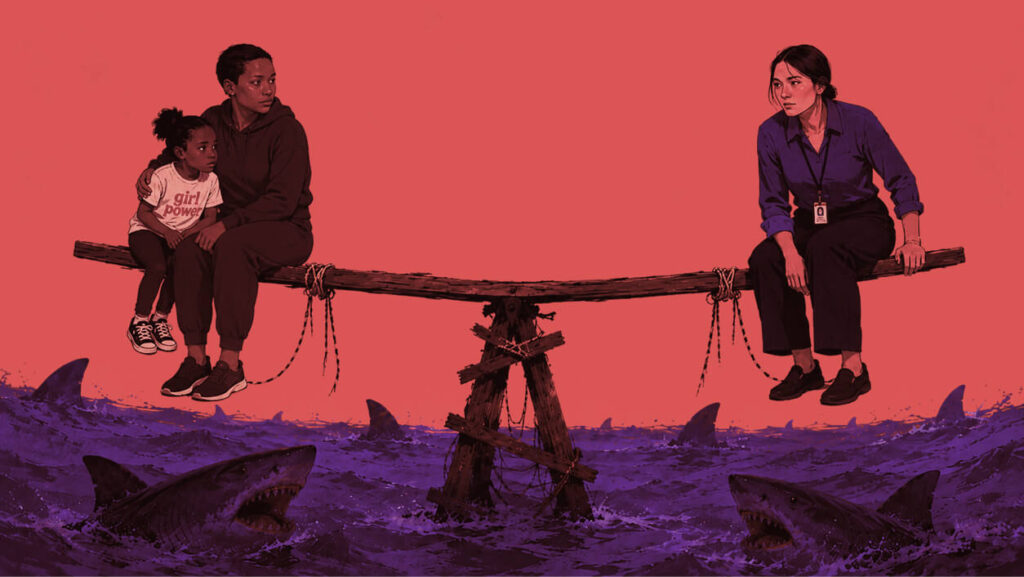
On opposite sides of the same door in BC schools
Families and teachers are describing the same failure from two positions inside it. The system survives by keeping them from recognising each other.
-

Try harder, try different
On the pedagogy of “people are not supports,” the research it misreads, and what happens when an idea is transplanted into a starved system.
-

Iatrogenic harm and the parent advocate: how school systems produce disability in the families they fail
The body keeps the account even when the institution refuses to. What the school system produced in the parent who spent years trying to hold it accountable is not caregiver burden — a word that belongs to the person carrying it — but iatrogenic harm: specific, dated, attributable, and fully known to the institutions that…
-

Sooke School District (SD62) secondary schools: a neurodiversity-informed policy critique
The Sooke School District secondary code of conduct opens with the steady, reassuring cadence of a district reading its own values back to itself: schools are “places for safe, purposeful learning,” conduct is “a shared responsibility of students, staff, parents / guardians and the broader community,” and every member carries an obligation to “support learning,”…
-

Masking and Human Rights law in BC
Autistic students (especially girls) often hide (“mask”) their natural behaviours to avoid peer conflict and “fit in” at school. When educators implicitly or explicitly demand this masking – for example by discouraging stimming or forcing conformity – it can amount to a form of discrimination and harm under BC and Canadian law. This article examines…
-

When one child’s support becomes everyone else’s denial
I bring Robin his meals now. I pour a bath periodically, and coax him in, when too many days have elapsed and a funk has grown pungent from him avoiding the sensory assault or the water on his skin. I manage mess, hygiene, and feeding, even though he is a teenager who should be developing…
-

The business process trap
I’m a business analyst by trade, so I naturally wanted to understand how things work in schools, but resist the temptation to let schools draw you in!!! School districts speak a language designed to obscure accountability, using administrative complexity as armour against obligation, converting urgent need into bureaucratic procedure, and replacing immediate legal duty with…
-
How public schools tax disabled families twice
My son has been home for nine months. The school asks periodically about return timelines, performing care through language. They say they would like to see him back at school. Meanwhile, his nervous system tells a different story: sleep patterns regulating, appetite returning, capacity for joy expanding in direct proportion to distance from their supervision.…
-

School discipline in British Columbia: what parents of disabled children need to know
In British Columbia, school discipline is usually described as a neutral, even benevolent process. Brochures reassure parents that discipline is not punishment, that it teaches self-control, and that consequences help children learn responsibility. The Vancouver School Board’s Discipline at Home and School guide follows this script exactly. It explains that: On paper, this sounds reasonable.…
-
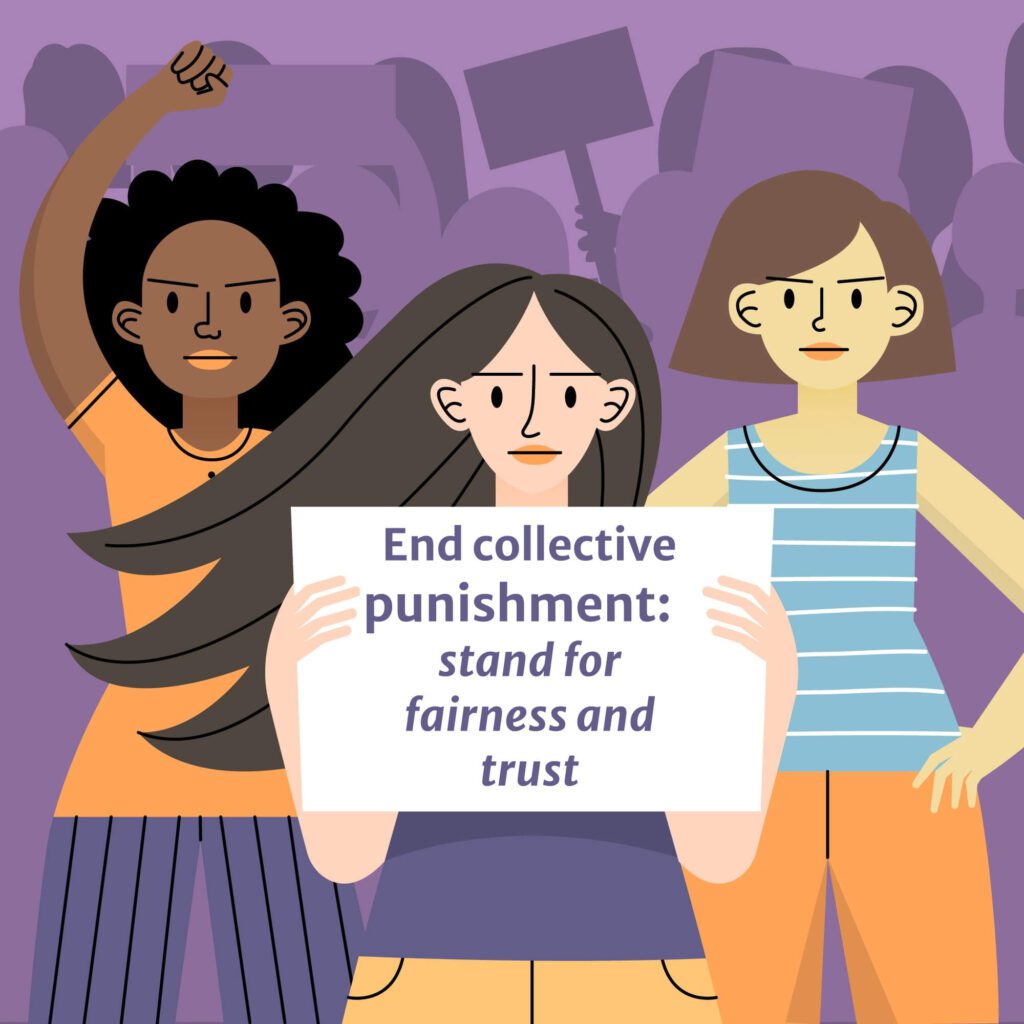
The internet has spoken: collective punishment in schools is wrong
When teachers punish entire classrooms for the actions of one student—when recess disappears because someone talked, when rewards vanish because someone forgot homework, when privileges evaporate because one child disrupted the lesson—students recognise the injustice immediately, and they name it with precision that educators often lack. Across TikTok, Instagram, and Reddit, students, parents, and teachers…
-
The equilibrium of refusal: what a decade of legal spending reveals about BC schools
Between 2012 and 2022, British Columbia’s Schools Protection Program spent $4,420,252.58 responding to human rights claims filed against public schools, according to this FOI release. Of that total, $752,525.34 went to indemnity—settlements and compensation paid to claimants. The remaining $3,635,085.21 funded legal defence. The ratio is precise: for every dollar spent remedying harm, the system…
-

The ethics of counting crisis
I have been packing boxes between paragraphs, writing this series while selling my home—a process shaped by exclusion and the loss of stability that followed my children’s experiences in the Vancouver School District. I approach this work from a lifelong love of data and technology, aware that the same tools I value can create harm…
-

The cost of partial inclusion in schools
I have returned to writing after a long silence—one imposed less by choice than by survival. The move was necessary, a matter of financial gravity after years of lost income entwined with the harm my children endured within an ableist school system. Leaving our home felt like surrendering a life I had fought to sustain,…
-

After Moore: why winning didn’t fix public education
When the Supreme Court of Canada ruled in favour of Jeffrey Moore and his family in 2012, affirming that meaningful access to public education was not a luxury but a legal right for disabled students, it seemed as though the tide had turned. The Court’s decision, rooted in the BC Human Rights Code and later…
-

Advocacy in BC schools: a comprehensive guide for parents
When your child experiences harm in a British Columbia public school—when they are excluded, punished unjustly, denied accommodations, or subjected to practices that violate their dignity—you enter a landscape designed to exhaust rather than resolve, to defer rather than repair, to protect institutional reputation rather than protect children. This guide maps that terrain, naming the…
-

Urgent behaviour intervention teams in major BC school districts
Across British Columbia, many school districts have developed internal teams or programs designed to respond to urgent behavioural situations—such as elopement, aggression, or significant dysregulation—particularly when students are perceived as posing a safety risk or disrupting the learning environment. While these interventions are often framed as supportive or inclusive, families report that they can feel…
-

Nobody is going to thank you
Nobody tells you that you can pour every last scrap of yourself into advocacy and still feel your bond with your child begin to strain. There is a familiar story passed among parents—one in which you step in, do a little advocacy, and watch as the pieces fall into place. The children grow, the challenges…
-

Against our will: When ‘support’ becomes institutionalised coercion
I said no. I said it plainly, early, repeatedly. I said it in writing, I said it on the phone, I said it from a place of trembling grief and exhausted clarity. I said it as a mother who had already tried everything. I said it after describing the diagnostic framework, after explaining what worked,…