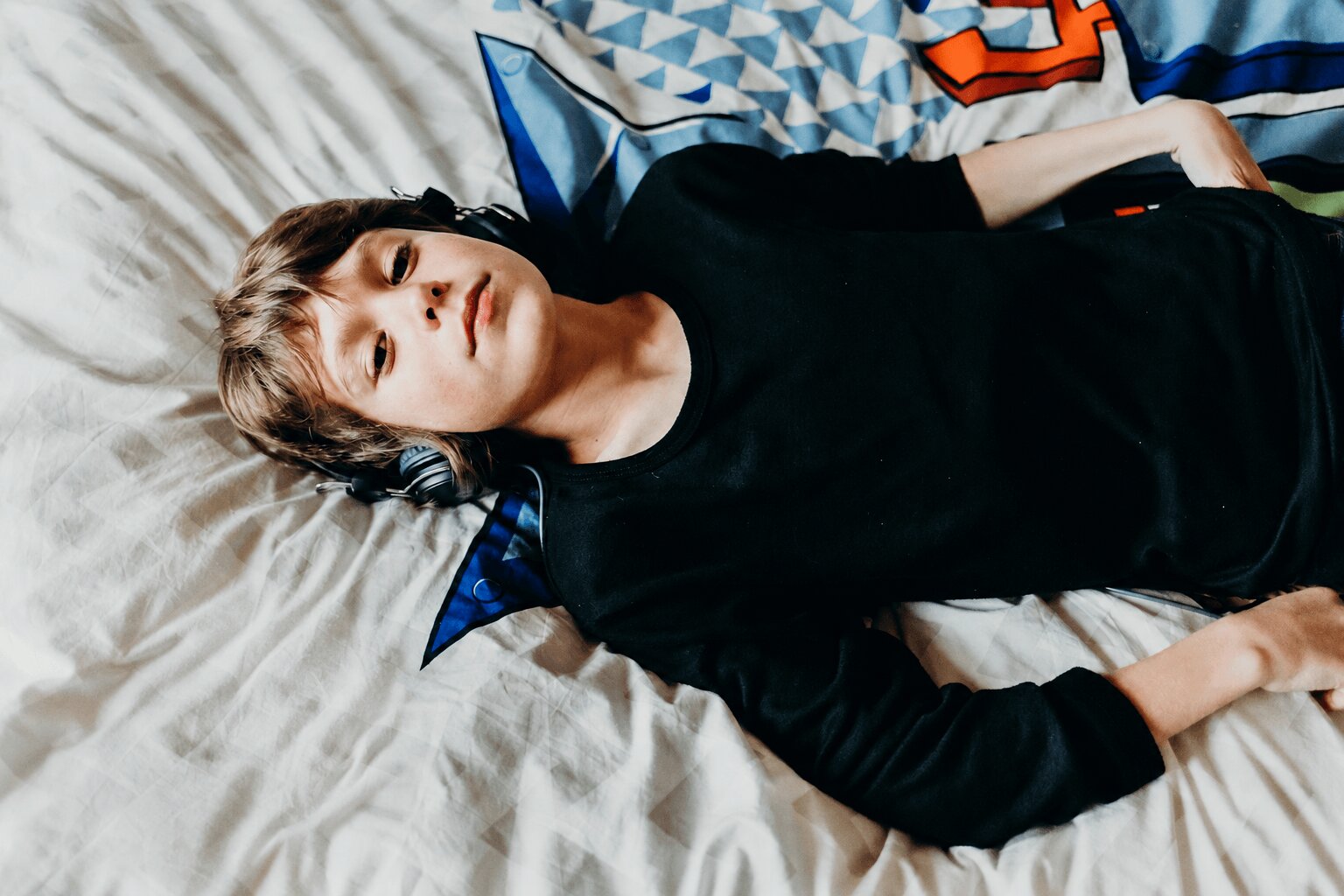
I bring Robin his meals now. I pour a bath periodically, and coax him in, when too many days have elapsed and a funk has grown pungent from him avoiding the sensory assault or the water on his skin. I manage mess, hygiene, and feeding, even though he is a teenager who should be developing independence.
He once explored the world with fierce curiosity. At two, he could describe Egyptian embalming in precise detail that startled adults who did not expect that kind of clarity from someone so young. His interest and intensity scared his peers, marking him as separate. That child—the one who loved learning, who asked questions that spiralled into hours of conversation, who moved through the world with confidence and wonder—no longer leaves his room. He used to love hiking and climbing trees and he won’t even go outside anymore. His body has become so thin and weak.
This is not developmental trajectory. This is institutional harm.
Robin’s nervous system experiences demand as threat. It collapses under coercion and requires flexibility the education system refused to provide. What followed was predictable: punishment, isolation, partial access, escalating trauma, withdraw of support, masking, meltdown, self hatred, and eventual withdrawal from the world. Institutions did this to him, and now they point to the damage as proof that he does not require support. They warmly say they want him back at school, now that is impossible.
I live profound caregiving intensity by any reasonable definition. The fact that Robin can speak, that he understands complex concepts, that his intelligence remains intact even as his capacity to function has collapsed, does not reduce the care he requires. It changes the presentation. It makes the need easier for systems to deny and more convenient to frame as behavioural choice rather than disability they helped insinuate.
The vigilance remains. The labour remains. The totality of care required to keep him safe, fed, and clean remains. Yet the district that should have prevented this collapse now treats the wreckage as evidence of personal choice. Maybe it wasn’t a good fit.
Crying in the car
I am sitting in my car outside the school, waiting for Jean to emerge from whatever has broken today. The windows fog from my breath, from the heat I’ve kept running against damp January cold, from the tears I permitted myself on the drive here.
The phone call came twenty minutes ago—the same tone of administrative efficiency that used to summon me for Robin, back when he still attended school, back when I believed each crisis call might be the last one if I could just find the right words to make them understand.
The crying or screaming in cars has become its own geography, a private territory I’ve mapped across years of emergency retrievals, and I am unmoored by how the fogging glass collapses time, how waiting for Jean now layers over every wait for Robin then, how my body remembers this particular species of dread even as I try to pull myself together because Jean needs me present for her crisis.
Robin has been in bed for nine months. Jean is inside that building right now, alone with whatever happened. I am in between, doing neither right, the cold air through the fogged window biting my damp cheeks where salt has dried, where stress eczema on my eyelids stings with each fast blink.
This is what I know about profound need: it exists across presentations, demands recognition regardless of how disability manifests, and is most often denied by the very systems that claim to prioritise the “most disabled”. Those systems invest heavily in sorting whose disability counts as legitimate and whose can be dismissed as parental exaggeration or diagnostic inflation. That sorting protects budgets and authority. It does not protect children.
The child who gets support
At our school, River had a full-time student support assistant (SSA). He needed one. His presentation requires constant adult proximity, environmental management, and uninterrupted safety monitoring. I learned this through the ordinary intimacy of schoolyard conversation, the quiet information-sharing between parents navigating similar terrain. River’s family advocated. The district provided support.
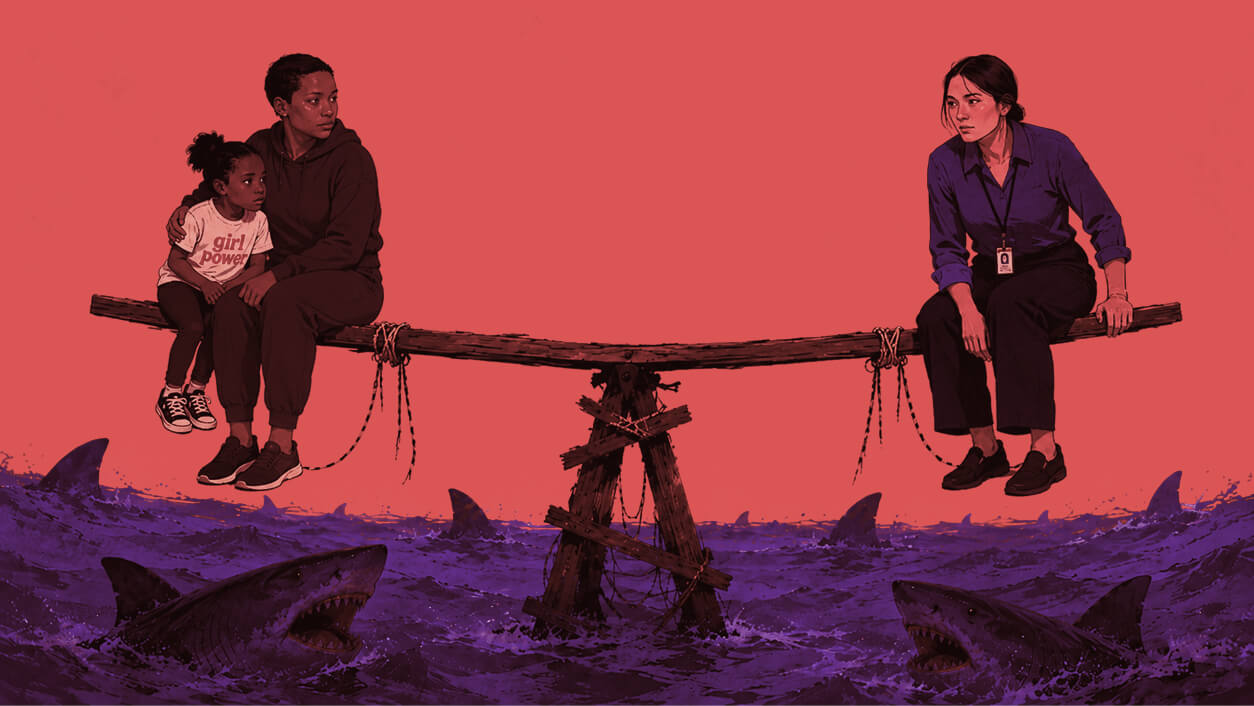
The problem is how the districts positions River’s support within their logic: as proof that the system serves disabled students, meets legal obligations, and provides intensive accommodation when children “really need it”. River becomes the referent case for them. His visible disability and one-to-one support make the district’s commitment to inclusion appear credible. Every other child whose needs do not match his presentation can then be positioned as less disabled, less urgent, and less deserving of resources the district “already provides”.
His SSA becomes institutional alibi.
River deserves everything he receives, and he deserves more than what he actually gets. His family knows this—they know about the bathroom delays, the moments when support falters, the ways even “adequate” accommodation operates at the margins of what their child needs. Consistent support is not the same as ideal support, and the district’s willingness to redeploy his SSA for punishment duty reveals how fragile even his protection is. When I say River deserves his support, I mean he deserves support that is actually consistent, actually adequate, actually sufficient—not support that can be withdrawn whenever institutional priorities shift, not support so marginal that families must remain vigilant against its erosion.
A note on method
This essay examines how school districts use one disabled child’s support to justify excluding others. That examination requires naming River and discussing how his support functions within institutional logic even as it serves his legitimate needs.
This is uncomfortable work. The district’s trap is designed to make any discussion of resource allocation feel like attack: either you’re arguing River doesn’t deserve what he has, or you’re accepting their premise that disabled children must compete for finite support. Both framings prevent structural critique.
I refuse both options.
What the district does with River:
- Uses his support as proof they meet obligations to all disabled students
- Deploys his SSA as mobile punishment resource when convenient
- Points to him as evidence other families’ requests are unreasonable
- Treats his support as finite resource other children threaten
- Frames his accommodation as the ceiling of what they provide
- Emphasises that his support needs are ongoing, while framing other needs as temporary
What this essay does:
- Documents how districts operationalise hierarchy through selective support
- Shows that even “prioritised” support remains conditional and marginal
- Refuses to accept that his support and my children’s are in competition
- Names that the system harms him too, just differently
River deserves his support. My children deserve support. All disabled children deserve support. These claims do not compete. Examining how systems pit them against each other is not argument for redistributing inadequacy—it is argument that adequacy itself must be redefined, expanded, and guaranteed for everyone.
Holding them together requires refusing zero-sum logic: the fiction that supporting one child exhausts the obligation to support others; that funding one SSA eliminates responsibility to fund more; that scarcity is natural rather than manufactured.
The institutional logic revealed
Districts operationalise diagnostic hierarchy through template matching: whose disability fits cultural narratives of profound need, whose presentation is legible as deserving rather than demanding. River’s needs are consistent across contexts, tied to intellectual disability, and cannot be attributed to choice. His presentation protects his family from certain forms of gaslighting. No one tells them he would comply if he tried harder, that he is manipulative, or that accommodation enables bad behaviour. His disability is readable as real, and therefore their advocacy is readable as reasonable.
That legibility serves district interests.
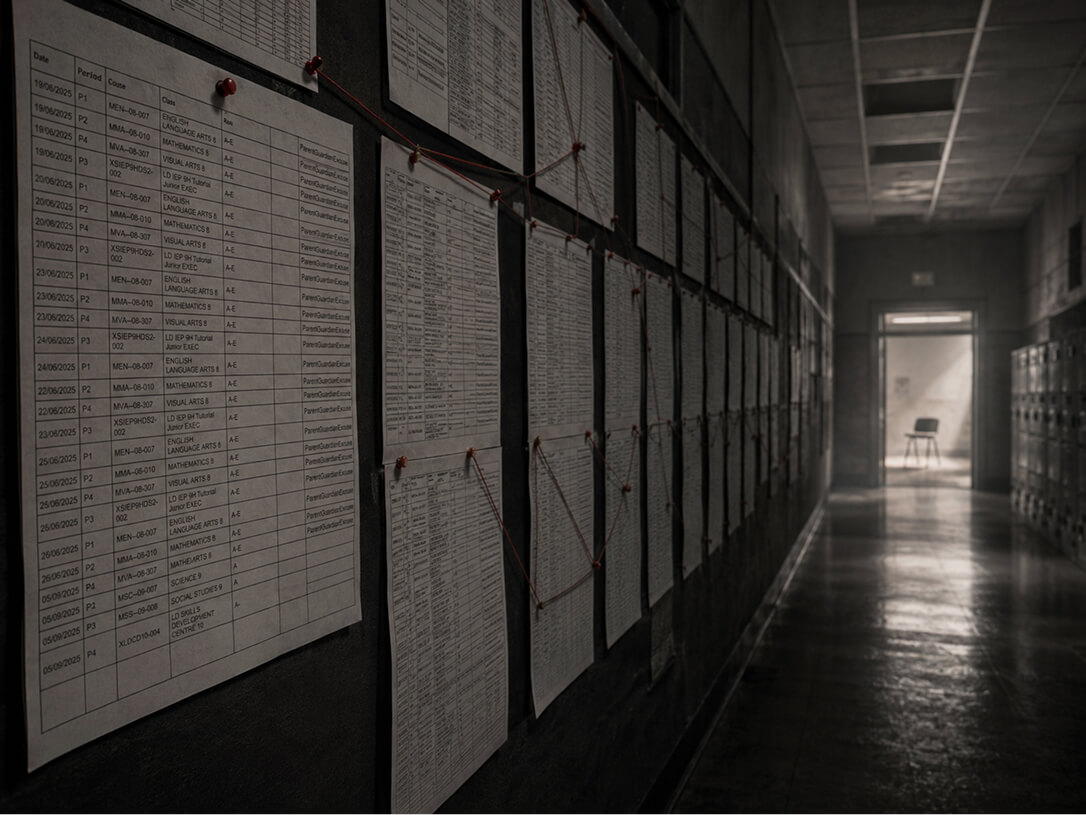
Supporting him allows districts to claim inclusive values while excluding children whose needs expose systemic harm. Robin’s regression—from curious toddler to room-bound teenager—reveals what inadequate accommodation does over time. Acknowledging his current need would require acknowledging causation: years of punishment for demand avoidance, room clears, partial schedules that communicated he was too difficult to educate. That accumulation produced trauma severe enough to destroy functioning he once had.
That truth is more expensive than River’s support assistant. It is harder to repair than early accommodation would have been. It is more damaging to institutional reputation. Robin’s collapse is evidence of failure. River’s support is evidence of commitment.
The sorting is cost containment.
River gets support because refusing him would generate immediate crisis and legal exposure. Robin gets partial access, behavioural framing, and conditions that become impossible because those mechanisms can be framed as pedagogy rather than abandonment. The outcome is the same. The political cost is lower.
River’s support also forecloses other families’ advocacy. When we requested intensive support for Robin, the response was always some version of we must prioritise the most urgent cases. Or we’ll provide temporary temporary support to stabilise Robin and then withdraw it until he’s in crisis again. River’s support became proof the system works, which meant our claim must be illegitimate or temporary. Autism is not a cold. It’s a lifelong neurodevelopmental condition.
Robin’s intelligence, his different danger profile, his demand avoidance—these became reasons to deny support rather than reasons to provide different support. The template admits only one version of profound disability. If your child does not match it, your advocacy becomes a threat.
I have cried in this car so many times the steering wheel feels like an old friend who has witnessed too much. Today I am waiting for Jean, but the muscle memory belongs to Robin—to the calls that came weekly, then daily, then so frequently I kept would jump when the phone rang. The school’s outline through steamed glass looks the same whether I’m here for him or for her, and something in me fractures at the sameness, at how institutional harm reproduces itself across my children while I sit helpless in warming cars, waiting to retrieve them from buildings that were supposed to keep them safe.
The scarcity they manufacture
That logic collapsed when the district pulled River’s support away to punish my daughter.
Jean went on a field trip. She tipped back in her chair back—a less that ideal manifestation of a documented need—movement explicitly protected by her IEP as necessary for regulation. Staff should of redirected to a wiggle stool, or asked if she wanted to stand at the back or go for a walk, but they decided this warranted removal. They called River’s SSA from the school to retrieve her, perp walk her back, and deliver her to the office.
Jean was devastated because they called River’s SSA to get her. She understood immediately what was happening: her punishment was being staged at his expense. The hierarchy supposedly protecting him collapsed the moment institutional discipline required it.
If River genuinely requires uninterrupted one-to-one support for safety, his SSA would not be redeployed for punishment escort duty. Either his support was never truly about safety, or his safety is negotiable when the district wants to assert control over another child’s body, or there was an actual way to shuffle staff to support Jean, if they wanted to. Any interpretation destroys the hierarchy.
This reveals resource fluidity that appears only in service of punishment. Suddenly staff are mobile. Constraints disappear. Scarcity evaporates. Accommodation remains impossible. Scarcity is conditional, ideological, and selectively enforced.
The district later claimed they “cannot guarantee” that staff on field trips will know or implement IEPs. This is failure reframed as inevitability. Rather than solving it, they use it to justify exclusion. Jean’s access to educational experiences becomes conditional on institutional convenience. Joy is rationed.
Field trips are novel, low-constraint, experiential learning environments—exactly what children like Jean need most. The district reserves them for children who need them least, using accommodation needs as justification for exclusion while framing that exclusion as regrettable necessity rather than chosen harm.
The lesson is clear: Jean’s accommodations are performative. Using them results in punishment. Her nervous system is a liability. River’s protection is conditional. The hierarchy protects no one.
-

Joy is rationed for disabled kids in school
When disabled children are excluded from field trips, they are being punished for their needs. These joyful, formative experiences become conditional—offered only to those who mask well, follow rules, and cause no disruption. In British Columbia, this widespread practice violates both law and…
The ideology beyond the institution
This pattern extends beyond our district into broader movements calling for renewed functioning labels and diagnostic gatekeeping. The claim is that expanded autism diagnosis dilutes resources for those who “really need them”. The premise is that resources must remain finite and that disabled people must compete for them.
Like disabled Hunger Games.
It converts “why won’t governments fund what disabled people need?” into “which disabled people deserve what little exists?”. And it’s not even enough for the ones who have access to the guarded resources.
Functioning labels have never expanded support for people coded as low-functioning. They have only denied support to those coded as high-functioning while leaving everyone inadequately served. The purpose is not access. It is gatekeeping.
Robin is excluded because his exclusion can be framed as behavioural intervention. River is supported because excluding him would be too visible and reputationally damaging to a district with so much vanity and marketing slop about how inclusive they are. The violence looks different. The logic is the same.
The movement gains traction because governments refuse to expand support while recognition increases, manufacturing conditions for lateral conflict between families. The system is designed for denial.
Robin’s story as counter-evidence
Robin will not leave his room.
The district sees this as proof he does not need educational support. They attribute it to sickness or family choice. They do not see what they did.
Pathological Demand Avoidance (PDA) profiles generate profound support needs even when they do not resemble intellectual disability. Robin’s demand avoidance produces elopement, weapon-throwing, and life-threatening height-seeking. This requires constant adult intervention, environmental modification, and proximity—the same infrastructure other profoundly disabled children receive.
The difference is epistemological. His intelligence makes the system read neurology as choice. Punishment follows. Trauma compounds. Debility grinds. Capacity collapses. The system then cites collapse as justification for further denial.
This is iatrogenic harm.
I now provide total care for a teenager who should be moving toward autonomy. That intensity is profound by any measure. I am absolutely devoted to this, but I’ll need to retire one day and I won’t live forever. The fact that institutional refusal created it does not absolve responsibility. It compounds it.
Jean’s indignation
The car door opens and Jean slides in, her face carrying the particular tenseness that comes after crying in a bathroom, after holding yourself together just long enough to make it to the parking lot. I want to ask what happened but the words catch because I am still half in another time, still collecting a different child from a different crisis that somehow led here, to this moment, to her crisis now while he remains behind, unreachable in his room.
My body aches with the impossibility of being enough for both of them when the system that broke one is now breaking the other, and I crack the window wider because the air is too close, too warm, too full of pain I cannot fix. The cold against my raw eyelids feels like the only honest thing—skin cracking from salt, the accumulated cost of loving children the world refuses to hold gently.
This is the calculation I make every day now.
I watch Jean navigate school, watch it harm her differently—the field trip punishment, the IEP violations, the humiliations designed to break her confidence. I know where this leads. The question isn’t whether school harms her. It does. The question is whether staying is worse than leaving, and that calculus is impossible because I cannot know what she would lose by withdrawing that might matter more than what she’s losing by staying.
She still goes places, does things, feels like she has a group she belongs to. Pulling her out severs that at exactly the age when peer connection is developmental necessity, when isolation carries its own traumatic weight. Robin is totally alone.
I drop my hours at work and take her to counselling every week. I leave work with increasing frequency and cannot muster enough cortisol for professional composure, cannot perform the expected emotional display at advocacy meetings when I am bored of my own narrative and my body has nothing left for their requirements. I take her to tutoring for her math disability, where she’s actually learning because the teaching style is catered to her needs. I pay and pay and pay for their abandonment of human rights.
I spend so much time in the car. It reminds me of driving to the NICU when they were born, of long voyages to the milk bank. I would scream at god and pray my children would live. I’m still praying.
I feel small relief when she launches into a story filled with indignation. She’s still indignant.
The coalition that could force change
River deserves his SSA. Robin deserves intensive support. Jean deserves to use her accommodations without punishment or discouragement. These claims do not compete.
Families share the same enemy: systems that engineer scarcity to contain costs. Lateral conflict serves those systems. The system is designed for division. Solidarity threatens them.
Districts use the most visibly disabled child as alibi for everyone else’s exclusion. This harms everyone, including the child used as proof.
The district flattens River into symbol—the profoundly disabled child they serve—without wondering what he thinks about any of it. I wonder if anyone asks his perspective on the bathroom delays, the coverage gaps, the days his SSA is sick. His interiority disappears into the institutional narrative that positions him as proof of their commitment while erasing him as person with thoughts, preferences, frustrations about the support they claim is adequate. He becomes the puppy in their metaphor: deserving of protection, incapable of opinion, useful precisely because his flattened representation forecloses questions about whether the support he receives actually honours his humanity or just manages his body.
Refuse that logic!
River deserves better than being used as justification. Robin deserves repair and support. Jean deserves joy without punishment.
All disabled children deserve systems that fund accommodation without requiring proof of suffering.
-

I only asked for gentleness: on parenting a PDA child in a punishing world
There is a certain kind of child—intuitive, emotionally articulate, wired with a startling perceptiveness about power and tone, about coercion and choice, about the invisible terms of adult authority—whose presence in the classroom becomes, almost immediately, a threat to the institution’s rhythm, a…