
Pathological Demand Avoidance (PDA)
Exploring the PDA profile of autism—marked by extreme anxiety around perceived demands, a deep need for autonomy, and non-traditional expressions of distress. This tag gathers reflections on parenting, school interactions, and the failures of behavioural frameworks to recognise this profile with empathy or nuance.
-
Happy belated PDA Day
I have written about Pathological Demand Avoidance (PDA) quite a bit over the past year, so for PDA Day / PDA Action Week I thought I would do a small review of the themes I keep returning to. It’s not wilful behaviour, usually Schools often read demand avoidance as refusal, manipulation, defiance, escape, or “not…
-

The compliance trap: why IEP goals fail PDA students
Every IEP written for a PDA student begins with the same quiet betrayal. The team gathers — parents, teacher, learning support, maybe an administrator — and the goals are drafted in language that sounds like care: manage responsibilities with support, self-advocate before becoming overwhelmed, organise materials and meet deadlines. The phrases are familiar because they…
-
They still haven’t learned: POPARD and PDA
POPARD’s internal PDA training materials have been circulating through parent communities this week, released through a freedom of information request to a BC school district, and what they reveal is something more structurally damning than a policy directive to dismiss Pathological Demand Avoidance — they expose the precise mechanism by which an organisation can train…
-

When one child’s support becomes everyone else’s denial
I bring Robin his meals now. I pour a bath periodically, and coax him in, when too many days have elapsed and a funk has grown pungent from him avoiding the sensory assault or the water on his skin. I manage mess, hygiene, and feeding, even though he is a teenager who should be developing…
-

The dishwasher, the hard drive, and what counts as progress when your child survives school
My son unloaded the dishwasher today without being asked. This is the first chore I can remember him doing of his own accord since he was a toddler—before school taught him that compliance means danger, before demand avoidance became the fortress protecting what remained of his autonomy, before each day required such total depletion that…
-
When provincial bodies dismiss parental expertise: POPARD, sticker charts, and the refusal of heterogeneity
In the previous essay, I examined neuroimaging research demonstrating that autism and ADHD are not internally homogeneous diagnostic categories but rather contain multiple neurologically distinct subgroups, often with opposite patterns of brain structure alterations relative to controls. The Pecci-Terroba study reveals what categorical intervention logic refuses to accommodate: diagnosis alone cannot determine whether a specific…
-
On euphemisms, PDA, and the rebranding of autism
When I look back on the early years of coming to terms with autism in our family, I understand the urge to rebrand it. The word autism lands hard at first. It sounds clinical, final, filled with sadness, injury, bad smells, and bleak prospects. In that first stage of reckoning—when your mind keeps circling what you imagined…
-

Keeping vigil
I live as though in a vigil, waiting for my child to heal from the slow injuries of school, which for many people represents a place of nurture and discovery, yet for him became an arena of exhaustion where survival eclipsed joy and the aftermath has demanded a long convalescence that feels almost like watching…
-
Our goals are not the same: ableism in bc public school
I want my children supported to grow and learn; schools uphold ableism by demanding they mask compliance or feign helplessness for support.
-
The orange shirt I folded
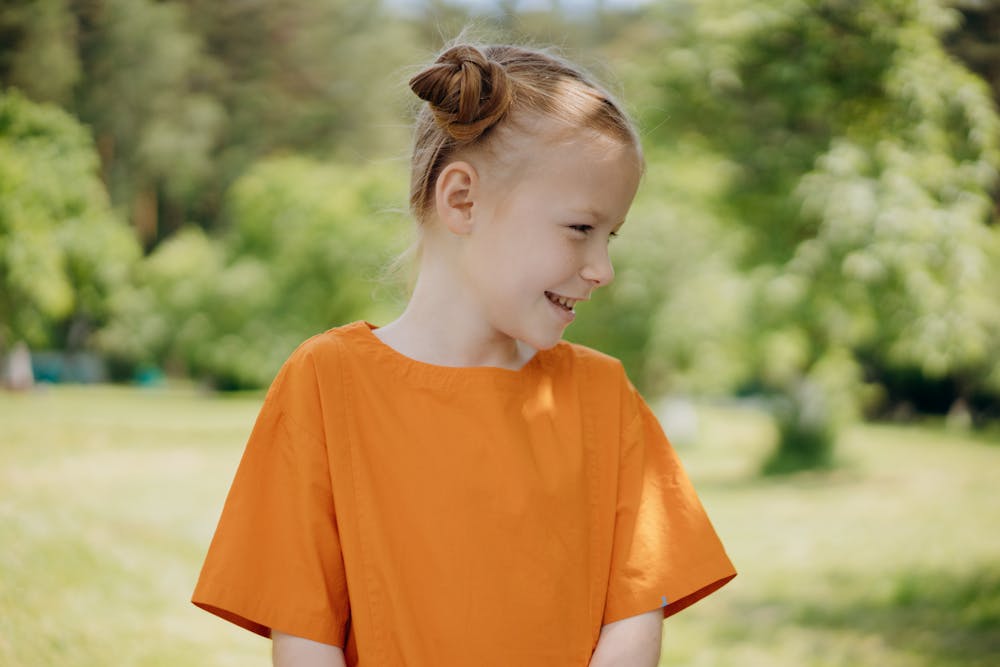
I was folding laundry late one night, brain running on the kind of background grief that rarely quiets, when my hand closed around the orange shirt. I moved to set it aside—automatically, instinctively—because I remembered September was coming, school would be starting, and Orange Shirt Day would follow quickly after. That shirt would be needed…
-
When “I hate you” becomes a reflex: understanding PDA, nervous system overwhelm, and emotional repair
Parenting a child with PDA (Pathological Demand Avoidance) demands a kind of relational agility that many of us were never taught. This post explores how communication—tone, language, and emotional presence—can be reimagined as care. There are moments in parenting—especially with children whose autonomy is sensitive and whose nervous systems are already carrying the charge of…
-

Against our will: When ‘support’ becomes institutionalised coercion
I said no. I said it plainly, early, repeatedly. I said it in writing, I said it on the phone, I said it from a place of trembling grief and exhausted clarity. I said it as a mother who had already tried everything. I said it after describing the diagnostic framework, after explaining what worked,…
-

Non-coercive, trauma-informed alternatives to PBS/ABA in BC schools
Positive Behaviour Support (PBS) and Applied Behaviour Analysis (ABA) are behaviourist approaches widely used in schools to manage student behaviour. However, a growing chorus of neurodivergent advocates, educators, and researchers highlight that these methods often prioritise compliance and “normalising” behaviour over student well-being rcpsych.ac.uk. By focusing on making neurodivergent children appear neurotypical (meeting neuronormative standards), traditional PBS/ABA can…
-

I only asked for gentleness: on parenting a PDA child in a punishing world
There is a certain kind of child—intuitive, emotionally articulate, wired with a startling perceptiveness about power and tone, about coercion and choice, about the invisible terms of adult authority—whose presence in the classroom becomes, almost immediately, a threat to the institution’s rhythm, a disruption to its hierarchy, a mirror held up to its limitations.
-
How narcissism and PDA collide in the wreckage of trust
Some children refuse control because control has always felt like violence. Because control has worn the face of love and left behind a residue of shame. Because adults said, “this is for your own good” while ignoring tears, violating autonomy, and insisting that compliance was safety. For these children, especially those with a PDA profile,…
-
The ABCs of regressive punishment
Discipline in schools is rarely neutral. For neurodivergent students, it often takes the form of quiet harm—masked as structure, delivered as shame. From exclusion and forced apologies to behaviour charts and the denial of recess, regressive punishment practices remain embedded in our classrooms. They don’t teach accountability. They teach fear, isolation, and the high cost…
-
How public education discriminates against PDA children through performative care
On Thursday, I changed my work calendar, after suffering a nervous breakdown the night before. On Wednesday, I had 7 meetings in one day, stacked with half-hour gaps. Almost every meeting ran long and I held my pee for 4 hours and my dog pooped on the floor. I had things to accomplish and they…
-

Building safer schools through restorative justice and neurodiversity-informed practices
When children are dysregulated the response from educators is too often punitive. For neurodivergent students in particular, the cost of these responses is high: shame, trauma, social exclusion, and a deep erosion of trust. But it doesn’t have to be this way. Restorative justice offers a path forward. Not as a one-time circle or a…
-
There’s no such thing as unexpected behaviour
This piece was hard to write. It holds my grief. It documents not only what happened to my child, but how systems made it worse by pretending to be surprised. I share it because too many families are made to carry this alone. Every time I see the phrase unexpected behaviour in a school document, a safety…
-
The cost of masking: What we lose when children perform wellness
This evening, I walked my son down the street toward the place where his father was waiting to pick him up. It was an ordinary hand-off on an ordinary day, except I carried that soft, watchful question I always carry now, held quietly in my chest until the timing feels right. I asked if he…