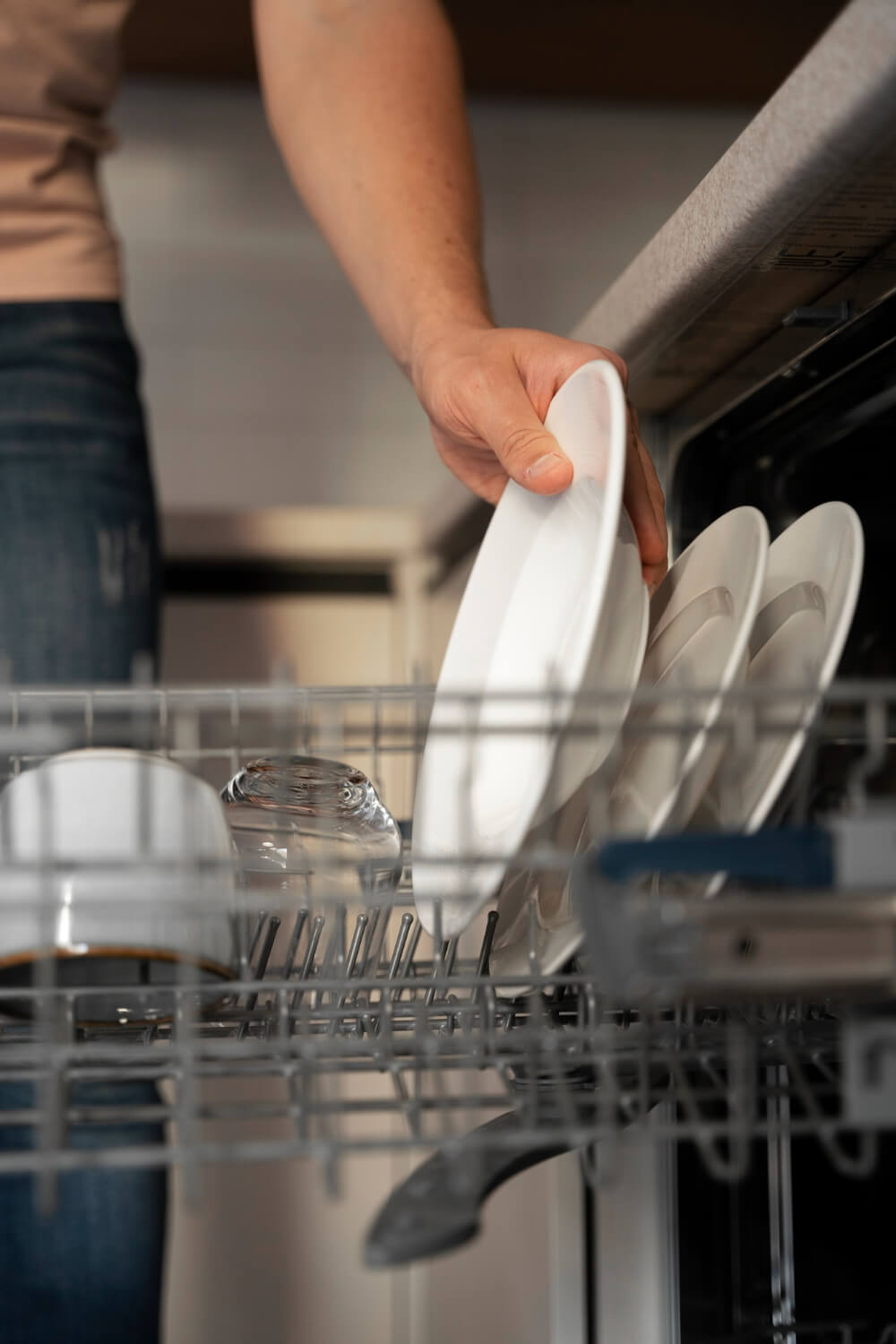
My son unloaded the dishwasher today without being asked.
This is the first chore I can remember him doing of his own accord since he was a toddler—before school taught him that compliance means danger, before demand avoidance became the fortress protecting what remained of his autonomy, before each day required such total depletion that nothing was left for the ordinary labour of living in a household.
I try not to feel hope. Hope is dangerous when you have watched your child’s capacity erode year after year, when you know progress is not linear, when tomorrow he may not have the energy to lift his head from the pillow.
But I noticed it. The dishwasher, unloaded, without negotiation or collapse. I held it carefully.
What people misunderstand about PDA parenting
Parents of pathological demand avoidance children learn quickly that demands—even reasonable, necessary ones—can trigger dysregulation so complete that the original boundary becomes irrelevant compared to the harm caused in enforcing it.
I know how to ask my son to help with chores. I gather the rubbish and say, “I’d love your help tonight, whenever works for you.” Later: “I’m thinking we should head out soon.” This isn’t permissive parenting or a lack of boundaries. It’s careful choreography, balancing task completion against nervous-system safety, knowing that a single misstep can send us into freefall.
When I explain this, people offer advice: Be firm. Stand your ground. Kids need consequences.
As if I haven’t tried.
I have. Once—over a boundary so inconsequential I can’t even remember what it was—my son melted down for four hours. Four hours of escalating distress, head-banging hard enough to injure himself, until I took him to the emergency department because regulation was impossible and harm inevitable.
Whatever I was enforcing wasn’t worth that. It never is.
Why ultimatums are dangerous
Ultimatums trap both parent and child in a false binary: comply, or suffer consequences. For PDA children, compliance may be neurologically impossible in that moment. Following through then damages trust, teaches that love is conditional, and reinforces the lesson that distress must be overridden to belong.
So we learn to leave room to manoeuvre. We learn that socks on the floor are not worth setting our relationship on fire. We learn to distinguish between boundaries that protect safety and dignity and demands that serve only order, compliance, or the performance of neurotypical development.
This is sophisticated, trauma-informed parenting. From the outside, it looks like inconsistency.
What others don’t see are the calculations running constantly underneath: Is this worth the cost? How much capacity does my child have today? How much am I entitled to claim for household labour versus preserving for regulation, joy, and survival?
The advice I keep receiving
People suggest solutions with the confidence of those who have never parented a child whose nervous system experiences demands as threats.
Have you tried a chore chart?
Take away screen time.
Kids need structure.
Yes, I understand anxiety. I am autistic and ADHD. I know what it is to feel demands as physical danger, to shut down under overload, to experience compliance as a loss of self.
Yes, I tried chore charts. They became one more demand to resist, one more visible marker of failure, one more site of conflict.
Yes, I restricted screen time. My son deleted the hard drive on his computer. (Thankfully, our family photos were backed up elsewhere.) That restriction didn’t teach compliance. It taught him to reinstall operating systems—and confirmed that he would destroy access to what he loved rather than submit.
This is what demand avoidance is. Not oppositional defiance. Not a refusal to respect authority. It is a nervous system that cannot process demands without triggering fight-or-flight, that experiences “you need to do this now” as “you are not safe.”
What school took from him
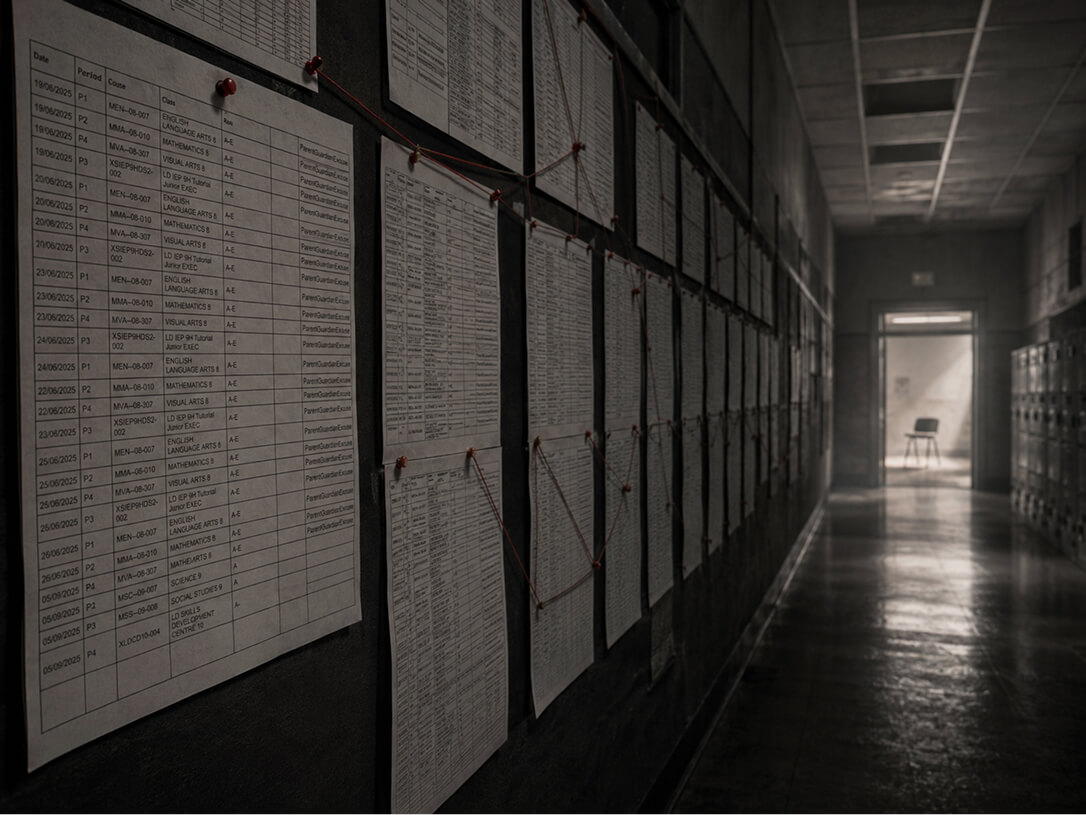
Before my son stopped attending school, every ounce of his capacity went to surviving it: sit here, move there, start now, stop now, comply from 8:30 to 3:00 every day.
He came home with nothing left—not for chores, not for conversation, not even for joy. Everything went to recovery. Demand avoidance became the last defence protecting his autonomy.
And I was told the problem was my parenting.
No one asked what school was taking from him. No one considered that seven hours of forced compliance might erase the capacity for voluntary contribution at home. No one questioned whether a child who couldn’t unload a dishwasher was spending everything he had just to survive.
Witnessing instead of enforcement
Kelly Oliver describes witnessing as response-ability: recognising another’s testimony as knowledge rather than pathology.
My son’s demand avoidance is testimony. It tells the truth about what he can bear, about the cost of compliance, about the conditions under which his self remains intact.
When I reduce demands, choose relationship over enforcement, and leave room instead of issuing ultimatums, I am responding to that testimony. Not because accommodation is permissive, but because his subjectivity matters.
The dishwasher, unloaded without being asked, is not progress toward normalcy. It is evidence that capacity wasn’t absent—it was inaccessible under constant threat.
-

Nobody is going to thank you
Nobody tells you that you can pour every last scrap of yourself into advocacy and still feel your bond with your child begin to strain. There is a familiar story passed among parents—one in which you step in, do a little advocacy, and…
Nine months without school
My son has been out of school for nine months. He isn’t producing the metrics people expect when they ask whether unschooling is “working.” He isn’t demonstrating tidy academic progress or predictable routines.
What has changed is quieter but real. He no longer sleeps twenty-three hours a day. He engages deeply with projects he chooses—programming, games, research, learning for its own sake. He participates in family life in small ways, when capacity exists, without the constant negotiation and collapse that once defined everything.
Healing isn’t linear. Demand avoidance hasn’t disappeared. But something has shifted: not cure, but restoration—the slow rebuilding of capacity once systematically extracted.
The dishwasher as testimony
So when my son unloads the dishwasher, I don’t treat it as evidence of success, recovery, or good parenting. I treat it as testimony.
It tells the truth about what school was costing him. It tells the truth about what becomes possible when demands decrease and witnessing replaces coercion.
When people insist the solution is firmer boundaries or better consequences, they are refusing to witness that testimony. That refusal serves institutions well. If the problem is parenting or defiance, schools need not change.
But the dishwasher says otherwise.
It says that when survival stops consuming everything, capacity can be freely offered. That underneath the fortress built to survive institutional harm, there is still a person who wants to participate in family life—when participation is safe.
He may not unload it again tomorrow, or next month. That isn’t the point.
Today, he had capacity. And he chose how to spend it.
The dishwasher, unloaded. Held carefully. Witnessed as what it is.
-

Debility versus disability: what the system cannot acknowledge
My son Robin took to bed two weeks before March break. He had been soldiering on through the aftermath of a school transfer the district assured us would help him, though his body told me otherwise from the first day he arrived. I’ve…