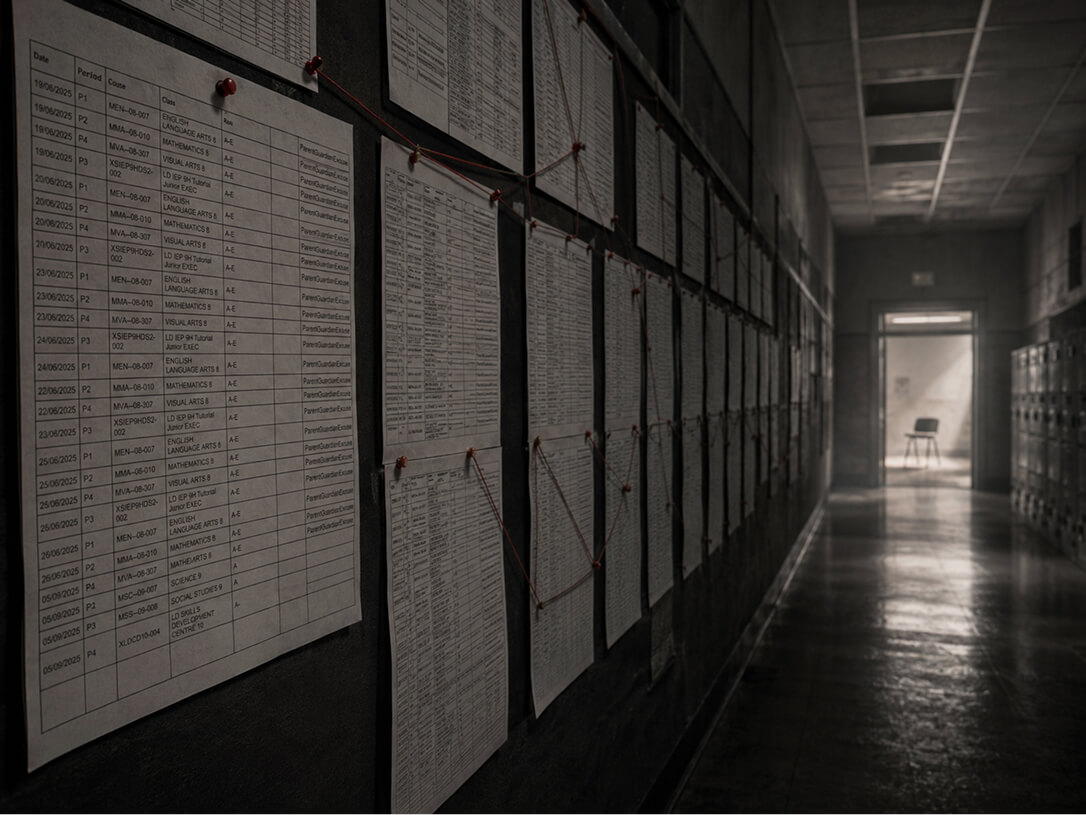
If your child has been removed from school, denied attendance, placed on an involuntary partial schedule, or told they cannot return until certain conditions are met, you are experiencing exclusion—even if the school avoids using that word, even if the decision is framed as temporary, collaborative, or necessary for safety; exclusion is happening when your child loses access to instruction, and you have rights, rooted in BC law, Canadian constitutional protections, and international human rights frameworks, that remain enforceable whether or not the school acknowledges what it is doing.
Key rights to know immediately
It’s important to understand that your family has rights.
- Education access under the School Act. Students in British Columbia have a statutory right to attend school; the School Act requires children of school age to attend, and it requires school boards to provide access to educational programs; there is no provision in the Act that permits schools to remove students indefinitely based on behaviour, disability, or resource constraints without following formal suspension or expulsion procedures.
- Informal removals—being sent home “for the day,” told to stay home “until we meet,” or placed on a partial schedule “until behaviour improves”—still trigger legal scrutiny; the absence of formal process does not make exclusion lawful.
- Due process protections. Even when suspension or expulsion procedures are followed, students and families have rights to notice, reasons, and opportunities to respond; when schools bypass these procedures and exclude students informally, they violate due process entirely.
- Equality rights under the Human Rights Code. The BC Human Rights Code prohibits discrimination in the provision of services, including education, on the basis of disability (among other protected grounds); disabled students—including autistic students, students with ADHD, students with learning disabilities, and students with mental health or behavioural support needs—are protected from exclusion that is connected to their disability.
If your child is being excluded because of behaviour that is linked to disability, and if the school has not accommodated your child to the point of undue hardship, the exclusion is discriminatory.
Charter protections. The Canadian Charter of Rights and Freedoms protects individuals from state action that violates fundamental rights; exclusion from education can engage:
- Section 7 (life, liberty, and security of the person): where exclusion causes psychological harm, destabilizes family life, or undermines a child’s development and wellbeing
- Section 15 (equality rights): where exclusion disproportionately impacts disabled students or reflects systemic discrimination
Charter violations require government action (schools are government actors) and a deprivation of a protected right; exclusion from education meets both tests.
Red flags that suggest unlawful exclusion
You are likely experiencing unlawful exclusion if:
- The school says “we don’t have the staff” or “we can’t keep him safe”
- You are told the removal is “just temporary” but no end date is provided
- The decision is framed as being “for safety” but no specific risk is documented
- You are told “we’re waiting for assessments” but your child is denied access in the meantime
- There is no written decision explaining the exclusion
- The school refuses to provide legal authority for the removal
- Your child is losing instructional time but receiving no alternative programming
These are procedural failures that signal the exclusion lacks legal foundation.
What you can do next
Here’s some important steps if your child is being excluded:
- Ask for everything in writing. If your child has been excluded, request a written explanation of the decision, the legal authority being relied on, the duration of the exclusion, and the plan for restoring access; if the school refuses to provide written documentation, that refusal itself is evidence of unlawful process.
- Request the legal authority being invoked. Schools cannot exclude students based on preference, convenience, or resource limitations; there must be legal authority for any removal, and you are entitled to know what that authority is.
- Document loss of instructional time. Track every hour your child is out of school, every cancelled activity, every reduction in access; this documentation will be essential if you file a complaint, pursue a tribunal hearing, or seek legal remedies.
- Use rights-based language early. Do not accept the school’s framing of exclusion as “support,” “accommodation,” or “collaboration”; name it as exclusion, invoke your child’s rights under the School Act, the Human Rights Code, and the Charter, and make clear that you will pursue formal remedies if the exclusion continues.
- Access tools and support. Use the strategy builder, letter generator, and documentation guides available on this site to structure your advocacy; if possible, consult with an education lawyer, disability rights advocate, or legal aid clinic that handles human rights complaints.
Exclusion is not inevitable, and it is not lawful simply because a school says it is necessary.
-

Shining a legal light on advocacy conversations
How to speak from a foundation of human rights while staying grounded in care. Firm, quietly defiant responses for families navigating school denial, delay, or deflection—centred on Kim Block’s Summer Series on the duty to accommodate. Each tip translates legal obligation into everyday…