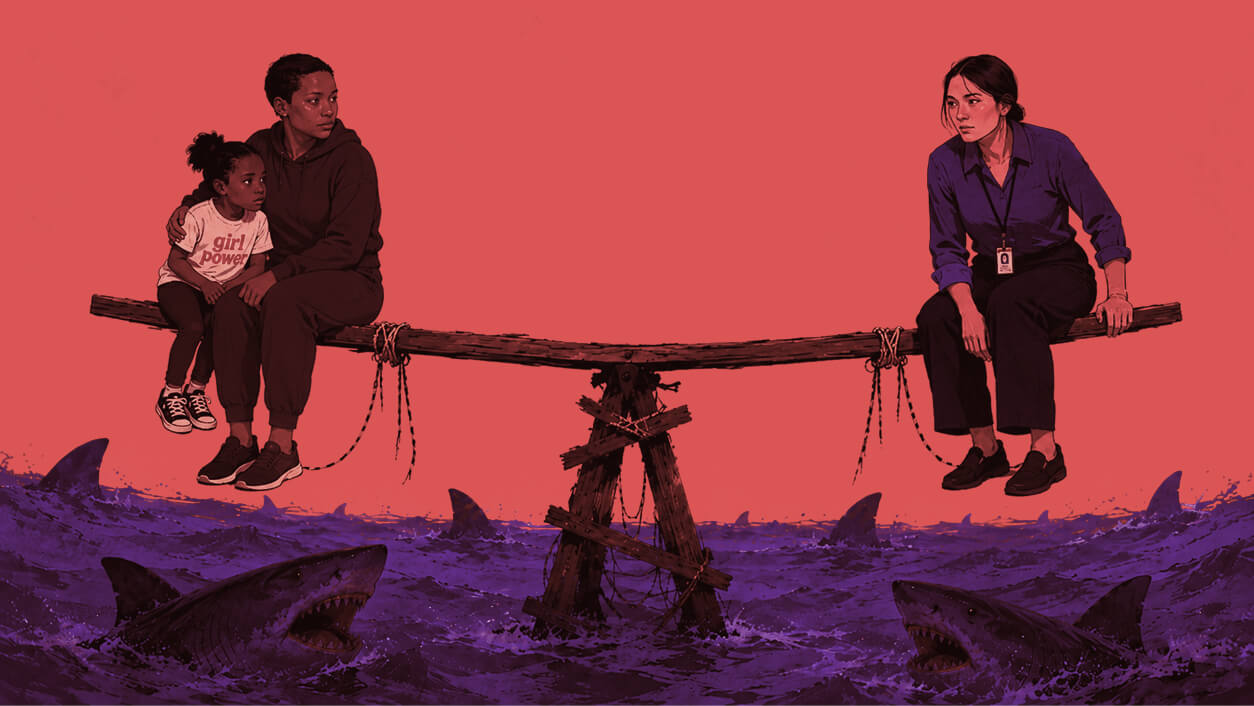
On the pedagogy of “people are not supports,” the research it misreads, and what happens when an idea is transplanted into a starved system.
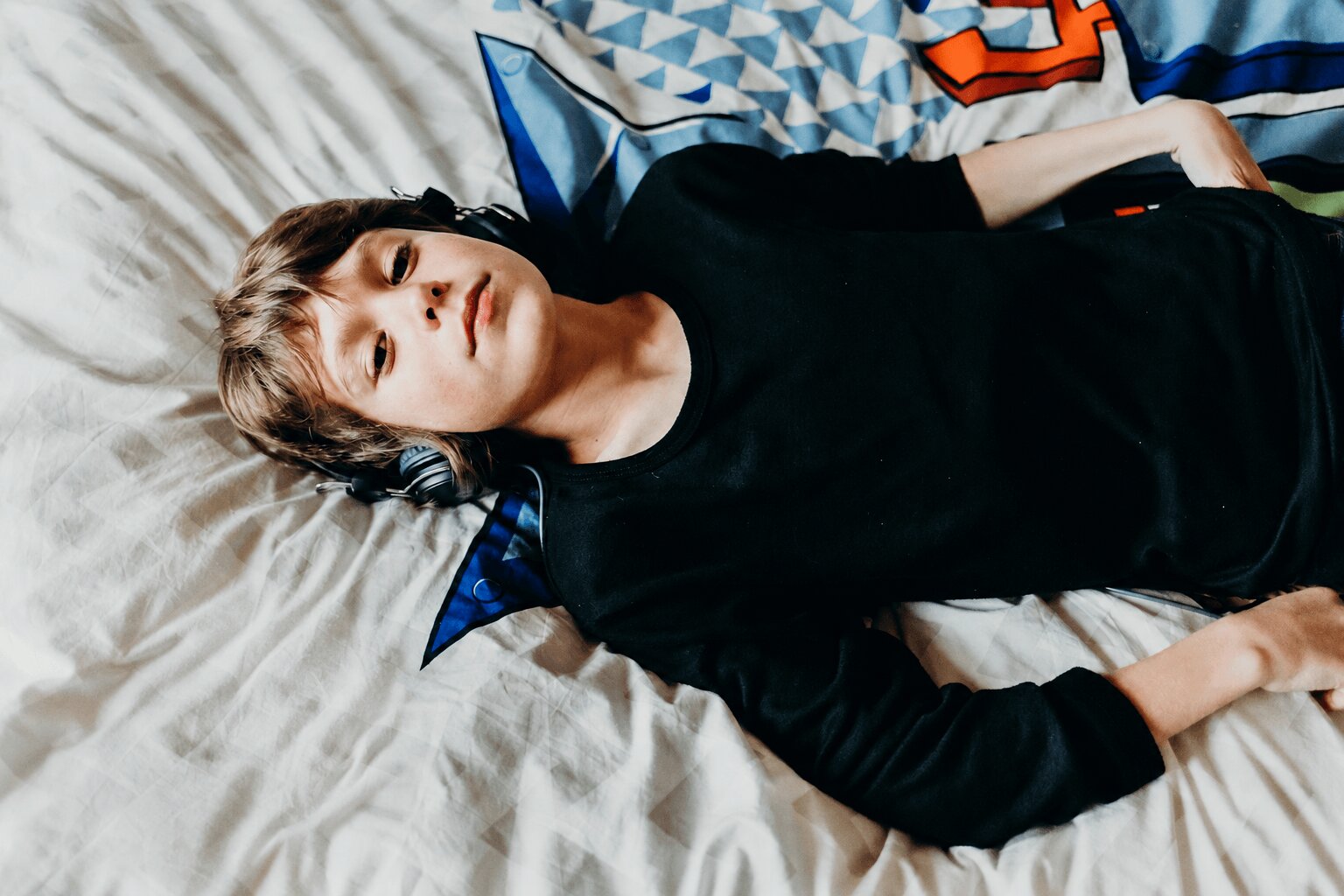
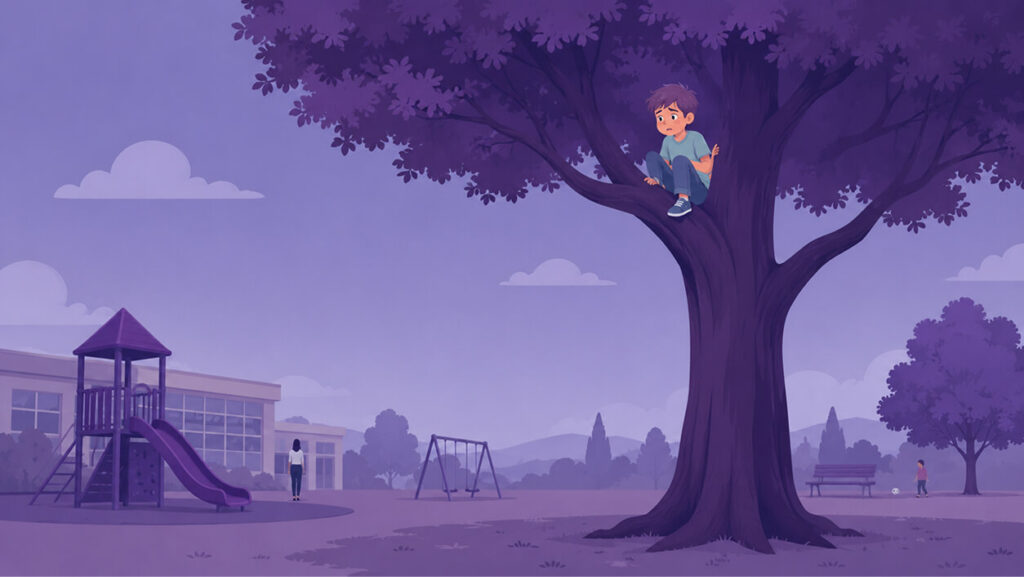
The day my son climbed 30 feet into the air, there was no adult nearby. On paper he had one-to-one support for the whole of the lunch hour. On the field there is a small boy very, very high in a tree. Another day, he became so dysregulated and he lashed out and hurt his best friend, and again the adult who was meant to be beside him was somewhere else. This is the ground the argument has to stand on, because when people debate semantics, I wish they could stand under that tree and see my son’s small body on the trembling limbs 30 feet above our head.
The slogan, and the word it reaches for
A correction is circulating right now in inclusive-education spaces: support is a verb, not a human. Support is not a place, a person, or a program; it is a series of intentional actions before, during, and after a lesson. Dr. Shelley Moore sets out a tidy taxonomy in “People are NOT Supports!” — needs, supports, strategies, resources. Supports are tools, she says; strategies are actions; and the people, the Education Assistant (EA) or Student Support Assistant (SSA), goes in the last box, resources. People are not supports. People can be supportive.
I’m an English major so I do care about semantics, and…
Watch where the human lands within this argument! Moore files the person in the resources box, alongside money and clock-hours, as an input to be sourced and allocated and drawn down. The reification is clear; it is the category itself. And watch the human get shuffled between boxes to suit the sentence — a resource when the argument calls for funding, not a support when the argument calls for decentering the EA. The word carries the freight it imagines it is escaping: the vocabulary of stock and supply, of the unit held in reserve, the grammar by which an extractive economy turns living things into inventory. To move my child out of one dehumanising frame by moving the adult beside him into another is no rescue.
And the grammar refutes the slogan even while it congratulates itself. Support is a verb, certainly — and verbs take subjects. Someone supports. Strip the someone and you do not arrive at a more rigorous account of support; you arrive at a sentence with no one in it, an action with no agent, which is the bureaucratic dream exactly: care that happens without anyone having to be there for it.
A theory built from one set of needs
Moore builds her case generously, at length, from her own life — and the choice of evidence is the whole argument. Her need, she tells us, is executive functioning: she loses her keys, misses the ferry off the island, once forgot the dog. Her supports are tools — a visual checklist taped by the door, an AirTag in the wallet. Her strategy is an action she performs herself, leaving on the earlier sailing so a missed ferry costs her nothing. And the people in the story, her wife above all, appear as teachers of tools and actions who then step back; her wife taught her the ferry trick, Moore is careful to say, but did not catch the ferry for her. From this she draws the law: jump straight to a person as the support and you skip the teaching, and you shrink independence instead of growing it.
It is a tidy theory, and it holds for precisely the kind of need she chose to build it from. A lost wallet has an AirTag. A missed ferry has a buffer. These are logistical needs — discrete, low-stakes, carried by a capable adult who can rehearse a strategy on Tuesday and deploy it alone on Friday. Name the need that has no such tool. There is no AirTag for trust. No visual checklist teaches a traumatised child to feel safe inside a building that all evidence says is dangerous.
The need my son carries is relational rather than logistical, and for a relational need the person is not the teacher of a tool who then withdraws — the person is the tool, the strategy, and the support at once, the irreducible medium through which regulation becomes possible at all. Co-regulation is not a trick you teach and take away. It is a ramp, a relationship you hold, and out of which, slowly, a child grows the capacity to hold himself.
The ferry gives the whole game away, exactly because it works. A missed ferry is survivable, repeatable, and yours to manage. A boy sixty feet in the air is none of those things, and the adult he needs is not one who taught him a strategy last week but one who is on the field this minute, in the crisis, with a relationship already built to bring him down through. The framework moves from a tractable logistical need toward a general rule, and that is where relational needs fall through. Children whose needs are categorically unlike hers fall straight through the floor of the framework — which is the recurring danger when the person designing the model is someone who has succeeded at managing with lots of support.
What the research actually says
The slogan presents itself as the distillation of evidence, so let us go to the evidence. The empirical spine is the paraprofessional-proximity literature, and its most-cited study is Giangreco and colleagues’ “Helping or Hovering?” from 1997, which watched sixteen classrooms and named eight ways an instructional assistant stationed too close can do harm: separation from classmates, dependence on adults, interference with peer interaction, loss of personal control, the general educator quietly surrendering ownership of the child. The finding is real, and I will meet it rather than dodge it. An undertrained adult velcroed to one student can become the wall between that child and the room.
But follow the lineage past its title. Giangreco never concluded that the human was the problem; he concluded that overreliance on the human, untrained and unplanned, produced these effects — which is why his later work argues directly for alternatives to over-reliance on paraprofessionals, and why by 2021 he was calling the teacher assistant the system’s Maslow’s hammer, the single tool reached for to meet every need because it is the only one in the drawer. The remedy that same tradition keeps finding is training: with targeted training, an assistant moves from hovering to facilitating, from a barrier between children into a bridge among them. The variable was never whether the person existed. The variable was the skill and the design around the person — which is the reverse of the lesson the slogan extracted.
Needs are part of who we are
Here is the line of hers I will defend to anyone: needs are part of who we are, and a resource should never be spent trying to eliminate a need. She is right, and right in a way that matters — she names the obscene habit of pouring support into stopping a child feeling anxious, or angry, or being an introvert, as though the child were a fault to be corrected.
If a need is part of who we are, and the need to trust and have connection is the most human need there is, then the relentless drive toward independence and self-determination as the goal of all support is itself an attempt to eliminate a need — the need for others.
Robin’s need for a trusted adult is no deficit to be navigated into nonexistence by Friday. It is part of who he is. It has been the most challenging job of my life to figure out how to care for him so he feels autonomy and lives with dignity. To treat that need as something other than his ramp is a lie.
To engineer him toward needing no one is the exact fixing she warns against, wearing the costume of empowerment. The telos eats the principle. And one of the central scholars of self-determination in disability education shuts the escape route: Wehmeyer’s later work does not define self-determination as rugged independence, but as causal agency shaped by supports, opportunities, threats, and impediments. Needing people is not the opposite of agency. For many disabled people, agency is exercised through support, not in its absence.
A hothouse flower in a famine
Let me be scrupulous about what Moore actually says, because the fair version of the charge is the lethal one. She does not oppose staffing. She says it outright: of course we need more people, just as we need more time and more funding — absolutely. Her quarrel is with treating headcount as sufficient, with asking for resources while skipping the plan for how they meet a need. Taken in her own climate, that is a coherent thing to want.
Sara Ahmed‘s account of the nonperformative is relevant here. A framework travels. It leaves the careful mouth that spoke it and arrives, stripped of its caveats, in a system organised by scarcity — and there “people are not supports” stops being a caution about good planning and becomes a gift. A district that never funded the human can fold the phrase into a budget meeting and hear its own starvation rebranded as pedagogy; the empty chair beside the child becomes a philosophy, the missing assistant becomes a principled choice to foster independence. Moore’s intent and the framework’s uptake come apart, and the gap between them is precisely where the harm sets up house. She wants the human funded and well-deployed. The institution has every incentive to let the human disappear, because it is better for the budget and comes with a reason to feel enlightened about it.
The particular problem Giangreco was studying was excessive, prolonged adult proximity in settings where assistants were already present. In all but one of the classrooms he observed, there was at least one instructional assistant. The danger he studied was too much poorly designed presence: an adult placed so close, so constantly, that the teacher, peers, and child’s own agency could be pushed aside.
“Currently, 20 per cent of K-3 classes do not have education assistants.”
— Education Minister Lisa Beare, quoted by Rob Shaw
British Columbia runs the other way. Our danger is the empty field, the one-to-one that lives on the IEP and nowhere else, the boy in the tree with nowhere to fall but down.
You cannot graft a critique of over-proximity onto a famine of presence; you cannot warn a starving family off overeating.
Achille Mbembe would recognise the quieter administrative cousin of his necropolitics in it — scarcity as the distribution of exposure, the slow sorting of which children are allotted a person and which are left on the field.
And Elaine Scarry would recognise the prose: “a series of intentional actions before, during, and after a lesson” is a sentence engineered to dissolve the body in the air, bureaucratic language doing to the event what the system declined to do for the child.
Two mouths, one word
Most of this fight is not a disagreement at all. It is two people using one word to mean opposite things and never noticing.
When Moore says people are not supports, she means: do not strap a child to a single undertrained adult, call it inclusion, and walk away; do not let the presence of an assistant excuse the teacher from owning the student or the system from building anything better. Read in her own climate, that is a defensible thing to want.
When the parent of a child attending one hour a day says we need more staff, she means: my child needs a person who shows up and stays, a known body in the room, someone who will be on the field when the climbing starts. She is describing presence as a precondition for survival.
And then each hears the other through the wall. The parent hears “people are not supports” and receives permission — permission for the district to deny the human her child cannot do without, dressed up as progressive practice. Moore hears “more staff” and receives a demand for more of the failed model, more velcro, more hovering, more bodies fed into the arrangement Moore is critiquing. Neither is hearing the other. They have never once been describing the same phenomena. The word support sits between them like a coin that reads differently depending on which face is up, and the institution is glad to let the confusion stand, because a field arguing about vocabulary is a field that has stopped sending the invoice.
What a parent means by more staff
Listen closely to the parents, though, because they are more precise than they are credited for. When they say they want more staff, many are not asking for headcount in the abstract. They are pointing at a specific person they have met — usually the younger one, the dynamic one, the one who gets right into the middle of the game and comes back sweaty, the one who learned this child’s particular weather and worked out how to make the day hold together. Parents have watched, up close, the difference between that person and the depleted figure standing at the edge of the playground doing nothing, and “more staff” is their shorthand for more of the first kind. They mean relationship. They mean presence with skill in it.
This is the assumption folded silently inside the demand, and it deserves dragging into the light, because it is also the assumption that fails to scale on its own. A raw headcount is something a system could deliver in bad faith — a number satisfied with more bodies, more monitors, more of exactly the disengagement the parent was trying to escape. The thing the parent actually wants stays harder to name and harder to win: a trained, relational adult with enough slack in the day to step into the game rather than guard its perimeter.
And the dynamism parents prize is the very thing the system is built to erode. Today’s sweaty assistant running a round of Go Go Stop is tomorrow’s husk of a person who had to work two jobs to survive and was at the homeless shelter last night where someone died.
She is underpaid, undertrained, handed an impossible caseload, redeployed mid-crisis, blamed and and then blamed when the thing she was never resourced to prevent goes wrong.
Jasbir Puar’s distinction between disability and debility belongs here, and it cuts both ways at once: the machine that wears the disabled child down to the threshold of bare maintenance is wearing the worker down beside him. The debility runs straight across the relationship. Child and assistant are depleted by the same logic, and the logic that turns the child into a case is the one that turns the adult into a resource.
The husk
Which brings us to the figure everyone is secretly arguing about: the empty husk on the playground, the adult standing there doing nothing while a child unravels. The people who say we don’t need more staff, we need better ideas are looking straight at that figure when they say it, and I understand the pull of it. But the husk is no proof that people are not supports. The husk is what the system manufactures when it strips the relationship out of the role.
That checked-out adult is the depersonalised job made flesh — the resource deploying strategies, stationed to monitor rather than to play, told in a hundred quiet ways that building relationships with children is not what they are there to do. The framework looks at over-reliance on the adult and moves the human out of the support category. I look at the same figure and see the product of exactly the depersonalisation her vocabulary extends. The frame reacting to husks is the frame that keeps producing them.
Re-personalise the role — train the adult, resource the day, treat relationship as the work rather than a distraction from it — and the husk stands up and gets into the game. A grammar of agents and resources and strategies trains people into standing apart, and then we profess surprise at the monitors.
Try harder, try different
There is a story the successful tell about themselves, and in some corners of this field it has hardened into doctrine.
It runs through two figures who look like opposites and are in fact two faces of one coin:
- The hyper-conscientious parent advocate who pried support out of the system for her own child.
- The hyper-conscientious inclusion educator who made it work in their own classroom.
Both look back at the win and credit the part they can take personal authorship of — the clever idea, the well-pitched email, the strategy, the reframe — rather than the parts they merely happened to be holding: the reasonable principal, the flexible job, the literacy, the executive function, the time, the slack, the luck.
The success gets reattributed from circumstance to ingenuity. And ingenuity, unlike a budget, is portable, so the conclusion writes itself: everyone else is simply failing to try the right thing. The structure vanishes. What is left is a competence story with the speaker cast as living proof.
The more careful theorists hold the line — Moore keeps insisting on the funding even as she reframes the human — but the popular distillation sheds the caveat on its way down, and what reaches the exhausted parent is try harder, try different. And here is the cruelty folded inside that phrase: it is the exact logic the school aims at the disabled child, swung around to face the adults. The child is told to use his strategies, to regulate, to comply — the problem located in the child. The advocate and the influencer tell the parent and the teacher to try a different idea — the problem located in the adult. Same move, same deflection from structure onto individual effort. It is behaviourism for grown-ups. The people who would be appalled to hear a child blamed for an unmet need will turn around and blame the parent for an under-resourced system, and feel they are being helpful while they do it.
The ego is what bolts it in place, because the alternative explanation is unbearable. If your child’s support came mostly from luck and privilege and a system that works by accident, then your hard-won expertise is smaller than your identity needs it to be — so the mind reaches for the flattering account, the wisdom worth dispensing, the gap between you and the drowning family redrawn as a gap in their approach.
Sara Ahmed has described how the institution learns to love this figure.
The advocate who succeeded becomes the success story the system holds up
“She proves: see, it is possible”
— Just a Parent
Her triumph does the institution’s work of denial for it, excusing the funding that would have made her heroics unnecessary. You only need an extraordinary parent where the baseline fails everyone.
The hero advocate is a symptom of the famine, repackaged as the cure.
And the whole instinct to prefer ideas over people resolves, held to the light, into austerity wearing the robes of sophistication: ideas are free, people cost money, and the ones who have made their peace with the system reliably prefer the free thing.
Relationship is the support
Let’s set the whole apparatus down for a moment and look at what an assistant on the playground could actually have been doing.
- Refereeing the soccer game.
- Running a round of Go Go Stop.
- In the thick of the play with every child, sweaty and laughing and known — building the relationships that make a whole group safer, my son inside the web of them rather than roped to a guard at its edge.
That is not the velcro aide Giangreco warned about. That is the cure for it. The skilful adult titrates proximity as a craft — close in when the nervous system asks for an anchor, widening the distance the moment there is slack, reading the field for the second to let go — which is the actual answer to the hovering problem, and the answer the slogan skips straight past on its way to abolishing the human.
Because for a child whose capacity to be in a room at all was dismantled by the institution, the relationship is not the scaffolding around the intervention. The relationship is the intervention. Trust does not generalise out of good environmental design; it accretes, slowly, around one person who keeps showing up. You cannot weave felt safety into the ambient air for a boy who has learned, with excellent reason, that the building is dangerous.
You rebuild it one human at a time — which is also the only way Kelly Oliver’s witnessing ever happens, a child becoming a someone by being held in the attention of a someone else.
Independence and peer connection, the very things Moore wants, arrive through that figure and by no other route. Remove the person and you do not get a more independent child. You get a child who never builds the trust that independence was supposed to grow from.
So I will keep saying the plain thing, in the plain words, against the whole tide of correction. I needed someone to support my son.
Not a verb suspended in the air, not a series of intentional actions, not a resource drawn down from a reserve that was always empty. A person. Someone who knows his name and stays on the field. The school broke the leg and now lectures me on the virtue of walking unaided; the framework launders the withdrawal, whoever first meant it kindly, and the boy is still sixty feet up, and there is still no one underneath. Tell me again which word I am using wrong.