The BC Ministry of Education and Child Care announced a new mandate this week requiring literacy screening for all kindergarten students beginning in the 2025–26 school year, expanding to K–3 students the following year. The British Columbia Teachers’ Federation published their response, which deserves careful attention.
No budget for implementing literacy screening
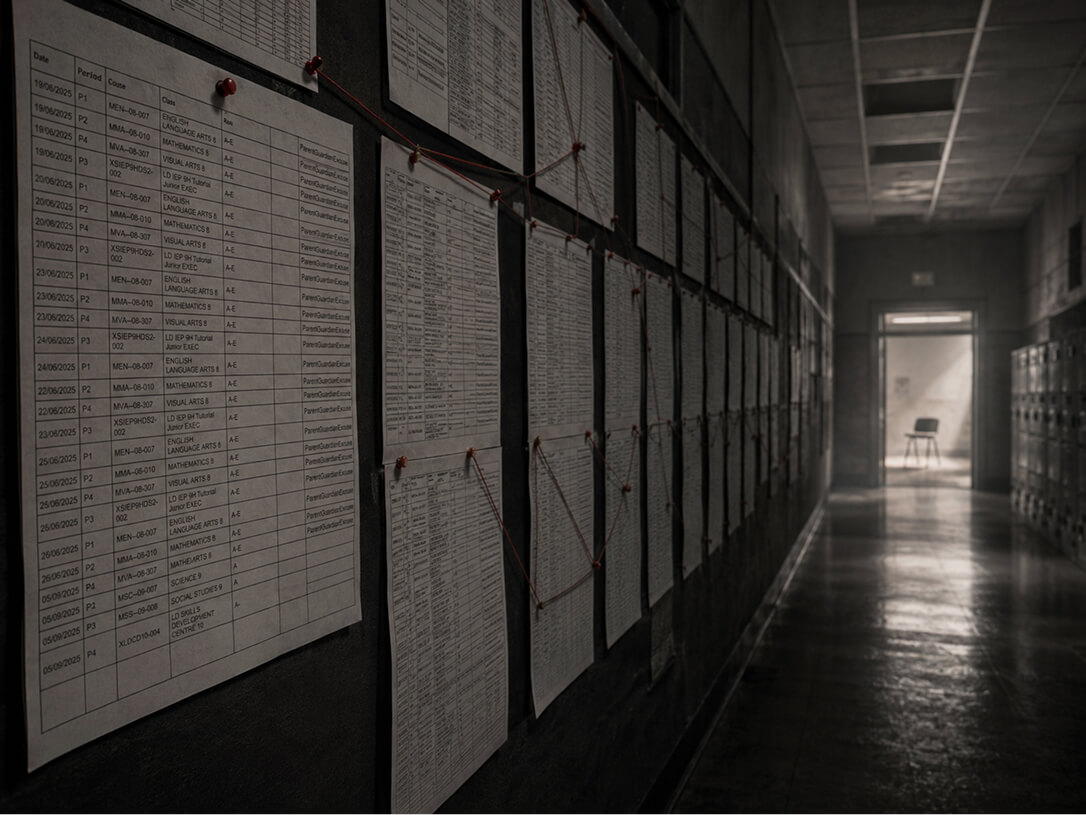
Everyone can see that education budgets are pinched, yet the Ministry has committed to zero additional funding for staffing or resources to address the needs this screening will expose. As a parent who has spent tens of thousands of dollars on private assessments that prove my children need support, watched those assessments acknowledged and then ignored, fought for accommodations only to have them withdrawn the following term, I know first hand that diagnosis does not equal support in the current scarcity logic of underfunded schools. The pattern repeats: assessment generates documentation, documentation goes into files, files become evidence of need the system refuses to meet.
Districts must absorb the costs of implementing these screening tools while already operating under austerity conditions that leave classrooms under-resourced, learning assistance services stretched impossibly thin, and teachers managing caseloads that make meaningful intervention very challenging.
The mandate will pull teacher hours away from actual instruction, redirect classroom time toward standardised testing rituals, produce data that sits in provincial databases while children who need support continue waiting for services that remain perpetually under-resourced.
-

Engineered famine in public education
In British Columbia schools today, we are not facing a behaviour crisis—we are facing a famine of care. This essay weaves together personal memory, systemic critique, and deep empathy for teachers and families alike to ask why our schools are starving the very…
Risk associated to BC’s choice of screening tools
The Ministry suggests three screening tools with each carrying problems the BCTF catalogues with care:
- DIBELS stores student data in the United States and offers no Canadian version,
- Aimsweb Plus provides Canadian content only through Grade 2, and
- both Acadience and Aimsweb Plus require substantial training costs that districts must somehow absorb.
The BCTF advocated for tools that store data securely in Canada, offer Canadian versions across all grade levels, and demonstrate cultural and pedagogical relevance to BC learners. The Ministry promises a BC-developed screening tool for next year, but the BCTF raises the obvious concern: developing such a tool takes time, and proper in-service training requires advance preparation that seems unlikely given current timelines. As I’ve discussed previously, we should not underestimate the risks associated to storing data in ways that don’t align with Canadian privacy laws.
The BCTF advocated for tools that store data securely in Canada, offer Canadian versions across all grade levels, and demonstrate cultural and pedagogical relevance to BC learners. None of these recommendations are reflected in the government’s plan.
Teaching time taken from focussing on the kids that need help
BCTF notes that teachers already know which students need support. The mandate frames screening as revelation, as though data collection itself constitutes care, when the actual barrier remains unchanged—schools lack the staffing, specialist support, learning assistance resources, and classroom capacity to address the needs screening will document.
Families already carry this knowledge through different means: the psychoeducational assessments we pay for privately, the speech-language evaluations, the occupational therapy reports that schools request and then shelve, the documentation we gather to prove what teachers observe daily and what our children live hourly. Many parents, like Heather Morrison, who’ve already had their children receive dyslexia diagnosises spend years fighting for any support.
-

Kamloops mother speaks after district ignored daughter’s dyslexia for thirteen years
‘She was failed’: Mother speaks out after Kamloops student’s dyslexia ignored tell the story of Heather Morrison. She spent thirteen years asking teachers and principals to assess her daughter for learning disabilities, watching her child move through kindergarten to graduation while reading at…
BC literacy screening requires funding for both testing and intervention
I support standardised literacy screening—I suspect my own dyslexia and wish someone had tested me as a child, caught the signs early, offered intervention before shame calcified into identity, before I built compensatory strategies that masked struggle while leaving the underlying difficulty untouched. Early identification matters, creates pathways toward support that can alter developmental trajectories, and screening tools offer one mechanism for catching children who might otherwise slip through observational gaps, particularly girls and twice-exceptional students who compensate in ways that allow them to remain invisible within classroom observation, their struggles legible only through systematic assessment designed to catch what performance and masking conceal.
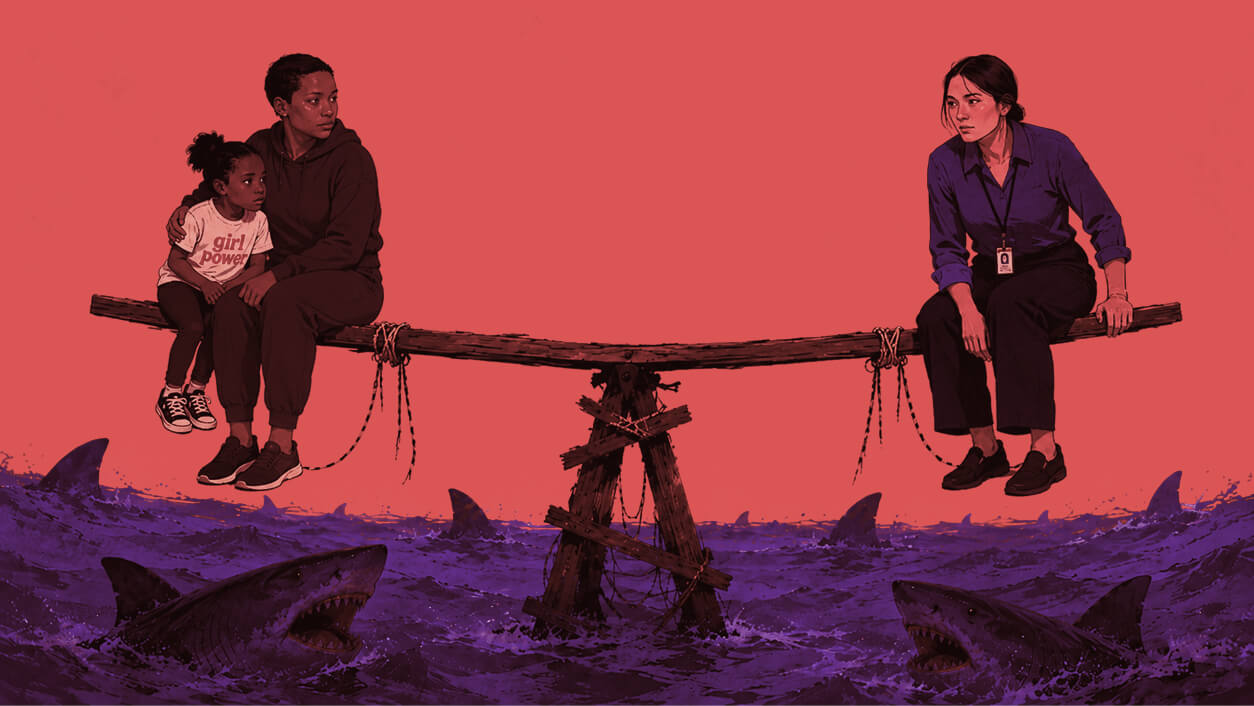
The issue lives in the Ministry’s choice to mandate assessment while refusing to fund the intervention that should follow identification, the decision to burden districts with implementation costs while maintaining austerity budgets that already leave existing support services catastrophically under-resourced. The logic feels deliberately cruel: identify more children who need help, provide no additional means to help them, then hold districts accountable when outcomes fail to improve.
The mandate carries the architecture of manufactured accountability, treating districts as though they mismanage resources rather than operate under conditions of engineered scarcity, positioning screening as surveillance mechanism rather than support infrastructure. The Ministry frames assessment as though documentation itself constitutes intervention, as though identifying need without funding response represents commitment to literacy rather than performance of concern, creating the conditions where districts absorb both financial burden and political blame for outcomes that provincial budget choices render impossible to achieve.
-

When compensation is mistaken for capacity: why I support Dyslexia BC
In every school, there are those children—gifted and hyper-conscientious—who stay behind after the bell has rung, who do the homework even when no one collects it, who chase perfection out of a desperation to stay afloat in a system that offers no life…
Must our government build a ‘business case’ for everything?
This mandate follows a pattern visible across BC’s education system, the same architecture that generates room clears and partial schedules, safety plans without accommodations, and the systematic exclusion I document through End Collective Punishment in BC Schools.
The government operates as though every commitment to disabled children requires a business case, treating educational rights as contingent on cost-benefit analysis rather than moral or legal imperative, demanding economic justification for meeting basic legal and moral obligations while framing resource scarcity as natural constraint rather than policy choice.
Assessment without investment creates conditions for abandonment.
Just a Parent
The Ministry promotes identifying children who need support while refusing to fund the structures that would provide it, generating documentation that proves need while maintaining the austerity logic that ensures need remains unmet, then blaming families when their children cannot thrive under conditions designed to produce failure.
Read the full BCTF statement
Read the full article on Teacher Magazine. The Federation continues to lobby for additional funding beyond existing literacy grants, advocate for proper training on forthcoming tools, and insist that teachers and specialist associations participate in development processes.
Support Dyslexia BC
Dyslexia BC provides resources, advocacy, and support for families navigating learning differences in a system that often treats dyslexia as invisible. The organisation offers workshops, connects families to assessment resources, and advocates for evidence-based literacy instruction and early intervention. Families managing dyslexia in BC schools need both immediate practical support and long-term systemic advocacy, and organisations like Dyslexia BC provide both while government continues treating literacy intervention as an optics exercise.
-

Four years on a waitlist
Richard Hackett’s eight-year-old son Austin has waited four years for occupational therapy services in Ontario, placed on the waitlist when he was four years old and still waiting as he navigates school with a learning disability and ADHD. The family received a school-based…