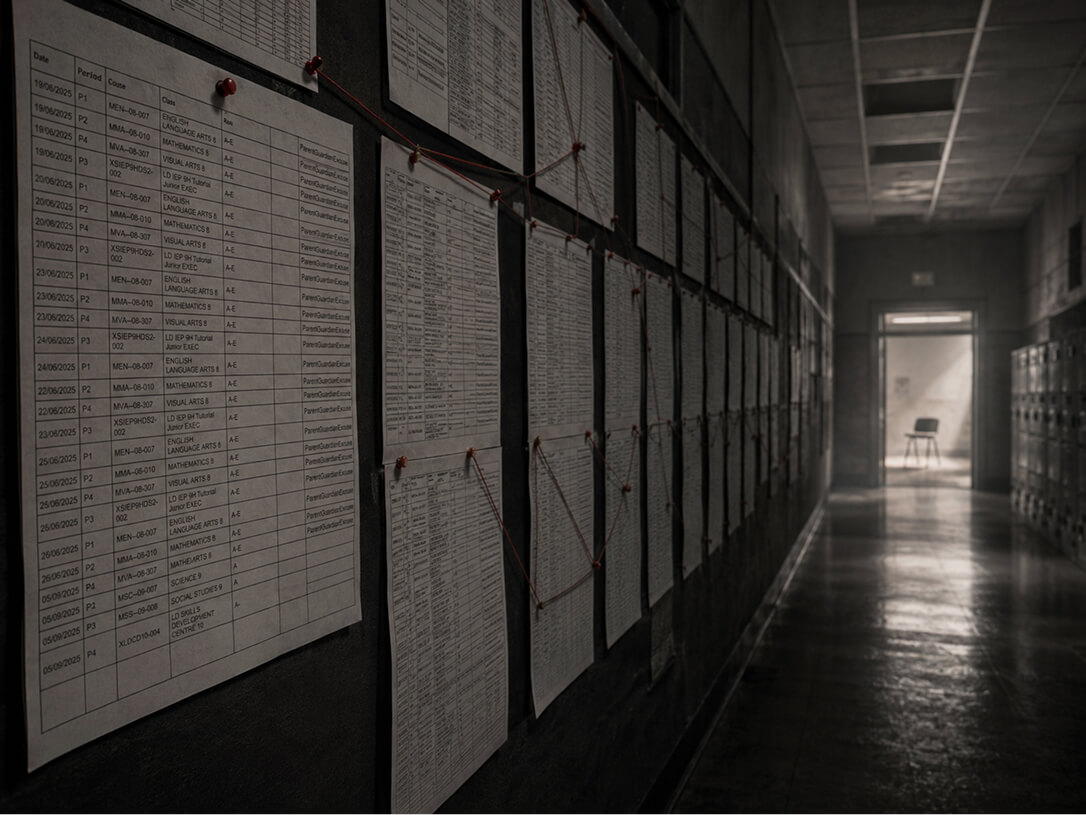
The Journal of Inclusion and Disability published research this month documenting what families living through exclusion have been saying for years: partial-day schooling operates as institutional marginalisation, transforming policy failure into individual deficit while schools claim to serve students they are systematically denying education.
Gordon Porter and Andrea Cameron’s article examines partial-day schooling across Canadian jurisdictions, drawing on provincial ombudsperson investigations, advocacy organisation reports, and parent testimony to reveal patterns obscured when exclusion gets framed as isolated incident rather than structural design. The research positions partial-day attendance within broader systemic inequities, demonstrating that shortened schedules disproportionately impact disabled students, disrupt academic progress and social development, create profound family burden, and reflect chronic underfunding and inadequate training rather than student need or legitimate accommodation.
-
The unseen wounds of advocacy: caregiver burnout, moral injury, and embodied grief
Caregiver burnout in BC schools reflects moral injury and systemic betrayal, as mothers fight exclusion and harm while advocating for disabled children.
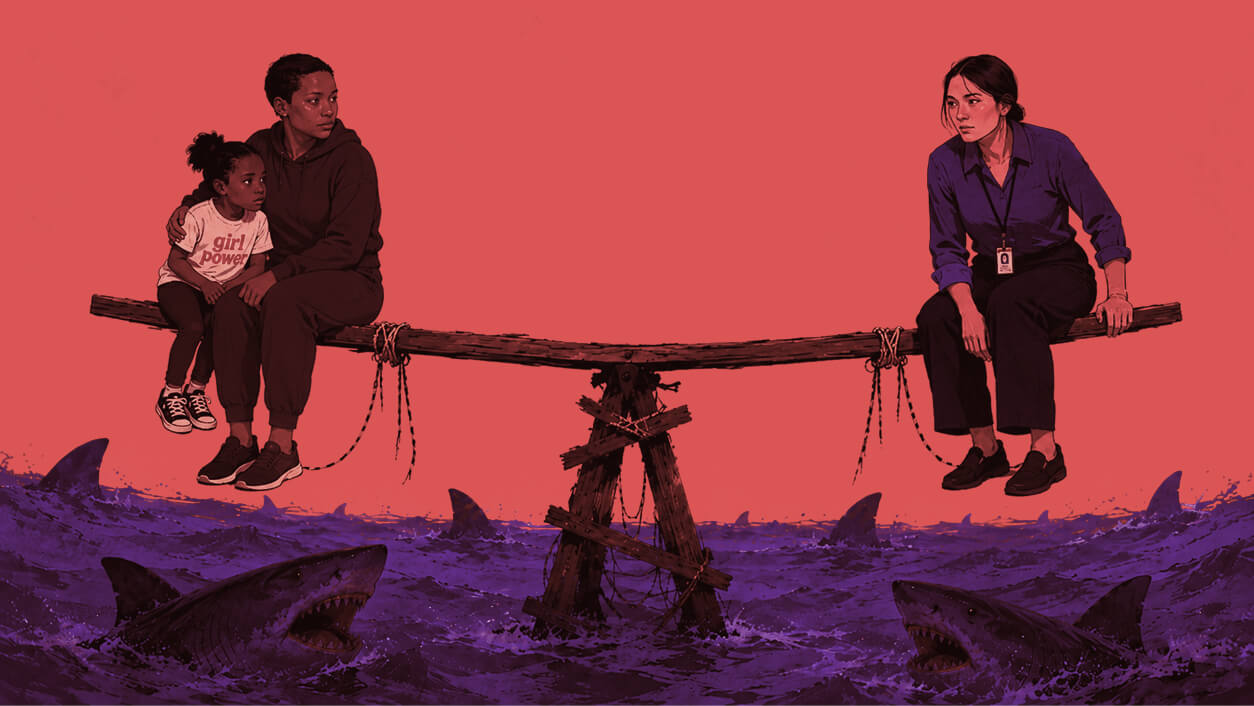
Their analysis centres what parents experience: children internalising messages that they are bad, mean, stupid, unwanted; families forced to choose between employment and supervision during school hours; schools justifying exclusion through behaviour while refusing to address underlying disability-related or environmental causes; districts normalising practices that would require formal process, written justification, and appeal rights if named honestly as suspension or expulsion. One parent describes the impossible position created when schools lack capacity to support yet demand compliance:
“The school recommended reduced days due to behaviours they were unable to support due to resource constraints; we also supported the reduced days because the only solution to behaviour challenges was isolation in a calming room, and he has been hurt during those isolations.”
The failure of inclusion in schools in Canada
Partial-day schooling represents systematic failure to implement inclusive education despite legal mandates under the United Nations Convention on the Rights of Persons with Disabilities, provincial human rights codes, and constitutional protections. Porter and Cameron emphasise that while Canadian provinces have formally adopted inclusive education policies, implementation remains inconsistent, constrained by insufficient staffing, limited training, and institutional cultures that treat disabled students as logistical problems requiring management rather than children entitled to full participation.
The article documents consequences extending beyond interrupted instruction: social isolation, emotional distress, damaged self-concept, financial strain, employment disruption, chronic advocacy labour. Parents report navigating systems designed to exhaust, where every accommodation requires documentation, justification, appeal; where schools frame exclusion as temporary measure or collaborative solution while maintaining indefinite timelines and refusing to specify criteria for restoration of full access; where districts claim resource constraints prevent support yet somehow find capacity to isolate, restrain, remove.
-

The architecture of absence data in Canada
A CBC investigation maps the landscape of what we choose to measure and what we choose to obscure, revealing a system where the simple act of knowing why children disappear from classrooms becomes an exercise in bureaucratic endurance calibrated toward opacity rather than understanding. The cost of transparency The investigation documents a…
Porter and Cameron position advocacy organisations as essential intermediaries bridging the gap between policy intent and classroom practice, providing families with legal guidance, systemic navigation support, and collective voice when individual complaints get dismissed as parental overreaction or misunderstanding. Their research acknowledges that while advocacy groups help families survive institutional systems designed for their failure, ultimate responsibility lies with school leadership and ministries of education to eliminate exclusionary practices through adequate resourcing, professional development, cultural transformation, and enforceable accountability mechanisms.
Increasing inclusion in Canadian schools
The article identifies key imperatives:
- reforming policies that justify partial-day attendance based solely on student behaviour;
- ensuring clear pathways for families to access inclusion supports and appeal exclusionary decisions;
- investing in professional capacity to equip educators with skills necessary for inclusive practice;
- striking balance between safety and inclusion by eliminating harmful interventions such as seclusion and restraint;
- collaborating with families and advocacy organisations to dismantle systems producing exclusion while claiming inclusion.
This research arrives as British Columbia faces renewed scrutiny of exclusionary practices following Jay Chalke’s announcement of systemic investigation, as parents across the province document sustained denial of education through mechanisms including partial schedules, safety plans, room clears, modified programming, and informal suspensions disguised as collaborative planning. The patterns Porter and Cameron identify—indefinite timelines, coercive implementation, disproportionate impact on disabled students, absence of alternative instruction, institutional justification through behaviour rather than environmental analysis—map precisely onto testimony gathered through freedom of information requests, ombudsperson complaints, human rights tribunal filings, and advocacy organisation casework.
Porter and Cameron conclude that partial-day schooling contradicts principles of inclusive education, representing systemic denial of rights requiring elimination through adequate resources, cultural change, and full implementation of international human rights frameworks. The research demonstrates what families navigating exclusion already understand: shortened schedules operate as institutional violence, producing academic harm, social deprivation, emotional damage, and family crisis while schools maintain plausible deniability through language performing care, collaboration, student-centred planning.
Parents describing children who wake distressed at the thought of school, who hide to escape attendance, who develop such profound fear of educational environments that families remove them entirely—these testimonies reveal exclusion’s emotional architecture, the psychic cost of systems claiming inclusion while engineering exit. One parent captures the impossible position:
“I fear for the psychological trauma and damage that he will suffer attending schools in a system that does not want him, cannot tolerate his attendance, and makes him and our family feel unwelcome, unwanted, and like we do not belong.”
The research affirms what documentation projects like End Collective Punishment in Schools have been establishing through policy analysis, district comparison, and rights-based advocacy: partial-day schooling functions as exclusion by redefinition, designed for denial, maintained through institutional discretion that allows schools to control access while avoiding accountability.
What families can do
If your child has been placed on a partial schedule, request written documentation specifying the educational rationale, legal authority, timeline for restoration of full access, and instructional alternatives being provided during reduced hours. Schools claiming partial schedules serve student interests should demonstrate through evidence rather than assertion; accommodation means adjusting environment to enable access, not reducing access and calling it support.
-

District exclusion reasons
A review of exclusion records from New Westminster (SD40) and Southeast Kootenay (SD5) reveals a consistent pattern: the stated reasons for exclusion drift toward biography, circumstance, and administrative decisions rather than the educational factors that legitimately shape access to full-time schooling. The records describe personality traits, incidental details, and complex…