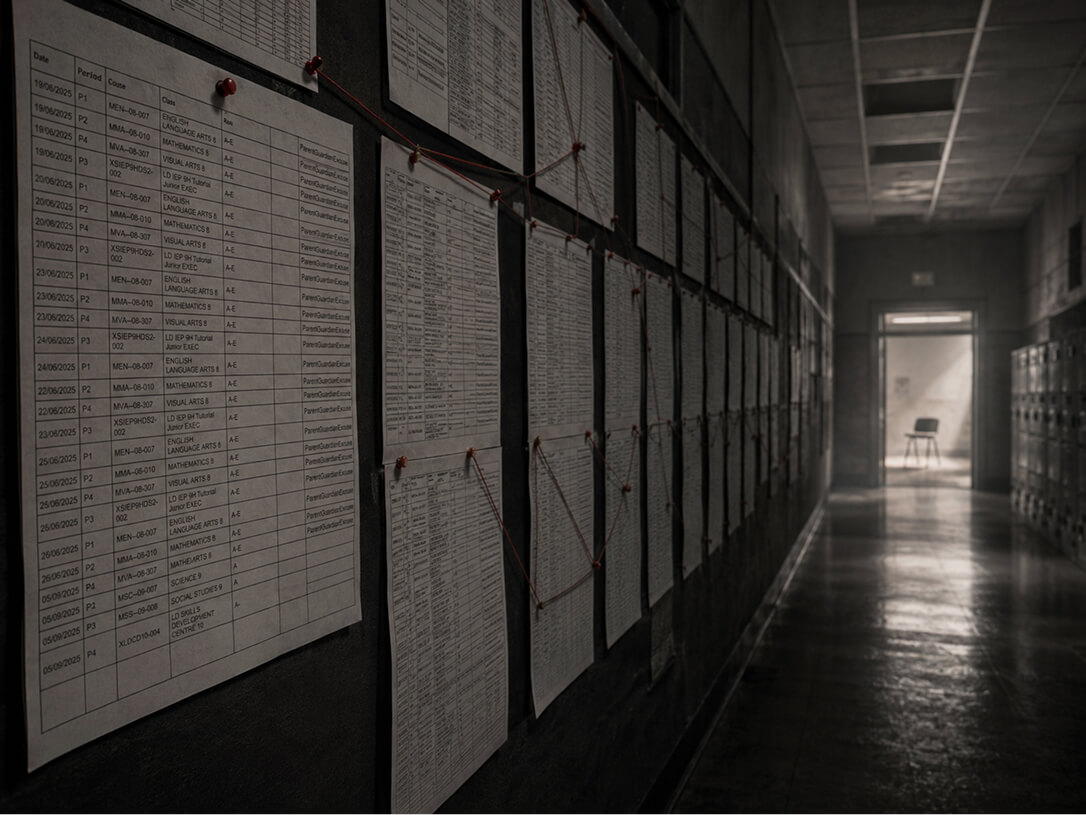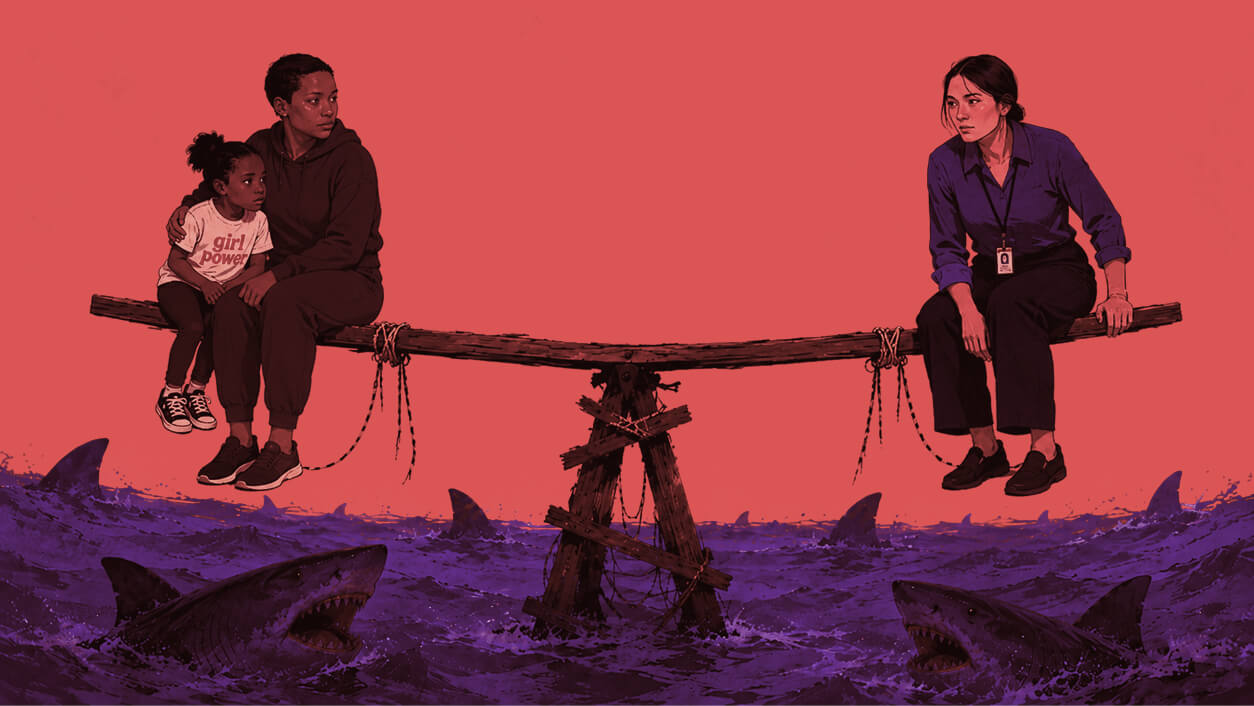
The teacher’s letter arrives home with careful reassurances about fairness, dignity, and professional expertise, yet embedded within its polite paragraphs sits a fundamental contradiction: the rules governing this seventh-grade classroom emerged from the crowdsourced preferences of twelve-year-old children rather than from pedagogical research or developmental understanding.
Ah yes, the wisdom of crowds—particularly effective when the crowd consists entirely of people whose prefrontal cortexes will remain under construction for another decade.
Just a Parent
The teacher positions this practice as engagement, as buy-in, as democratic participation in the social contract of learning. She imagines that children who author the rules will perceive them as fair, will follow them willingly, will internalise the logic of compliance through ownership.
This framework collapses under scrutiny, revealing pedagogical evasion—a retreat from adult responsibility disguised as progressive collaboration.
-

How do school staff survive while upholding systems that cause harm?
Freyd’s betrayal trauma theory (1996) starts with the idea that trauma is more psychologically destabilising when it comes from someone—or some system—you are dependent on and trust. Abuse by a stranger wounds, but abuse by a parent, partner, or caregiver fractures the psyche…
Didn’t they teach Lord of the Flies at your school?
You can probably imagine my face twisting in disgust, when I got the email, biting my cheek so as to not scream out with frustration.
William Golding understood what happens when children govern themselves without adequate adult scaffolding. Lord of the Flies remains pedagogically useful because it dramatises what happens when structures of care dissolve into peer-enforced conformity, when rules emerge from group dynamics rather than ethical frameworks grounded in protection.
The boys on Golding’s island begin with democracy—they vote, they assign roles, they attempt rational governance—yet their system degrades rapidly into exclusion, cruelty, and violence because children lack the developmental capacity, the historical knowledge, and the moral formation to construct just systems from scratch.
They cannot anticipate edge cases. They cannot recognise their own biases. They cannot protect the vulnerable among them because they do yet understand vulnerability as a category requiring structural intervention rather than individual fortitude.
Spoiler alert: it ends badly.

The research confirms what literature dramatises: children’s moral reasoning develops through stages, moving from concrete reciprocity toward abstract principles of justice only through guided experience and explicit instruction.
Seventh graders occupy a transitional phase—capable of sophisticated social navigation yet constrained by egocentric perspectives, peer pressure, and limited exposure to diverse ways of being. Asking them to generate classroom rules without expert guidance produces predictability: they replicate dominant norms, centre neurotypical behaviour, privilege compliance over learning, and construct boundaries that feel natural to them whilst excluding peers whose neurology, temperament, or circumstances differ from the majority.
The illusion of fairness through ownership
The teacher’s rationale—that student-authored rules generate perceptions of fairness—misunderstands both fairness and ownership. Fairness requires deliberate attention to power dynamics, to structural inequities, to whose voices dominate the crowdsourcing process and whose needs remain unspoken; it cannot be achieved through majority preference alone.
When twelve-year-olds propose “listen respectfully” and “follow instructions,” they articulate their own frustrations with classroom disruption, their desire for predictable adult authority, their absorption of school culture’s emphasis on compliance.
They do consider that some children cannot maintain prolonged silence due to neurological differences, that auditory processing delays might require speaking out of turn to participate at all, that “respectful listening” remains culturally defined and therefore excludes children whose communication patterns diverge from white, middle-class, neurotypical norms.
Ownership becomes coercion when children bear responsibility for rules they lack the authority to interpret, enforce, or modify. The teacher retains all enforcement power—she issues the warning, she determines the threshold, she decides when behaviour constitutes rule-breaking—yet frames consequences as flowing from student consensus rather than adult judgment. This rhetorical manoeuvre obscures power whilst intensifying it, making discipline appear inevitable rather than chosen, natural rather than constructed, fair because the children apparently agreed to it. Seventh graders cannot give meaningful consent to disciplinary systems; they cannot foresee how rules will be weaponised against them or their peers, cannot predict which bodies will become marked as chronically non-compliant, cannot anticipate the cumulative trauma of repeated exclusion dressed up as “self-regulation.”
Expertise abandoned
The teacher possesses a teaching degree, years of training in child development, access to current research on inclusive pedagogy and trauma-informed practice, yet she declines to use this expertise when structuring the foundational elements of classroom culture. Children deserve adults who take responsibility for creating environments where all learners can access education, where rules flow from understanding rather than preference, where the vulnerable receive protection instead of being subjected to majority rule.
A teacher who knows that speaking out of turn often signals auditory processing differences, anxiety, or the neurodevelopmental characteristic of hyperfocus carries the ethical obligation to structure participation without punitive consequences for neurological variance. A teacher who understands that timeout systems activate trauma responses, communicate rejection, and reduce access to instruction should refuse to implement such systems even if students request them.
This particular teacher positions her degree and professional knowledge as secondary to student opinion, suggesting that expert-designed rules would feel imposed, authoritarian, disconnected from student experience. She mistakes participation for co-design, consultation for governance, and in doing so creates a system where children police each other according to norms they absorbed from previous exclusionary schooling.
Someone needs to be the adult, to ensure the rules are fair.
Just a Parent
The rules they generate—listen respectfully, follow instructions, be kind—sound reasonable until examined for what they assume. They assume all children can sit still, process auditory information in real time, modulate their voices, read social cues, and suppress neurological impulses on demand. They assume that speaking out of turn represents wilful disruption rather than communication necessity. They assume that kindness looks the same across all bodies and brains. These assumptions remain unexamined because seventh graders lack the frameworks to interrogate them, and the teacher has declined to provide those frameworks in favour of democratic participation.
Timeout as self-regulation: euphemism and exclusion
The consequence system reveals the practical failures embedded in student-authored rules: children who break rules twice in one day must sit separately from the class “for a few minutes,” ostensibly to regulate. The teacher describes this practice as both timeout and self-regulation, using the terms interchangeably, apparently unaware that the two concepts contradict each other fundamentally. Self-regulation involves developing internal capacity to manage arousal, emotions, and attention; it requires co-regulation from safe adults, explicit teaching of regulatory strategies, and environmental modifications that reduce dysregulation triggers. Timeout, conversely, involves removing the child from the learning environment as punishment for behaviour deemed disruptive, teaching isolation as consequence rather than regulatory capacity.
When the teacher calls timeout “self-regulation,” she performs euphemistic relabelling that obscures harm. The child sent to the back of the classroom learns nothing about managing sensory overwhelm, nothing about requesting breaks before reaching crisis, nothing about communicating needs or advocating for accommodations. The child learns that breaking rules—rules authored by peers who do share their neurological reality—results in spatial exclusion, in being marked visibly as someone who cannot participate appropriately, in losing access to instruction and social connection precisely when those supports matter most. The class, meanwhile, learns that some bodies belong whilst others do, that certain ways of being warrant removal, that the teacher will protect vulnerable students from peer-generated norms that exclude them.
Research on exclusionary discipline practices demonstrates unambiguous harm: removing students from instruction reduces academic outcomes, increases dropout risk, damages student-teacher relationships, and disproportionately affects disabled students, racialised students, and students navigating poverty. Research on timeout specifically shows that it functions as punishment rather than support, activating shame and rejection rather than building regulatory capacity. Yet this teacher implements timeout daily, describes it as delivered “with utmost respect for their dignity,” and appears to believe that calling it self-regulation transforms its nature. Dignity cannot be preserved through exclusion. Respect cannot coexist with removal. The child sitting alone at the back of the classroom experiences the consequence as punishment regardless of the teacher’s internal narrative about her intentions.
-

Apparently, starving yourself isn’t a serious mental health condition in VSB
There is a kind of harm that unfolds slowly — a hunger that accumulates across weeks and months, tucked beneath the surface of routines and well-meaning systems. My daughter is autistic, has ADHD, and a feeding disorder called ARFID. She eats quietly, cautiously,…
Who belongs in the circle
The crowdsourced rules—listen respectfully, follow instructions, do your work, be kind, respect materials, phones out of sight—create a behavioural template that centres neurotypical, economically secure, emotionally regulated children who arrive at school having slept adequately, eaten breakfast, and experienced no morning trauma. These children can listen respectfully because their auditory processing functions typically. They can follow instructions because their working memory holds multi-step directions. They can do their work because their executive function supports task initiation and sustained attention. They can be kind because their nervous systems permit social reciprocity. They can respect materials because they have practised fine motor control and impulse regulation. They can keep phones out of sight because phones do represent their primary connection to parents who work multiple jobs, primary source of emergency contact, or primary tool for managing anxiety.
Children who cannot meet these expectations—because of neurodevelopmental disability, trauma history, economic precarity, or developmental variance—face daily warnings, daily timeouts, daily marking as non-compliant. The system does ask why a child speaks out of turn; it asks only whether they broke the rule. It does consider whether sitting separately constitutes therapeutic intervention or traumatic repetition; it counts only whether the consequence occurred with a calm voice and respectful tone. The teacher describes avoiding lectures and raised voices as though volume represents the primary harm in exclusionary discipline, as though quiet removal inflicts less damage than loud reprimand, as though the child’s experience of being sent away matters less than the teacher’s experience of maintaining composure.
The system functions precisely as designed: it maintains order, centres compliant bodies, and makes visible which children belong and which remain perpetually on probation. It teaches children that fairness means uniform application of rules regardless of differential capacity to follow them, that justice means consequences delivered politely, that inclusion means conditional acceptance revoked the moment behaviour deviates from peer-authored norms. These lessons do serve disabled children, traumatised children, or neurodivergent children—the students most likely to require flexibility, compassion, and structural accommodation rather than peer-generated standards enforced through spatial exile.
Congratulations to all the children who arrived at school appropriately regulated! Gold stars for being born with cooperative neurology!
The teacher’s retreat
Perhaps most troubling, the crowdsourcing framework allows the teacher to disclaim responsibility for the harm her system produces. When a child sits in timeout, the teacher can gesture toward the rules—the students wrote these, the students agreed, the students know what happens when rules are broken—as though student authorship absolves adult accountability. She can describe offering “one warning each day” as evidence of patience, as generous provision of second chances, without examining whether neurologically based behaviours warrant warnings at all. She can position herself as fair—applying the same standard to every child—without recognising that equality of treatment produces inequality of impact when children enter the classroom with vastly different capacities, histories, and support needs.
This retreat from expertise appears throughout the letter: the teacher mentions her professional goal to communicate better with parents, yet she provides no mechanism for parents to contest the disciplinary system, no invitation to collaborate on individualised approaches, no acknowledgment that some children require different structures entirely. She notes that students lack homework partly because “all students have adults at home who can help them,” demonstrating awareness of economic inequality, yet she implements a discipline system that punishes children who cannot regulate independently—children who also disproportionately lack adult support at home. The contradictions reveal a teacher who recognises systemic inequity in some domains whilst reproducing it in others, who positions herself as progressive whilst implementing practices that decades of research have exposed as harmful.
But sure, let’s ask the twelve-year-olds what they think.
What children deserve
Children deserve rules designed by adults who understand child development, who centre inclusion as non-negotiable, who refuse to implement systems that predictably harm disabled and marginalised students regardless of how politely those systems operate. They deserve teachers who use their expertise to create structures that support all learners, who modify expectations based on individual capacity, who treat behaviour as communication rather than defiance. They deserve classrooms where speaking out of turn warrants curiosity rather than warnings, where dysregulation prompts co-regulation rather than isolation, where difference represents variation rather than violation.
Seventh graders cannot design such systems themselves—they lack the developmental perspective, the theoretical frameworks, and the historical knowledge required to construct truly inclusive environments. They replicate what they know, which means they replicate the exclusionary practices that have shaped their own schooling. Asking them to generate rules positions children as responsible for creating the conditions of their own exclusion, as authors of the systems that will mark some of them as perpetually non-compliant. This represents pedagogical failure—a teacher declining to use her authority, her training, and her ethical obligation to protect all students in favour of a progressive-sounding practice that produces regressive outcomes.
The teacher’s letter concludes with an invitation: she welcomes hearing from parents, hopes to communicate better, wants questions and information. The structure she has built does permit meaningful challenge. The rules exist because students wrote them. The consequences exist because the rules exist. The timeout exists because fair enforcement requires consistent application. Each element appears inevitable, natural, beyond contestation—yet everything about this system flows from choices this teacher made: to ask children to govern themselves, to implement timeout as discipline, to call exclusion self-regulation, to retreat from expertise in favour of crowdsourced preferences that inevitably centre the already-centred.
Golding’s boys began with democracy and descended into savagery—they lacked adults willing to intervene, to teach, to structure environments that protect the vulnerable from majoritarian harm. This seventh-grade classroom will descend into literal violence, yet it will reproduce hierarchies, will mark bodies as non-compliant, will teach children that inclusion remains conditional and fairness means identical treatment regardless of differential need. The teacher could choose differently. She could use her degree, her training, her expertise to build something better—she would first need to recognise that asking children to design the rules represents abandonment rather than empowerment, abdication rather than democracy, a retreat from the ethical responsibility to protect all learners from systems that predictably exclude them.
-

She graduated and this is what she learned
On raising a badass advocate, unintentionally. I didn’t set out to raise an advocate—I set out to raise a child. A child who might feel safe in her body and steady in her breath, who might look out at the world and feel…