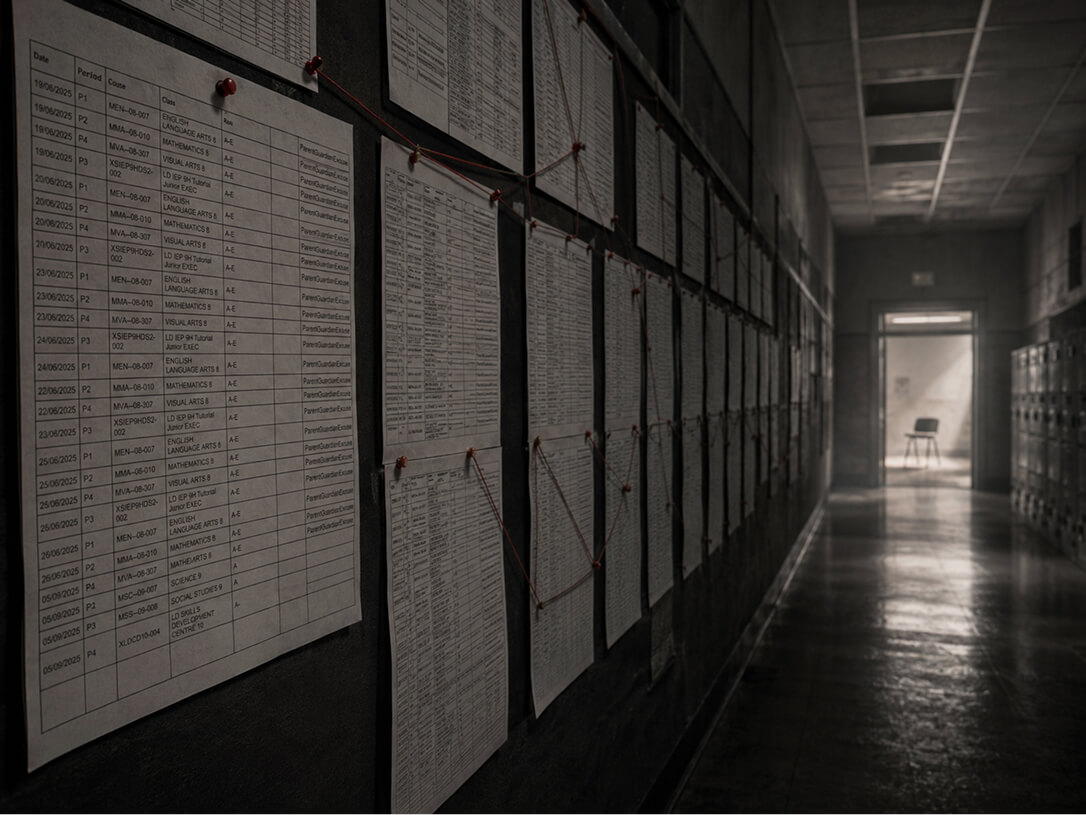
Every fall the BC Ministry of Education and Child Care releases an annual Aboriginal Report – How Are We Doing? covering Indigenous (First Nations, Métis, Inuit) student outcomes in public schools. For example, the 2023/24 edition (dated November 2024) tracks graduation rates, test scores, course marks, special education designations, survey results, and related indicators for Indigenous and non-Indigenous students media.sd5.bc.ca fnesc.ca.
Content warning: This article discusses historical and ongoing institutional harm to Indigenous and disabled children, including mortality in residential schools, physical restraint, seclusion, and systemic violence in educational settings.
As the report reveals gaps: Indigenous students generally have lower completion and test scores than others, even as all groups improve over time fnesc.ca. This transparency is notable in light of Canada’s history: during the residential school era the federal government suppressed information on the harms. For example, Dr. Peter Bryce (chief medical officer of Indian Affairs) investigated Indigenous boarding schools in 1907–08 and found catastrophic tuberculosis mortality. One summary notes that “mortality rates at some residential schools in western Canada ranged from 30 to 60 percent over five years” en.wikipedia.org. That data – gathered by Bryce in 1908 – was not made public until 1922, when he self-published The Story of a National Crime en.wikipedia.org. Thus, high death rates in the schools were known internally long before they were disclosed; they were kept hidden by officials for over a decade.
The contrast in today’s BC is stark. The Aboriginal Report only exists because political and legal pressure forced disclosure of Indigenous education data. The 2007 Indian Residential Schools Settlement Agreement (IRSSA) – itself the largest class-action settlement in Canadian history – created the Truth and Reconciliation Commission (TRC) with a $60-million mandate to document survivors’ experiences en.wikipedia.org. The TRC proceeded to gather testimony (over 6,750 survivors and family members provided statements)princeedwardisland.ca and made its Final Report (2015) public. Many survivors also took legal action: “In 2008, after thousands of school survivors filed lawsuits, the Canadian government formally apologised for its policies. It also set up a $1.9 billion compensation fund and established a Truth and Reconciliation Commission… For six years the commission heard testimony from survivors across the country” cbsnews.com.
In short, tens of thousands of Indigenous people and allies spoke publicly, sued, gave media interviews, and urged governments to reckon with the schools. Indigenous organisations like the First Nations Education Steering Committee (FNESC) and the National Centre for Truth and Reconciliation (NCTR) then partnered with government as “Tripartite” negotiating bodies, shaping what data was collected and how it’s reported fnesc.ca en.wikipedia.org.
Transparency about Indigenous student outcomes came only after legal settlements, federal apologies, TRC hearings, and sustained media attention created a political imperative.
Restraint and seclusion data in BC schools
By contrast, no comparable provincial report or dataset exists for how often students with disabilities are physically restrained, isolated (seclusion), or otherwise excluded from class. The BC government does not publicly publish annual stats on these practices.
In fact, the BC Ministry of Education has no legislative or mandatory reporting requirements for restraints or seclusion. An Inclusion BC/Family Support Institute guide notes bluntly: “In BC there is no provincial legislation regulating the use or reporting of restraint and seclusion in schools” familysupportbc.com.
Guidelines issued in 2015 and refreshed in 2019 encouraged school districts to adopt their own policies, but enforcement is uneven. As of March 2022, Inclusion BC found that 59 of 60 districts had some policy on restraint/seclusion, but with “alarmingly inconsistent” compliance to provincial standards inclusionbc.org.
There is no province-wide database of incidents. In practice, districts may record incidents locally (if at all), but do not report aggregated numbers to the Ministry. A BCEdAccess press release confirms this gap: “Districts do not collect data or information on restraint and seclusion room use” bcedaccess.com.
Because of this silence, families and advocates have taken up the slack. The BCEdAccess Society (a non-profit of parents of children with disabilities) launched an Exclusion Tracker survey in 2018 to document how often students are excluded (sent home early, partial days, or kept in isolation) for disability-related reasonsbcedaccess.com.
BCEdAccess reports yearly on this survey data. For example, by June 2022 parents had reported 4,760 incidents of exclusion in the 2021/22 school year bcedaccess.com. The tracker is explicitly needed because official sources provide nothing: as BCEdAccess’s former Chair, Tracy Humphreys, said, parents report exclusion “because districts refuse to supply this data”bcedaccess.com. In 2025 the project expanded: hosted by the Family Support Institute, the National Exclusion Tracker is now recruiting reports from across Canada – including child-care exclusions for the first time familysupportbc.com.
Right now, the cost of withholding restraint and seclusion data remains low for government. The burden of documentation shifts to families and advocacy groups.
Just a Parent
BC’s education system has robust data tools (for example, the MyEducationBC database that tracks attendance, course schedules, special ed designations, etc.), but restraint/seclusion reporting is simply not mandated or centralised.
Advocates emphasise that the technical capacity exists – districts could record each restraint incident in MyEdBC and produce disaggregated reports – yet no one is forcing them to. The result is that we lack basic public statistics on how often disabled students in BC schools are restrained, isolated, or removed from class. Instead, families and organisations must rely on surveys and anecdotes.
Policy and reporting gaps
BC’s official stance has been to treat restraint and seclusion as local safety issues, not matters for provincial data collection. After a 2013 report (“Stop Hurting Kids”) revealed widespread use of restraint and seclusion, the government asked districts to adopt policies (with guidelines and training) inclusionbc.org.
By late 2019 almost all districts did so inclusionbc.org. But crucially, no provincial law or ministerial order requires documenting or reporting these incidents. Inclusion BC notes that existing guidelines “aimed to increase accountability” and even “require reporting to the Ministry at year-end, but with no enforcement, compliance has been minimal inclusionbc.org inclusionbc.org. In practice, only a few districts publicly release any numbers, and those data cover only part of the province. The BC government has not compiled or published system-wide figures.
Similarly, there is no integrated system for tracking “exclusion” (learners sent home early, kept out of class by arrangement, or otherwise denied instruction). The education ministry’s databases do record attendance (full/partial day) and whether a student has special education designations, but there is no province-wide mechanism to flag exclusions or to analyse them by disability status or other demographics. In fact, BCEdAccess had to create its own definition and survey for “exclusion” because official records did not identify it. bcedaccess.com bcedaccess.com.
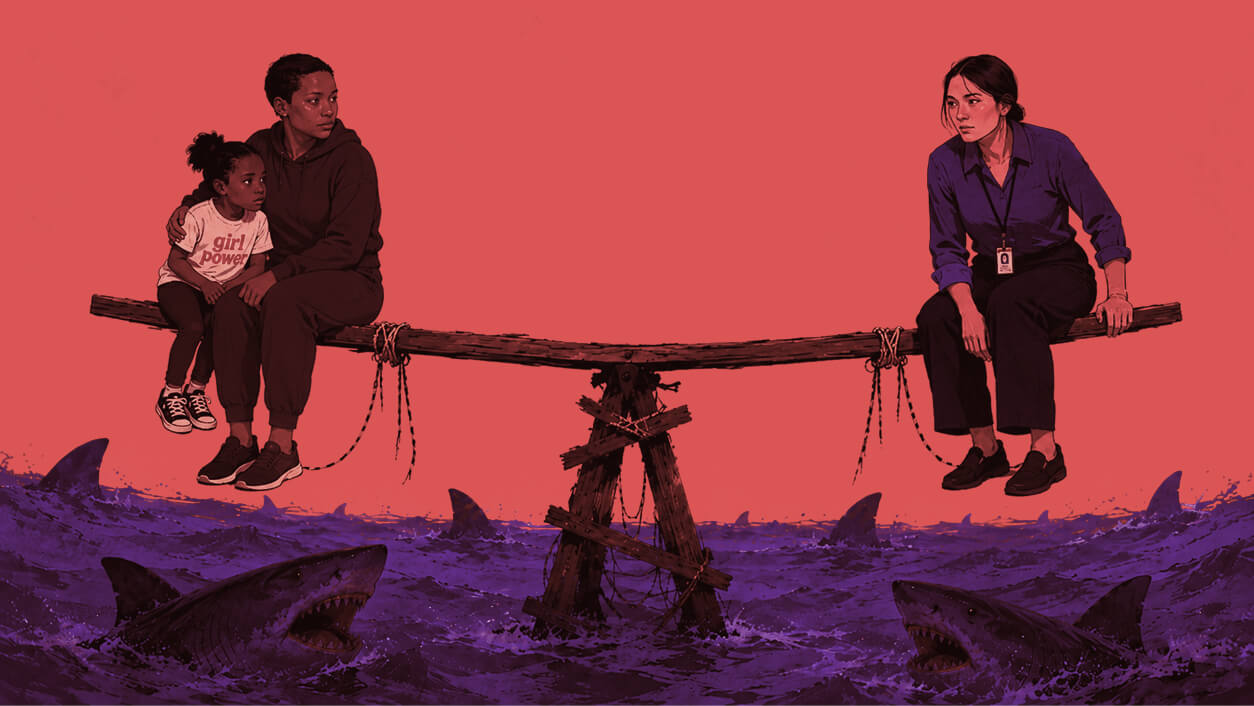
In short, the same BC government that publishes detailed annual data on Indigenous student achievement does not produce any comparable public reports on how often disabled students are restrained, secluded, or excluded. The government’s silence is not due to technical impossibility; it is a matter of political choice and policy.
Why some data is made public
Public systems disclose information only when compelled by pressure or accountability mechanisms. In the residential school case, crucial facts (like mortality rates and abuse) were suppressed for decades until survivors’ voices, litigation, and public inquiries forced disclosure. Similarly, Indigenous education outcomes in BC are reported today because of the political-moral weight of reconciliation, legal settlements, and cross-party consensus that emerged (especially after high-profile discoveries of graves in 2021 en.wikipedia.org cbsnews.com).
In the case of restraint/seclusion, those forces have not yet coalesced. The children most affected tend to be very young, with disabilities that limit their ability to testify. There is no framework or specific legislation triggering independent oversight, and disability advocates (though dedicated) do not yet have the same institutional leverage as First Nations bodies like FNESC. Media coverage of restraint/seclusion is intermittent, and international scrutiny (e.g. UN disability rights reviews) has been relatively light. As a result, officials have faced relatively low pressure to make these numbers public.
A 2022 BCEdAccess report noted that “numbers [of students restrained or secluded] haven’t improved over 4 years” of their tracking, and explicitly lamented that “Districts do not collect data or information on restraint and seclusion room use” bcedaccess.com. Inclusion BC likewise reports that reporting mechanisms have large “information gaps” at local and provincial levels, and that “superintendents should be informed of every incident in their district” – implying they often are notinclusionbc.org.
Transparency functions as diagnostic practice revealing where political pressure has accumulated and where it remains insufficient.
Just a parent
It follows that publishing comprehensive data on restraint/exclusion would shift power: it would illuminate patterns of harm, create legal/liability concerns, and prompt media and public scrutiny. Such transparency could support advocacy interventions and policy change. Conversely, keeping data secret preserves the status quo: affected families remain isolated, and the issue stays in the shadows.
Personally, I’d like to know how many of the kids restrained, isolated, or excluded have a disability designation. I have my suspicions.
What could change
Historical precedent suggests several triggers could force change:
- Mass survivor testimony or documentation: If a critical mass of parents, former students, or healthcare professionals came forward with consistent evidence (for example, medical records or public accounts of abuse in schools), it would raise the political cost of silence. The residential school truth was unlocked when thousands of survivors shared their stories publicly cbsnews.com princeedwardisland.ca. Something analogous – for example, a concerted campaign of reports on restraint/seclusion – could have a similar effect.
- Legal action or oversight orders: Class-action lawsuits, human-rights complaints, or a judicial/human-rights finding could compel reporting. The 2008 apology and TRC came after lawsuits and a settlement cbsnews.com. To date, advocates like Inclusion BC and families have petitioned government but have not achieved a binding legal requirement. A court case or a new ministerial order (as advocated in some “Stop Hurting Kids” recommendations familysupportbc.com) could mandate data collection and public reporting.
- Empowering advocacy bodies: Formal recognition of disability-rights organisations (through government funding, legislation, or treaty-like agreements) could give them a seat at the table to demand metrics, akin to FNESC’s role on Indigenous education. If a treaty or provincial disability act included reporting provisions, that would change the dynamics.
- Sustained media and political attention: Bringing restraint/seclusion incidents to the fore of public discourse (e.g. investigative journalism, national news stories) could create cross-partisan consensus that something must be done. International attention (e.g. UN committees on disability rights highlighting Canada’s performance) might also raise the stakes.
Some early steps are already visible: the National Exclusion Tracker familysupportbc.com is beginning to aggregate family reports; several news articles have covered specific restraint incidents; and civil society groups have held conferences on inclusive education. But as of 2025, these remain scattered efforts rather than a broad movement.
Bottom line
The facts checked above show: BC’s Aboriginal Report exists and is published every year with full details on Indigenous student outcomes fnesc.ca eric.ed.gov. By contrast, no provincial data on student restraint, seclusion, or classroom exclusion is publicly available. Independent sources (BCEdAccess, Inclusion BC, Family Support Institute) confirm that districts do not compile those figures, and only ad hoc surveys capture the reality bcedaccess.com bcedaccess.com.
The question is how to accelerate the conditions that transform transparency from optional to inevitable. And whether another generation must wait for that threshold to arrive.
Just a Parent
This disparity reflects politics more than capability: the infrastructure to measure discipline exists in MyEducationBC, and Inclusion BC confirms most districts have policies since 2019 inclusionbc.org inclusionbc.org. The difference is that Indigenous education data became public only after the combined force of survivor testimony, legal settlements, and national pressure. In the absence of similar forces for disability-related exclusions, those numbers remain hidden.
-
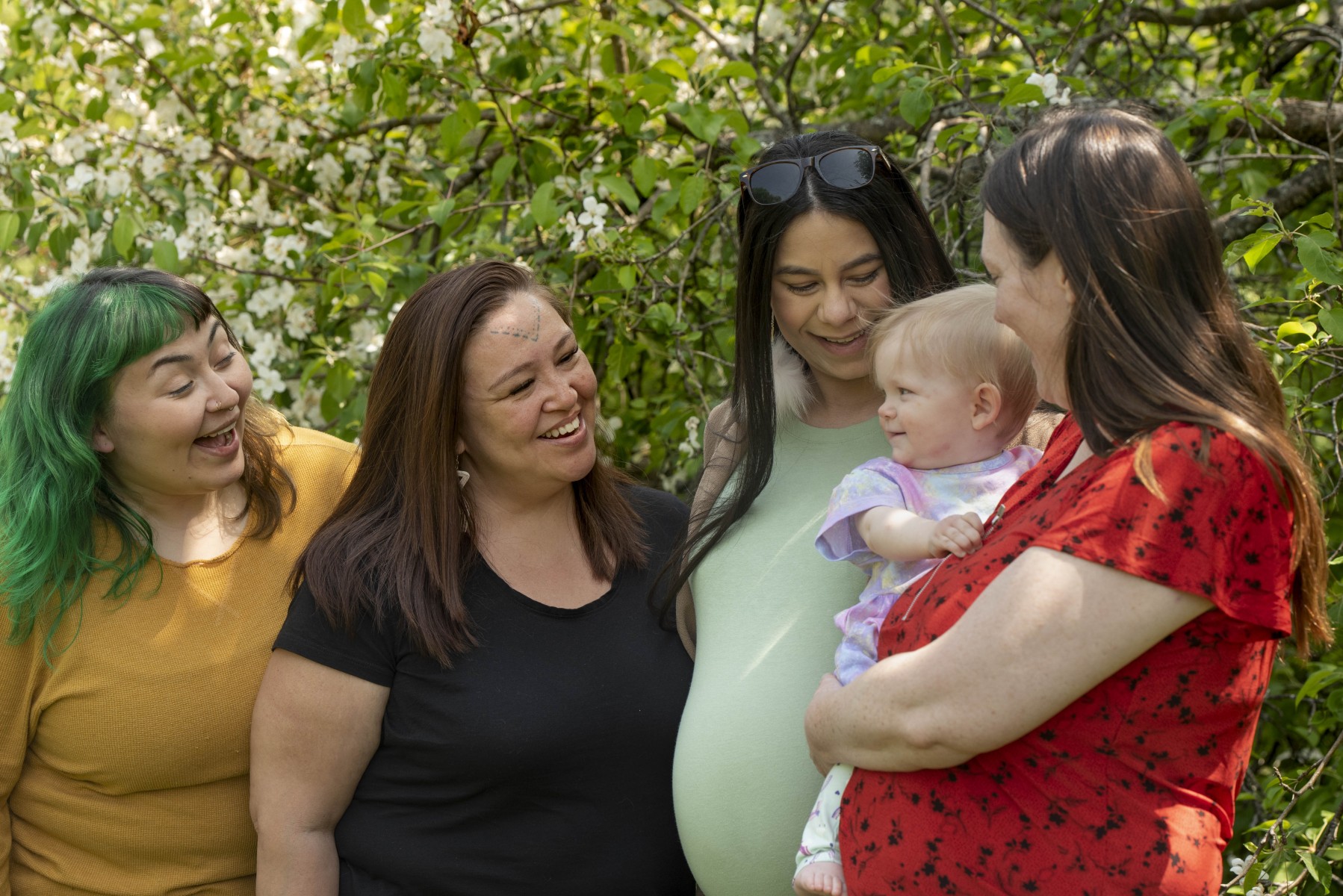
Reconciliation demands that we put collective punishment aside
Collective punishment in residential schools did more than punish children—it shattered the bonds between parents and children. For many parents who survived, the fear, shame, and trauma they endured complicated their ability to nurture trust in their own parenting. Emotional disconnection and disrupted…