

Institutional Harm
When harm is built into policy and procedure—not an accident, but an outcome.
-
What 8 years of advocacy took from our family
I advocate because I love my children and I want them to be well. Because I know the accommodations they require are entirely tenable, requiring only modest shifts in how adults think and respond. Because it is unbearable to watch them be slowly debilitated by a system that insists their needs are excessive and their…
-

When one child’s support becomes everyone else’s denial
I bring Robin his meals now. I pour a bath periodically, and coax him in, when too many days have elapsed and a funk has grown pungent from him avoiding the sensory assault or the water on his skin. I manage mess, hygiene, and feeding, even though he is a teenager who should be developing…
-

When improvement tolerates death: why schools must stop the line
Education systems insist they are engaged in continuous improvement. They invoke cycles, frameworks, data dashboards, and action plans to demonstrate seriousness and care. But children are killing themselves in every district, every year. Disabled children are being excluded, isolated, placed in hallways, sent home early, or left to deteriorate while plans are written. The question…
-

The business process trap
I’m a business analyst by trade, so I naturally wanted to understand how things work in schools, but resist the temptation to let schools draw you in!!! School districts speak a language designed to obscure accountability, using administrative complexity as armour against obligation, converting urgent need into bureaucratic procedure, and replacing immediate legal duty with…
-

The dishwasher, the hard drive, and what counts as progress when your child survives school
My son unloaded the dishwasher today without being asked. This is the first chore I can remember him doing of his own accord since he was a toddler—before school taught him that compliance means danger, before demand avoidance became the fortress protecting what remained of his autonomy, before each day required such total depletion that…
-

When advocacy stops being collaboration
You’re dealing with a school district, and a recognition is starting to settle: advocacy will not going to be easy! Meetings feel uncomfortable in ways you cannot yet fully name. Promises dissolve between conversations. Your child’s needs remain unmet despite repeated requests. Decisions appear to be made elsewhere. Something about the process feels designed to…
-

Navigating school meetings without losing your mind
School meetings occupy a particular kind of hell where institutional power performs collaboration while enacting control, where districts convene parents to discuss their child’s struggles without acknowledging the system produces those struggles through inadequate accommodation, and where the meeting itself functions less as problem-solving forum than as liability management theatre, generating documentation that protects the…
-
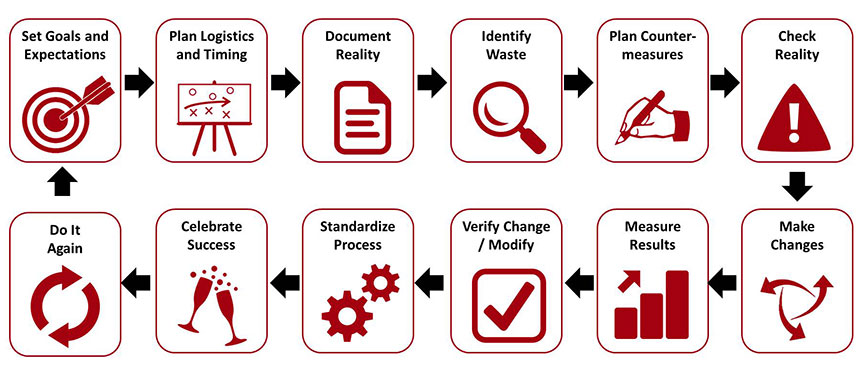
Manufacturing acceptable loss: why parents must resist education’s factory logic
Districts describe their work using the language of continuous improvement, capacity building, resource optimisation, and evidence-based allocation—borrowing terminology from industrial production systems designed to manufacture widgets efficiently, to minimise waste, to maximise throughput, to tolerate predictable defect rates within acceptable margins. This vocabulary reveals the underlying logic: education systems increasingly operate as though children are…
-

On subjectivity, vicarious belonging, and institutional violence
Winter light, girls singing, a boy listening from the front seat. A mother tries to witness without interpreting what nine months of isolation cost.
-

How BC education policy discourse positions institutional refusal as neutral fact
This is a methodological critique examining how dominant policy analysis systematically erases the institutional practices that produce educational exclusion while appearing rigorous, neutral, and evidence-based. Understanding this analytical apparatus matters because it shapes what counts as legitimate evidence in meetings, what research administrators cite to justify program decisions, and what policy recommendations achieve political traction.…
-

Where Surrey’s $6.3 million went
I recently reviewed the provincial budget tables and buried within Table 17 (2024/25 Amended Annual Budgeted Operating Expenditures of Program 1.10 Inclusive Education by Object) and Table 26 (2024/25 Actual Operating Expenses of Program 1.10 Inclusive Education by Object) of British Columbia’s 2024/25 operating budget documents lies evidence of what can only be described as…
-

Discipline outcomes and statistics in BC school districts: what the statistics reveal about institutional protection
Schools are quick to label children as dysregulated when they struggle to process harm, respond slowly under stress, or push back against systems that have failed them. These labels carry consequences. What is less often examined is how institutions respond when they behave in the same way. A note I support parents making complaints when…
-

What districts refuse to count, they refuse to see
Canary Collective makes explicit what current FESL reporting renders invisible: the exclusionary practices that shape access to learning but disappear from accountability structures because districts are not required to document them publicly.
-

Four years on a waitlist
Richard Hackett’s eight-year-old son Austin has waited four years for occupational therapy services in Ontario, placed on the waitlist when he was four years old and still waiting as he navigates school with a learning disability and ADHD. The family received a school-based assessment with no follow-up, no results shared, no clarity about whether support…
-

When the system refuses to repair itself: external complaint options that actually exist
You have tried everything inside the building, climbed every rung of the internal complaint ladder, watched your carefully documented concerns disappear into administrative silence or get redirected back to the very people who created the harm in the first place. You are exhausted, your child is still being excluded or denied accommodations or subjected to…
-

Scapegoats for austerity: BC education funding excludes disabled children
BC education funding scapegoats disabled children, using collective punishment and performative inclusion to divide parents and maintain austerity.
-
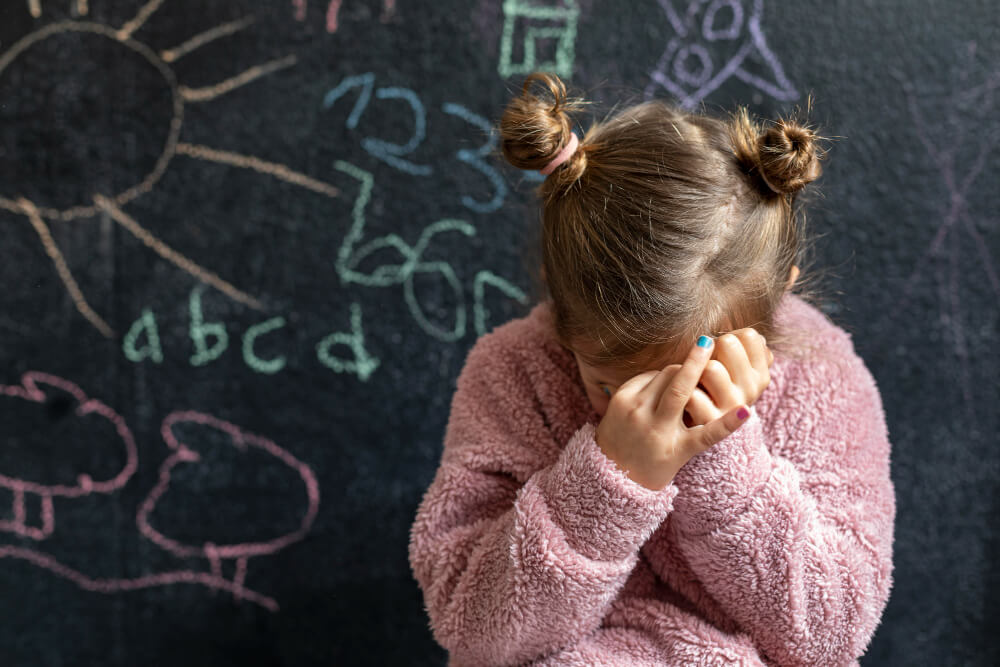
Partial-day schooling as systemic violation: new research confirms what parents already know
The Journal of Inclusion and Disability published research this month documenting what families living through exclusion have been saying for years: partial-day schooling operates as institutional marginalisation, transforming policy failure into individual deficit while schools claim to serve students they are systematically denying education. Gordon Porter and Andrea Cameron’s article examines partial-day schooling across Canadian…
-

The cost of saying ‘change costs nothing’
Long before it became common sense, the spherical shape of the Earth was already known. Astronomers, mathematicians, and navigators across multiple ancient cultures—within the Hellenic world, in ancient India, in Islamic scholarship—had measured the Earth’s curvature, calculated its circumference with remarkable accuracy, and built navigational systems that depended on that knowledge. This was not speculative…
-

Collective punishment at Vancouver School Board: when one disabled child’s behaviour closes the playground
On December 20, 2017, my kindergarten child Robin went onto an ice field during recess at his school in Vancouver. Robin loved ice—the sensory experience, the visual shimmer, the way it cracked and moved under small feet. The school had asked all students to stay away from the ice for safety reasons throughout the morning,…
-

The optimal funding model for inclusive education
Inclusive education does not fail because children are too complex. It fails because funding systems reward denial, privatise enforcement, and treat disability as an exceptional cost rather than a predictable feature of human populations. A functional model already exists. It is not radical. It is aligned with what inclusive education actually requires, rather than with…