
School Discipline
A critical look at how discipline is enforced in Canadian schools, and how it intersects with bias, exclusion, and trauma.
-
Surrey FESL report shows why FESL is designed to fail
Surrey School District’s 2025-26 Enhancing Student Learning Report spans 42 pages across two documents, presenting what appears at first glance as a model of comprehensive educational accountability—extensive data visualisations tracking student outcomes across multiple measures, disaggregated by Indigenous identity, English language learner status, and disability designation, accompanied by detailed narrative analysis of gaps, strategic responses,…
-
What Arrow Lakes reveals about BC’s FESL
School District 10, Arrow Lakes, is often described, including by itself, as a best‑case scenario for public education in British Columbia. It is small, rural, relational, and values‑driven. It knows its learners. It emphasises inclusion, connection to land, and collaboration. If any district should be able to identify and respond to exclusion quickly, it is…
-

Surrey School District is self congratulatory while exclusions continues
Surrey Schools’ International Day of Persons with Disabilities announcement celebrates procedural progress at the very moment families continue pressing for basic transparency around exclusionary practices. On December 3, the district marked the day by releasing a progress report on its three-year accessibility plan. The report highlights achievements including animated videos defining accessibility terms, tools for…
-

Why I won’t stop in 2026
The principal used collective punishment against my child almost two years ago, and yet I remain unreconciled to what she did. People suggest moving on, starting fresh, forgiving. Schools are obsessed with ‘fresh starts,’ framing each September as reset opportunity, as though institutional harm dissolves at arbitrary calendar boundaries. My daughter carries what happened in…
-

B.C. teacher who pushed elementary school student gets 1-day suspension
“A B.C. teacher who pushed an elementary school student she believed had insulted her mother has agreed to a one-day suspension and remedial education. Jeven Kaur Gill agreed to the punishment in a consent resolution agreement with B.C.’s Commissioner for Teacher Regulation last month, which was published on the commissioner’s website Tuesday.” CTV News The…
-

The principal’s casualness reveals authorisation to harm
When a principal cancelled my daughter’s volleyball game with bureaucratic ease, her comfort while causing harm revealed systematic institutional authorisation.
-

Autism and bullying in BC schools
Autistic and ADHD children face bullying at astonishing rates. Large-scale studies report that nearly half to two-thirds of autistic students have been bullied, with some surveys finding 44–67% victimized[1] – far above the ~20–40% typical rate in general populations. For example, one meta-analysis found 67% of autistic youth experienced some form of school bullying[1]. Youth with ADHD…
-

How FESL enables ongoing exclusion of disabled children
In 2020, the British Columbia Ministry of Education and Child Care brought into force the Framework for Enhancing Student Learning, a policy architecture ostensibly designed to guide the province’s approach to continuous improvement in public education, with particular attention to improving equity for Indigenous students, children and youth in care, and students with disabilities or diverse…
-

The affective architecture of room clears
Room clears should be rare. In adequately resourced classrooms with sufficient staffing, with educational assistants trained in co-regulation, with adults who understand that compliance is not wellness and frozen silence is not calm, most crises could be prevented or held without architectural intervention. But British Columbia schools operate under manufactured scarcity, austerity politics disguised as…
-

Positive behavioural interventions and supports: a behaviourist rebrand
Positive behavioural interventions and supports circulates through British Columbia’s public schools with a gentle, polished confidence, offering administrators the comfort of matrices and fidelity tools, offering families soothing language about positivity and predictability, and presenting itself as an enlightened evolution of schoolwide discipline, yet what I see each time I study its structure is the…
-

Why the SD23 suspensions report matters for exclusion analysis
While I was looking for more disclosures from school districts to the Ombudsperson, I stumbled on this older document that summarises suspensions in School District 23. The document offers a valuable complement to the exclusion data disclosed by other districts, because it reveals how disciplinary frameworks operate alongside accommodation-framed removals, and this pairing creates a…
-

What research says about school conduct codes and disabled students
This explainer summarises what a small but influential group of scholars have shown about school discipline policies, student codes of conduct, and how these frameworks disproportionately harm disabled and neurodivergent students. It draws especially on the work of Catherine K. Voulgarides, Russell J. Skiba, Daniel J. Losen, David Osher, and Edward Fergus. Where possible, citations…
-

New science on punishment and rewards
A growing body of research from 2023–2025 offers a transformative account of how children learn, regulate, and respond to school environments, because these studies converge on a striking and deeply consequential insight: children learn through stability, safety, and relational reward, while punitive systems generate emotional distress, behavioural escalation, and institutional inefficiency, particularly for neurodivergent and disabled students…
-
Pacific Heights Elementary School (SD36): a neurodiversity-informed policy critique
The Pacific Heights Elementary Code of Conduct positions the school as a community of “learners (curiosity, humility, engagement, wonder, delight, creativity, collaboration, passion)” and emphasises “care for self, others, and the environment,” framing positive relationships as “foundational to learning.” This aspirational preface signals a relational ethos. Yet the operational sections reveal a blend of restorative…
-
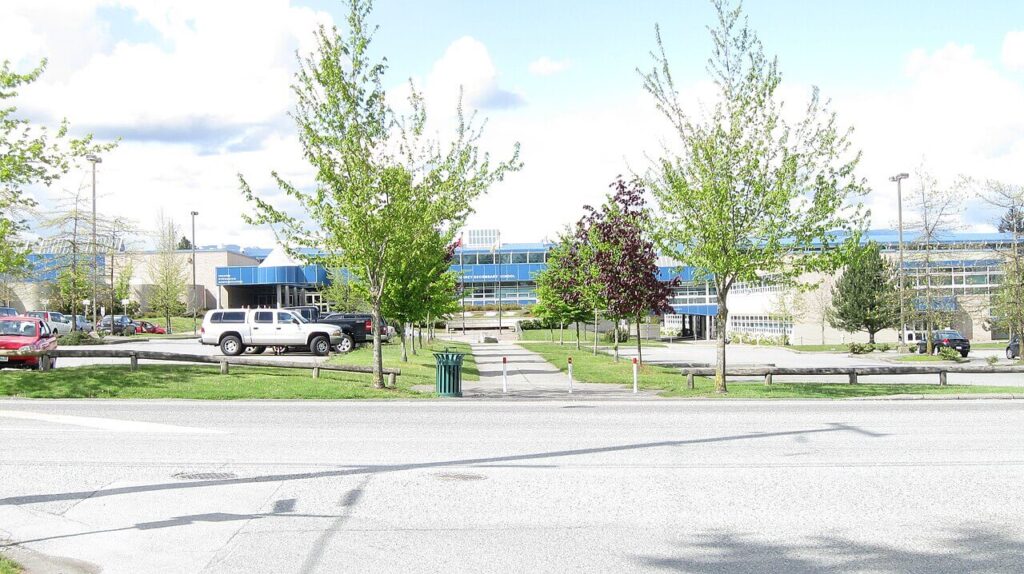
North Surrey Secondary (SD36): a neurodiversity-informed policy critique
North Surrey Secondary’s 2024–25 Parent/Student Handbook presents itself as a practical guide to daily school operations, but its conduct code reveals a disciplinary framework anchored in behavioural control, punctuality, and compliance. Its language reflects a pre-neuroscience understanding of student behaviour, one that frames regulation as obedience, distress as misconduct, and support as conditional upon conformity.…
-

What they say when you leave the meeting
Canary Collective’s piece The Apple Doesn’t Fall Far from the Tree: What’s Said About Parents After They Leave the Room tells what often happens after parents leave a school meeting. The talk shifts away from the child and turns toward the parents. People start guessing what is “wrong” at home instead of asking what the…
-

North Okanagan-Shuswap (SD83): a neurodiversity-informed policy critique
School District 83’s Policy 310 Student Code of Conduct, amended December 14, 2021, presents itself as a framework for “safe, respectful, and inclusive learning and working environments for all members of its school communities.” The policy commits to restorative approaches, acknowledges that consequences should be “preventative and restorative in nature,” and states explicitly that “appropriate…
-

Coerced care, gendered neglect, and the reframing of family collapse
It began with daily incidents that were anything but small. My son repeatedly hugged my daughter against her will, pressing into her space while she pulled away, asking for it to stop. She reported that when she turned to supervision aides for help, they told her it was fine because they were siblings. Staff framed…
-

The cancellation
When the principal cancelled the volleyball game, she did more than remove an afternoon of play from a group of eager children, she transformed what should have been a moment of joy and collective affirmation into despair and humiliation, converting what should have been an opportunity to connect and excel as a team into a…
-

Serpentine Heights Elementary (SD36): a neurodiversity-informed policy critique
Serpentine Heights presents its Code of Conduct as an affirmation of safety, inclusion, and communal care. The opening commitments describe a school that values belonging, co-constructed routines, and dignity for every learner, offering a vision of education rooted in relational safety and shared citizenship (p. 1) . This framing gestures toward a caring culture, one…