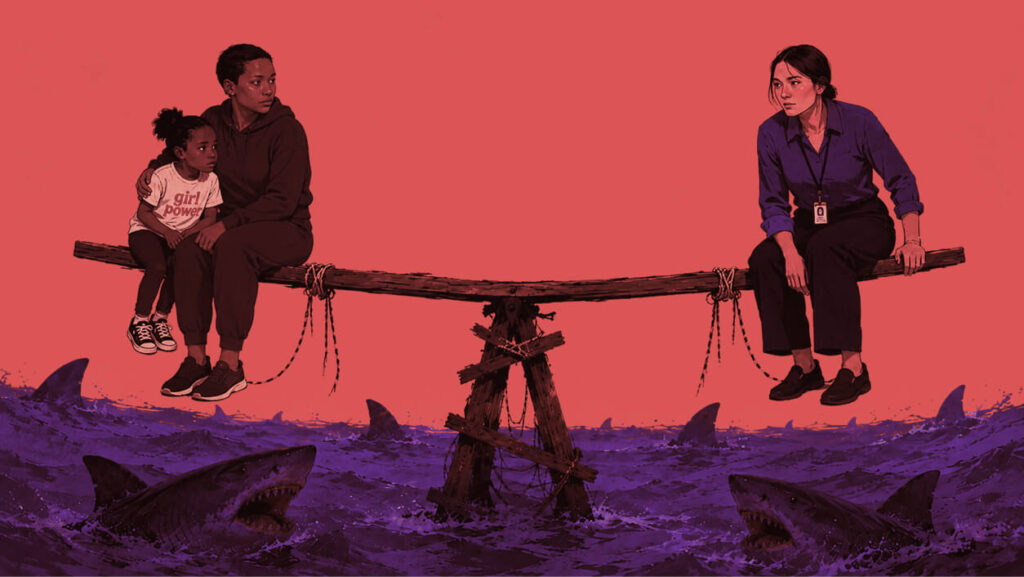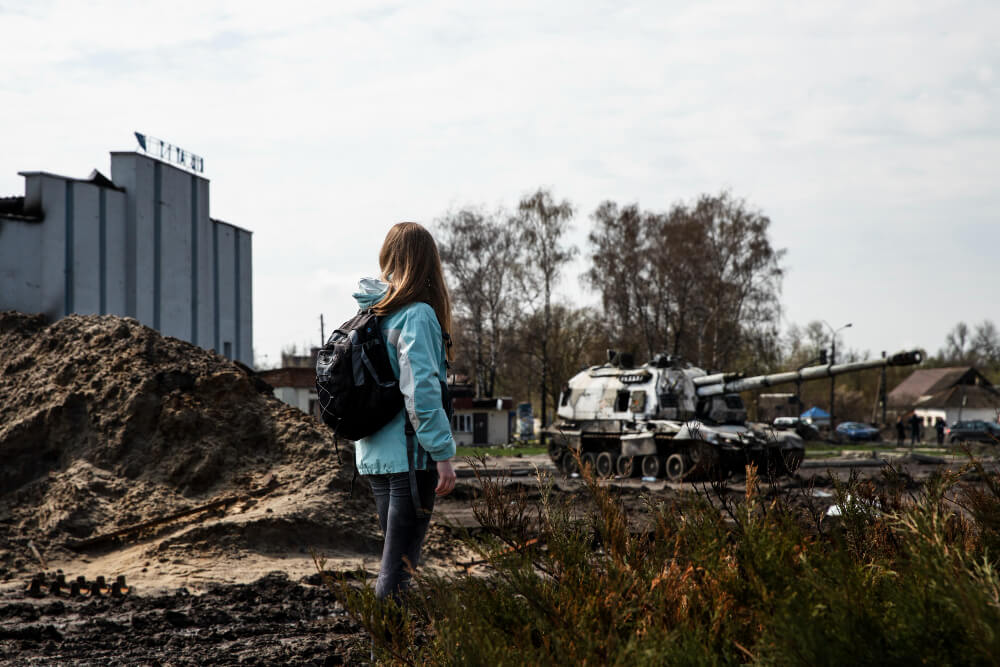
2024 marked the highest number of grave violations against children in armed conflict since monitoring began, and BC simultaneously experienced record complaints to the Human Rights Tribunal for education discrimination—both phenomena share infrastructure: scarcity ideology masquerading as resource constraint, bureaucratic mechanisms that document harm while enabling its continuation, systems that ask what amount of violence proves acceptable rather than eliminating the conditions producing it. Will 2025 turn out better, or will institutions continue performing the same ideological work that positions systematic rights violations as unfortunate necessity rather than active choice reflecting priorities?
“One in five children live in conflict zones and 520 million exposed to war, a record high.”
Aljazeera
Death toll on children in 2024
- Gaza and Occupied Palestinian Territory: 8,554 verified violations in 2024, more than double any other context, with nearly eighty-five percent committed by Israeli forces Human Rights Watch. The UN confirmed 1,259 Palestinian children killed in Gaza and is currently verifying information on an additional 4,470 children killed in 2024 France 24, while one in three children killed or maimed in war globally were Palestinian Al Jazeera.
- Sudan: The war between the Sudanese Armed Forces and Rapid Support Forces killed an estimated 20,373 people between August 2024 and August 2025 World Population Review, with famine declared in North Darfur, the first famine determination since 2017 UN News.
- Democratic Republic of the Congo: More than 4,000 grave violations against children recorded in 2024 France 24.
- Ukraine: The UN verified more child casualties during the first nine months of 2024 than during all of 2023 UN News, with Russian forces responsible for nearly 700 attacks on schools and hospitals, the highest of any country monitored Human Rights Watch.
- Myanmar: The civil war killed an estimated 15,420 people between mid-2024 and mid-2025 World Population Review, with over 1,200 distinct armed groups involved, making it the most fragmented conflict in the world ACLED.
- Somalia: More than 2,500 grave violations against children recorded in 2024 France 24.
- Nigeria: More than 2,000 grave violations against children recorded in 2024 France 24.
- Haiti: Among the countries with highest numbers of violations in 2024 United Nations, with over 4,500 Haitians killed as a result of political violence ACLED.
- Yemen: Estimated 1,000 to 3,000 casualties in 2025 World Population Review, with the civil war continuing since 2014.
- Syria: Among conflicts with highest numbers of children killed and maimed France 24.
- Afghanistan: Estimated 768 war-related deaths in 2024 World Population Review.
- Lebanon: More than 500 children were killed or injured in 2024 France 24 during Israeli military operations.
- Ethiopia: Among conflicts with highest numbers of children killed and maimed France 24.
- Burkina Faso: Multiple armed conflicts involving various groups.
- Central African Republic: Multiple non-international armed conflicts involving numerous armed groups.
- Mexico: The drug war killed an estimated 8,616 people between August 2024 and August 2025 World Population Review.
Human rights complaints in BC
According the BC Human Rights Tribunal 2024/2025 Annual Report, complaints rose dramatically while the system’s capacity to process them remained structurally insufficient, creating conditions where discrimination persists precisely because the mechanisms designed to address it operate under manufactured scarcity.
On volume and scale:
- “The fiscal year saw an unexpected increase in filing volume – from last fiscal’s 2,537 to 3,036”
- “People filed a total of 3,036 new complaints with the Tribunal this fiscal year marking the second highest new-filing volume in the Tribunal’s history”
- “The Tribunal closed 2,704 complaints in the 2024-25 fiscal year”
On systemic delays and resource constraints:
- “Without additional resources, the Tribunal will be unable to meaningfully reduce delays”
- “Delays not only create barriers to accessible justice but also self-perpetuate – compounding the strain on an already straining system”
- “Without the resources to address both the accumulated overflow and the increased complaint volume, delays will continue”
- “The Government has mandated the Tribunal with the just and timely resolution of human rights disputes under the Code. Timeliness is a cornerstone of justice and key underpinning of administrative tribunals”
On the backlog accumulation:
- “By the end of the 2022/23 fiscal year, people had filed roughly 4,500 more complaints than the Tribunal could absorb in just three years”
- “From 2020-2023, the Tribunal had the capacity to close an average of 1,322 complaints annually, but people filed an average of 2,824”
- “The fiscal year closed with 6,253 active complaints at March 31, 2025”
Education discrimination formed a substantial portion of these complaints, representing disabled students systematically removed from educational access through mechanisms designed to appear supportive while enacting exclusion: room clears that isolate children in separate spaces indefinitely, partial schedules that reduce instructional time to accommodate institutional convenience rather than student need, “safety plans” that function as behaviour modification protocols enforcing compliance rather than addressing environmental barriers, accommodation denials framed as resource limitations rather than rights violations.
These mechanisms operate through documented processes—Individual Education Plans that specify goals requiring students to suppress autistic traits, safety plans that authorise physical restraint, attendance records showing systematic partial days, emails confirming that requested accommodations exceed available funding—creating extensive paper trails that simultaneously prove discrimination occurred and demonstrate how thoroughly institutions embedded exclusion within their standard operating procedures, making the harm appear inevitable rather than chosen.
“Ultimately, it will be the Government’s role to decide what level of delay is acceptable for resolving human rights complaints under the Code.”
BC Human Rights Tribunal 2024/2025 Annual Report
Shared mechanisms generating documented harm
Both systems—international monitoring of grave violations against children in armed conflict and provincial processing of discrimination complaints—generate massive documentation infrastructure recording harm in meticulous detail while the conditions producing that harm persist, intensify, expand. The UN verifies thousands of violations annually through standardised monitoring frameworks, compiles comprehensive reports detailing specific incidents of killing, maiming, recruitment, sexual violence, attacks on schools and hospitals, abduction; the BC Human Rights Tribunal receives thousands of complaints annually documenting specific instances of discrimination across protected grounds, processes extensive evidence submissions, produces detailed decisions analysing whether discrimination occurred and what remedies apply. Both systems require substantial institutional capacity dedicated to documentation, verification, analysis, reporting—capacity that could alternatively address the underlying conditions generating the harm being documented.
The infrastructure serves multiple functions simultaneously: it establishes the reality of harm through official recognition, creates accountability mechanisms that theoretically enable intervention, generates data demonstrating patterns and scale, provides institutional legitimacy to claims that might otherwise face dismissal.
Yet the same infrastructure also diffuses responsibility across bureaucratic processes, creates procedural delays that extend harm’s duration, positions systematic violence as series of individual incidents requiring separate adjudication rather than as structural conditions requiring fundamental transformation, absorbs resources and attention into documentation rather than prevention.
Just a Parent
Consider what it means that both systems exist: international humanitarian law prohibits attacking civilians, recruiting child soldiers, using starvation as weapon of war, yet monitoring mechanisms document thousands of violations annually because the law exists alongside insufficient enforcement capacity and political will; BC’s Human Rights Code prohibits discrimination in education, employment, services, housing, yet the Tribunal processes thousands of complaints annually because the prohibition exists alongside insufficient compliance mechanisms and structural incentives favouring discrimination over accommodation. The gap between legal framework and lived reality measures the distance institutions maintain between stated values and operational priorities, between what they claim to prevent and what they allow to continue.
Documentation becomes its own kind of violence when it replaces action, when institutions invest in recording harm rather than eliminating its sources, when the existence of monitoring systems provides alibi for continued inaction—we are tracking this, we are aware, we are processing complaints, we are producing reports, therefore the system functions even as children continue dying in armed conflict and disabled students continue facing systematic exclusion from education. The documentation proves the harm happened while simultaneously suggesting the harm required such extensive institutional attention that preventing it proved impossible given available resources, framing scarcity as natural constraint rather than political choice about what receives priority.
-
The Ombudsperson and the war of attrition with systems of escalation
This essay is in response to the closure of my complaint by the Office of the Ombudsperson of British Columbia. It documents my family’s experience navigating the education complaint system, the Teacher Regulation Branch, and the Ombudsperson itself. It exists to show how a system meant to protect fairness becomes one that delays, deflects, and exhausts those who seek help. When the Ombudsperson closed my file, the letter arrived polished with civility, every sentence measured to soothe. It began by thanking me for my time, moved through a careful expression of sympathy, and ended with the assurance that my experience…
Scarcity as ideology
“Global military expenditure increased to $2718 billion in 2024, the 10th year of consecutive rises” according to the Stockholm International Peace Research Institute, marking the steepest year-on-year rise since 2009, with military expenditure as share of global GDP reaching 2.3 percent, the highest since the early post-Cold War period. This occurred during the same year that the UN Secretary-General declared famine in North Darfur, that humanitarian organisations documented record violations against children in armed conflict, that funding constraints prevented adequate refugee support, that development programmes faced systematic cuts—revealing how scarcity operates as distributional choice rather than absolute condition, as ideological framework positioning certain forms of violence as inevitable consequence of insufficient resources while other expenditures reach historic highs.
BC provides parallel illustration at provincial scale: the government increased Human Rights Tribunal funding in response to accumulated complaint backlog, yet the increase remained insufficient to address the 6,253 active complaints by fiscal year end or prevent delays that the Tribunal Chair explicitly framed as government decision about “what level of delay is acceptable for resolving human rights complaints.” The language performs crucial ideological work—positioning systematic rights violations as unfortunate necessity constrained by resources rather than as active choice reflecting priorities, distributing responsibility across bureaucratic layers so no single actor authorises the harm while the system continues producing it. Meanwhile, compare the cost of processing one discrimination complaint through multi-year tribunal proceedings against the cost of actually accommodating disabled students in the first instance: a single educational assistant supporting multiple students costs substantially less than the legal processes generated when districts deny accommodations, yet institutional incentives favour the latter because complaint processing disperses costs across different budget lines and timeline horizons while accommodation requires immediate allocation from education funding envelopes already structured to operate through manufactured scarcity.
Scarcity ideology maintains that resources prove inherently insufficient to meet all legitimate needs, therefore institutions must make difficult choices about allocation priorities, therefore some level of harm becomes acceptable as unavoidable consequence of operating within constraints. This framing obscures how the constraints themselves emerge from prior allocation decisions that could operate differently given alternative priorities: military spending increases while humanitarian needs go unmet; tribunal backlogs accumulate while accommodation requests face denial; extensive documentation systems track harm while prevention mechanisms receive inadequate funding. The pattern reveals how institutions engineer scarcity conditions that justify continued harm, how they construct resource insufficiency as natural limit rather than as political choice about what receives priority, how they position violence against children—whether through armed conflict or education discrimination—as tragic necessity rather than as systematic practice enabled through specific funding structures and institutional arrangements.
The BC government could fund the Human Rights Tribunal sufficiently to eliminate multi-year complaint backlogs; could fund school districts adequately to provide requested accommodations without forcing disabled students into exclusion mechanisms; could restructure education funding formulas to incentivise inclusion rather than reward efficiency measures that systematically disadvantage students requiring additional support. These remain possible choices rather than impossible demands. Similarly, international actors could redirect fraction of military expenditure toward humanitarian response, conflict prevention, infrastructure supporting displaced populations, programmes addressing root causes of armed conflict including poverty, resource competition, governance failures. The resources exist. The choice involves how to allocate them, what priorities to centre, which forms of harm to prevent versus which to document while they continue.
-

Why the evolving understanding of childhood terrifies systems built on scarcity
Children now arrive at school shaped by homes that honour physiology over performance, autonomy over obedience, and co-regulation over fear, and this shift grows from a decade of relational neuroscience, trauma literacy, sensory understanding, and disability justice that families have absorbed far more quickly than schools, which leaves discipline ideology standing on crumbling ground because its entire logic depends on fear, shame, and behavioural control as stable organising principles that contemporary children recognise as incoherent. Parents built worlds where feelings are named, sensory limits are acknowledged, and distress is interpreted as communication rather than defiance, and these relational environments give…
The question of acceptability
When institutions ask “what level of delay is acceptable” or calculate “acceptable loss,” when they frame harm as inevitable consequence of resource constraints rather than policy choice, they perform the same ideological work whether the subject is children killed by missiles or children disappeared from classrooms through exclusion mechanisms that leave no visible wound. The Tribunal Chair’s framing—”the Government’s role to decide what level of delay is acceptable”—articulates what most institutional communications leave implicit: that systematic rights violations operate through calculated tolerance, through decisions about what amount of harm proves acceptable given current priorities, through bureaucratic language that sanitises violence by rendering it as administrative question about processing capacity and timeline management rather than as ethical crisis requiring immediate intervention.
The language of “acceptable levels” assumes a spectrum where zero sits at one impossible extreme and current conditions occupy some reasonable middle position balancing competing demands, suggesting that moderate harm represents pragmatic compromise rather than structural violence. This framing collapses moral and operational questions—treating “what can we accomplish given current resource allocation” as equivalent to “what should we tolerate as unavoidable”—thereby naturalising institutional priorities as fixed constraints rather than revealing them as contingent choices. When the Tribunal closes 2,704 complaints annually while receiving 3,036 new filings, accumulating 6,253 active cases by fiscal year end, the resulting multi-year delays materialise policy decisions about tribunal funding, education system accountability, discrimination complaint processing as legitimate institutional function versus urgent crisis requiring immediate resource reallocation.
What does it mean to declare any level of delay acceptable when that delay extends discrimination’s duration, when it prolongs the period during which disabled children face systematic exclusion from educational access, when it signals to districts that accommodation denial carries minimal consequence given complaint processing timelines? The delay itself functions as institutional mechanism enabling continued harm, creating conditions where districts can deny accommodations knowing that tribunal intervention will occur years later if at all, that families will exhaust themselves navigating complaint processes while their children remain excluded from school, that the system’s incapacity to respond within reasonable timeframes effectively nullifies the rights it purports to protect. Acceptable delay means acceptable discrimination, acceptable exclusion, acceptable violence against disabled children occurring throughout the complaint processing period and extending beyond it.
The acceptable number is zero.
The acceptable level of delay in resolving discrimination complaints is zero. The acceptable number of children killed in armed conflict is zero. The acceptable number of students excluded from education without accommodation is zero. These zeros remain structurally impossible under current configurations of power and resource allocation, which is precisely the point—the impossibility reveals the violence as endemic to the system rather than aberration from it, exposes how institutions operationalise scarcity as governing logic while military spending reaches record highs and discrimination complaints accumulate in multi-year backlogs because governments decide what receives funding priority. The gap between stated zero tolerance and operational acceptance of systematic harm measures the distance institutions maintain between rhetorical commitment and actual practice, between what they claim to prevent and what they enable through how they allocate resources, structure accountability mechanisms, define acceptable outcomes.
Naming zero as the only acceptable answer refuses institutional framing that positions some level of harm as inevitable, rejects the premise that violence against children becomes necessary consequence of resource constraints, insists that the impossibility of achieving zero under current conditions indicts the conditions rather than justifying their continuation. When institutions respond that zero proves unrealistic, impractical, economically unfeasible, they reveal how thoroughly they embed violence within their operational logic, how completely they structure themselves around accepting certain populations’ harm as price of maintaining current priorities. The claim that zero violence against children proves impossible says more about institutional values and resource allocation than about actual constraints—it articulates what institutions prioritise over children’s safety, dignity, access to education, right to exist without systematic harm.
-

Collective punishment: how schools displace guilt, erase harm, and preserve the collective
One of the things that was so traumatising about the collective punishment that was callously perpetrated against my daughter was the light and evasive tone of the principal. She said that the punishment had to be “swift.” I frequently wondered about the choice to psychologically wound disabled children while treating the infliction of that wound as superficial, inevitable, or procedural—as though it were not a choice at all, but an automatic assumption. As if the action emerged from consensus, a cousin of policy, a friend of pedagogy. And yet somehow, again, my child is gone. And we are the ones…
What 2025 demands
The opening question—will 2025 turn out better—demands answering with clarity about what “better” requires: transformation of resource allocation priorities, dismantling of institutional mechanisms that operationalise scarcity as justification for continued harm, recognition that the acceptable level of violence against children is zero regardless of current system capacity. Better requires the BC government to fund the Human Rights Tribunal adequately to eliminate complaint backlogs, to restructure education funding so districts face incentives supporting inclusion rather than exclusion, to treat discrimination complaints as urgent crises requiring immediate intervention rather than as administrative backlog requiring patient processing. Better requires international actors to redirect resources from military expenditure toward humanitarian response and conflict prevention, to treat grave violations against children as intolerable rather than as regrettable but inevitable consequences of armed conflict, to structure monitoring systems that enable rapid intervention rather than merely documenting harm for subsequent reporting.
2025 will turn out better only if institutions stop asking what level of harm proves acceptable and start asking why they structured themselves to produce harm systematically while claiming resource constraints prevented alternative approaches.
Just a Parent
The question is not what amount of violence against children we can tolerate given current conditions, but what priorities we must transform to make continued violence impossible. The answer remains zero—zero acceptable delay, zero acceptable discrimination, zero acceptable deaths, zero acceptable exclusions. Institutions claiming this proves impossible reveal only that they value other priorities more highly than children’s safety, dignity, and access to education. That revelation clarifies what transformation requires: not managing harm more efficiently through improved documentation and processing systems, but eliminating the conditions that generate harm through fundamental restructuring of institutional priorities and resource allocation. Whether 2025 proves better depends entirely on whether institutions accept this demand or continue performing the same ideological work that positions systematic violence as unfortunate necessity while military budgets reach historic highs and discrimination complaint backlogs accumulate across multi-year timelines because governments decide what receives funding priority and what level of harm proves acceptable as consequence of those decisions.