The evidence is no longer merely emerging. It is converging.
A national study of privately insured autistic youth in the United States matched 17,120 autistic children and youth who received applied behaviour analysis with 17,120 autistic children and youth who did not. The study found that ABA receipt was associated with 30% higher odds of mental health hospitalisation and a 32% higher incidence rate of mental health hospitalisation. The authors did not claim this proves ABA causes hospitalisation. They were careful, as researchers should be. But they did find that autistic youth who received ABA had greater use of acute mental health services than matched autistic peers whose records showed no ABA.
That finding should land like a thunderclap in every ministry, district office, school board room, and professional training programme that still treats ABA and its school-based descendants as benign, evidence-based, or simply “what we do” for autistic and disabled children.
For decades, autistic adults have said that ABA harmed them. They have described masking, compliance training, loss of autonomy, trauma, shame, and the slow erosion of trust in their own bodies. They have explained, over and over, that being trained to suppress distress is not the same as being supported. They have said that the problem was never only the old, obviously abusive versions of ABA. The problem was the underlying logic: that a child’s observable behaviour is the central problem to be shaped, rather than communication from a nervous system asking to be understood.
Institutions largely treated those accounts as anecdotal. Too emotional. Too political. Too insufficiently quantitative.
Now the numbers are arriving.
ABA did not stay in the clinic
Applied behaviour analysis did not remain neatly contained inside therapy rooms. Its assumptions migrated into public education, where they now circulate under softer names and friendlier acronyms.
They appear in positive behavioural interventions and supports. They appear in functional behaviour assessments. They appear in behaviour support plans, safety plans, token systems, reward charts, first-then boards, replacement-behaviour goals, compliance-based IEP targets, and urgent-response teams that arrive when a disabled child is no longer manageable inside an under-supported classroom.
The language changes. The spine remains.
A child melts down, elopes, refuses, freezes, screams, hides, throws, collapses, or shuts down. The system asks: what is the function of the behaviour? What replacement behaviour can be taught? What reinforcement schedule will increase the desired response? What consequence will reduce the undesired one? What data can be collected to prove that the plan is working?
Rarely does the system begin with the more urgent questions. What is the child communicating? What is the environment demanding that this child cannot safely meet? What sensory, relational, instructional, medical, or trauma-related reality has been converted into “behaviour”? What has the school failed to provide before deciding the child requires intervention?
This is the behaviourist inheritance that runs through school systems with remarkable confidence. In earlier ECP writing, I have traced how PBIS packages ABA’s clinical assumptions into schoolwide discipline culture, how urgent-intervention teams reproduce functional assessment and reinforcement logic, and how compliance discourse turns disability-related needs into conduct problems. The new mental health study does not sit outside that analysis. It sharpens it.
If ABA receipt is associated with higher acute mental health service use among autistic youth, then public schools cannot keep treating ABA-derived methods as neutral tools of classroom management.
They are not neutral. They are an ideology of control.
Also see
- PBIS and oh, the places you’ll go
- Positive behavioural interventions and supports: a behaviourist rebrand
- Non-coercive, trauma-informed alternatives to PBS/ABA in BC schools
- How to smell a rat: spotting fake neurodiversity-affirming programs
- The fallout of regressive discipline: from community trust to mental health
- The behaviourist spine of BC’s urgent-response systems
- Urgent behaviour intervention teams in major BC school districts
- There’s no such thing as unexpected behaviour
- Compliance discourse vs. disability justice in BC’s education system
- Parents are responsible for the collapse of discipline ideology at school
- Punishment is not a good learning tool
- Neural evidence exposes the steep cost of sacrificing vulnerable children to punitive myths
Behaviourism teaches children to disappear themselves
The central harm of behaviourism is not always spectacular. It is often bureaucratic, quiet, and cumulative.
A child learns that distress is acceptable only if expressed in a form adults find convenient. They learn that escape from overwhelm is “avoidance.” They learn that refusal is “non-compliance.” They learn that shutdown is praised as calm. They learn that masking earns rewards. They learn that their body is unreliable evidence unless an adult has recorded the behaviour, coded the behaviour, interpreted the behaviour, and decided whether the behaviour served an acceptable function.
This is why behaviourist systems can look successful from the outside. The data may show fewer incidents. The chart may show reduced “problem behaviour.” The child may sit longer, protest less, complete more tasks, or move through the hallway with less visible distress.
But the apparent success may be the record of a child learning that visible distress is unsafe.
That is not regulation. That is suppression.
And suppression has a cost. Sometimes the cost is paid at home after school, when the child explodes in the only place where they still feel safe enough to fall apart. Sometimes it is paid through school refusal, burnout, eating problems, self-injury, anxiety, depression, or the gradual collapse of trust between child and adult. Sometimes it is paid through hospitalisation.
The new ABA study does not tell us everything. It does not capture every form of harm. It uses insurance claims data, which means it sees only what the health system records. It cannot tell us what happened inside every therapy session, what methods were used, how coercive the programme was, or how many children endured harm without reaching a hospital. The authors themselves call for more comprehensive records and more research.
But that limitation cuts both ways.
If claims data, with all its bluntness, can still detect a significant association between ABA receipt and increased mental health hospitalisation, then the ethical response is not to shrug because causation has not been perfectly mapped. The ethical response is precaution.
When an intervention targets a disabled population, carries a long record of survivor testimony, and is now associated with higher acute mental health service use in a large matched sample, the burden should shift. Families should not have to prove harm child by child, crisis by crisis, complaint by complaint, while institutions continue to presume safety.
The system should have to prove that what it is doing is not injuring children.
-

There’s no such thing as unexpected behaviour
This piece was hard to write. It holds my grief. It documents not only what happened to my child, but how systems made it worse by pretending to be surprised. I share it because too many families are made to carry this alone.…
BC’s school data is already flashing red
British Columbia has its own warning signs.
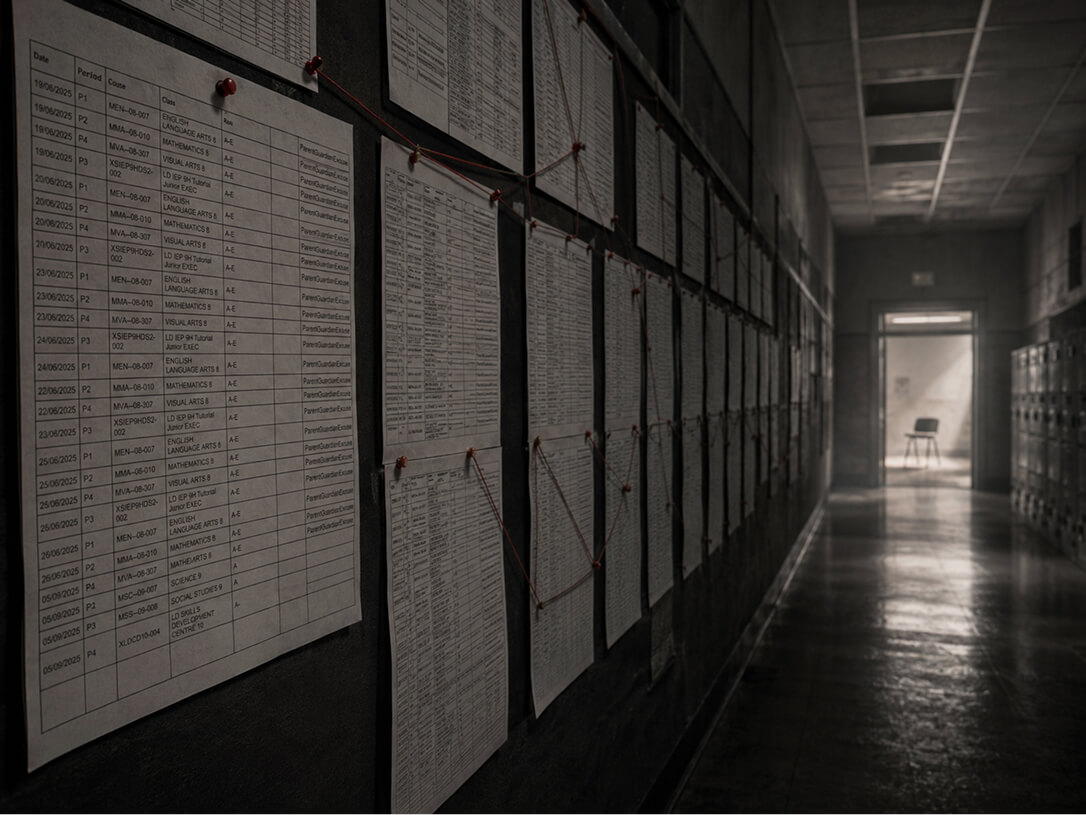
Freedom of information data from the Ministry of Education shows that students designated in behaviour-related categories account for a grossly disproportionate share of suspension-coded absences province-wide. These are the children most likely to be placed under behaviour plans, safety plans, functional behaviour assessments, urgent-intervention referrals, and other school-based behaviourist programming.
That pattern should alarm us.
It is not enough to say that these students have “complex behaviour.” That explanation collapses the entire problem back onto the child. It assumes the intervention is innocent and the child is the source of risk. But if the group most intensely exposed to behaviourist logic is also the group most intensely disappearing through suspension-coded absence, then the intervention landscape itself must be investigated.
Suspension-coded absence is not the only measure of exclusion. It is probably one of the easiest to see.
A child can be excluded without a formal suspension. They can be placed on partial days. They can be repeatedly sent home. They can be told not to attend field trips. They can be removed to a separate room without meaningful instruction. They can be placed on a “transition plan” that never transitions. They can be given a school placement that exists on paper while access to actual education has already been foreclosed.
The child is still on the list. Their name is still called. But the right to be there has been structurally weakened.
This is where the health data and the education data begin to speak to each other. One records crisis through hospital admission. The other records disappearance through attendance, suspension, and absence. They are not identical instruments, but they are measuring the same institutional failure: disabled children being pushed through systems that interpret distress as behaviour to control rather than harm to remedy.
-

BC schools are failing disabled students: an absence analysis
This analysis is based on a provincial FOI request to the BC Ministry of Education, file ECC-2025-52461, which was shared recently, bc BCEdAccess. The data covers absence rates, absence reasons, enrolment, and mid-year exits for BC public school students, broken down by inclusive education…
“Evidence-based” cannot mean evidence-blind
ABA has long protected itself with the phrase “evidence-based.”
But evidence of what?
Evidence that a child can be trained to perform a target behaviour? Evidence that an adult can increase compliance under controlled conditions? Evidence that visible distress can be reduced? Evidence that a child can be made easier to manage?
Those are not the same as evidence of safety, dignity, mental health, self-trust, autonomy, or long-term wellbeing.
Public education has absorbed a dangerously narrow idea of evidence. It has accepted behaviourist success metrics as though they were child-centred outcomes. It has treated observable compliance as proof of support. It has treated adult manageability as educational progress.
That is bad science. It is also bad ethics.
A method can produce measurable behaviour change and still be harmful. A programme can reduce disruption while increasing distress. A school can appear calmer because disabled children have learned to internalise their pain, leave the building, or stop asking for what they need.
This is why “data-driven” systems can be so dangerous when the wrong things are measured. If schools count incidents but not masking, they will reward suppression. If they count compliance but not exhaustion, they will mistake collapse for success. If they count attendance but not meaningful access, they will miss exclusion hiding inside the school day. If they count suspensions but not informal removals, they will preserve the fiction that discipline is rare.
And if they count behaviour but not harm, they will keep poisoning children while calling it intervention.
-

The high stakes of understanding PDA
Pathological Demand Avoidance (PDA) might sound like just another clinical term, but for many families it represents a daily struggle that is anything but trivial. PDA is a profile on the autism spectrum characterised by an extreme, anxiety-driven avoidance of everyday demands, even those the child wants to…
The school-based descendants of ABA need public scrutiny
BC’s Ministry of Education and Child Care should not be able to distance itself from ABA by saying that schools do not provide clinic-based ABA therapy.
That misses the point.
The question is not only whether a child receives billable ABA from a private provider. The question is whether public schools have embedded ABA-derived methods into the daily governance of disabled children.
Do school teams use functional behaviour assessments as a default response to distress?
Do IEPs include goals that measure compliance, tolerance, “expected behaviour,” quiet body, whole-body listening, task completion, or reduced refusal without equal attention to autonomy, consent, sensory safety, communication access, and environmental change?
Do behaviour plans rely on reinforcement, extinction, planned ignoring, token economies, rewards, loss of privileges, or “replacement behaviours” that teach children to perform manageability rather than receive accommodation?
Do safety plans convert disability-related distress into risk documentation used to justify exclusion?
Do urgent-intervention teams arrive with behaviourist templates before anyone has meaningfully redesigned the environment?
Do districts track whether these interventions are followed by increased absence, reduced attendance, suspension, seclusion, restraint, parent pickup, school refusal, or mental health crisis?
If the answer to that last question is no, then districts are not practising evidence-based intervention. They are practising evidence-selective intervention.
They are collecting data to manage children, not data to protect them.
Institutional responsibility cannot be outsourced to individual educators
This is not an argument that every teacher using a reward system is malicious. It is not an argument that every education assistant following a behaviour plan intends harm. It is not an argument that school staff, abandoned inside overcrowded classrooms and underfunded systems, invented this problem alone.
The responsibility sits higher.
It sits with ministries that fund frameworks without tracking harm. It sits with districts that procure programmes, hire specialists, mandate training, and build referral pathways around behaviourist assumptions. It sits with professional colleges and universities that continue to teach behaviourism as ordinary practice. It sits with administrators who translate lack of support into “safety concerns.” It sits with policymakers who demand inclusion while refusing to fund the relational, sensory, instructional, and staffing conditions inclusion requires.
Behaviourism thrives in scarcity because it is cheaper to modify the child than transform the environment.
It is cheaper to write a behaviour plan than reduce class size. Cheaper to collect data than provide one-to-one support. Cheaper to teach replacement behaviours than redesign a classroom. Cheaper to reward compliance than build authentic access. Cheaper to blame parents than admit that the system is asking disabled children to absorb the consequences of underfunding.
This is why behaviourism keeps returning, even after families name the harm. It offers institutions a seductive promise: the child can be adjusted so the system does not have to be.
-

The BC NDP is balancing the budget on mothers’ backs
For years, families have been told that schools are inclusive, that supports are needs-based, that ministries are working together, and that children will not be left behind—a cascade of institutional reassurance designed to function as substitute for material reality, the kind of language…
-

Balancing budgets by denying disabled kids support
In British Columbia, we are told that the education system is improving. Budgets are rising. Inclusion is a stated priority. And yet, for families whose children require consistent, sustained support—especially those who are disabled or living with complex trauma—the lived experience is defined…
What should happen now
BC should impose a precautionary review of ABA-derived practices in public education.
That review should not be led only by behaviour analysts, district administrators, or professionals whose training and authority depend on the continuation of the model being reviewed. It must include autistic adults, disabled students, families whose children have experienced school exclusion, trauma-informed clinicians, disability-rights advocates, and researchers who understand both quantitative outcomes and lived experience.
At minimum, the province should require districts to:
- Publicly report absence, suspension, partial-day, seclusion, restraint, and informal-removal data by disability designation.
- Track whether students placed under behaviour plans, safety plans, functional behaviour assessments, or urgent-intervention referrals experience improved access to education or increased exclusion.
- Prohibit IEP goals that operationalise compliance as progress without clear connection to the student’s own communication, autonomy, safety, and meaningful access.
- Require that any behaviour-related intervention begin with environmental review: sensory conditions, staffing, instruction, communication access, trauma history, medical needs, peer safety, adult behaviour, and unmet accommodation.
- Replace reinforcement-and-compliance models with non-coercive, trauma-informed, neurodiversity-affirming approaches grounded in relationship, consent, communication, and access.
- Require districts to document what accommodations were attempted before any disciplinary response to disability-related distress.
- Treat rising absence after behavioural intervention as a safety signal, not as proof that the child is too complex for school.
If a medication were associated with increased psychiatric hospitalisation in the population it was prescribed to help, no responsible public system would continue handing it out as routine care while insisting that families prove, one child at a time, that something had gone wrong.
ABA is a bad medicine and BC education needs to stop poisoning our children.
The child is not the treatment failure
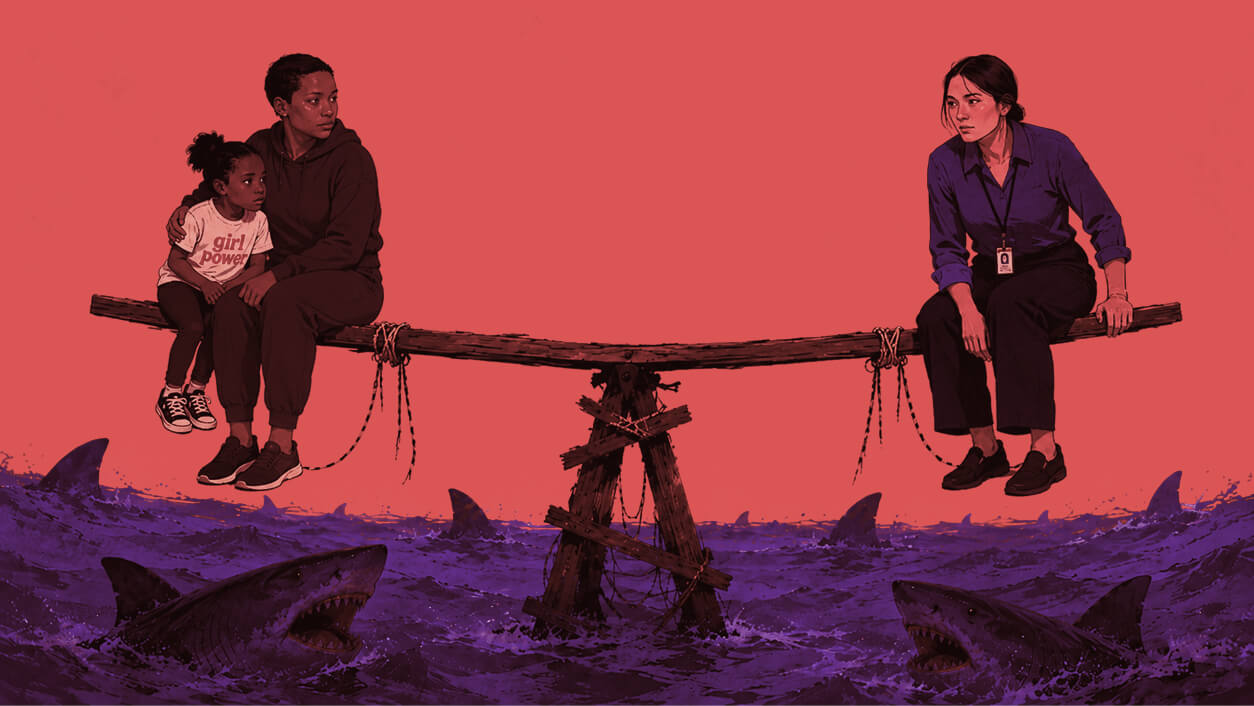
The deepest violence of behaviourism is that it makes the child carry the evidence of the system’s failure.
When the plan does not work, the child is said to be non-compliant. When the reward loses power, the child lacks motivation. When the child escalates, the behaviour has intensified. When the child refuses school, the family is enabling avoidance. When the child collapses, the disability is too complex. When the child disappears from the classroom, the system calls it safety.
This language protects the intervention from accountability.
But the child is not the treatment failure. The child is the person harmed by a system that mistook control for care.
The new ABA mental health study should not be treated as one more paper to be filed away while ministries wait for certainty so complete it will never arrive. It should be treated as a warning. Autistic adults warned us. Families warned us. Children’s bodies warned us. Attendance data warned us. Exclusion data warned us. Hospitalisation data is warning us now.
Public education does not get to say it did not know.
The question is whether it will keep administering bad medicine because the medicine makes the institution easier to run, or whether it will finally ask what disabled children have been communicating all along.
They were never asking to be shaped.
They were asking to be safe.
-

Parents are responsible for the collapse of discipline ideology at school
The dominant narrative in staff rooms and comment sections insists that discipline has collapsed because parents no longer “back up the school.” This explanation comforts institutions and shames families, yet it misunderstands the architecture that once made discipline appear effective. What is collapsing…