
Neurodivergence
Concepts and lived experiences related to autism, ADHD, sensory processing, masking, executive functioning, and other neurodevelopmental traits.
-
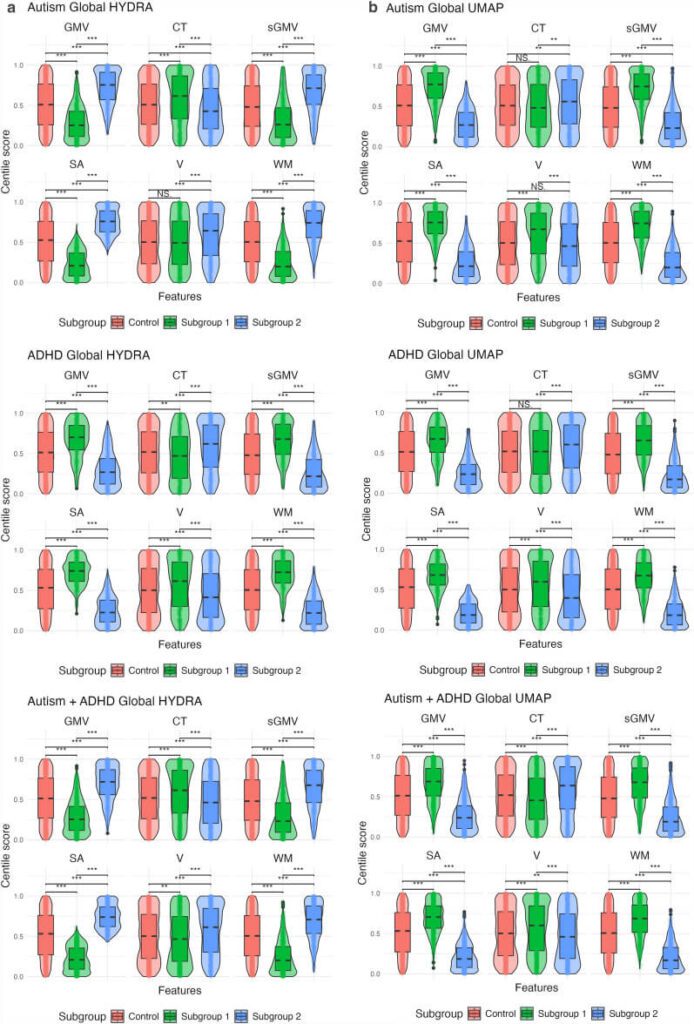
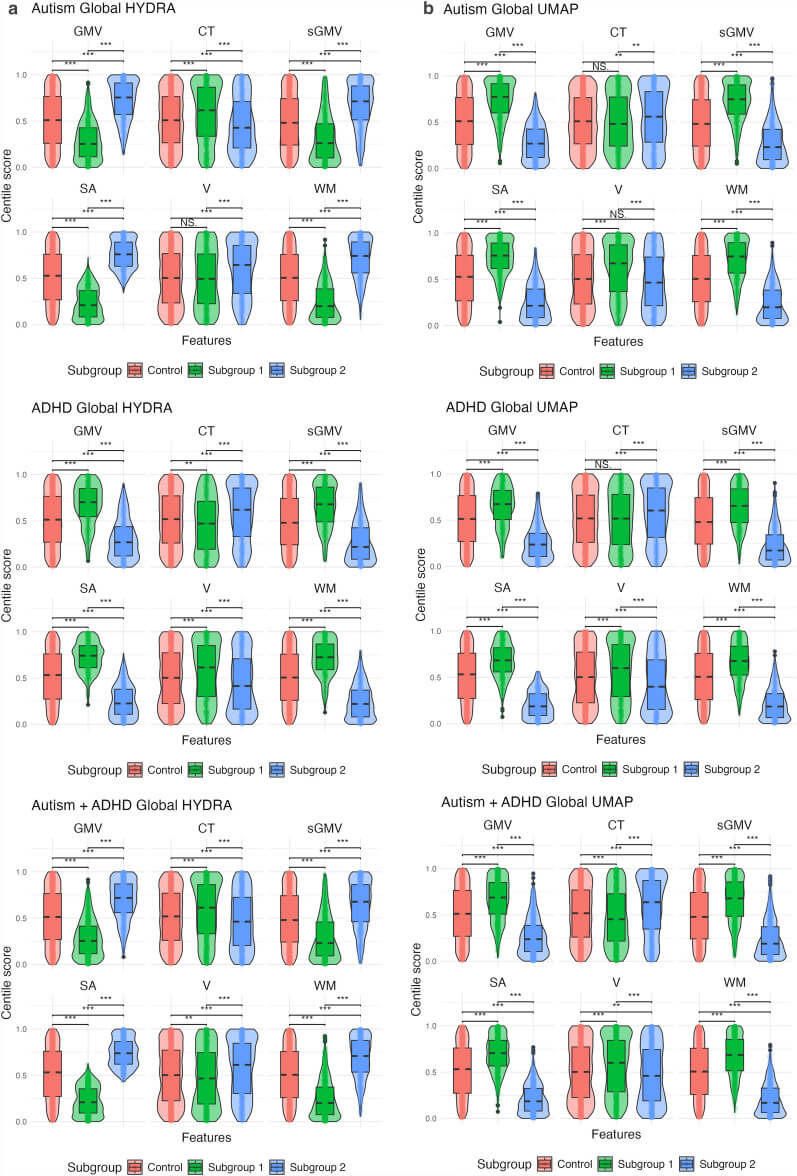
Subgrouping autism and ADHD based on structural MRI population modelling centiles
A June 2025 neuroimaging study examining brain structure patterns across individuals with autism, ADHD, and combined diagnoses, published in Molecular Autism by Pecci-Terroba and colleagues applies population modelling to cluster participants based on centile scores for cortical thickness, surface area, and grey matter volume, using HYDRA—a semi-supervised machine learning algorithm that identifies subgroups based on…
-

The material costs of educational harm
My son no longer attends school. He no longer wants anything the education system offers. He has taught himself programming, navigates Linux with expertise that exceeds my own knowledge, learns alone in his room because learning with others became too expensive to survive. The district asks affectionately how he is, suggests I login to their…
-

How collective punishment turns provincial funding failure into disabled children’s “behavioural failure”
Many years ago, my kindergarten child Robin went onto an ice field during recess. Robin was seeking sensory input—the visual shimmer, the cracking sound, the tactile feedback their nervous system required. The school had told students to avoid the ice for safety reasons. Robin’s support worker redirected them repeatedly; Robin kept returning. Eventually the principal…
-

Truth is never negative: on becoming the voice a system tried to silence
I have come to understand that my role in this landscape exists because every public system that touches disabled children in British Columbia carries a quiet, shared expectation: families will smooth the rough edges, soften the evidence, dilute the language, and narrate harm as misunderstanding or miscommunication rather than what it is—the predictable outcome of…
-

Lord Beaconsfield Elementary School (SD39 Vancouver): a neurodiversity-informed policy critique
Lord Beaconsfield Elementary School’s Code of Conduct, reviewed June 19, 2024, presents itself as a framework for creating a “safe, inclusive, equitable, welcoming, nurturing, and healthy school environment.” The document employs the language of care, respect, and community while constructing a disciplinary architecture that presumes neurotypical development, rewards compliance, and positions disability as exceptional deviation…
-

The return of functioning labels: How austerity turns advocacy into competition
A parent recently posted about profound autism, describing the experience of having her son’s reality erased when people say that “profound autism” doesn’t exist. Her frustration is legitimate—parents of children with intensive, lifelong support needs face profound institutional abandonment, and “profound autism” names a reality that deserves recognition and resources. But her post also illustrates…
-

Why I won’t stop in 2026
The principal used collective punishment against my child almost two years ago, and yet I remain unreconciled to what she did. People suggest moving on, starting fresh, forgiving. Schools are obsessed with ‘fresh starts,’ framing each September as reset opportunity, as though institutional harm dissolves at arbitrary calendar boundaries. My daughter carries what happened in…
-

The principal’s casualness reveals authorisation to harm
When a principal cancelled my daughter’s volleyball game with bureaucratic ease, her comfort while causing harm revealed systematic institutional authorisation.
-

From trauma to topology: the grotesque work of quantifying institutional denial
When institutional harm accumulates in childhood—in objects confiscated, spaces denied, bodies excluded—the evidence lives first in memory and affect. The saucer eyes of a humiliated or frightened child. The sting in the sobs of a child who just wants to be with her friends at the volleyball game. The physical weight of a garbage bag…
-

Autism and bullying in BC schools
Autistic and ADHD children face bullying at astonishing rates. Large-scale studies report that nearly half to two-thirds of autistic students have been bullied, with some surveys finding 44–67% victimized[1] – far above the ~20–40% typical rate in general populations. For example, one meta-analysis found 67% of autistic youth experienced some form of school bullying[1]. Youth with ADHD…
-

A multi-lens analysis of accommodation denial in BC Schools
When the school handed me a garbage bag filled with jackets at the end of the year, it was evidence of a failed executive function accommodation. When I was handed a box containing hundreds of dollars of fidgets, it was evidence of a regulation accommodation that had been denied. There’s a lot of reasons an…
-

Material witness: objects and architecture in the exclusion of disabled children
When schools perform inclusion while enacting exclusion, the evidence accumulates in objects and spaces, in the material culture of neurodivergent childhood, in the things that were meant to help but became instruments of control, in the architecture that promised safety but delivered abandonment. These are the objects that witnessed what happened to my children in…
-
The affective architecture of room clears
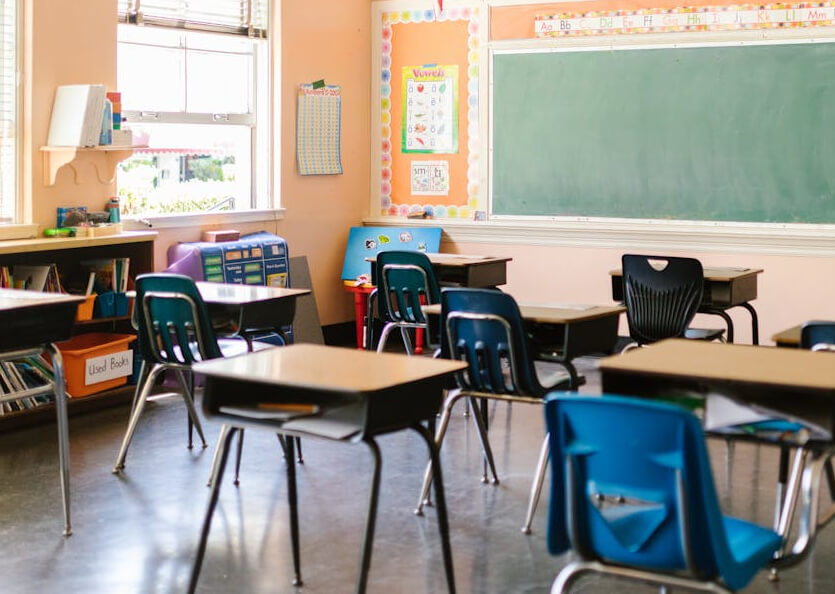
Room clears should be rare. In adequately resourced classrooms with sufficient staffing, with educational assistants trained in co-regulation, with adults who understand that compliance is not wellness and frozen silence is not calm, most crises could be prevented or held without architectural intervention. But British Columbia schools operate under manufactured scarcity, austerity politics disguised as…
-

Justice and dignity too expensive for BC NDP
In 2018, experts told BC exactly how to fix special education funding. The government has spent five years “consulting” instead. Meanwhile, your child sits in hallways. The 192% problem nobody wants to fund Between 2015 and 2024, autism designations in BC schools exploded by 192%. Total student enrolment? Up just 11.6%. The province knows this. They…
-

When delay becomes policy: British Columbia’s strategic abandonment of disabled students
In 2018, an independent panel reviewed how British Columbia funds kindergarten through grade twelve education and recommended a prevalence model for special education funding, a shift that would allocate resources based on statistical prevalence of disability within the general student population rather than on individual diagnostic designation. The proposal threatened to expose what the existing system carefully…
-

Children as witnesses in institutional spaces
Children do not match the institutional fantasy of the perfect witness. Schools expect crisp chronology, tidy sequencing, and emotion-free narration. What children offer is perception—sharp, immediate, and grounded in the sensory truth of what happened. I learned this when my daughter was still in elementary school, when a playground supervisor grabbed her arm, twisted it…
-
Government funding for education fails to keep pace with known needs
The Education and Childcare Estimate Notes 2025 reveal a province experiencing an enormous rise in disability designations while preparing the minister with polished assurances that gesture toward progress, equity, and commitment, and this dual presentation of crisis beneath a veneer of stability creates a document that tells two stories at once: one whispered in the…
-

Why the SD23 suspensions report matters for exclusion analysis
While I was looking for more disclosures from school districts to the Ombudsperson, I stumbled on this older document that summarises suspensions in School District 23. The document offers a valuable complement to the exclusion data disclosed by other districts, because it reveals how disciplinary frameworks operate alongside accommodation-framed removals, and this pairing creates a…
-

Pacific Heights Elementary School (SD36): a neurodiversity-informed policy critique
The Pacific Heights Elementary Code of Conduct positions the school as a community of “learners (curiosity, humility, engagement, wonder, delight, creativity, collaboration, passion)” and emphasises “care for self, others, and the environment,” framing positive relationships as “foundational to learning.” This aspirational preface signals a relational ethos. Yet the operational sections reveal a blend of restorative…
-

Why the evolving understanding of childhood terrifies systems built on scarcity
Children now arrive at school shaped by homes that honour physiology over performance, autonomy over obedience, and co-regulation over fear, and this shift grows from a decade of relational neuroscience, trauma literacy, sensory understanding, and disability justice that families have absorbed far more quickly than schools, which leaves discipline ideology standing on crumbling ground because…