The BC Ministry of Education directs families to file complaints through their school district’s K12 system when schools violate policy, deny accommodations, or harm disabled children through exclusionary discipline. The process presents itself as accessible redress, a pathway families can navigate while managing the daily crisis of a child being room cleared, partially scheduled, or sent home repeatedly because the school refuses appropriate support. The Ministry frames this mechanism as reasonable remedy, as though documentation and procedural compliance operate on the same timeline as a child’s psychological collapse.
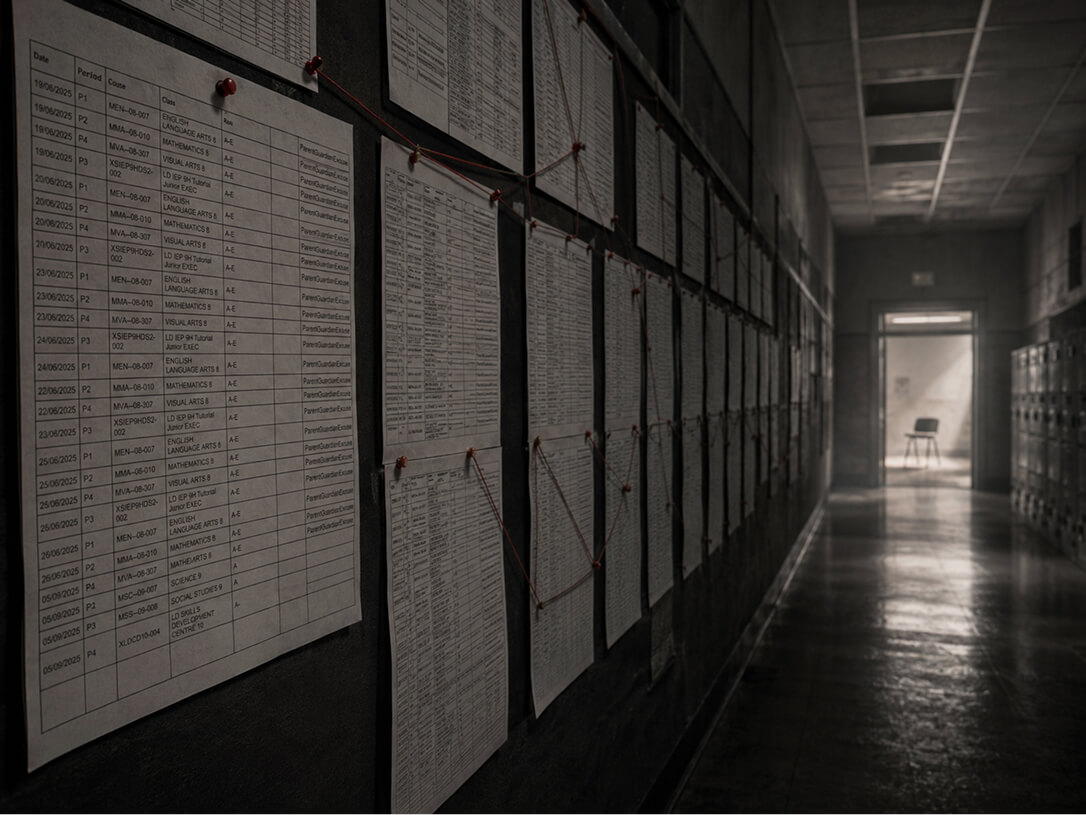
Filing a K12 complaint requires families to identify which policies the school violated, cite specific sections of district conduct codes or administrative procedures, gather evidence across multiple incidents, articulate how the harm connects to their child’s disability, and maintain clinical precision while describing trauma that often unfolds in real time. The complaint must demonstrate that the family raised concerns with the teacher, then the principal, then the district office, following an escalation sequence that presumes institutions respond with good faith rather than delay, dismissal, or retaliation.
Families arrive at the complaint process exhausted, having spent months or years advocating for accommodations the school is legally obligated to provide without being asked. They have attended countless meetings where administrators describe the child’s behaviour as the problem requiring management rather than the school’s refusal to accommodate as the violation generating distress. They have received emails couched in concern that frame partial attendance as a collaborative decision rather than constructed abandonment. They have watched their children regress, refuse school, develop anxiety disorders, lose skills they once demonstrated with ease. The complaint process asks these families to perform as legal analysts, procedural experts, and dispassionate documentarians while living inside the emergency their complaint attempts to describe.
The K12 system routes complaints to district staff, often to the same administrators who designed or defended the exclusionary practices families challenge. Complainants receive acknowledgment within five business days, followed by investigation timelines that stretch across weeks while children remain in environments causing measurable harm. The process offers no interim relief, no mechanism to halt room clears or restore full schedules while the complaint moves through bureaucratic review. Families submit evidence knowing the same institution they accuse of violating their child’s rights will assess whether those rights were indeed violated, a structural conflict of interest the Ministry presents as neutral procedure.
Districts respond with language that repositions institutional failure as resource constraint, safety concern, or misunderstanding requiring further collaboration. They describe room clears as responsive intervention rather than traumatic isolation. They frame partial schedules as temporary supports rather than coercive reduction of educational access. They reference policies selectively, extracting phrases about student safety or staff discretion while ignoring sections mandating proactive accommodation, least restrictive measures, or the prohibition against using discipline to manage behaviour stemming from disability. The response often concludes with assurance that the district remains committed to inclusion, a rhetorical flourish that erases the exclusion families documented with precision the institution demanded but refuses to recognise.
Families who exhaust the K12 complaint process without resolution face choices that clarify how the system engineers attrition rather than accountability. They can accept the district’s findings and return to advocacy within a school that has demonstrated indifference to legal obligation. They can escalate to the BC Ombudsperson, a process requiring new documentation, extended timelines, and the emotional labour of explaining to yet another institutional body why their child’s exclusion violates law the school claims to follow. They can file with the BC Human Rights Tribunal, a process demanding legal arguments most families cannot construct without representation they cannot afford. Or they can withdraw their child, relocate to another district, attempt homeschooling, or accept that the education system has decided their child’s access to learning matters less than institutional convenience.
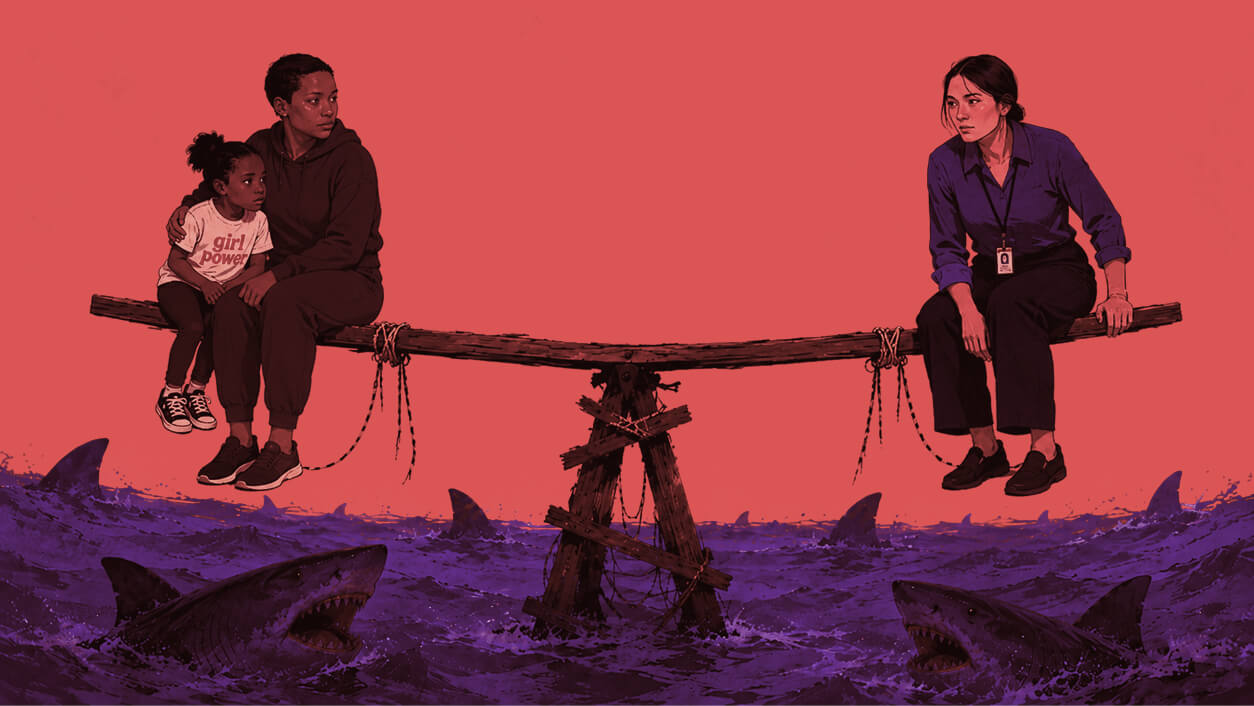
The Ministry describes K12 complaints as evidence that BC schools maintain robust accountability structures responsive to family concerns. The existence of a complaint mechanism becomes proof the system works, even as the mechanism itself operates as barrier rather than remedy, procedural theatre that exhausts families while protecting institutions from consequence. The process asks parents already managing the labour of raising disabled children in an ableist world, coordinating therapies schools refuse to integrate, advocating for accommodations the law requires without enforcement, and supporting children traumatised by the environments meant to educate them—to also perform as legal researchers capable of translating lived emergency into administrative language that rarely generates institutional change.
What families need is immediate intervention when schools violate policy, enforceable timelines for accommodation implementation, independent oversight with authority to compel compliance, and consequences for administrators who choose exclusion over access. What they receive is a complaint form, a five-business-day acknowledgment, and the suggestion that resolution requires further collaboration with the institution causing harm. The gap between what the K12 process promises and what it delivers reveals how accountability mechanisms can function as containment strategies, absorbing family energy while insulating districts from the legal obligations they repeatedly violate. The process is not broken; it operates precisely as designed, asking families to document systemic failure while that system continues harming their children without interruption.
Learn more at K12complaints.ca.