
Child Experience
The internal and external impact of collective punishment and exclusion on children — including fear, shame, dysregulation, and invisibility.
-
When back to school means staying in bed
Children will soon be going back to school… well, some children. Stores are already filled with lunch kits, backpacks, and brightly coloured displays of school supplies. Parents are checking whether indoor shoes still fit. Social media will soon fill with first-day photographs: children standing beside front doors, holding signs with their grade and what they…
-
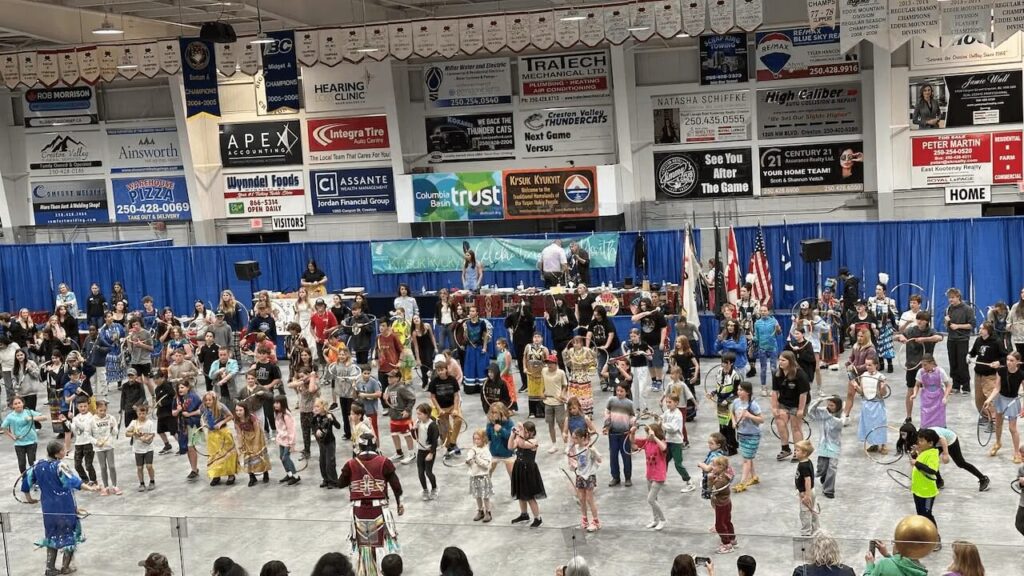
CBC covers SD8’s elimination of Indigenous Education teachers
Earlier this week we wrote about School District 8’s decision to cut all Indigenous Education teacher positions from its elementary and middle schools, replacing them with support workers — a role with no instructional authority and no capacity to lead the cultural programming these teachers built over years. CBC’s Amber Wang has now published a…
-
I’m a seventh grade failure
Institutional capture refers to the process by which individuals — parents, children, advocates, even dissenting professionals — are absorbed into the operational logic of an institution to the point where they begin reproducing its framework, its language, and its priorities, without necessarily endorsing them or recognising what is happening. It is distinct from agreement. You do…
-
The masking tax: how autistic girls absorb bullying invisibly in BC schools
Autistic girls in B.C. schools often develop sophisticated masking or camouflaging strategies to hide their autism in order to fit in and avoid bullying. In the short term this can make them appear “fine” – leading teachers and administrators to assume no support is needed – but the “masking tax” is high. Decades of invisible stress and exclusion build up as girls…
-
Meltdown monster: how exclusion makes bullying worse
I often think back to the school principal telling me that when kids see my son, they don’t see an autistic child, they just see a child being mean. When a disabled child melts down at school—after sensory overload, social stress, academic pressure, and chronic misattunement—schools rarely ask what led up to the crisis. Instead,…
-
Bullying of disabled children: a human rights issue requiring accommodation
Bullying emerges when power differentials enable repeated harm, when one child or group systematically targets another through physical aggression, verbal degradation, social exclusion, or digital harassment. BC’s ERASE framework describes bullying as “a persistent pattern of unwelcome or aggressive behaviour intended to harm or humiliate a person”, language that obscures the particular vulnerability of disabled children…
-
Advocacy is too hard and schools expect too much
The BC Ministry of Education directs families to file complaints through their school district’s K12 system when schools violate policy, deny accommodations, or harm disabled children through exclusionary discipline. The process presents itself as accessible redress, a pathway families can navigate while managing the daily crisis of a child being room cleared, partially scheduled, or…
-

When one child’s support becomes everyone else’s denial
I bring Robin his meals now. I pour a bath periodically, and coax him in, when too many days have elapsed and a funk has grown pungent from him avoiding the sensory assault or the water on his skin. I manage mess, hygiene, and feeding, even though he is a teenager who should be developing…
-

On subjectivity, vicarious belonging, and institutional violence
Winter light, girls singing, a boy listening from the front seat. A mother tries to witness without interpreting what nine months of isolation cost.
-
Discipline outcomes and statistics in BC school districts: what the statistics reveal about institutional protection
Schools are quick to label children as dysregulated when they struggle to process harm, respond slowly under stress, or push back against systems that have failed them. These labels carry consequences. What is less often examined is how institutions respond when they behave in the same way. A note I support parents making complaints when…
-

The cost of saying ‘change costs nothing’
Long before it became common sense, the spherical shape of the Earth was already known. Astronomers, mathematicians, and navigators across multiple ancient cultures—within the Hellenic world, in ancient India, in Islamic scholarship—had measured the Earth’s curvature, calculated its circumference with remarkable accuracy, and built navigational systems that depended on that knowledge. This was not speculative…
-
Collective punishment at Vancouver School Board: when one disabled child’s behaviour closes the playground
On December 20, 2017, my kindergarten child Robin went onto an ice field during recess at his school in Vancouver. Robin loved ice—the sensory experience, the visual shimmer, the way it cracked and moved under small feet. The school had asked all students to stay away from the ice for safety reasons throughout the morning,…
-
When schools ask disabled children to accept being hurt
I used to have a pretty good dialogue with my kids, before they experienced a lot of institutional harm. The conversations flow less freely now and less seldom, but back then, we chatted a lot and I often recorded the conversations, for proof, having experienced enough gaslighting from the district to know I wouldn’t be…
-
A school advocacy vocabulary
What families experience in schools is often described as a series of unfortunate incidents: a meltdown here, a missed accommodation there, a relationship breakdown framed as “complex family dynamics.” But these events are not random, isolated, or accidental. They are patterned. They recur across schools, districts, and provinces. They follow recognisable logics, deploy familiar language,…
-
The internet has spoken: collective punishment in schools is wrong
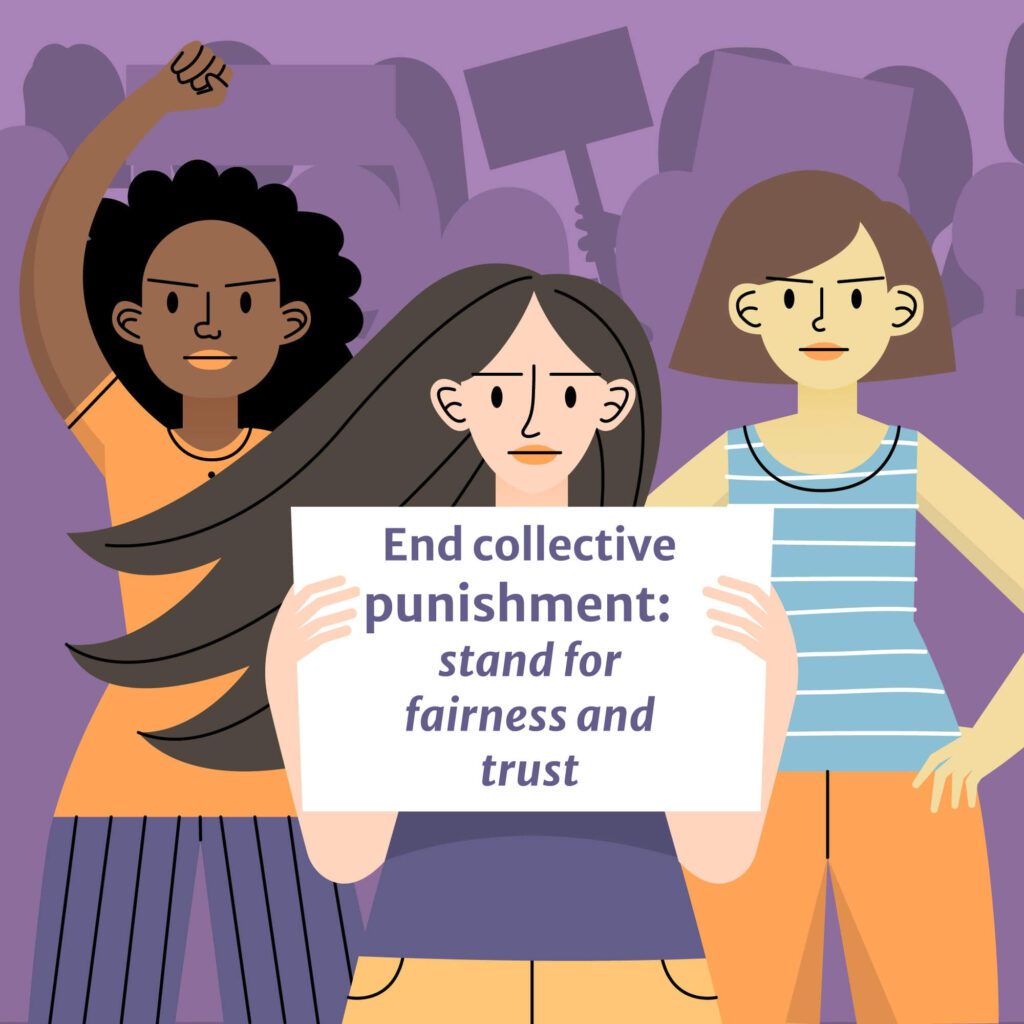
When teachers punish entire classrooms for the actions of one student—when recess disappears because someone talked, when rewards vanish because someone forgot homework, when privileges evaporate because one child disrupted the lesson—students recognise the injustice immediately, and they name it with precision that educators often lack. Across TikTok, Instagram, and Reddit, students, parents, and teachers…
-
When provincial bodies dismiss parental expertise: POPARD, sticker charts, and the refusal of heterogeneity
In the previous essay, I examined neuroimaging research demonstrating that autism and ADHD are not internally homogeneous diagnostic categories but rather contain multiple neurologically distinct subgroups, often with opposite patterns of brain structure alterations relative to controls. The Pecci-Terroba study reveals what categorical intervention logic refuses to accommodate: diagnosis alone cannot determine whether a specific…
-

How collective punishment turns provincial funding failure into disabled children’s “behavioural failure”
Many years ago, my kindergarten child Robin went onto an ice field during recess. Robin was seeking sensory input—the visual shimmer, the cracking sound, the tactile feedback their nervous system required. The school had told students to avoid the ice for safety reasons. Robin’s support worker redirected them repeatedly; Robin kept returning. Eventually the principal…
-

Why I won’t stop in 2026
The principal used collective punishment against my child almost two years ago, and yet I remain unreconciled to what she did. People suggest moving on, starting fresh, forgiving. Schools are obsessed with ‘fresh starts,’ framing each September as reset opportunity, as though institutional harm dissolves at arbitrary calendar boundaries. My daughter carries what happened in…
-
The principal’s casualness reveals authorisation to harm
When a principal cancelled my daughter’s volleyball game with bureaucratic ease, her comfort while causing harm revealed systematic institutional authorisation.
-
From trauma to topology: the grotesque work of quantifying institutional denial
When institutional harm accumulates in childhood—in objects confiscated, spaces denied, bodies excluded—the evidence lives first in memory and affect. The saucer eyes of a humiliated or frightened child. The sting in the sobs of a child who just wants to be with her friends at the volleyball game. The physical weight of a garbage bag…