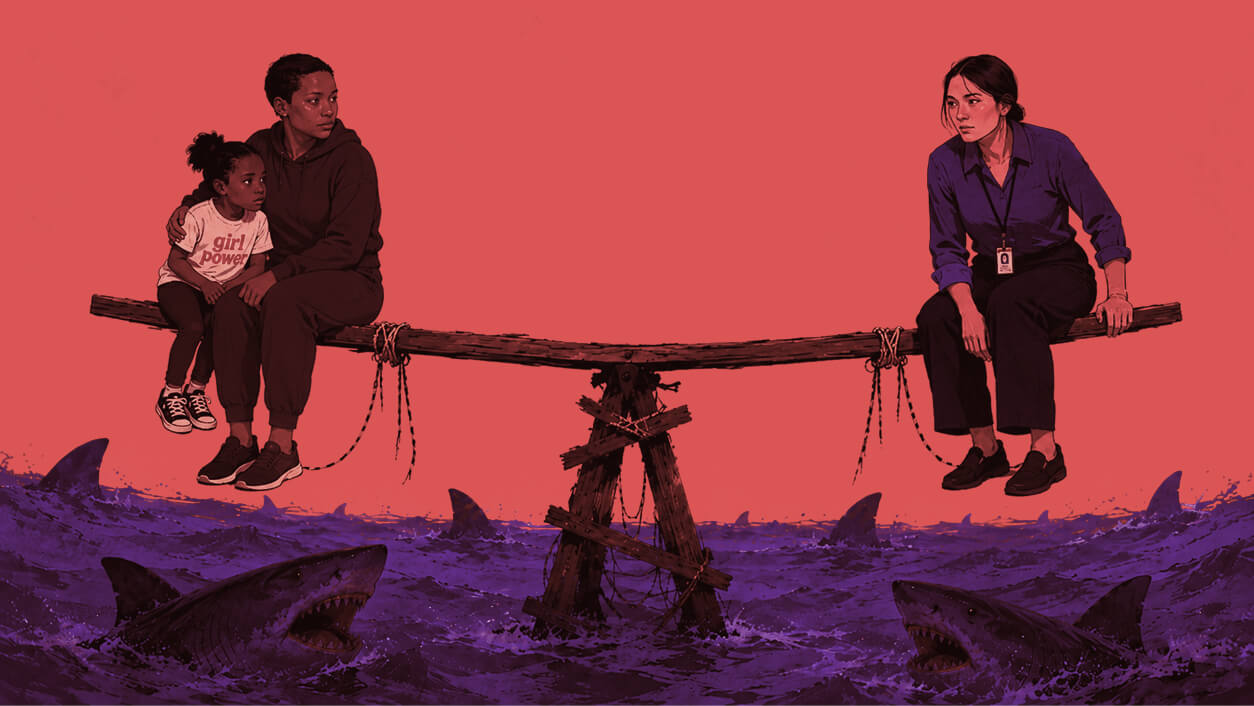
Midwifery offers something rare in policy discourse: a concrete, recent example of how a holistic, person-centred model of care moved from the margins into stable public funding without diluting its philosophy or abandoning its core practices. The model succeeded because practitioners organised collectively, defined clear boundaries around safe practice, and presented government with a credible, immediate plan for implementation—not because they softened their vision or made the work more palatable to bureaucratic comfort.
Inclusive education occupies the same structural position midwifery once did, widely recognised as ethically necessary and empirically beneficial yet persistently underfunded, fragmented, and treated as an exception rather than core public infrastructure. This comparison is not metaphorical. The parallels run through funding structures, risk distribution, evidence bases, political resistance, and the precise mechanisms by which governments defer essential services until crisis forces action. What midwifery’s path to stable funding reveals is what inclusive education must do next, and the central conclusion remains straightforward: moral urgency alone will not produce sustainable funding. The work requires collective negotiation, a shared operational vision, and a clear demonstration that proper funding is fiscally responsible over the long term, not as distant aspiration but as immediate implementation plan.
The pre-regulation problem in midwifery
Before regulation and public funding, midwifery in British Columbia existed in a precarious and unsafe structural position, not because holistic care was inherently dangerous but because care without infrastructure always is. Birth is a predictable population-level event, yet midwifery care was treated as a private choice rather than a public responsibility, forcing families to pay out of pocket or accept unmanaged risk while practitioners worked without consistent standards, clear liability frameworks, or institutional backup. This arrangement produced two simultaneous failures that governments initially misread as evidence that midwifery itself was dangerous rather than recognising the true cause: unsafe practice could persist because there was no coherent system to enforce boundaries or intervene early, while safe, effective practice remained inaccessible to much of the public despite accumulating evidence of strong outcomes.
High-profile harm, including preventable deaths associated with unsafe practitioners such as Gloria Lemay, intensified public concern and drove policy attention toward regulation, but the narrative framing remained confused for years. Governments read these tragedies as proof that the model was flawed when the actual problem was the absence of a public framework capable of regulating, supporting, and containing risk. The harm was real, the deaths were preventable, and the public outcry was justified, but the solution was not to abandon midwifery or treat it as permanently marginal—it was to build the infrastructure that made safe practice universal rather than dependent on individual practitioner integrity and family resources.
-

This isn’t a unique case, is it?
My children’s father said in a meeting: “Surely you’ve dealt with this before and you have a solution? This isn’t a unique case, is it?” The question hung in the air, simple and devastating, exposing in one breath the entire pretence on which school leadership rests. The question matters because it cuts through bureaucratic delay and the endless rhetoric of “complex cases” and “challenging behaviours.” It insists on memory. It resists the seductive performance of institutional amnesia. It shifts responsibility back where it belongs—onto systems designed to serve, but which instead perform ignorance in order to justify inaction. And it…
Evidence without access: an equity failure
At the same time that high-profile harm was driving calls for prohibition, research increasingly demonstrated that midwifery-led care produced equal or better outcomes than physician-led hospital birth for low-risk pregnancies, with lower rates of unnecessary intervention, comparable or improved safety outcomes, and higher satisfaction and continuity of care. Once this evidence accumulated, denying public access to midwifery was no longer a neutral policy position—it became an equity failure, creating a system where families who could navigate private arrangements or accept unregulated risk accessed better care while others could not.
This combination of real harm caused by lack of regulation and clear benefit from the model itself forced a policy reckoning that went beyond ideology or professional turf protection. The evidence was sufficiently strong that continuing to exclude midwifery from public systems required justifications that could not withstand scrutiny, particularly as the model gained legitimacy in other jurisdictions and as the feminist health movement made the politics of reproductive care visible as a question of bodily autonomy, informed consent, and access to person-centred support. The pressure came from multiple directions simultaneously: families demanding better options, practitioners seeking recognition, researchers documenting outcomes, and policymakers recognising that the status quo was both unsafe and inequitable.
-

Debility versus disability: what the system cannot acknowledge
My son Robin took to bed two weeks before March break. He had been soldiering on through the aftermath of a school transfer the district assured us would help him, though his body told me otherwise from the first day he arrived. I’ve seen that kind of shutdown before—at camp, at birthday parties, in classrooms where support is promised and then revoked. The new program promised academic alignment, built for gifted asynchronous learners, and it intrigued me with its language of belonging and accommodation. It felt like a retroactive sorting—a belated admission that Robin should have been placed in the…
The decisive shift: organisation, not compromise
Midwifery did not become fundable because practitioners abandoned their philosophy or accepted a watered-down version of relationship-based care. The core elements of midwifery—attention to personal history, respect for physiological processes, informed consent, continuity across prenatal care and birth and postpartum support—remained intact through regulation and integration into public systems. The key shift was organisational, not ideological, and this distinction matters enormously for understanding what made funding possible.
Through the Midwives Association of British Columbia, midwives formed a single, coherent counterpart to government that could legitimately say: we represent the profession, we can require members to meet standards, we can implement agreements consistently. Unsafe practice was no longer framed as ideological diversity or personal choice; it became a boundary issue, and the majority of midwives already agreed that certain practices were unacceptable. Organisation made that boundary enforceable.
The association did not ask government to endorse a vision in the abstract or trust that good intentions would produce good outcomes. It presented a business case: workforce numbers tied to birth rates, training and credentialing pathways, integration with hospitals and emergency systems, liability and accountability structures, cost comparisons with physician-led care. In short, midwives showed not only that the model worked but that it could be implemented immediately within public systems, with clear lines of accountability and mechanisms for addressing harm when it occurred. Midwifery became fundable when it was no longer hypothetical, when the question shifted from whether the model deserved support to how many midwives were needed and where they would practice and how funding would flow through existing infrastructure.
The parallel position of inclusive education
Inclusive education today occupies the same structural position midwifery once did, and the parallels run deeper than surface resemblance. Disability and learning variation are predictable population-level realities, yet inclusive education is still funded reactively—through diagnosis, designation, litigation, or crisis—rather than as planned infrastructure designed to accommodate the full range of human neurology and development. As a result, exclusion persists without mandatory intervention, educators absorb systemic failure through individual effort and personal resourcefulness, families are forced into enforcement roles that require legal knowledge and emotional stamina most do not possess, and public fear is driven by worst-case examples rather than system design.
As with pre-regulation midwifery, uneven practice and occasional serious harm are used to argue that the model itself is unsafe, that inclusion creates chaos or compromises safety or undermines learning for other students. This repeats the same category error that delayed midwifery funding for decades. The problem is not inclusion—the problem is inclusion without infrastructure, inclusion demanded but not resourced, inclusion as aspiration rather than operational commitment. When schools are told to include all students but given no additional staff, no time for planning, no training in trauma-informed practice or disability justice frameworks, no clear escalation pathways when situations become unsafe, the resulting failures are predictable and the harm is real. But the solution is not to abandon inclusion or treat it as optional—it is to build the infrastructure that makes inclusive practice sustainable, safe, and genuinely supportive rather than performative.
What “doing it like midwives did” means for education
The transferable lesson from midwifery is effective negotiation grounded in operational readiness, and this requires a shift in how inclusive education advocates position themselves in relation to government. Moral arguments are necessary but insufficient. Evidence of harm caused by exclusion is compelling but does not automatically produce funding. What governments respond to is a credible plan for implementation that demonstrates how money will be spent, what outcomes can be expected, and who will be accountable when things go wrong.
Inclusive education advocacy remains fragmented, with parents, educators, disability groups, and unions often speaking past one another and advancing overlapping but inconsistent demands. From a government perspective, this signals risk—not because the demands are unreasonable but because there is no clear counterpart capable of negotiating on behalf of the field and ensuring compliance with negotiated agreements. A credible negotiation requires a bounded coalition with shared non-negotiables, internal debate separated from external bargaining, and a body authorised to negotiate and secure buy-in from practitioners. Governments fund systems they can bargain with, systems that present clear pathways from policy decision to classroom implementation.
Like midwifery, inclusive education must move the conversation from whether it should exist to how it will be delivered now, and that means presenting population-based funding models, staffing ratios and role definitions, training and professional development capacity, accountability and escalation mechanisms, and clear expectations that exclusion is not a stable end state. This is not vision-selling or advocacy theatre—it is implementation planning, the unglamorous work of specifying exactly how many educational assistants are needed per school, what their training should include, how disputes will be resolved, and what happens when a student’s needs exceed available resources. The specificity is what makes appropriate funding possible.
The economic case: cost stabilisation, not cost avoidance
Properly funded inclusive education will not be cheap, and pretending otherwise undermines credibility. Midwifery was not cheap either—regulation required new training programs, liability insurance, hospital privileges, integration with emergency care systems, and ongoing professional development. The honest economic argument is not that inclusion saves money immediately but that it prevents predictable downstream costs currently absorbed by other parts of government, costs that remain invisible in education budgets but show up everywhere else.
When inclusive education is underfunded, costs are displaced into healthcare, including mental health services for children experiencing chronic exclusion and trauma; child protection and family services responding to family breakdown driven by school-related stress; policing and the justice system managing behaviour that was never addressed through educational support; adult disability and income assistance for people who could have developed greater independence with proper schooling; and lost parental workforce participation and tax revenue when one parent is forced to leave employment to manage school crises or provide home-based education. These costs already exist—they are simply hidden across ministries, fragmented across budgets, and treated as separate problems rather than consequences of the same systemic failure.
Properly funded inclusive education is safer, more predictable, and more fiscally responsible than the current system of exclusion, denial, and crisis management. The costs of building infrastructure—hiring adequate staff, training educators in disability justice and trauma-informed practice, creating sensory-friendly spaces, providing assistive technology, ensuring every child has access to speech-language pathology and occupational therapy and mental health support—are upfront and visible. The costs of continuing to exclude are diffuse and delayed, but they are larger, they compound over time, and they fall hardest on the families and communities with the fewest resources to absorb them. This is the economic case for inclusive education, not as moral imperative but as cost stabilisation, a recognition that governments are already paying for exclusion—they are simply paying more, in worse ways, with worse outcomes.
-

The material costs of educational harm
My son no longer attends school. He no longer wants anything the education system offers. He has taught himself programming, navigates Linux with expertise that exceeds my own knowledge, learns alone in his room because learning with others became too expensive to survive.…
The core policy claim
Inclusive education should be treated the way midwifery eventually was: as essential public infrastructure, planned around predictable human variation, funded upfront rather than enforced through crisis. The question for government is not whether inclusive education is affordable but whether continuing to underfund it while paying far more elsewhere is sustainable, and the answer is increasingly clear. Midwifery shows what happens when a holistic model organises, insists, and demonstrates readiness—it becomes fundable not because it compromises its values but because it presents government with a pathway from commitment to implementation that accounts for risk, specifies accountability, and makes the fiscal case for long-term investment.
Inclusive education can do the same, but it requires moving beyond fragmented advocacy toward collective negotiation, beyond moral urgency toward operational specificity, beyond demanding that schools do better toward showing exactly how they can. The work is unglamorous, the timelines are long, and the compromises required are not ideological but organisational—deciding who speaks for the field, what boundaries are non-negotiable, and what implementation looks like in practice rather than aspiration. Midwifery succeeded not by abandoning its vision of person-centred care but by making that vision legible, fundable, and ready to scale. Inclusive education must do the same, and the time for that work is now.
-

The optimal funding model for inclusive education
Inclusive education does not fail because children are too complex. It fails because funding systems reward denial, privatise enforcement, and treat disability as an exceptional cost rather than a predictable feature of human populations. A functional model already exists. It is not radical.…