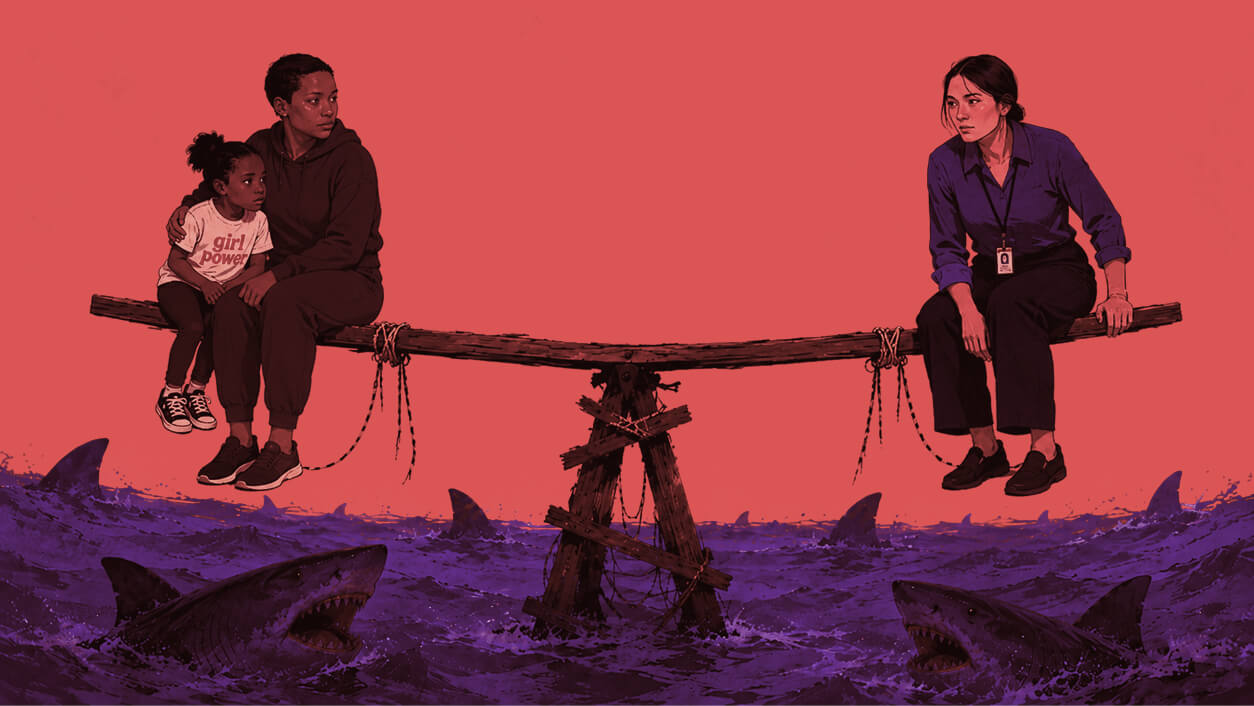
I would like to acknowledge the shared labour of our community, because this interpretation arises from absorbing the stories that circulate within our community, where families describe the daily calculus of parenting, the emotional and physical toll of mornings, and the persistent hope that someone will finally recognise the scale of labour required simply to help a child reach the school door and how systems make this labour more difficult, and these stories illuminate the truth that caregivers perform extraordinary work long before attendance registers on a screen, and for every parent exhausted by 9 a.m., whose patience frays under the weight of unrelenting responsibility, I see your courage and your hard work, and fuck this engineered scarcity for making our daily routines so difficult and for making school so inaccessible for our children!
Parenting disabled children through the pandemic
Parents raising disabled children entered 2020 already carrying the weight of chronic advocacy, daily regulation work, and the existential vigilance required to protect children whose access depends on responsive environments, and when schools closed their doors, these families performed uninterrupted one-to-one support while still working, improvising structure, and absorbing the dread that settled across every surface of public life, and the body stored this labour in the heart, the joints, the autonomic system, and the mind, where exhaustion wedged like a painful sore, and this unhealed depletion continues to shape the capacity to navigate mornings, manage meltdowns, and sustain the emotional scaffolding required to deliver a dysregulated child to a classroom.
Post-viral fragility in disabled children and their caregivers
Many neurodivergent children live in hypermobile, dysautonomia, or otherwise physiologically sensitive bodies that reacted intensely to Covid, with families observing increased POTS, MCAS, and chronic inflammatory cascades, and this same pattern emerged for caregivers, who often carry similar physiological profiles and emerged from the pandemic period with elevated blood pressure, cardiac irregularities, diabetes, and chronic pain, and these health shifts reduce energy, endurance, and executive capacity, creating mornings where attendance collapses because the household cannot stabilise its own regulatory centre of gravity.
The collapse of school-based support structures
Schools entered the pandemic with thin margins, and temporary Covid grants briefly masked chronic underfunding by supplying the EA and SSA hours many disabled children had always needed, and when that funding evaporated, the supports disappeared as well, replacing stability with inconsistency, turnover, and coverage gaps that dismantle the regulatory predictability children depend on, and every shift in adult presence reverberates in the nervous systems of high-needs learners, who attend only when a trusted adult anchors the environment.
Fragile literacy and the burden of catching up
Literacy instruction across BC often assumes stamina, seated endurance, and the capacity to tolerate repeated correction, and disabled and neurodivergent children who experienced regression or disrupted trajectories during Covid returned to classrooms organised around acceleration and remediation, and the pressure to perform became demoralising, transforming academic spaces into sites of shame rather than access, and children avoided the places where they felt exposed.
The sensory and relational volatility of post-pandemic schooling
Children who experienced the pandemic as a period of co-regulation with parents faced the abrupt return to socially dense, noisy, unpredictable school environments, and their nervous systems registered threat long before adults perceived anything amiss, and a single incident—an unexpected comment, a privacy breach, a conflict with a peer, a teacher unfamiliar with an IEP—can imprint for weeks, interrupting sleep, heightening vigilance, and producing school refusal that arises from safety calculations rather than defiance.
The social rupture and the loss of neurotypical fluency
Neurodivergent children often rely on patterned familiarity, predictable interpersonal rhythms, and steady relational signals to navigate social spaces, and the pandemic years removed daily exposure to neurotypical peers whose communication styles, sensory expectations, and conversational norms require constant interpretation, and many disabled children returned to classrooms unpractised in the subtle negotiations, abrupt transitions, and unspoken conventions that shape neurotypical social life, and this gap generated acute strain because the peer landscape felt sharper, faster, more performative, and more demanding than before, creating a continuous regulatory drain that made attendance feel punishing rather than communal.
The shifting choreography of post-pandemic school norms
Changes to school routines during and after social distancing—rotating recess zones, staggered entry times, directional hallway rules, modified group work, shifting lunch protocols, and altered behavioural expectations—expanded the cognitive and social load required to participate in school, and neurodivergent children who depend on stable patterns, predictable rules, and consistent sensory cues experienced these fluctuating norms as an escalating maze of contradictions, and each new expectation demanded fresh interpretation, adaptation, and self-regulation, creating daily strain that accumulated in the body and shaped attendance long after formal restrictions lifted.
The erosion of trust in institutions
Families raising disabled children witnessed a pattern of minimisation, misdocumentation, and inconsistency that fractured their trust in schools, and this trust, once broken, requires slow, consistent repair, yet staff shortages and administrative overload leave little capacity for follow-through, and parents respond by keeping children home when conditions feel unpredictable.
The burnout of invisible labour
Parents track symptoms, regulate transitions, email teachers, schedule meetings, manage IEPs, document incidents, coordinate specialists, and serve as the only buffer between their children and an environment that often misunderstands their needs, and this administrative and emotional weight multiplied during Covid, producing chronic decision fatigue that makes daily attendance contingent on the parent’s remaining reserves rather than the child’s ability alone.
Poverty, housing instability, and the cost of survival
Many families lost income, housing, or stability during the pandemic period, and disabled children absorb this instability somatically, with each move, each eviction threat, each job loss introducing stressors that dysregulate the household and shape attendance patterns, and the rising cost of food, transportation, and childcare magnifies these pressures.
The shifting landscape of childhood illness
Children get sick more often and remain sick longer in the post-Covid environment, and immunocompromised families navigate heightened caution, longer symptom windows, and fear of viral spread, and sniffles that once warranted a day at home now extend into a week, because children fear harming others or re-triggering family health crises.
Gaps in health care access
Families struggle to access family doctors, specialists, and timely care, and many appointments require full-day travel, leaving parents to weigh the cost of missed school against the necessity of treatment, and these choices accumulate across the year.
The documentation gap and the invisibility of protective withdrawal
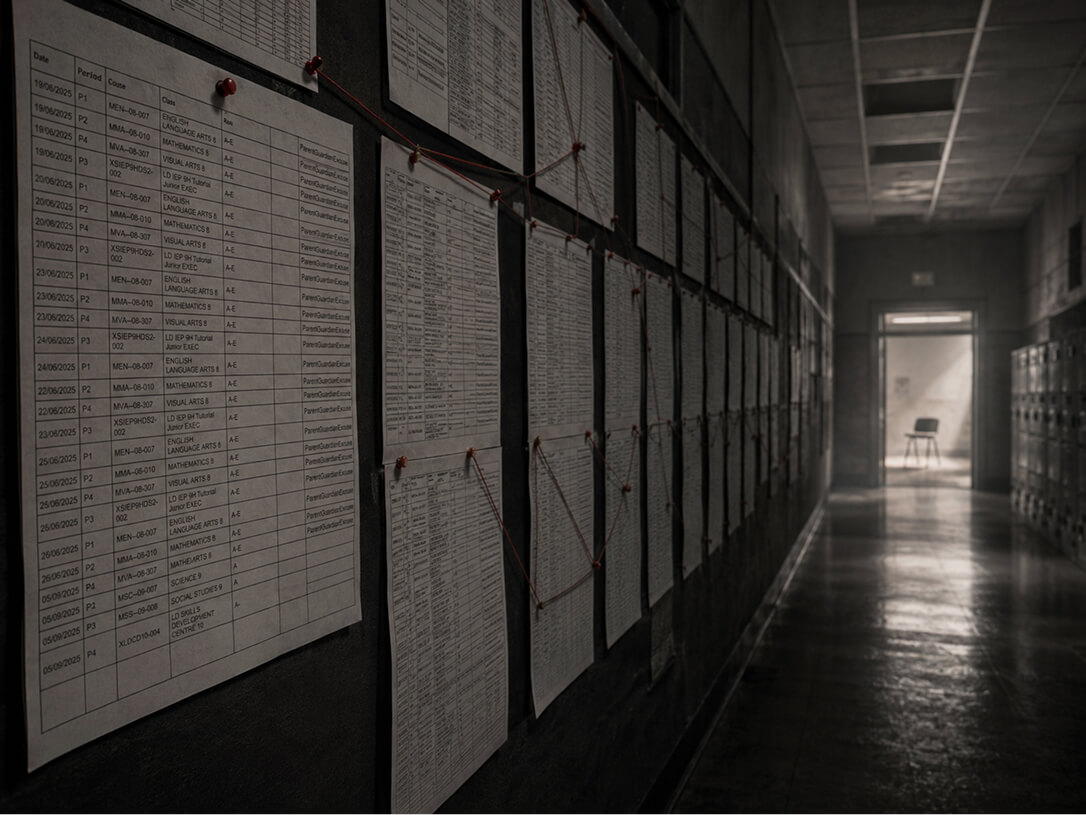
Absences get recorded without context, coded as parent choice, illness, or unexcused, erasing the institutional conditions that precipitated them, and this erasure protects the system while obscuring patterns of unmet need, trauma recovery, staffing instability, and coercive partial-day arrangements, and the absence of meaningful categories hides the truth that disabled students are missing school because school is often inaccessible in ways the data refuses to name.
Trauma, PTSD, and school as a site of remembered harm
Many disabled children—and their caregivers—carry trauma that the pandemic reactivated, and school environments that mirror past institutional dynamics (dismissal, inconsistency, boundary violations) trigger protective withdrawal, and attendance collapses because the nervous system chooses survival.
Transportation and accessibility failures
Post-pandemic transportation instability interacts with disability, with late buses, cancelled routes, and inaccessible commutes disrupting the delicate morning balance required to support dysregulated children into the building, and each transportation failure becomes an absence attributed to families rather than systems.
The cultural resurgence of compliance-based discipline
Schools under pressure lean into behavioural language, code-of-conduct framings, and compliance narratives that disproportionately target neurodivergent communication, stress responses, and sensory overwhelm, and children internalise these misinterpretations as shame, further eroding attendance.
Intergenerational stress and the burden of care
Parents carrying their own trauma histories experienced Covid as a reactivation of older wounds, and raising disabled children through this period compounded the emotional load, making each school incident feel existentially charged and deeply familiar, and the body remembers these echoes in ways that directly shape attendance decisions.
The unseen aftermath
Absences have risen because families are still healing from years of compounded stress, health decline, staffing instability, austerity budgeting, administrative drift, and the relentless labour of advocating within a system that has not adapted to the complexities of disability, and every missed day reflects a calculation about safety, capacity, and survival that the attendance record flattens into a single empty cell, masking the structural forces that shape the daily lives of disabled children and the families who carry them.