Winter light comes through the car windows with the brightness that follows long stretches of grey, the kind of illumination that makes dust visible, that renders every speck I missed when I wiped down the interior earlier. The light sharpens surfaces evenly. It outlines what usually blends into background.
My son sits in the front passenger seat.
Three girls fill the back—my daughter wedged between her two friends, their bodies pressed together in the easy intimacy. Knees touch. Shoulders lean. Big limbs tangle through shared space. They scroll through TikTok on my daughter’s phone. The audio spills into the hum of the car, into the ventilation system, into their laughter. The sound circulates and settles.
Snow Meister starts playing.
All three girls begin singing to varying degrees. One interjecting a few muffled words, another singing a line here or there, and one persistent in a clear child-like voice. The song carries memories of Christmas concerts past. Their faces and bodies have changed—longer limbs, movement of cheeks and narrowing of chins, the density of adolescence still arranging itself. Big bodies. Child voices.
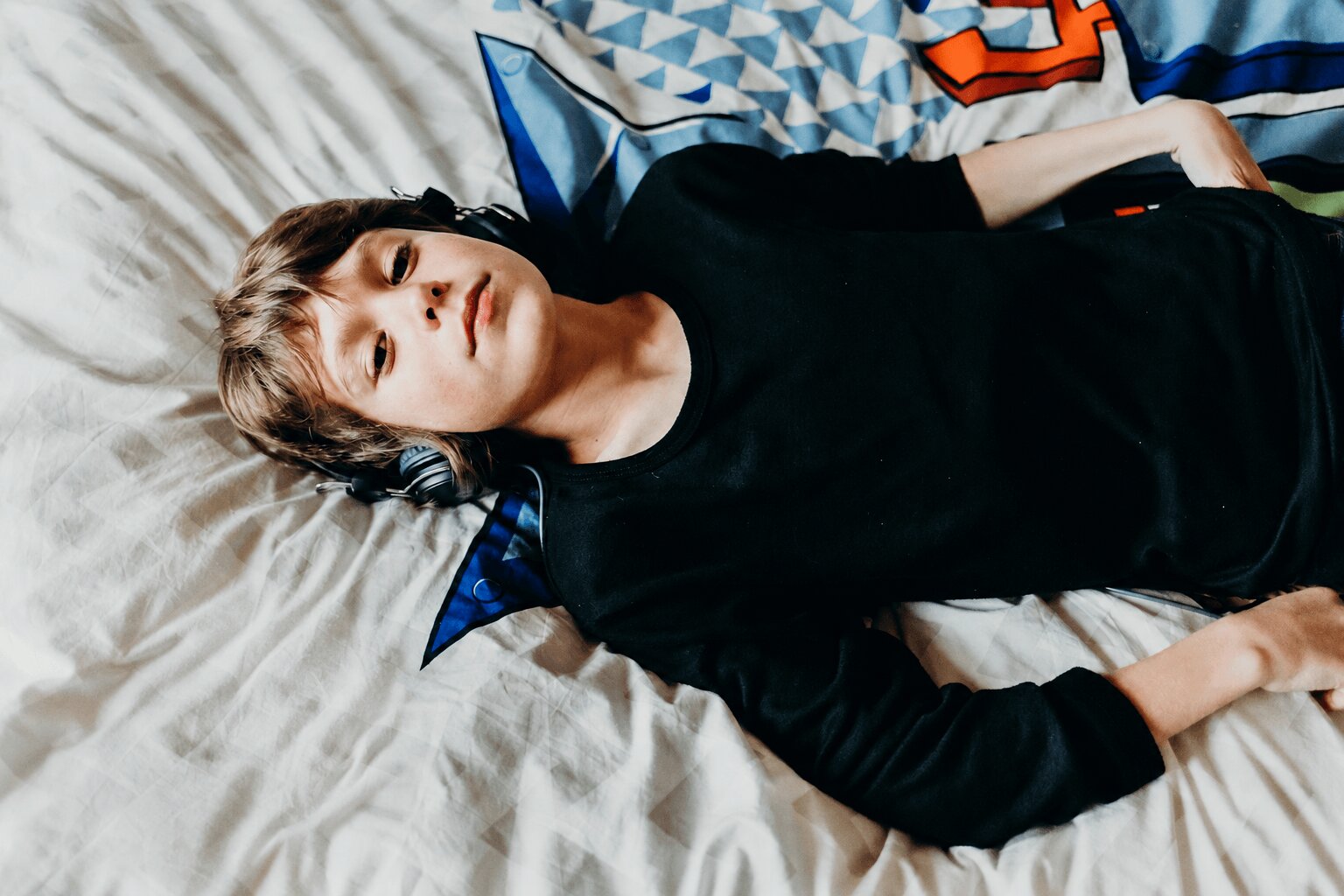
My son sits forward and seems to pause breathing for a moment. I notice because my attention rests there.
An impulse to name the day moves through me. A good day. A precious rare moment. A day shaped by closeness. The impulse loosens and leaves the question suspended. Something war-like happens inside my body in this moment—two forces meeting, two interpretations occupying the same instant, two truths that refuse reconciliation. I carry the sense that this car ride, these voices, this nearness to other teenagers registers as something meaningful in ways I continue learning how to read. Simultaneously I carry awareness of what this moment reveals about institutional violence, about nine months of isolation, about baseline catastrophically recalibrated. The tension between these knowings does not resolve. Both operate. The space between them stretches.
-
The economics of abandonment
When districts exclude children from school, the funding does not follow the child home. The money remains captured within institutional accounts, redirected toward students who attend, while parents absorb the cost of providing education systems are legally required to deliver. I’ve reduced my…
I witness
When I say I witness this scene, the word carries more than one claim.
I witness from position. I sit in the driver’s seat. I am their mother. Nine months of watching my son stay in bed shape how my attention moves. Years of navigating schools that manage disabled children through withdrawal shape how quickly patterns surface. Feminist theory and disability justice shape how I recognise institutional force in ordinary arrangements. My seeing carries this history.
At the same time, I witness as eye witness. I track placement and sequence. Three girls in the backseat. One boy in the front. Knees touching. Shoulders leaning. Winter light entering at a low angle, making dust visible in the air. Voices carrying a song forward through the car. A posture that shifts, or settles.
The word sounds the same in both uses. I witness. Eye witness. The sound collapses distinction even as the meanings pull apart.
Eye witness names attention to surfaces: where bodies sit, how sound moves, what light reveals. It claims fidelity to what appears. I witness names the conditions that shape how appearance gathers meaning: care, anger, institutional literacy, long exposure to patterned harm.
Both operate at once. The scene unfolds independent of my interpretation. Light enters the car. Singing fills the space. My son’s body occupies the front seat. These facts exist. Interpretation arrives with them.
Proximity gathers significance. Stillness attracts reading. Nine months at home recalibrate what registers as social access. Institutional knowledge floods in without invitation.
The homophone refuses a clean division. Observation carries position. Position inflects observation. The word holds both.
Nine months
He has been home for nine months, since we agreed to transfer him from his neighbourhood school to a special program. The district presented this as choice as conditions narrowed across several years, a pattern becoming legible only through repetition.
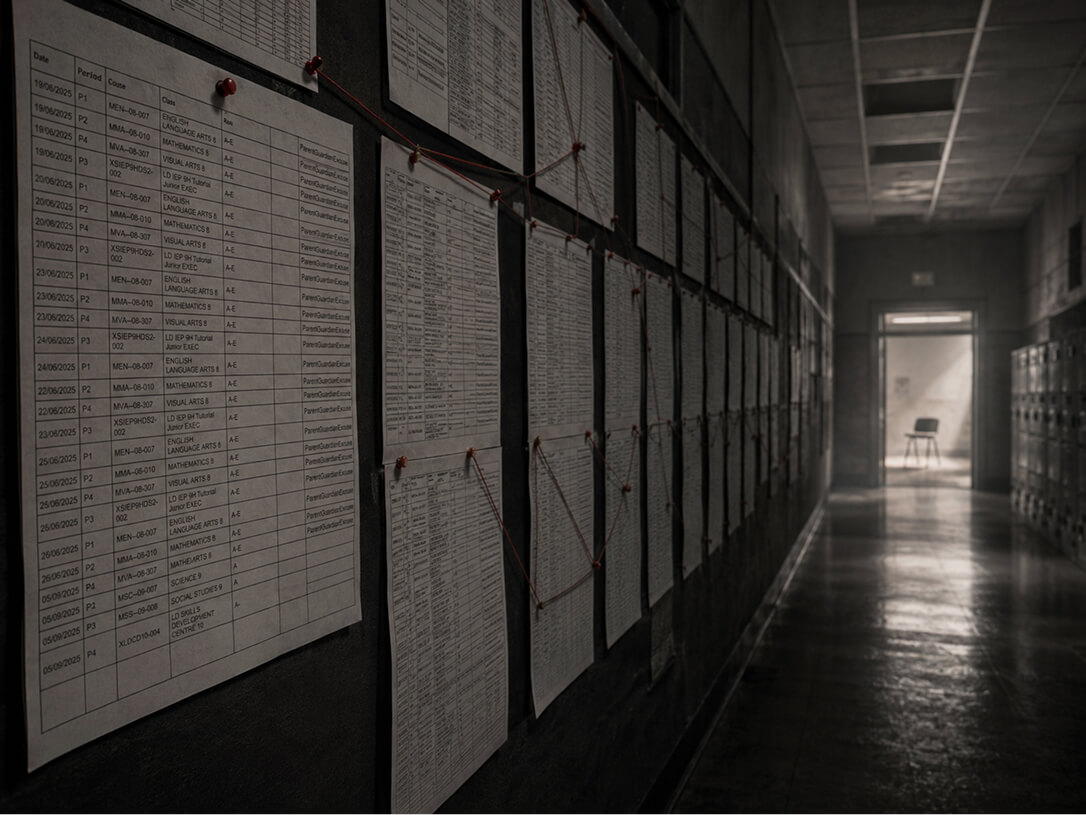
When he stabilised, support reduced. When support reduced, conditions shifted. The shifts produced collapse. The collapse appeared in shared spaces. Withdrawal from class followed. Return followed. The sequence repeated with mechanical precision.
Peers encountered him during moments of difficulty. Violence shaped their reference points. Over time, the sequence taught the room how to interpret his presence. Social bonds frayed under the weight of constant removal, constant return, constant public performance of disability framed as disruption requiring intervention.
The district introduced transfer as resolution. A different building. A fresh start. A setting designated for disabled children. The framing suggested alignment and relief. Suitability and fit entered the language. The special program appeared as solution to problems generated through the district’s own practices—support withdrawn at moments of stability, momentum interrupted, inclusion rendered provisional.
We agreed because conditions had become intolerable. The promise of a clean slate carried weight. The possibility that a class full of twice exceptional children might operate differently shaped our agreement.
I agreed.
The transfer ended existing social connections. Proximity to these children. Children who shared history dispersed. Educators who understood his rhythms stayed behind. Familiar space dissolved. A new setting formed all at once. The demands of the new environment gathered quickly. New peers. New routines. New expectations.
He took to bed one day. Days passed. He stayed there almost every minute of the day and night for months.
I carry the knowledge that I agreed to send him away from everyone he knew. Guilt and anger coexist—recognition of how the district shaped this outcome while presenting it as our choice, awareness of how conditions at his home school deteriorated through institutional practice, awareness of how agreement emerged inside that narrowing.
-

The good twin, the bad twin, and the system that needed both
Before school taught them roles, they played tea party—taking turns serving and being served. Seven years later, I can’t say with certainty whether one would fetch the fire extinguisher if the other caught flame.
The interstitial space
The car functions as interstitial space—the connective tissue between established categories, the space between main structures where boundaries stay fluid. Interstitial describes occupation of the gap, the zone where categories blur and remain negotiable. In medicine, interstitial fluid fills the spaces between cells. In architecture, interstitial spaces name the leftover gaps between rooms. Here, the car becomes the gap between home and school, between isolation and connection, between what was and what might be. The space where my children exist right now, in this moment, resists settling into single interpretation.
Several states occupy the same moment. Childhood and adolescence share bodies. Singing and social sorting travel together. Sound moves forward through the seats. I experience the scene as mother and witness at once, attending to what unfolds while holding awareness that my understanding arises from position rather than access.
The war in my body intensifies. I observe my son’s posture—the slight forward lean, like he’s drinking in the sounds—and interpretation floods in: this matters to him, proximity offers something he needs. Then institutional analysis floods in, like a tide: nine months home has recalibrated what registers as connection, vicarious participation now qualifies as optimal, the baseline has dropped so that being passenger to his sister’s friendships represents victory. Or maybe it always was?
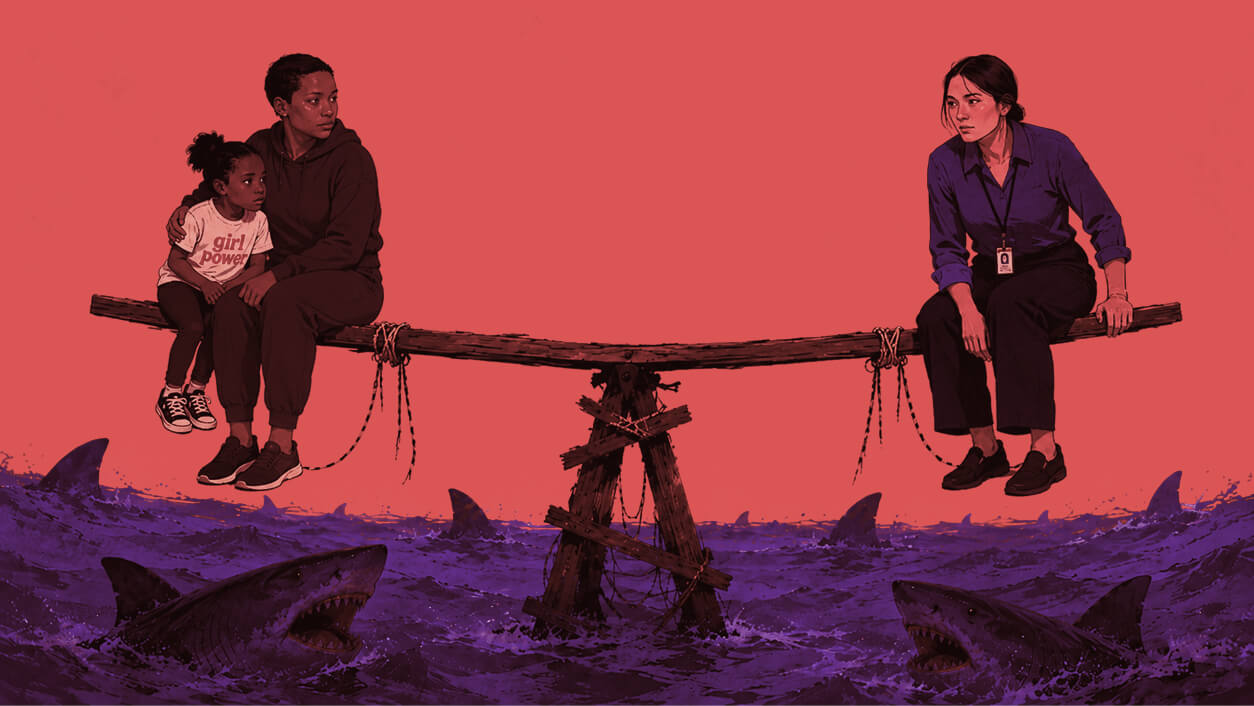
My daughter’s body stays wedged between friends whose institutional paths diverged earlier. One friend attends mini school. Academic fluency opened that route. Another attends private school. Family resources shaped that access. Both trajectories lead elsewhere. My daughter continues in the mainstream public system that shaped all three.
The wedging carries connection and separation together. Physical closeness coexists with institutional distance. Friendship persists across different educational architectures. I observe this arrangement as physical fact, attending to posture and placement. The recognition of her body pressed close to friends who found escape routes, recognition of the comfort this physical proximity might offer, recognition simultaneously that she watches them thrive while she remains trapped, that wealth and academic capacity functioned as gates, that the system rations support through mechanisms that sorted these three girls into different trajectories.
Being hated
The conversation shifts.
Someone at school hates my daughter. The declaration arrives plainly. My daughter says she does not understand the reason. A friend confirms the sentiment. The girls continue talking. I continue driving.
The girl they reference comes from a family oriented toward rules, propriety, and careful performance. Safety travels through excellence and compliance. My daughter moves differently. The system responds through discipline rather than accommodation. Over time, this positioning accumulates. Renegade takes shape as a social location assigned through repeated interaction rather than as an identity she names. She tries renegade on, like a new set of clothes.
The impulse to protect rises—turn around, interrupt, reframe the moment, tell her the girl’s hatred emerges from institutional architecture rather than anything wrong with her. Simultaneously, awareness that she navigates this terrain daily, that she possesses her own understanding, that my interpretation might be cringe. I might override rather than support her subjectivity, her own sense-making, her own hope or resilience or navigation of adolescent social complexity I cannot access from the driver’s seat.
Reading into the moment
The girls return to TikTok. Sound mixes with the ventilation. Audio I usually mute plays on. I track sound and dust moving through the car. I catch partial views of the backseat while checking the highway. I hear my son breathe, then pause. His body holds an attentive stillness.
Interpretation gathers quickly around proximity. Closeness begins to signify repair, relief, connection. Meaning attaches to posture, to listening, to shared air. The act of noticing becomes charged. Attention slides toward story.
An impulse arises to name this his best day. The framing draws from his posture shift, his orientation toward sound. The meaning rises alongside my longing. I want proximity to other children to matter to him. I want this moment to register as social warmth. Wanting sharpens perception.
Other experiences remain possible. Sound as intrusion. Voices as irritation. Pleasure braided with overwhelm. Sensations arriving mixed, unaligned with the story forming in my body.
Violence enters through interpretation shaped by desire rather than access. My grief over his isolation presses against the scene. Hope gathers around a car ride. I notice posture and meaning rushes in: this matters, this reaches him, this compensates for months at home. These readings emerge from what I carry rather than what I know.
A gap persists between his lived experience and my need for this moment to signify something restorative. I hold a wide view of institutional harm. I understand what prolonged isolation removes. That understanding leans heavily on the present, asking it to bear more than it can.
I witness his body in the front seat. I witness interpretation rising alongside it. Eye witness to posture and I witness shaped by longing collapse into the same moment. Both operate.
The intertidal zone
The scene carries the quality of an intertidal zone—the shoreline between high and low tide, where conditions oscillate between submersion and exposure, where life adapts to extreme changes in water, sun, and waves. Intertidal spaces sustain organisms shaped by flux, by repetition, by constant adjustment to shifting terrain. Barnacles clamp to rocks during exposure, open to filter-feed during submersion. Sea stars navigate between underwater hunting and air-borne desiccation. Plankton pulse with the tide, hover suspended like dust motes in column of water, then dry on shore when the water recedes. The zone teems with life precisely because organisms evolved to inhabit threshold, to survive regular flooding and drying, to exist as both subject and object of forces larger than themselves, to persist in dynamic environment experiencing constant transformation.
My experience in the car moves this way. Interpretation approaches, then recedes. One knowing floods in—my children are having a moment of connection, of ordinary adolescent ease, of singing and friendship and proximity that matters regardless of institutional context. Then that knowing recedes, pulls back, reveals the rocks underneath—nine months of my son’s isolation, systematic support withdrawal, manufactured crisis, clean slate mythology, transfer that severed connection, baseline so catastrophically lowered that car ride proximity registers as optimal. My daughter wedged between friends who escaped while she remains trapped, navigating casual cruelty about being hated, her body pressed close to girls the system sorted into different trajectories through mechanisms that pretend neutrality. The tide returns. Maybe both truths operate. Maybe honouring their possible joy in this moment—her physical closeness to friends, whatever that contact means to her body, whatever hope or resignation or pleasure or grief moves through her as she sits between them—does not require abandoning recognition of the violence that shaped the conditions where car ride proximity qualifies as significant, where being wedged between friends who found exit routes she cannot follow becomes her ordinary afternoon.
The war intensifies in the intertidal space. The zone between high and low tide, between submersion in their lived experience and exposure to systemic analysis. Between what this moment might mean to them and what it reveals about institutional abandonment. Between their subjectivity—which I cannot access, which belongs to them, which might include hope or joy or relief or connection I cannot witness directly—and the twenty-thousand-foot view showing exactly how the district engineered these conditions, how support withdrawal manufactured crisis, how transfer severed social fabric, how nine months home recalibrated what counts as victory.
Making meaning
I hover at the edge of speaking. Of turning around. Of marking the moment. The impulse to intervene, to narrate, to shape experience through my interpretation cycles through. I stay quiet.
Staying quiet feels like restraint, like honouring their autonomy, like ethical witnessing that refuses to override their subjectivity with my analysis. Don’t be cringe, mom! My daughter navigating being hated, my son’s posture I cannot read—both deserve space to experience this moment without my narration, without my need to make it mean what I need it to mean.
Staying quiet feels simultaneously like failure, like complicity, like allowing institutional violence to proceed unmarked. My silence enables the normalisation of catastrophic baseline where vicarious belonging represents optimal, where my daughter accepts being wedged between friends who escaped while she remains trapped, where neither child names what the district destroyed because the destruction happened slowly enough to become ordinary.
The girls talk. My son listens. My daughter’s body stays pressed between friends whose institutional paths diverged. The car moves through traffic. I remain poised, motionless in speech, body tense with the effort of holding multiple truths. The intertidal zone offers no stable ground. Only constant adjustment. Only adaptation to conditions that shift between extremes. Only the recognition that life persists here.
In winter light
Winter light fixes the scene. Dust suspended in air. Ventilation hum beneath voices. Knees touching in the backseat. Shoulders leaning. A song carried forward. My son’s body angled toward sound.
What I know appears through arrangement. Who sits where. Who touches whom. Who travels together. My son in the front seat. My daughter pressed between friends already routed elsewhere. Big bodies. Young voices.
What I know appears through time. One year since the transfer. Nine months since the bed became the center of his day. A recalibration of what counts as connection.
What I know appears through institution. Sorting named neutral. Support withdrawn. Crisis produced. Separation offered as care. Access gated by wealth and fluency.
The scene carries ordinariness. Teenagers in a car. Singing. Talking. Bodies close.
That ordinariness carries weight. It holds possible joy alongside the conditions that made it scarce. It holds proximity alongside the architecture that limits it.
I hold the scene as it unfolds. I offer this as witness—attentive, situated, unresolved—suspended in winter light.