The Vancouver School Board has released its Accessibility Plan for 2025–2028, a document that positions itself as a forward-looking commitment to equity, belonging, and barrier removal, offering warm assurances about inclusion while presenting a polished institutional narrative that feels carefully tuned for public confidence rather than rooted in the depth of community experience.
Families who live the daily consequences of exclusion—through partial-day schedules, sensory overwhelm, behavioural containment, inaccessible communication, and exhausted appeals—read this plan through a different lens, one shaped by accumulated harm and the emotional labour required to navigate systems that have rarely centred their realities. Through that lens, the plan appears less like a blueprint for transformational change and more like a curated piece of institutional marketing, designed for legislative compliance rather than systemic overhaul.
A polished surface that stabilizes rather than transforms
The plan offers expansive affirmations about inclusivity, anti-ableism, and belonging, and these statements carry an emotional weight that resonates deeply with families who hope for safer and more humane schooling. Yet the core implementation relies on familiar district tools—training modules, advisory groups, audits, policy reviews—that create the impression of motion without demanding a shift in culture, authority, or accountability.
Families have witnessed this pattern before: expansive promises paired with incremental actions that leave underlying harms intact. When institutions define accessibility through the optimistic lens of “continuous improvement,” they avoid the deeper work of examining how their own processes, staffing practices, communication structures, and behavioural systems produce the very barriers they claim to remove.
Marketing can soothe; transformation requires discomfort.
Barrier categories that list issues without absorbing their human cost
The plan organises barriers into five neat categories—attitudinal, physical, communication, systemic, technological—and attaches procedural actions to each.
Yet the realities described by families reach far beyond these categories, revealing the emotional, relational, and cultural conditions that shape daily life in schools: infantilising language, sensory-inaccessible classrooms, chronic delays in support, fractured handoff processes, coercive behaviourist practices, and communication strategies that destabilise already-vulnerable families.
These are barriers rooted in culture, not merely skill gaps; rooted in power, not merely misunderstanding; rooted in institutional habits that resist accountability.
Listing a category like “attitudinal barriers” does not account for the systemic expectations that disabled students must mask, self-regulate, or conform to neurotypical norms or suffer social and educational consequences. Listing a category like “communication barriers” does not capture the psychic toll of vague emails, inconsistent timelines, or unanswered concerns.
Administrative categories sanitise what families experience as harm.
Institutional framing vs. lived expertise
The plan highlights committees, advisory panels, and working groups as evidence of deep engagement and shared decision-making.
Yet in practice, the institution shapes the meeting formats, the agendas, the summarisation of experiences, and the interpretive frame for what counts as “actionable.” This centres the district’s perspective, even when community members share expertise born of necessity and survival.
Families across Vancouver consistently articulate a different model of accessibility: one where lived experience is not invited into predesigned structures but instead shapes the structures themselves; one where trauma-informed facilitation, emotional safety, and power transparency sit at the foundation of engagement; one where contributors retain agency over their own narratives rather than watching their words filtered through institutional tone.
A consultation process becomes accessible when the institution surrenders narrative control.
Communication upgrades that avoid the culture of communication
The plan promises clearer digital information, improved accessibility tools, screen-reader-friendly content, and a refined reporting mechanism.
These commitments matter, yet the heart of communication barriers lies not in the absence of tools but in the presence of distrust. Families experience communication as a psychological landscape shaped by tone, timeliness, clarity, and relational honesty. They seek stability in a system that frequently responds with delay, vagueness, or shifting explanations.
Communication becomes accessible when power is acknowledged, when processes are explicit, and when the district communicates with declarative clarity rather than strategic ambiguity. Families need communication that steadies rather than destabilises; that affirms rather than monitors; that operates transparently rather than defensively.
Digital upgrades improve access; cultural change improves safety.
Physical accessibility as progress, sensory and emotional accessibility as unmet responsibility
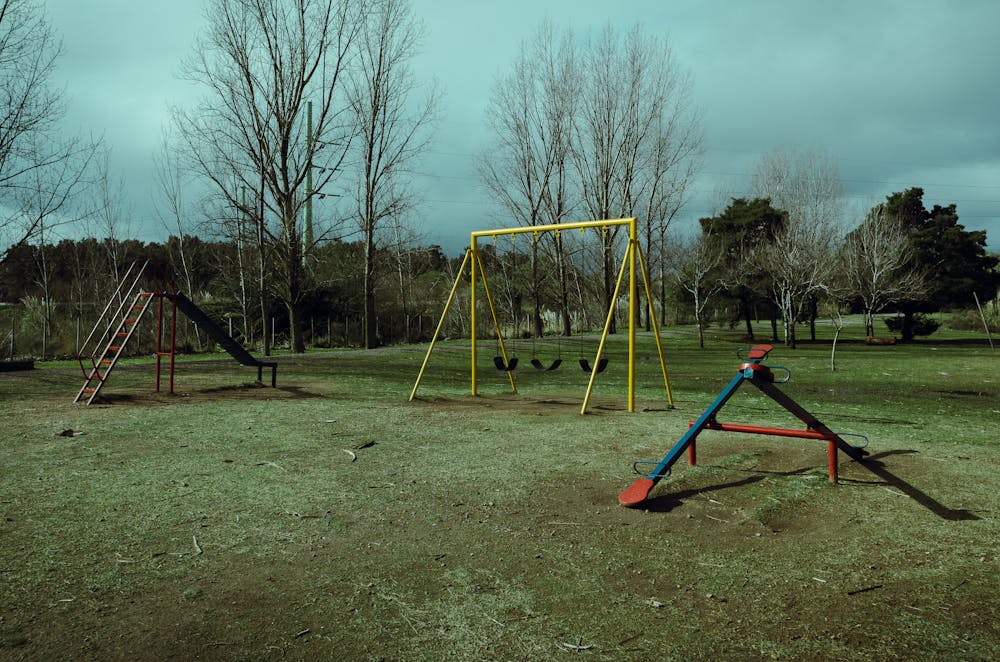
The plan offers concrete actions around playground revitalisation, facility audits, and capital funding requests—work that meaningfully expands access for students with mobility needs.
Yet families also name sensory overload, lack of quiet regulation spaces, overwhelming visual environments, inaccessible lighting, and closed-door library or rest areas as barriers that remain unaddressed.
Accessibility extends beyond the physical shell of a school; it lives in sensory predictability, emotional attunement, and an environment that allows neurodivergent children to regulate without shame. Families need schools to acknowledge that sensory needs are not preferences but foundational conditions for learning and belonging.
A ramp provides access to a classroom; a sensory-safe environment provides access to dignity.
Systemic barriers that require courage, not committees
The plan outlines policy reviews and procedural alignment, describing systemic barriers as areas for administrative fine-tuning.
Families describe systemic barriers as forces that shape the entire educational trajectory of disabled children: designation gatekeeping, lack of early intervention, inconsistent accommodation delivery, unsupported dysregulation, staff turnover, inaccessible appeals processes, and chronic underfunding that pushes children into crisis before help is offered.
Meaningful accessibility requires political willingness to build accountability structures—structures that track whether accommodations are actually delivered, that address delays in support, that protect students from exclusion, and that ensure families are not left to navigate labyrinthine processes alone.
Systemic barriers dissolve when accountability becomes structural rather than discretionary.
Metrics that count outputs instead of measuring impact
The plan proposes annual reviews that summarise the number of playground upgrades, training sessions, and advisory meetings.
Families measure accessibility through an entirely different lens:
- consistent support staff
- reduced exclusion
- safety in school meetings
- fidelity of IEP implementation
- predictable communication
- reduced masking
- emotional regulation gains
- continuity of care
- trauma-informed responses
Educational inclusion becomes meaningful when metrics shift from what the district completes to what children experience.
Counting actions produces reports; measuring impact produces justice.
A vision that offers optimism without integrating the weight of community experience
The plan closes with expressions of gratitude, collective commitment, and a shared vision of accessibility.
This tone offers comfort, yet it does not engage with the depth of harm experienced by disabled students and their families—harm shaped by exclusion, unsupported dysregulation, behavioural containment, and years of fragmented communication.
Families across Vancouver continue to call for emotional safety, transparent communication, and genuine inclusion. They carry insights born from navigating systems that were never designed to meet their needs.
A truly accessible district honours these truths explicitly and without euphemism.
Conclusion
The VSB Accessibility Plan provides a polished, well-organised framework that satisfies legislative requirements and signals institutional goodwill. Yet its true potential remains unrealised, because meaningful accessibility emerges from cultural change, relational clarity, and an unwavering commitment to the lived experiences of disabled students and their families.
A district dedicated to ending exclusion must move beyond marketing language, beyond training cycles, and beyond surface-level consultation, toward genuine structural reform—reform grounded in humility, accountability, emotional safety, and a willingness to cede interpretive authority to those who understand harm most intimately.
Accessibility grows when lived experience becomes the system’s compass, guiding decisions toward justice rather than optics, toward repair rather than reassurance, and toward the full flourishing of every student.

Your Accessibility Committee
A collection of essays written during and after my participation in a school district’s accessibility committee: a process branded as collaborative, but engineered for control. This series explores institutional betrayal, process theatre, and the architecture of performative inclusion. It’s a record of what happens when access is promised but the implementation falls short—and what it costs to keep showing up anyway.