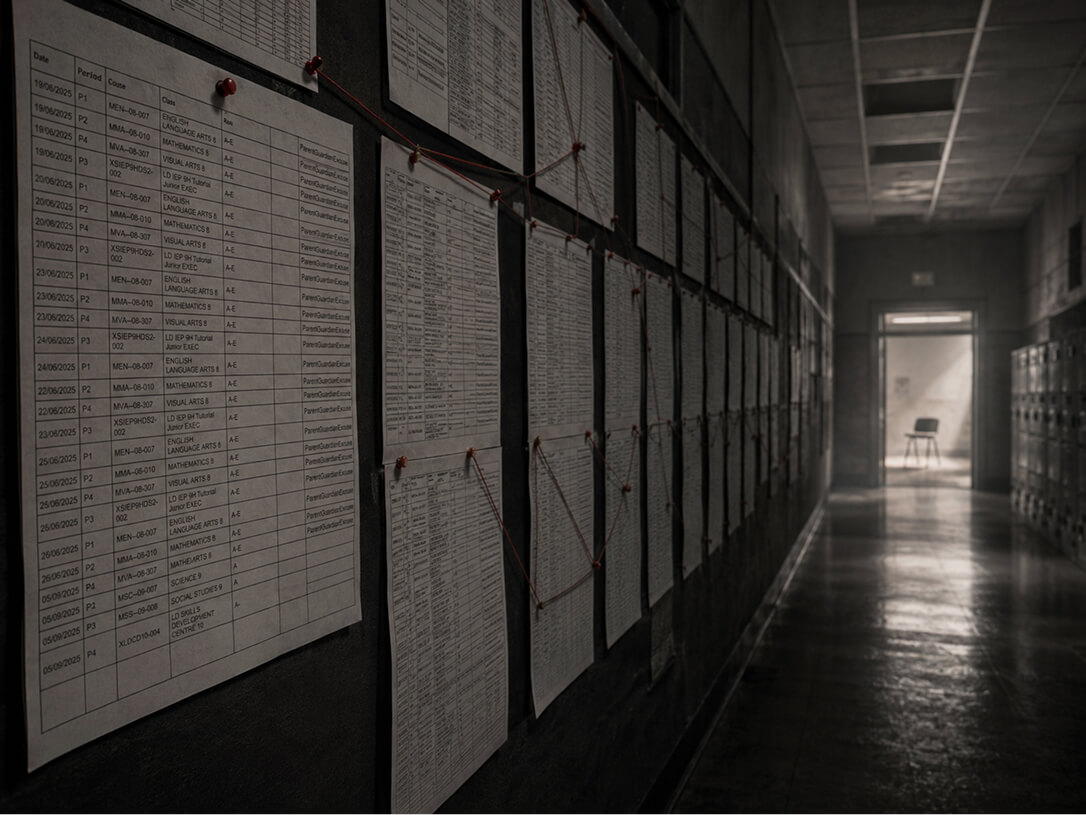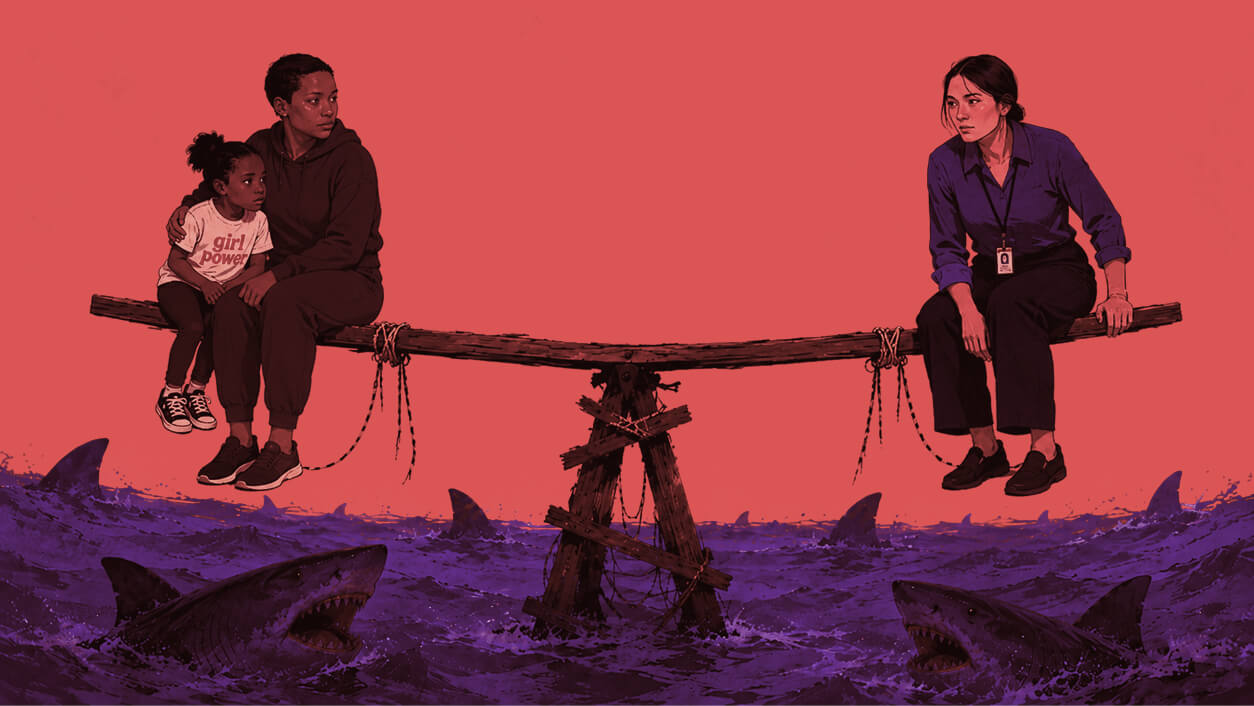
The dominant narrative in staff rooms and comment sections insists that discipline has collapsed because parents no longer “back up the school.” This explanation comforts institutions and shames families, yet it misunderstands the architecture that once made discipline appear effective. What is collapsing is not parenting. What is collapsing is the total environment that once enforced behaviourism across every sphere of a child’s life.
Love as a force of rapid evolution
Families changed first. Neuroscience changed alongside them. Institutions did not. A generation of caregivers learned to listen to their children’s nervous systems, recognising that the body communicates through overwhelm long before it communicates through words. Avoidance signals fear. Shutdown signals collapse. Masked composure hides strain. Behavioural interpretations flatten what is profoundly physiological. Love accelerated this shift.
Behaviourism’s historical success
Discipline seemed to “work” only when the child moved through a seamless world of compliance, where school, home, church, medicine, and community reinforced the same punitive logic. A child who left a harsh classroom stepped into a household governed by identical expectations. There was no refuge, no alternative worldview, no emotional vocabulary for dissent.
When a single refuge breaks the illusion
Modern families, informed by neuroscience and disability studies, offer a different kind of refuge: relational safety, autonomy, co-regulation, sensory understanding, and emotional literacy. Once a child experiences this environment even once, the body knows the difference. The nervous system recognises safety and refuses coercion. Resistance emerges from discernment.
Neuroscience and the collapse of behavioural ideology
Polyvagal theory, trauma research, and interpersonal neurobiology reveal what behaviourism never could: regulation emerges from connection, not control. Children comply when they feel safe, and they falter when they are overwhelmed. A classroom that interprets distress as misbehaviour escalates a child into shutdown or explosion. The nervous system—not the reward chart—determines outcomes.
-
Punishment is not a good learning tool
In Altered Neural Responses to Punishment Learning in Conduct Disorder, researchers examined how young people learn from punishment and reward using fMRI and computational modelling, and the findings show that punishment-based approaches produce weak and unreliable learning signals in a significant subset of…
Schools preserving mid-century ideologies
Even as families evolve, schools remain tethered to behaviourist models. They respond at the speed of policy and austerity. Their training systems have not shifted toward relational science. They still rely on consequences, compliance routines, and punitive expectations that contradict what we now understand about children.
Urgent-intervention programs: expertise rooted in scarcity
Intervention teams—such as Urgent Intervention Program, in Vancouver—are designed to stabilise classrooms, not to understand children. They offer token systems, consequence ladders, and compliance strategies that are incompatible with PDA profiles, autistic nervous systems, and traumatised children. They teach teachers to misread panic as refusal and overwhelm as attitude. When these strategies fail, teachers blame themselves. This is institutional sabotage disguised as support.
The science of co-regulation
Interpersonal neurobiology demonstrates that children regulate through proximity to regulated adults. When they experience genuine attunement at home, they develop a sensory map that exposes the coerciveness of school-based discipline. They recognise when an adult is dysregulated. They notice when a room feels hostile. They accurately interpret shaming as harm. Their nervous systems refuse what their bodies cannot survive.
The economics of scapegoating: austerity’s invisible machinery
Austerity requires someone to absorb the consequences of structural scarcity. Children become scapegoats when classrooms are overcrowded and supports inadequate. Parents become scapegoats when they refuse to replicate coercion at home. Teachers become scapegoats when outdated strategies fail. Blame circulates because transformation is costly, while accusations are cheap.
-
Neural evidence exposes the steep cost of sacrificing vulnerable children to punitive myths
Neural evidence from Altered Neural Responses to Punishment Learning in Conduct Disorder offers a precise account of how punitive school discipline collides with the neurodevelopmental profiles of vulnerable children, because the study shows that punishment learning relies on the anterior insula’s capacity to transform discomfort…
Behaviourism as the ideological arm of austerity
Behaviourism thrives in systems that cannot afford relational care. It interprets systemic failures as personal deficiencies: the child is “non-compliant,” the parent is “permissive,” the teacher is “inconsistent.” This moral economy protects the institution by pathologising everyone else.
Why discipline ideology cannot survive modern children
Children raised with attunement feel the difference between safety and control. They refuse to erase themselves to appease adults. They resist not because they are undisciplined but because they are neurologically literate. They know what respect feels like. They know what harm feels like. They know what learning requires.
The collapse of discipline ideology as ethical progress
Parents are responsible for the collapse of discipline ideology because they evolved beyond it. They refused to participate in the violence the system requires for behavioural conformity. They built environments grounded in relational dignity. Their children now carry this knowledge into the classroom.
Toward a future aligned with science and dignity
If schools want discipline that “works,” they must accept that consequences cannot regulate fear, that compliance is not learning, and that safety is not incidental. They must abandon the fantasy of a compliant home and begin the work of reimagining the classroom as a place where children receive the same relational dignity they experience elsewhere.
Love, science, and the new educational horizon
The collapse is not a crisis. It is a reckoning. It is the moment when the nervous system becomes the teacher, and when love—sustained by science—reshapes what childhood can be. Families evolved. Neuroscience evolved. Schools now face the choice: transformation or obsolescence.
-

Protecting the ledger over the learner: operationalising scarcity in BC School Districts
British Columbia’s public schools are mandated to provide inclusive education for all students, but they do so in a context of chronic resource scarcity. Scarcity in education means there are not enough funds, staff, skills, or services to fully meet all student needs. School districts…