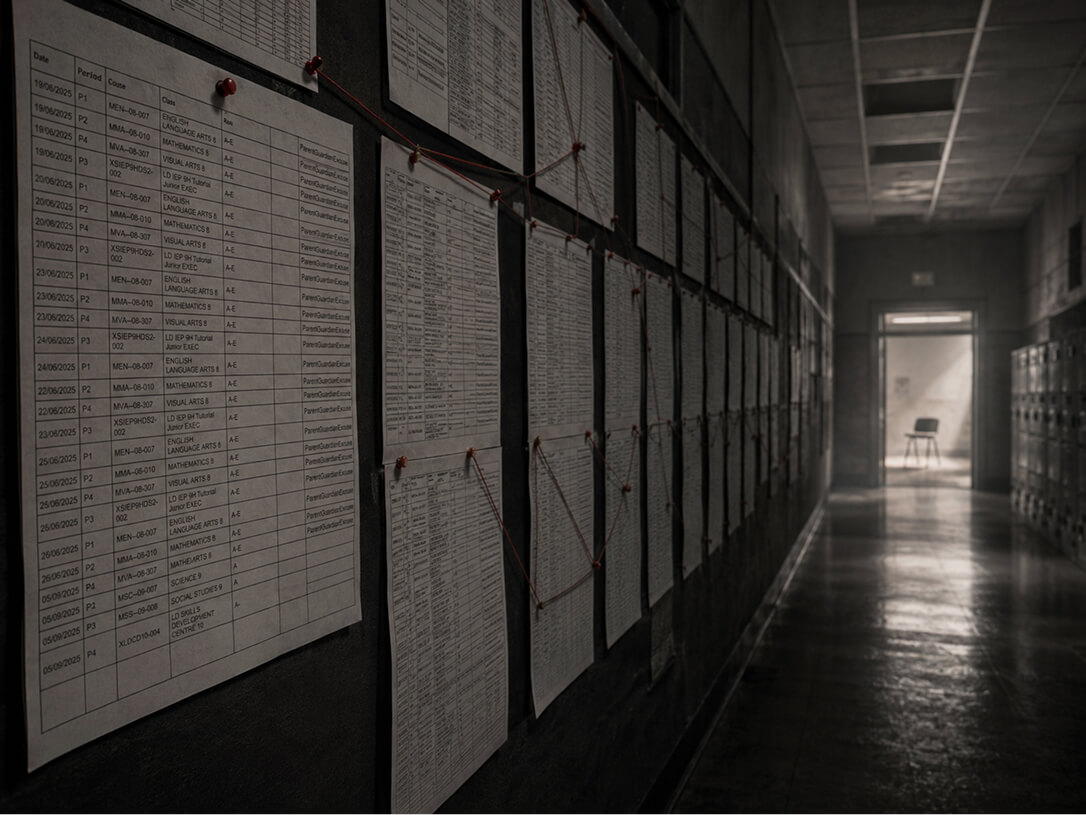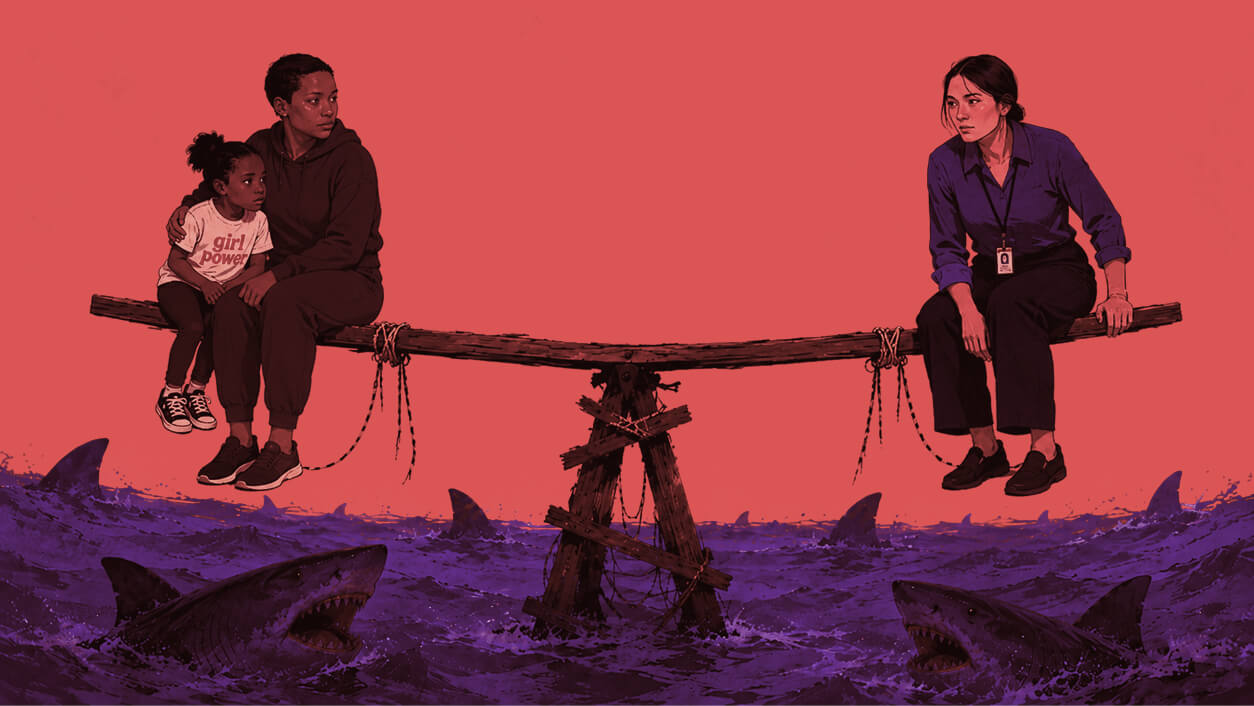
The BC education system spends extraordinary resources defending scarcity while positioning that defence as fiscal responsibility, generating an exhaustion infrastructure that operates across every population the system touches—teachers, families, disabled children, administrators, support staff—all labouring to maintain stories that protect individual dignity within conditions designed to make moral action impossible.
A recent analysis on Fund BC Education mapped how money flows through legal settlements and defence budgets, how districts spend millions protecting refusal while claiming poverty prevents accommodation, how the accounting systems render visible only the costs of compliance while obscuring the far greater expenditures on mechanisms of denial.
Even measuring every legal fee, every settlement dollar, every tribunal defence hour would capture only the most legible fraction of what the system spends defending scarcity as inevitable rather than engineered.
The deeper costs accumulate in a domain fiscal ledgers cannot register: the psychological and moral labour required to maintain institutional narratives that frame systematic harm as appropriate practice, the energy consumed constructing stories that allow educators to survive in systems designed around refusal, the exhaustion produced when daily reality conflicts relentlessly with professional identity and ethical commitment.

Does BC know how much they’re spending to make our lives miserable?
A guide to following the money from classroom crisis to courtroom settlement. When a student gets hurt at school, when a family files a human rights complaint about exclusion, or…
Moral injury as systemic feature
Moral injury describes the psychological harm that occurs when people participate in actions that violate their core values, when institutional demands require behaviours that conflict with ethical commitments, when survival within a system necessitates abandoning the principles that drew them to the work.
Teachers enter the profession committed to supporting all children, to creating inclusive environments, to recognising diverse needs and responding with appropriate accommodation. The scarcity regime positions these commitments as naive, unsustainable, incompatible with classroom management realities and resource constraints. The system demands they participate in exclusion while maintaining the story that they support inclusion, that they deny accommodations while believing they advocate for disabled children, that they implement punitive discipline while framing it as trauma-informed practice.
The gap between ethical commitment and institutional requirement produces profound psychological strain that manifests as the exhaustion infrastructure we see operating across BC and Canadian classrooms. A 2024 BC Teachers’ Federation survey found one in six teachers considering leaving the profession, while research across three Canadian provinces documented 76.9% of educators experiencing emotional exhaustion, with BC Teachers’ Federation president Clint Johnston describing conditions where “teachers have an ever-increasing number of students with complex needs, but no time or resources to do what works well.”
Maintaining the stories that protect dignity within this system—the belief that they are doing their best under impossible conditions, that collaboration might eventually produce change, that the resources truly are insufficient rather than strategically withheld, that their refusal of accommodations reflects necessity rather than choice—requires immense cognitive and emotional labour that intensifies rather than resolves as the contradictions compound.

one in six teachers considering leaving the profession, while research across three Canadian provinces documented 76.9% of educators experiencing emotional exhaustion
The systemic opposition illusion
Canary Collective recently articulated how advocacy for children’s rights gets interpreted as opposition to teachers, how the scarcity regime positions parents and educators as adversaries rather than recognising their shared subjugation to conditions neither group controls.
The gaslighting apparatus functions by translating structural critique into interpersonal conflict, ensuring that those harmed by inadequate resourcing direct frustration horizontally rather than toward the procurement decisions and funding formulas engineering the shortage. When parents advocate for disabled children’s right to appropriate accommodation, the system frames this as attack on teachers already struggling under impossible conditions. When teachers describe burnout produced by untenable caseloads and insufficient supports, the system positions this as evidence that disabled children’s needs exceed what inclusion can accommodate.
Both narratives serve the scarcity regime by preventing coalition, by ensuring teachers and parents experience each other as obstacles rather than recognising their shared interest in adequate resourcing, by transforming demands for systemic change into debates about whether parents or teachers deserve sympathy for conditions the system engineered to harm both populations simultaneously.
As Canary Collective observes:
“parents and teachers are positioned in opposition to one another. Parents are framed as unreasonable, demanding, or emotional. Teachers are framed as rigid, resistant, or uncaring. Meanwhile, the system sits quietly in the background, pitting both sides against each other in a carefully constructed lose-lose scenario.”
The moral injury operates bidirectionally: teachers required to deny accommodations they know disabled children need, parents required to maintain collaborative relationships with professionals implementing the exclusion they are fighting, both populations exhausted by the labour of managing contradictions the institutional architecture depends upon sustaining.
-

Designed for denial the architecture of accommodation refusal
Designed for denial describes systems structured so that refusing accommodation is the path of least resistance, the default outcome, the architecturally embedded response to requests for support. These are systems where saying no requires little justification, documentation, oversight, or consequence, while saying yes requires…
The toxic positivity tax
The institutional culture generates mandatory optimism that functions as additional labour demand rather than support, requiring everyone to maintain hopeful narratives about conditions designed to produce failure.
Teachers must believe that collaboration with parents might improve outcomes even when the system provides no mechanism for translating collaborative relationships into material resources. Administrators must position professional development as solution to structural problems, framing skill deficits as the barrier to inclusion rather than acknowledging that training cannot replace staffing, that learning trauma-informed language cannot substitute for trauma-informed resourcing, that understanding neurodivergent profiles cannot compensate for class sizes and support ratios designed around neurotypical compliance.
Parents must perform gratitude for inadequate services while navigating appeals processes designed to exhaust advocacy capacity, must maintain collaborative relationships with professionals implementing the exclusion they are simultaneously fighting, must believe that the next meeting might produce breakthrough even as the pattern repeats: more documentation, more promises, more supports added to IEP documents describing interventions that never materialise as practice.
Disabled children must sustain hope that adults might eventually deliver what documents promise, that their needs might eventually register as legitimate rather than burdensome, that the environment might eventually become survivable even as their bodies map the impossibility through shutdown, through school refusal, through taking to bed for months approaching years.
The exhaustion of maintaining these stories, of performing belief in the possibility of change within systems structurally designed to prevent it, of protecting dignity through narratives that frame moral injury as professional challenge rather than institutional violence—this labour remains completely unaccounted in any fiscal measure of what the scarcity regime costs.
Just a Parent
The stories that protect and exhaust
The infrastructure depends upon everyone constructing narratives that allow them to survive psychologically within conditions that would otherwise register as morally intolerable.
Teachers tell themselves they are doing their best with limited resources, that the disabled child’s needs exceed what any classroom can accommodate, that the exclusion serves safety rather than convenience, that the behaviour plan represents appropriate intervention rather than coercive control, that the parent advocating for accommodation operates as adversary rather than ally because the system has positioned their interests as oppositional.
District administrators defend funding formulas and staffing ratios through stories about fiscal responsibility, about balancing needs across all students, about making difficult choices with insufficient resources, about legal obligations met through documented process even when practice diverges dramatically from policy promises.
Parents construct narratives about their child being particularly complex, about their own advocacy being particularly demanding, about the systemic patterns they experience representing unfortunate individual circumstances rather than designed features, about collaboration eventually producing breakthrough if they can just communicate needs more clearly, advocate more skillfully, demonstrate more understanding of educator constraints.
The disabled child absorbs stories about their needs being too much, their body being too dysregulated, their nervous system being too sensitive, their disability being too severe—internalising the institution’s refusal as evidence of their inadequacy rather than recognising the environmental design failure the adults protect through stories that position scarcity as reality rather than choice.
Just a Parent
Every story functions as psychological defence against recognising the moral injury the system produces, and maintaining these defences consumes enormous energy that manifests as the exhaustion infrastructure operating across all populations simultaneously.
What the accounting misses
The recent Fund BC Education analysis mapped how money flows through legal settlements defending refusal, how districts spend millions on legal flights while claiming poverty prevents accommodation, how the fiscal architecture renders advocacy costs invisible while highlighting compliance expenses.
The moral injury economy operates at scale that dwarfs even these unmeasured legal expenditures.
Every meeting where educators perform collaboration while knowing the resources enabling actual change remain unavailable. Every IEP document listing supports the system has no intention of delivering. Every professional development session teaching trauma-informed language to staff working in trauma-producing conditions. Every administrator defending policies they privately recognise as harmful. Every parent email requiring careful tone management to maintain collaborative relationships while fighting systematic exclusion. Every disabled child’s effort to survive environments designed around their erasure.
The labour of maintaining stories that protect dignity within morally injurious conditions, the energy consumed performing belief in possibility within systems structurally designed around limitation, the exhaustion produced when daily practice conflicts relentlessly with professional ethics and institutional narratives—none of this appears in budget documents, none registers in fiscal accounting, none gets measured as cost of the scarcity regime even as it consumes capacity across every population the system touches.
The defence budget nobody counts
The system spends extraordinary resources defending scarcity as inevitable, natural, fiscally necessary—and the largest expenditures remain completely invisible in traditional accounting.
Every principal’s hour spent crafting refusal language that sounds like consideration. Every district meeting developing talking points that frame noncompliance as good faith effort. Every professional learning session teaching educators to manage parent expectations rather than meet student needs. Every counselling session helping teachers survive the moral injury of participating in exclusion while maintaining professional identity as inclusive educator. Every parent support group processing the gaslighting that positions their child’s unmet needs as their perception problem. Every disabled child’s therapy addressing the trauma of environments designed around their exclusion.
The infrastructure even generates markets that monetise the harm it produces. Private counselling practices advertise services specifically for teacher burnout, citing BCTF statistics about moral injury—the pain of knowing what students need but being systemically prevented from providing it—then offering therapeutic interventions to help educators manage the psychological strain of working in conditions designed to produce that injury. The therapy industrial complex positions boundaries, mindfulness, and cognitive reframing as solutions to problems created by political decisions about resource allocation, selling individual coping mechanisms for systemic violence back to those the system harms. Teachers access funded counselling through BCTF wellness programs, converting collective labour organising capacity into individual therapeutic consumption, ensuring exhausted educators seek personal healing rather than structural change.
The system simultaneously extracts mothers from the paid workforce entirely, conscripting them into unpaid advocacy labour when schools refuse accommodations their disabled children require. A recent compilation of testimonials from BC families by BCEdAccess reveals the pattern: master’s degree holders working part-time or leaving healthcare positions, diplomats abandoning UNICEF careers, professional engineers taking year-long leaves of absence, single mothers forced onto income assistance after schools implement partial schedules making employment impossible. “The isolation and loneliness is real and I eventually began to think of the fighting and advocating that I had to do to get what he needed as my job,” one mother reports, her senior administrative position abandoned to manage what the education system refuses to provide. Another describes losing not just income but identity: “With my resignation, I not only lost my seniority, making the job more difficult to one day return to, I also lost any resemblance of a personal identity outside of being the parent of a high needs child.”
These employment losses never appear in education budgets despite representing fiscal transfers vastly exceeding what appropriate accommodation would cost—mothers’ lost wages, depleted retirement savings, abandoned careers, medical leaves for burnout, income assistance dependency, all absorbing education system failures the accounting refuses to register. When a BC Human Rights Tribunal declined to consider a mother’s employment loss due to her disabled child’s educational exclusion as matter of public interest, the dismissal revealed how completely the system obscures this cost architecture: maternal economic devastation produced by educational refusal positioned as private family problem rather than evidence of systematic institutional failure requiring accountability.
The infrastructure defending scarcity operates through mechanisms distributed across so many roles, so many domains, so many institutions that the costs remain illegible even as they consume resources vastly exceeding what meeting needs appropriately would require.
Canadian research documenting 76.9% emotional exhaustion rates among teachers. BC data showing one in six educators considering leaving the profession. Parents becoming unemployable advocates. Children taking to bed. Administrators retiring early. Support staff cycling through impossible caseloads. Counsellors, doctors, case managers treating the predictable casualties of systems designed to produce harm while claiming resource constraints prevent adequate support.
Every body caught in this infrastructure represents costs the fiscal accounting refuses to register, labour consumed defending stories about scarcity that protect institutional dignity while producing the exhaustion economy operating across all populations simultaneously.
What moral injury reveals
The concept of moral injury illuminates what the scarcity regime depends upon obscuring: the system does not merely fail to provide adequate resources, it actively requires participation in harm while demanding everyone maintain stories positioning that harm as appropriate, necessary, inevitable, or non-existent.
Teachers experience moral injury not from resource constraints alone but from the requirement to frame exclusion as inclusion, to implement punitive discipline while using trauma-informed language, to deny accommodations while performing advocacy, to participate in systematic harm against disabled children while maintaining professional identity as educator committed to supporting all learners.
Just a Parent
This contradiction—between ethical commitment and institutional requirement, between professional values and daily practice, between the inclusive language saturating district policy and the exclusionary conditions structuring actual schools—produces psychological strain that manifests as the burnout statistics, the early departures, the defensive narratives, the toxic positivity demanding everyone believe collaboration might eventually change conditions designed to resist change.
The stories people construct to manage this strain—the belief that they are doing their best, that the resources truly are insufficient, that the disabled child’s needs genuinely exceed what any environment can accommodate, that scarcity reflects fiscal reality rather than ideological choice—these narratives protect against recognising the moral injury the system produces, but maintaining them consumes energy the exhaustion infrastructure then extracts without acknowledgement or limit.
The collaboration illusion
The system promotes collaboration as the solution to problems that collaboration has no power to resolve. In doing so, it converts structural refusal into relational labour, consuming time, emotional energy, and hope while leaving the conditions that produce harm untouched.
Parents and educators collaborate extensively. They build shared understanding of disabled children’s needs. They generate detailed documentation, attend meetings, refine plans, adjust language, demonstrate goodwill. None of this changes whether supports are delivered, because delivery depends on resources allocated elsewhere—through staffing ratios, procurement decisions, and funding formulas that collaboration cannot access.
The collaboration apparatus functions as containment. It absorbs dissent, reframes systemic refusal as communication breakdown, and positions better relationships as the missing ingredient when the actual barrier is material provision. Each meeting produces the appearance of progress while ensuring that responsibility for failure remains interpersonal rather than institutional.
Maybe we’re just not collaborating hard enough? In our case, eight years of collaboration and escalation—eight years of meetings, documentation, and careful relationship management—and my son still testified with devastating clarity: “the things they’re supposed to do, the things that say in my IEP, well they just never do them.”
Just a Parent
The bodies accumulating across BC classrooms, bedrooms, and early graves suggest otherwise.
Besides my son, there is my marriage, my career, my health. And my friend who died from institutional distrust cultivated through years of educational gaslighting. Another friend dead of cancer after the chronic stress of labouring in schools structured around scarcity. How many bodies must the collaboration apparatus consume before we acknowledge that partnership cannot substitute for provision, that understanding disabled children’s needs while systematically refusing to meet them intensifies rather than resolves moral injury, that the exhaustion killing teachers, parents, and disabled children alike reflects design rather than implementation failure?
The defence budget nobody counts
The largest expenditure in the scarcity regime does not appear in any ledger: the psychological labour required to maintain stories that protect institutional dignity while producing harm.
Every carefully worded refusal framed as consideration. Every meeting that generates plans without delivery. Every professional development session teaching trauma-informed language in trauma-producing conditions. Every counselling appointment helping educators survive the moral injury of participating in exclusion. Every parent email crafted to preserve collaboration while contesting denial. Every disabled child internalising the message that their needs are too much.
These costs are distributed across nervous systems rather than budgets, across families rather than fiscal years. The accounting system cannot register them because registering them would require acknowledging that current conditions are not constrained by scarcity but organised around it.
-

The question they refused to ask: adequate funding and the architecture of denial in BC schools
Between 2017 and 2020, BC reviewed education funding. The question asked: designation or prevalence? The question refused: what would adequate funding cost?