
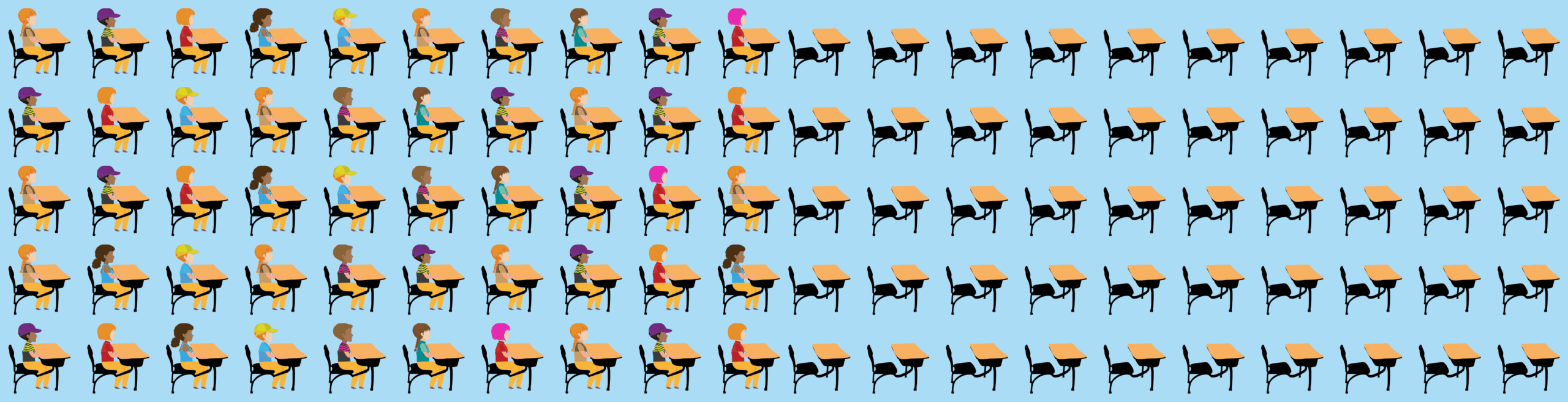
Data
As a data architect, I hold a reverence for structure—the elegance of systems that gather, connect, and reveal patterns across complexity. Yet my work within the disability community continually unsettles that faith. Numbers can illuminate injustice, but they can also obscure it; they can quantify harm while concealing its origin. Data promises clarity, but often it trades away the texture of lived experience for legibility. This tension shapes how I write about education, surveillance, and inclusion. I remain devoted to precision and transparency, while learning from those who remind me that information is never neutral—it carries the imprint of power, perspective, and care. The disability community teaches that knowledge without relationship becomes extraction; true accessibility requires that data be returned to those from whom it is drawn, interpreted with humility, and used to build systems that heal rather than categorise.
-
PEI’s education minister just told you exactly how data suppression works
A motion passed unanimously in the PEI legislature this month, calling on the province to track student absences caused by bullying. Green MLA Karla Bernard brought it forward after years of families reporting that their children are staying home — and the system recording nothing about why. Education Minister Robin Croucher’s response is a masterclass in the…
-

Children are not pawns: disability, private schools, and budget cost-containment
Public money should not be subsidising private advantage while public schools are told to make do with less. That is the clean version of the argument. It is intuitive, politically useful, and often true. When governments claim there is not enough money for education assistants, specialist support, safe buildings, accessible classrooms, or meaningful inclusion, it…
-

Tara Carman tracks absences district by district
CBC’s Tara Carman released another investigation this week, this one examining absence patterns across British Columbia’s largest school districts, finding that excused absences have tripled in Vancouver secondary schools between October 2018 and October 2025, that chronic absence rates have quadrupled in Burnaby, that the numbers climb steadily across Central Okanagan and Surrey despite marginal…
-

Where Surrey’s $6.3 million went
I recently reviewed the provincial budget tables and buried within Table 17 (2024/25 Amended Annual Budgeted Operating Expenditures of Program 1.10 Inclusive Education by Object) and Table 26 (2024/25 Actual Operating Expenses of Program 1.10 Inclusive Education by Object) of British Columbia’s 2024/25 operating budget documents lies evidence of what can only be described as…
-

What districts refuse to count, they refuse to see
Canary Collective makes explicit what current FESL reporting renders invisible: the exclusionary practices that shape access to learning but disappear from accountability structures because districts are not required to document them publicly.
-

Scapegoats for austerity: BC education funding excludes disabled children
BC education funding scapegoats disabled children, using collective punishment and performative inclusion to divide parents and maintain austerity.
-

The optimal funding model for inclusive education
Inclusive education does not fail because children are too complex. It fails because funding systems reward denial, privatise enforcement, and treat disability as an exceptional cost rather than a predictable feature of human populations. A functional model already exists. It is not radical. It is aligned with what inclusive education actually requires, rather than with…
-

What districts hide when they count
Enrolment data is meant to be the most transparent artefact a public education system produces. It records how many students are present, where they are placed, and how populations change over time. These figures determine staffing, funding, capital planning, and programme viability. They are the numerical infrastructure that underwrites every district claim about equity, inclusion,…
-

The question they refused to ask: adequate funding and the architecture of denial in BC schools
Between 2017 and 2020, BC reviewed education funding. The question asked: designation or prevalence? The question refused: what would adequate funding cost?
-
How public schools tax disabled families twice
My son has been home for nine months. The school asks periodically about return timelines, performing care through language. They say they would like to see him back at school. Meanwhile, his nervous system tells a different story: sleep patterns regulating, appetite returning, capacity for joy expanding in direct proportion to distance from their supervision.…
-

VSB’s FESL report: the aesthetics of performative accessibility
An analysis of how VSB’s FESL report performs inclusion through language and process while avoiding measurement, accountability, and material change.
-
Surrey FESL report shows why FESL is designed to fail
Surrey School District’s 2025-26 Enhancing Student Learning Report spans 42 pages across two documents, presenting what appears at first glance as a model of comprehensive educational accountability—extensive data visualisations tracking student outcomes across multiple measures, disaggregated by Indigenous identity, English language learner status, and disability designation, accompanied by detailed narrative analysis of gaps, strategic responses,…
-

What Arrow Lakes reveals about BC’s FESL
School District 10, Arrow Lakes, is often described, including by itself, as a best‑case scenario for public education in British Columbia. It is small, rural, relational, and values‑driven. It knows its learners. It emphasises inclusion, connection to land, and collaboration. If any district should be able to identify and respond to exclusion quickly, it is…
-

From trauma to topology: the grotesque work of quantifying institutional denial
When institutional harm accumulates in childhood—in objects confiscated, spaces denied, bodies excluded—the evidence lives first in memory and affect. The saucer eyes of a humiliated or frightened child. The sting in the sobs of a child who just wants to be with her friends at the volleyball game. The physical weight of a garbage bag…
-

How FESL enables ongoing exclusion of disabled children
In 2020, the British Columbia Ministry of Education and Child Care brought into force the Framework for Enhancing Student Learning, a policy architecture ostensibly designed to guide the province’s approach to continuous improvement in public education, with particular attention to improving equity for Indigenous students, children and youth in care, and students with disabilities or diverse…
-
The affective architecture of room clears
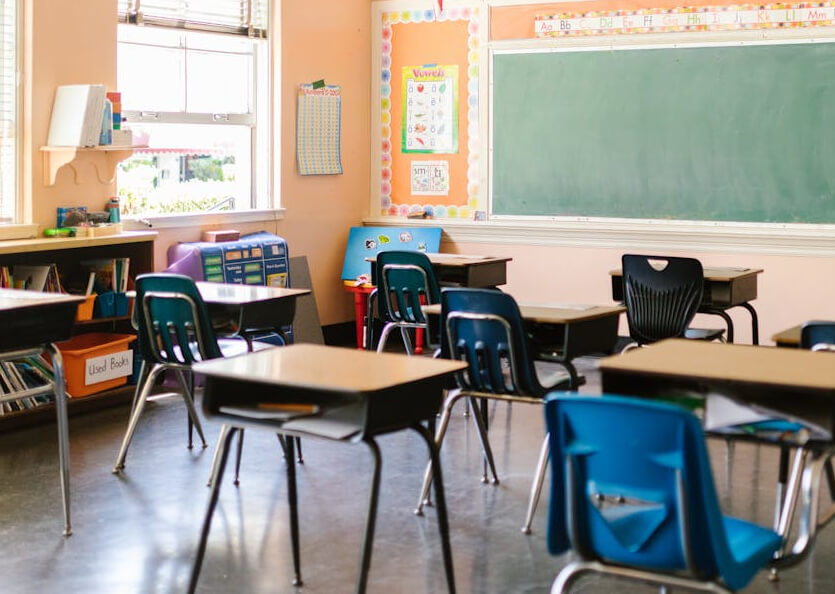
Room clears should be rare. In adequately resourced classrooms with sufficient staffing, with educational assistants trained in co-regulation, with adults who understand that compliance is not wellness and frozen silence is not calm, most crises could be prevented or held without architectural intervention. But British Columbia schools operate under manufactured scarcity, austerity politics disguised as…
-

The architecture of absence data in Canada
A CBC investigation maps the landscape of what we choose to measure and what we choose to obscure, revealing a system where the simple act of knowing why children disappear from classrooms becomes an exercise in bureaucratic endurance calibrated toward opacity rather than understanding. The cost of transparency The investigation documents a routine that families, journalists, and…
-
Government funding for education fails to keep pace with known needs
The Education and Childcare Estimate Notes 2025 reveal a province experiencing an enormous rise in disability designations while preparing the minister with polished assurances that gesture toward progress, equity, and commitment, and this dual presentation of crisis beneath a veneer of stability creates a document that tells two stories at once: one whispered in the…
-

Why the SD23 suspensions report matters for exclusion analysis
While I was looking for more disclosures from school districts to the Ombudsperson, I stumbled on this older document that summarises suspensions in School District 23. The document offers a valuable complement to the exclusion data disclosed by other districts, because it reveals how disciplinary frameworks operate alongside accommodation-framed removals, and this pairing creates a…
-

Why disabled kids are missing more school than peers
Tara Carman recently wrote an article about rising absences from school and suggested that the trend may be linked to a growing mental health crisis: Why are so many kids calling in sick for school? That explanation captures part of the reality, yet it overlooks a parallel and far more specific pattern that many families…