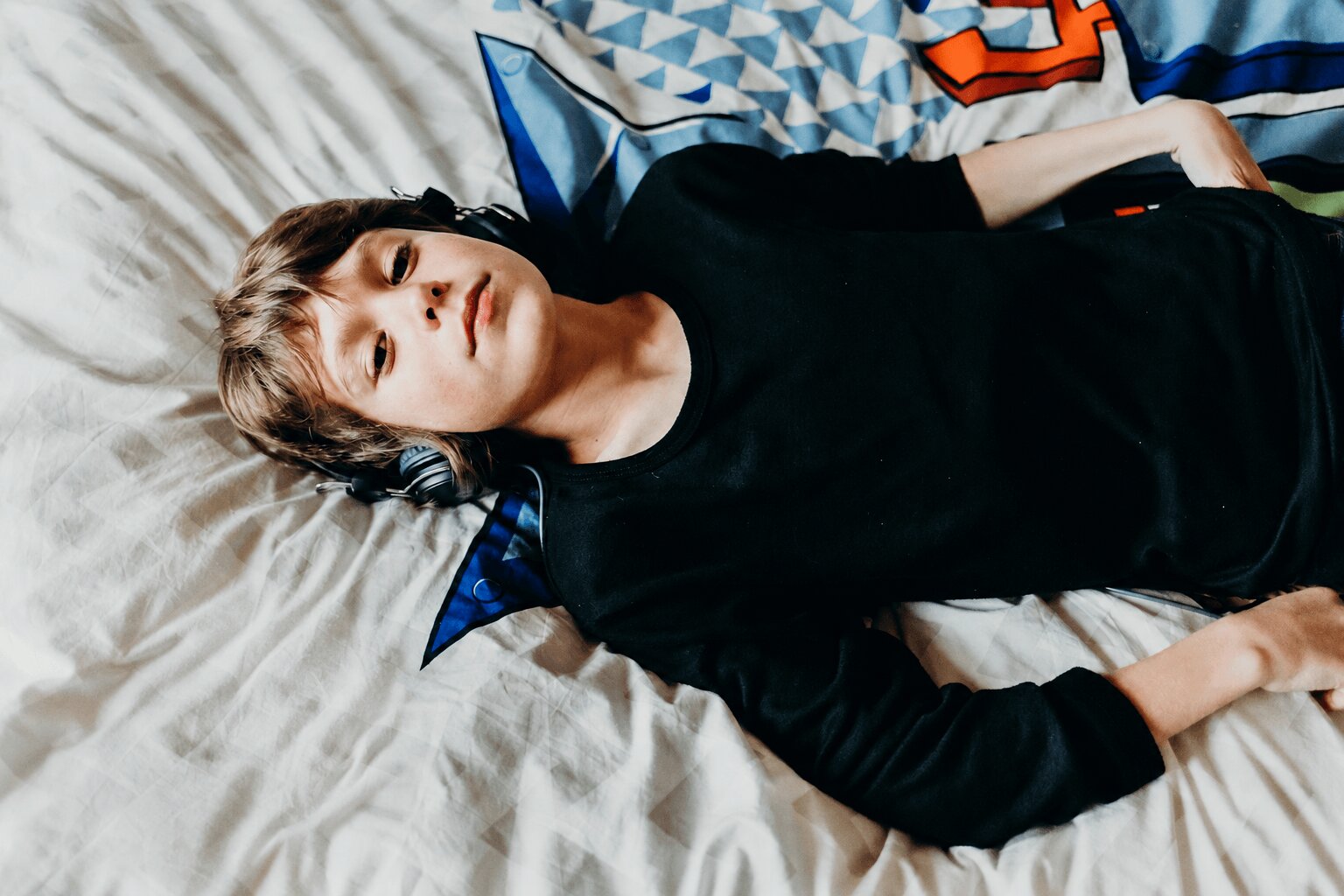
My son no longer attends school. He no longer wants anything the education system offers. He has taught himself programming, navigates Linux with expertise that exceeds my own knowledge, learns alone in his room because learning with others became too expensive to survive.
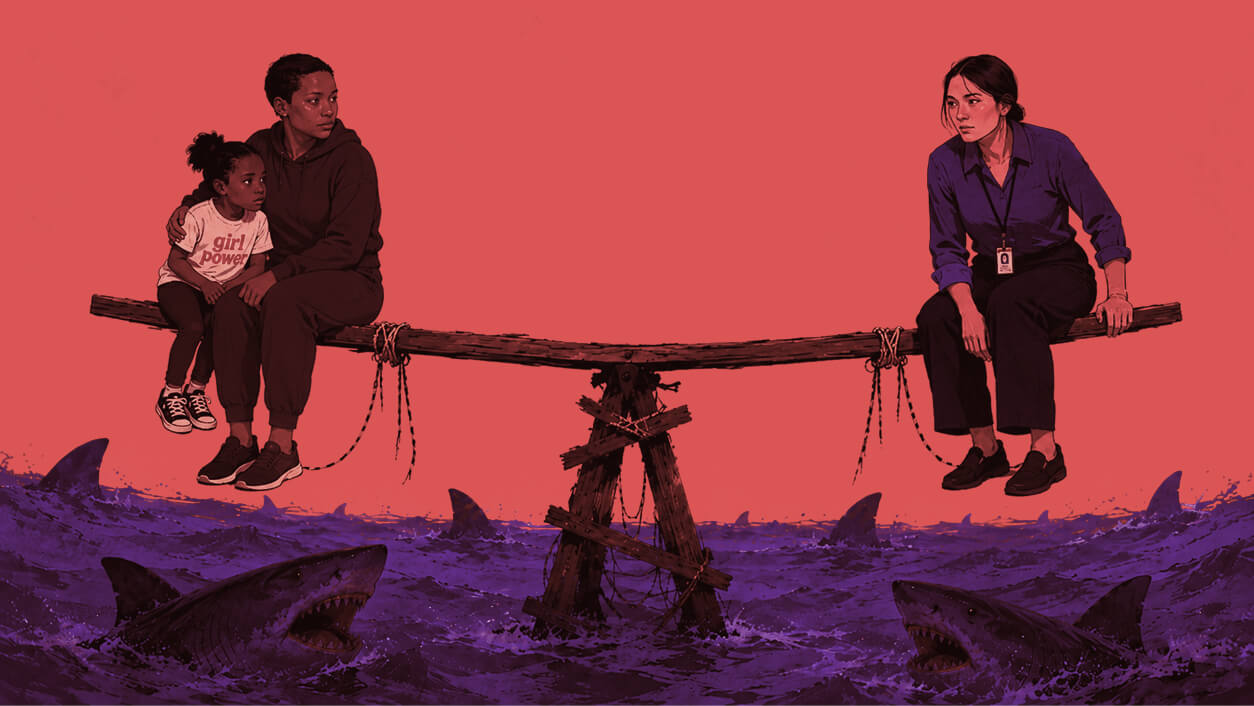
The district asks affectionately how he is, suggests I login to their virtual learning network, performs concern while evading the question at the centre of his absence: what does accountability mean when a public education system has destroyed a child’s interest in school?
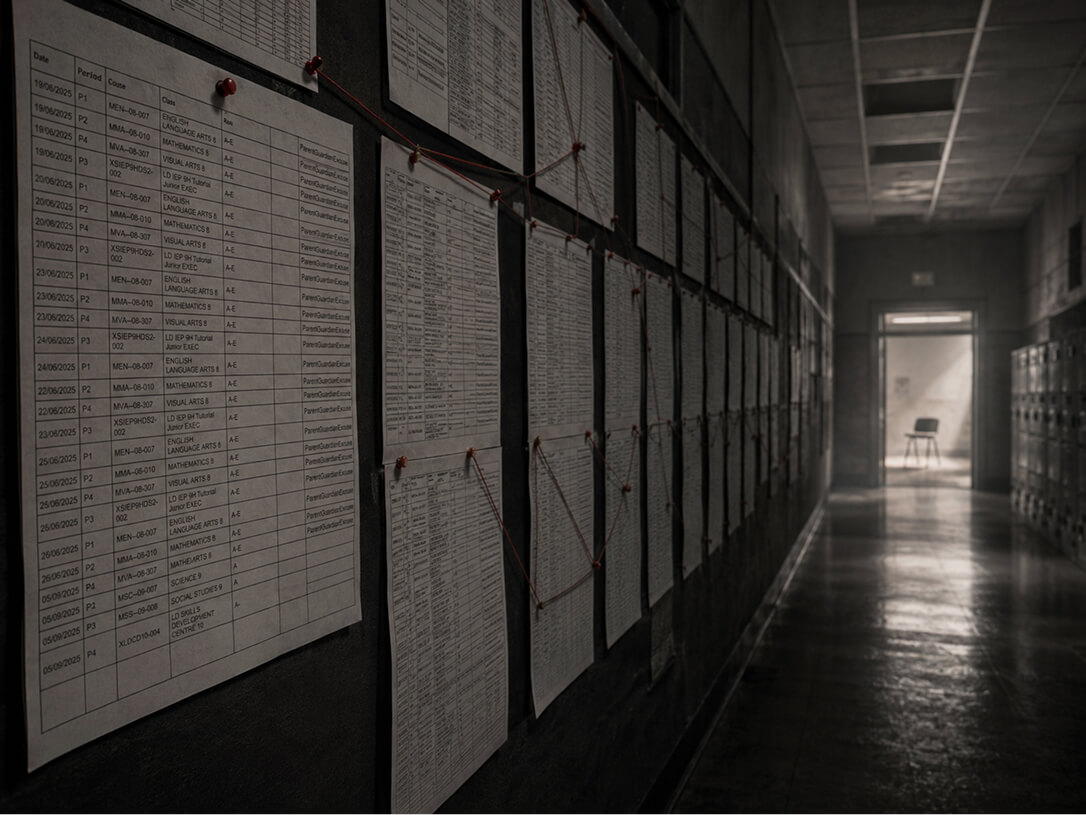
The email thread from January 2023 documents the trajectory that produced this outcome—a family in crisis, a school system performing concern while systematically refusing the accommodations that might allow two autistic children to remain in education without disintegrating under the weight of institutional demand. Reading it now, almost three years later, the pattern becomes unmistakable: every plea for declarative language, reduced questioning, consistent implementation of expert recommendations met with pleasant acknowledgment followed by continued escalation, burnout, classroom evacuation, a teacher on stress leave, children kept home because their mother could no longer trust they would be safe in their vulnerable and disengaged state.
-

Neural evidence exposes the steep cost of sacrificing vulnerable children to punitive myths
Neural evidence from Altered Neural Responses to Punishment Learning in Conduct Disorder offers a precise account of how punitive school discipline collides with the neurodevelopmental profiles of vulnerable children, because the study shows that punishment learning relies on the anterior insula’s capacity to transform discomfort…
The slow violence of niceness
The harm that pushed my son out of education did not arrive through obvious cruelty. It accumulated through niceness. Support and accommodation denials delivered with a positive attitude. Teachers and administrators spoke pleasantly while maintaining unrelenting pressure, offered choices that concealed non-negotiable expectations, framed interactions as supportive while requiring his compliance as proof he deserved that support. What they refused to provide was declarative language—the transparency that would have given him the dignity of knowing exactly what was happening, what adults needed from him, what structures governed his day.
The principal responded to descriptions of chaos—Robin screaming, swearing, hiding in closets, breaking things, the classroom evacuated—by reporting that they were having positive experiences.
When I documented that Robin was experiencing difficulties with overstimulation and burnout, that he becomes exhausted from masking and unmet needs, that strategies for reducing stimulation and using declarative language had been discussed repeatedly with the school team, the response was acknowledgment without change.
When I wrote that I could not ethically send my children back to an environment the principal herself described as chaotic and unsafe, the school scheduled another meeting.
When I explained that Robin needed help rebuilding trust and tolerance after days at home where he was lovely, talkative, and regulated, the principal continued asking him questions.
Declarative language states what is happening without embedding demand in the structure of speech itself. It provides information the child can use to orient themselves without requiring them to formulate responses, make decisions under pressure, or perform social reciprocity when their nervous system is already overloaded. “Math starts in five minutes.” “The library is available during lunch.” “I’m going to write this on the board.” These statements create transparency, tell the child what is occurring, what adults are doing, what resources exist. The child can use this information however serves them—they might choose to transition to math, they might go to the library, or they might not. The declaration carries no concealed expectation that the child respond in any particular way.
Niceness operates differently. It presents coercion as concern, wraps every expectation in the fiction of student choice, asks a child to perform gratitude for interventions he never requested while pretending his participation is voluntary.
Robin learned to recognise this pattern with perfect clarity. He learned that other people’s proximity always costs something he cannot afford to pay, that connection arrives wrapped in coercion he must pretend not to notice, that kindness itself becomes the medium through which his autonomy gets dismantled piece by piece until refusal constitutes the only territory he still controls.
-

The moral cost of leaving children in fight-or-flight
Robin was eleven the day he fell and came up swinging. It was recess, and something had happened—a misstep, a bump, a collision on uneven ground. His body hit the pavement. And when he rose, disoriented and humiliated, the first thing in his path was his best friend. So he struck him, over and over. That friend, Michael, had constituted one of the few stable social anchors tethering…
What questioning does to a dysregulated PDA child
Questions, by contrast to declarative statements, constitute violence for a child with a Pathological Demand Avoidance profile who is already dysregulated. Every question contains implicit demand: the demand to process language, formulate response, perform social reciprocity, demonstrate knowledge, make decisions, justify behaviour, explain thinking, maintain eye contact, modulate tone, manage the questioner’s affect, produce answers that satisfy adult expectations.
“How was your weekend?” “What did you learn in science?” “Why did you do that?” “Can you show me your work?” “Do you want to join the group?” “Are you feeling better today?” Each of these questions appears innocuous, even friendly. Teachers ask them believing they are building relationship, demonstrating interest, checking in on student wellbeing.
For a PDA child in fight-or-flight, each question lands as demand the nervous system must defend against. The question “how was your weekend” requires the child to retrieve memory, assess what level of detail the adult expects, determine what response will end the interaction quickest, monitor the adult’s facial expression for signs their answer is satisfactory, perform the vocal and physical gestures associated with friendly conversation—all while their system is screaming that they are not safe, that compliance costs more than they can afford, that every interaction with adults requires them to become someone they are not.
When I wrote to the school team that we had previously discussed strategies for reducing stimulation and the importance of reducing questioning and using declarative language to prevent Robin from entering fight-or-flight response, I was naming this dynamic explicitly. The continued escalation—classroom evacuation, teacher stress leave, Robin’s complete refusal to return to school—demonstrates what happens when institutions hear recommendations as suggestions they may implement if convenient rather than as essential accommodations without which the child cannot survive the environment.
The school did not merely fail to provide the relational care he needed. It taught him that care always conceals evaluation, that every offer of help contains implicit demand, that allowing adults into his learning means submitting to assessment he cannot pass and correction he cannot survive. This pedagogy succeeded completely. He learned exactly what they taught. The cost of that education is his withdrawal from all the learning that might actually nourish him, his refusal of connection with people who share his interests, his retreat into solitude as the only condition under which knowledge remains safe from institutional capture.
The violence of positive framing
The principal’s insistence that they were having positive experiences, when I documented chaos and crisis, constitutes a particular form of institutional gaslighting. This response pattern—reframing violence as growth opportunity, crisis as learning moment, a child’s distress as challenging behaviour rather than communication that the environment has become unliveable—appears throughout our past interactions with the school.
When I wrote that Robin had been experiencing difficulties with rules, rule changes, and excessive questions, demands, particularly when his support was absent, the response was to schedule a meeting. When I documented that the dysregulation he experiences at school carries over into other environments, that he did not want to go to school and I did not trust he would be safe in his vulnerable and disengaged state, the response was concern about his hesitance rather than examination of what the school environment was doing to produce that hesitance.
The niceness functioned as anaesthetic throughout, obscuring the violence underneath. Every email acknowledged my concerns with language that performed care—”thank you so much for sharing,” “looking forward to connecting,” “I am disappointed to hear things have escalated”—while the actual conditions that produced the escalation remained unchanged. The school locked away fidgets despite knowing Robin needed sensory regulation tools. Staff demanded he answer questions despite repeated explanation that questioning triggers fight-or-flight. The principal described positive experiences while the classroom descended into chaos requiring evacuation.
This is what niceness accomplishes when deployed as substitute for accommodation: it allows institutions to claim they are responsive, supportive, committed to the child’s success, while systematically refusing the changes that might actually allow the child to remain in the building without disintegrating. The principal’s continued framing of these interactions as positive—her insistence that they were having good experiences even as the classroom descended into chaos requiring evacuation—reveals the fundamental incompatibility between institutional definitions of success and disabled children’s actual experience.
From the school’s perspective, they were trying. They were asking questions to build relationship. They were creating opportunities for Robin to participate. They were maintaining high expectations. They were refusing to lower standards. They were treating him like any other student.
From Robin’s perspective, they were subjecting him to relentless interrogation he could not escape, demanding performances he could not produce, punishing his distress by removing the sensory supports that might have helped him regulate, framing his survival responses as behavioural choices requiring correction. The school’s commitment to treating him like any other student meant refusing to accommodate the reality that questions which feel like friendly interest to neurotypical children land as violence for a PDA child whose nervous system is already overwhelmed by the sensory, social, and cognitive demands of remaining in a classroom.
We just want to be treated like we’re disabled
I remember asking for my children to be treated like my children are disabled and watching disgust spread across the principal’s face, as though acknowledging disability constituted failure rather than prerequisite for accommodation, as though the goal of education must always be assimilation into neurotypical performance rather than creating conditions where disabled children can learn as themselves.
The principal’s disgust reveals the ideological foundation underneath all the niceness: the belief that disability represents deficit to overcome through sufficient effort, that accommodation enables dependency rather than access, that the proper trajectory moves always toward normality and any request to simply meet children where they are—to treat them like they are disabled, to structure support around their actual needs rather than the fiction of who they might become if only they tried harder—constitutes abandonment of aspiration, lowering of standards, failure of institutional responsibility to push children toward integration.
This framework makes accommodation morally suspect. If the goal is pulling yourself up by bootstraps until you can pass as normal, then declarative language becomes crutch preventing the child from developing resilience through navigating the demand embedded in questions. Reduced stimulation becomes overprotection preventing the child from building tolerance for sensory environments they will encounter in the real world. Acceptance of the child’s communication style becomes permission to avoid the social reciprocal skills they need to function in society. Every accommodation I requested threatened the principal’s understanding of what education should accomplish, which was not supporting disabled children to learn but training disabled children to appear less disabled through sufficient pressure.
The irony I carry is brutal and precise: their refusal to accommodate in service of integration produced the opposite outcome. Robin cannot leave his room. Jean attends only a few classes. The commitment to treating my children like they should become normal—the disgust at my suggestion they simply be treated like they are disabled—resulted in complete withdrawal from the very social participation the principal claimed to be protecting. This is what happens when institutions mistake compliance for learning, assimilation for growth, the performance of neurotypical behaviour for actual education.
My son barely is willing to do basic hygiene since he hit burnout. Maybe he’s finally capable of performing disability sufficiently for them to consider him disabled?
If they had treated my children like they are disabled from the beginning—implemented declarative language, reduced questioning, provided consistent sensory supports, respected their communication styles, structured the environment around their actual nervous systems rather than demanding they adapt their nervous systems to the environment—Robin might still be in school. Jean might attend full time. The accommodations that felt like lowering standards to the principal would have constituted the baseline conditions necessary for my children to access education at all.
Instead, the principal’s commitment to integration, her visceral rejection of disability as frame for understanding my children’s needs, her belief that accommodation represents giving up on potential rather than creating access to learning—this ideology produced exactly the isolation she claimed to be preventing. My children are more disabled now than they were before the system refused to treat them like they are disabled, because the refusal of accommodation taught them that participation in social environments always costs more than the connection is worth, that adults will always demand they perform neurotypical compliance as price of access, that the only safe place is withdrawal into spaces where nobody asks them to be anyone other than who they are.
The colonisation of disabled childhood
What the district accomplished through years of documented carelessness constitutes a form of colonisation—the occupation of my son’s interiority until desire itself became suspect, until wanting anything risked exposure to the machinery of behavioural intervention, progress monitoring, the relentless pressure that insisted he demonstrate his learning in formats designed to measure compliance rather than understanding. They systematically extinguished his capacity to receive teaching as gift, to experience another person’s knowledge as invitation rather than domination, to trust that sharing what he knows might generate genuine exchange instead of triggering assessment.
The way I support his learning now requires the most delicate restraint imaginable. When he tells me anything—about Linux, about programming, about whatever he is teaching himself alone—I respond with calm enthusiasm, careful never to escalate into excitement that would feel like trap. I talk on the same topic, trying to meet him where he is, though I recognise he has already eclipsed my knowledge. I do not ask questions that sound like assessment. I do not suggest applications for his skills. I do not propose projects. I simply receive what he offers and let him see that his knowledge can exist in proximity to mine without triggering demand, evaluation, the expectation that he perform his learning for someone else’s satisfaction.
This is what they destroyed: not his capacity to learn but his capacity to learn in relation to others, to accept teaching without reading it as prelude to control, to trust that someone’s interest in his thinking might be genuine rather than strategy designed to manipulate him toward outcomes he never chose. He is learning programming. He is navigating operating systems I barely understand. He is building knowledge in the only conditions he can currently tolerate, which are conditions of complete autonomy where nobody asks him to demonstrate progress, apply his skills to institutional priorities, or prove that his learning counts by making it legible to adults who measure understanding through compliance.
The cost of institutional refusal
By January 2023, I had dedicated years to advocating for my children’s needs, made significant financial sacrifices to support their education, engaged behaviour consultants to develop functional assessments and de-escalation plans, coordinated with counsellors and autism outreach and POPARD, attended endless meetings where I explained the same accommodations repeatedly, kept my son home for three days to allow him to recharge because I could not trust he would be safe at school. The stress of constantly advocating was taking a toll on my family. I wrote that I felt hopeless, that all my efforts seemed in vain, that despite everyone’s best efforts the school was still not meeting my children’s needs.
The language in that email thread reveals my belief, in January 2023, that the problem might be solvable through better communication, clearer documentation, more expert involvement, collaborative goal-setting around objectives that would allow me to stop feeling like we were circling the drain. I asked whether we could split the meeting to allow each child meaningful participation in discussions about their own education. I shared assessment reports from psychologists with concrete accommodation recommendations. I explained that my daughter needed more support in the classroom, that months had passed since we first met and she had not noticed appreciable change in terms of accommodations being offered. I wrote that I was doubtful support gaps could be remedied with existing staffing levels but that the proof would be in the pudding and I looked forward to hearing how the school planned to achieve this.
The email thread also documents how institutional inadequacy produces harm that radiates beyond the identified crisis. Robin had been repeatedly hugging Jean against her will at school during lunch and recess, behaviour triggered by stress that did not occur in home or out-of-school care environments where supervision and structure reduced his dysregulation. When Jean asked a supervision aide for help, the aide dismissed the behaviour as “cute” and “acceptable” because they are siblings and Robin is expressing his love. Jean felt this was assault. She was deeply disappointed that school staff and administration were not protecting her from unwanted touching.
This pattern—where one child’s unmet needs generate behaviour that violates another child’s bodily autonomy, where staff dismiss that violation through sentimentalising sibling relationships, where the reduced stress and increased supervision in non-school environments prevent the behaviour entirely—reveals how institutional failure compounds. The school’s refusal to provide Robin with the accommodations that would allow him to regulate created conditions where he sought comfort through touch his sister experienced as violation. The school’s refusal to take Jean’s distress seriously when she reported unwanted touching taught her that adults prioritise their own interpretations of sibling affection over her right to govern her own body. The fact that this behaviour occurred only at school, where both children were dysregulated by an environment that refused to accommodate their needs, demonstrates that the problem was not sibling relationship but institutional inadequacy producing crisis that manifested as one child’s survival strategy infringing on another child’s safety.
I wrote that placing the twins in the same class exacerbated this issue and I strongly advised against doing so in the future. The principal promised to follow up with staff and the children. I received no report back on this issue, though the hugging stopped after I raised it. The pattern held: my escalation produced temporary change without addressing the structural conditions that generated the harm, leaving both children to navigate an environment where their distress was treated as behaviour requiring management rather than communication that the school was failing to meet their needs.
Three years later, Robin no longer attends school. He will not engage with the district’s virtual learning network. He has taught himself programming and Linux, learning alone because the system destroyed his capacity to learn in relation to others. Jean barely attends.
The harm of the imperative
Implementing declarative language as primary communication mode with my son would have required the principal to stop asking how he was feeling, what he did on the weekend, whether he wanted to join activities, why he made certain choices. It would have required staff to provide information—”the schedule changed,” “art supplies are in the cabinet,” “I’m going to talk with your teacher now”—without embedding expectation that Robin respond, explain, justify, or perform social reciprocity in return.
This shift sounds simple. It requires complete restructuring of how adults understand their role in relation to children, how they measure successful interaction, what they believe teaching means. Most educators derive satisfaction from student response—the child who answers questions enthusiastically, who seeks them out for conversation, who demonstrates learning through participation in formats the teacher recognises as engagement. Declarative language asks adults to provide information and then step back, to allow the child to use that information however serves them, to relinquish control over whether the child responds and to trust that learning is occurring even when it does not produce the performances adults expect.
The school could not make this shift. The principal continued framing Robin’s distress as hesitance to overcome rather than communication that the environment had become unliveable. Staff continued asking questions because questions feel like relationship-building, because teachers are trained to check for understanding through interrogation, because niceness requires the appearance of interest and interest is performed through asking children about their experiences, their feelings, their thinking, their choices. The questioning continued until my son learned that every adult interaction costs more than the knowledge is worth, until he retreated into solitude as the only condition under which he can learn without simultaneously defending against demand.
Money can’t repair a destroyed childhood
The district continues to ask how he is. Not joking!!! I just stopped participating allowing access. They suggest I login to the virtual learning network, as though a different platform might somehow repair what their pedagogy destroyed, as though the problem resides in access rather than in the fact that they taught him school means violation. These suggestions perform care while evading responsibility, framing his absence as mysterious circumstance rather than outcome they produced. My son glanced at their virtual learning portal once, long enough to ask why he would want to engage with it. Whatever vestiges of reciprocal interest the system might have cultivated were fully excised through their years of carelessness. He never wants anything from them again.
This refusal constitutes appropriate response to institutional harm, the only boundary remaining after they breached every other protection. Accountability under these conditions cannot mean more services, more intervention, more opportunities for them to demonstrate their renewed commitment to his education through methods that would require his participation in systems designed to measure his compliance. He will not return to their definition of school.
What does accountability mean when a public education system has destroyed a child’s interest in school? It must mean material redress for what they took. It must mean compensation for the wages I lost when managing the crisis they created became incompatible with maintaining employment. It must mean recognition that I am now performing the educational labour they abandoned, that their failure has costs they should bear rather than transferring those costs to my family through the fiction that his absence represents choice rather than consequence of their negligence.
Sixty thousand dollars annually until he graduates high school would constitute reasonable restitution going forward—compensation for lost income, acknowledgment that they are not educating him, recognition that the harm they caused has material dimensions they cannot address through renewed offers of programming he has every reason to refuse.
Reasonable compensation for what has already happened would be around three million dollars per child. This is what accountability looks like when a system has destroyed the relationship it was supposed to nurture: money, because they cannot give back his trust, his curiosity, his willingness to learn from others, his belief that adults might share knowledge without simultaneously demanding he perform gratitude, progress, compliance as payment for their attention.
Material cost of educational harm
Today is Christmas Eve, 2025. We were supposed to go to my friend’s house for dinner. I asked if she would come here instead, knowing that even though Robin will not come out of his room, he might still have the company of knowing people are in the other room—the presence of sociality without the demand to participate in it. My friend spent considerable time asking whether I wanted her to ask him to come out, whether she might intrigue him through offering things around the PlayStation, whether there was some strategy that might bring him into the gathering.
We do not want that. We do not want anyone to ask him to do anything, because we are still struggling to manage the necessary demands of brushing teeth, washing hair, taking a bath every week or so. Every demand costs him reserves he no longer possesses. The accumulation of necessary intrusions has left him with nothing extra to spend on optional sociality. Asking him to come out for Christmas Eve dinner would constitute one more extraction from an account already overdrawn.
Tomorrow is Christmas Day. We are going to my mother’s house. I will not ask Robin to come. He will stay home alone on Christmas because I love him enough to let him govern his own capacity, to protect his refusal from other people’s concern, to recognise that forcing him into the room would be one more instance of prioritising other adults’ comfort over his right to exist without performing participation he cannot afford. This is the material cost of educational harm.
-

I only asked for gentleness: on parenting a PDA child in a punishing world
There is a certain kind of child—intuitive, emotionally articulate, wired with a startling perceptiveness about power and tone, about coercion and choice, about the invisible terms of adult authority—whose presence in the classroom becomes, almost immediately, a threat to the institution’s rhythm, a…