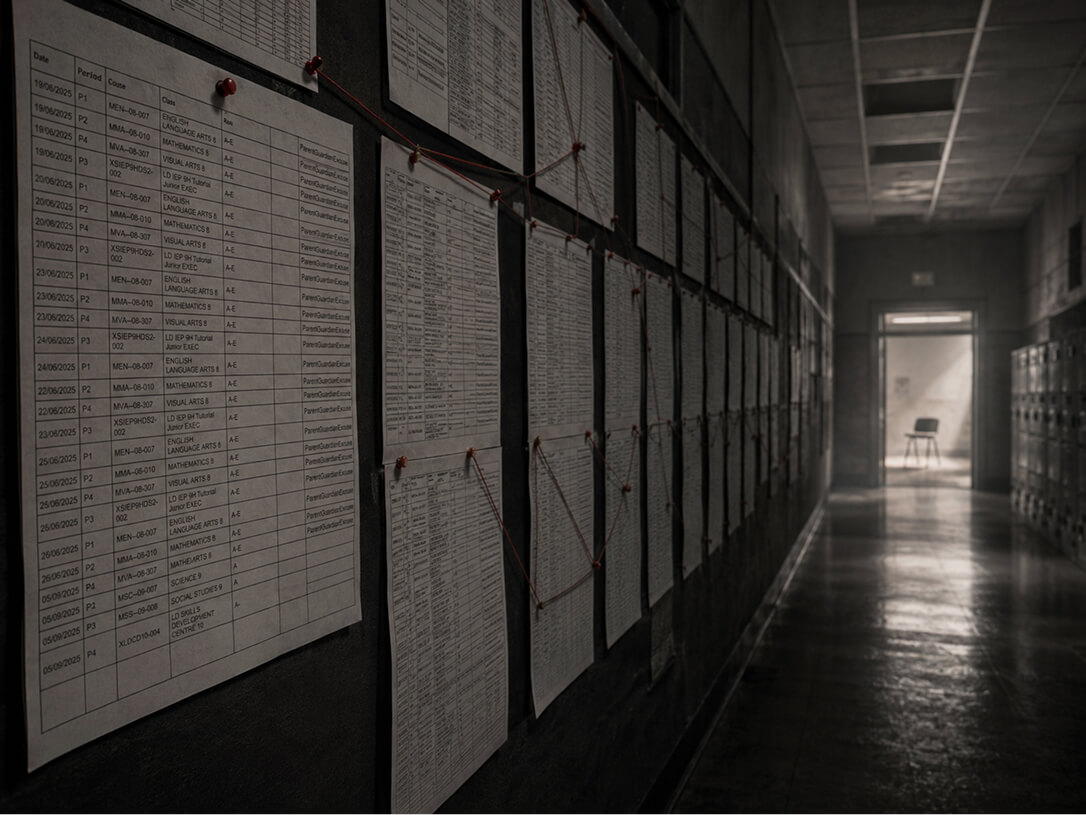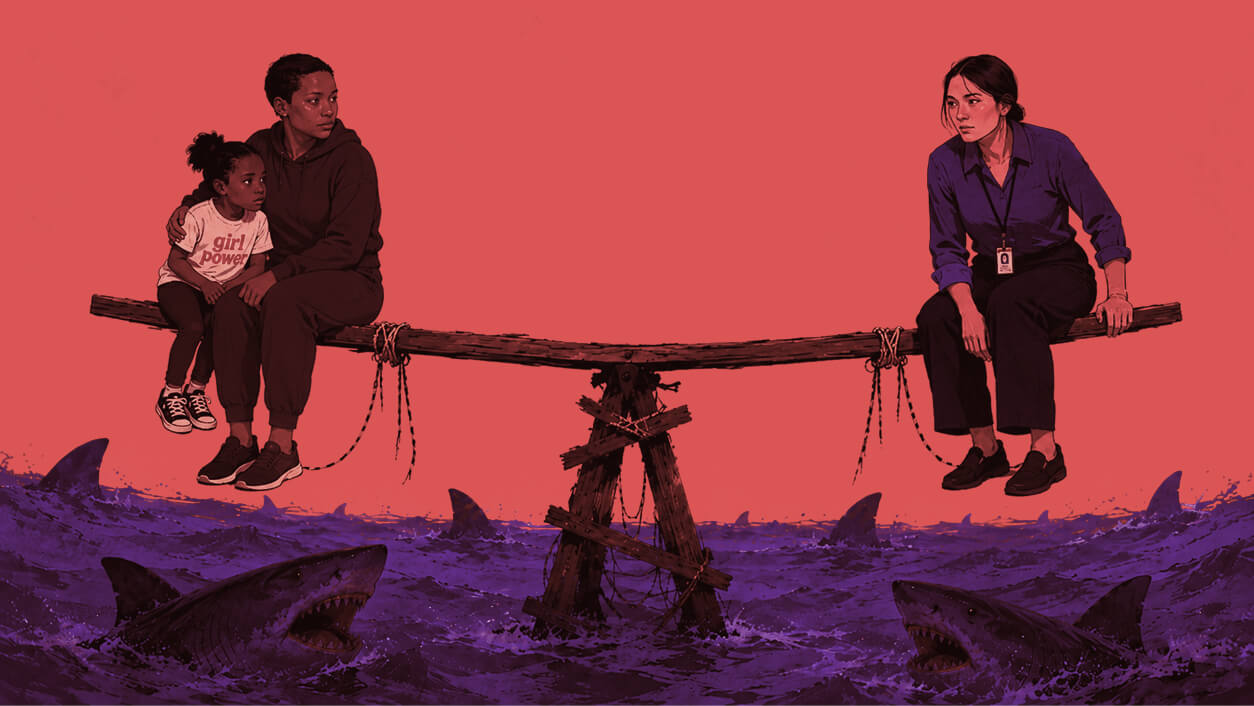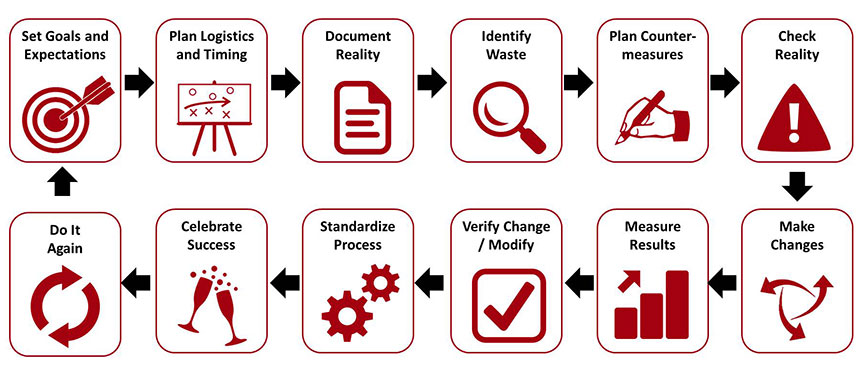
Districts describe their work using the language of continuous improvement, capacity building, resource optimisation, and evidence-based allocation—borrowing terminology from industrial production systems designed to manufacture widgets efficiently, to minimise waste, to maximise throughput, to tolerate predictable defect rates within acceptable margins.
This vocabulary reveals the underlying logic: education systems increasingly operate as though children are products moving through an assembly line, as though some proportion of failure is inevitable and acceptable, as though loss can be managed statistically rather than mourned individually, as though scarcity is natural condition rather than manufactured constraint.
When parents engage with district business processes, when we learn their allocation frameworks and speak their resource language and accept their capacity explanations, we legitimise this logic, we participate in systems that construct scarcity as justification for rationing care, we help districts determine which children qualify as grievable and which may be abandoned without consequence.
But education is not manufacturing. Children are not widgets. And acceptable loss, when measured in young lives, is never acceptable.
From acceptable loss to acceptable suffering
Manufacturing logic assumes acceptable loss: some proportion of failure is inevitable and economically rational, some percentage of products will fail quality standards, and the goal is not zero defects but optimised defect rates that balance quality against cost.
When imported into education, this assumption shifts. Children are not written off entirely, are not expelled en masse, are not formally excluded from the system—instead, their distress is absorbed into daily operations, their suffering is prolonged rather than resolved, their harm is managed just well enough that the system can proceed.
What is tolerated is not loss, but suffering.
Disabled children remain enrolled while being excluded from meaningful participation. They attend partial days, wait in hallways, sit apart from peers, cycle through temporary plans that never resolve, endure daily indignities that leave no documentation, experience relational violence that generates no incident reports. Their distress is calibrated to remain below the threshold that would force institutional rupture.
This is acceptable suffering: harm managed to preserve system stability, pain distributed strategically so it never accumulates visibly enough to demand emergency response, debilitation administered in doses small enough that each individual incident appears tolerable even as the cumulative impact devastates.
-

This isn’t a unique case, is it?
My children’s father said in a meeting: “Surely you’ve dealt with this before and you have a solution? This isn’t a unique case, is it?” The question hung in the air, simple and devastating, exposing in one breath the entire pretence on which school leadership rests. The question matters because it cuts through bureaucratic delay and the endless rhetoric of “complex cases” and “challenging behaviours.” It insists on memory. It resists the seductive performance of institutional amnesia. It shifts responsibility back where it belongs—onto systems designed to serve, but which instead perform ignorance in order to justify inaction. And it…
Continuous improvement as harm stabilisation
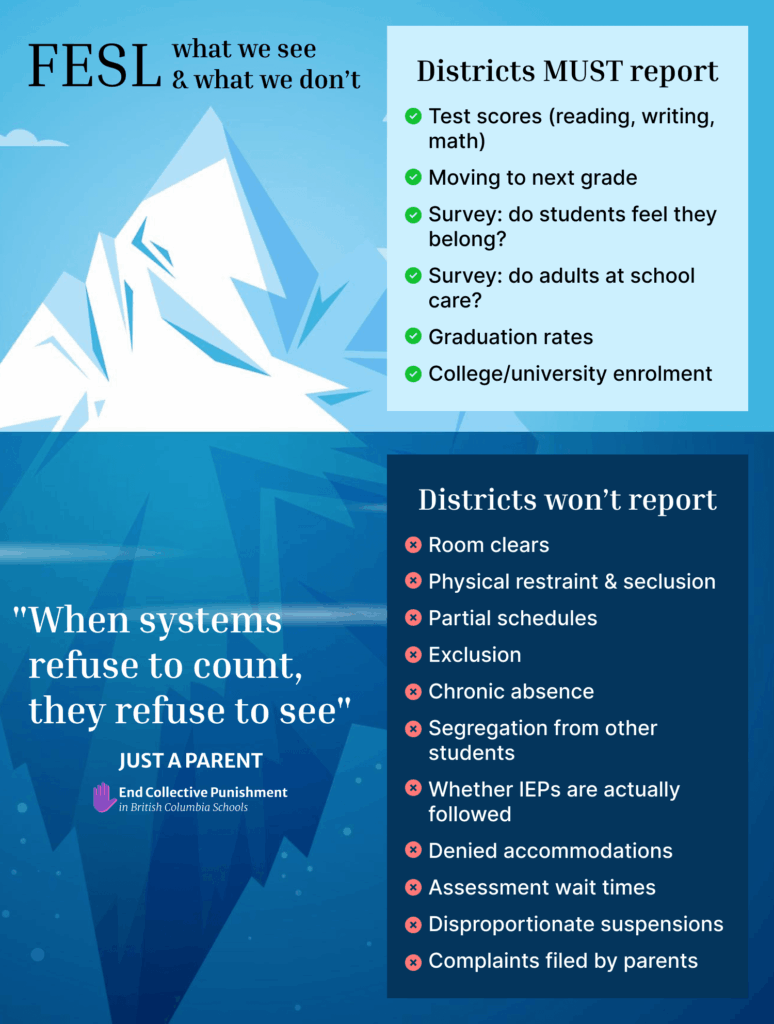
Continuous improvement frameworks borrow directly from industrial quality control: identify inefficiencies, set targets, monitor outcomes, refine processes. In education, this translates into aggregate goals—graduation rates, attendance percentages, assessment performance—that measure system stability rather than child wellbeing.
British Columbia’s Framework for Enhancing Student Learning exemplifies this logic, positioning districts as production facilities responsible for optimising outcomes across student populations, treating educational “quality” as something that can be enhanced through systematic process refinement, as though the barriers preventing disabled children from accessing education are inefficiencies to be smoothed rather than injustices to be rectified.
The framework encourages districts to set goals like “increase graduation rates by X percent” or “reduce chronic absenteeism by Y percent,” establishing targets that treat aggregate statistics as measures of success while rendering individual children invisible, while obscuring how those statistical improvements are achieved, while making it impossible to distinguish between genuine enhancement and exclusionary triage.
When a district reports improved outcomes while simultaneously pushing disabled children out through partial schedules, prolonged absences, informal withdrawals, and manufactured transfers, the framework cannot capture this contradiction because it was designed to measure production efficiency, not human dignity; it was built to track system performance, not individual suffering; it was structured to optimise throughput, not ensure belonging.
The system is not broken. It is performing exactly as designed: to maintain institutional continuity, to keep operations flowing, to preserve administrative calm. What appears as failure from the perspective of disabled children appears as stability from the perspective of institutional management. What registers as crisis for families registers as tolerable variance for districts.
Within this framework, a contradiction is not a problem. A district can report improvement while disabled children deteriorate. The framework does not register this as harm because it was never designed to. Its purpose is not to eliminate suffering, but to keep suffering from disrupting performance indicators, to ensure that debilitation remains distributed widely enough, managed quietly enough, documented poorly enough that it never threatens system stability.
Debility, not failure
Jasbir Puar’s concept of debility clarifies what is happening in schools. Debility describes the slow, distributed production of injury that does not kill, exclude outright, or provoke crisis, but instead wears bodies down over time—harm that accumulates quietly, sanctioned by policy and rendered unremarkable by routine, injury administered in doses small enough that each instance appears manageable even as the cumulative impact destroys capacity.
Disabled children in schools are not simply failing to thrive; they are being made less able by environments that exhaust, isolate, and diminish them. This debilitation is not accidental. It is the predictable outcome of systems that prioritise institutional continuity over human need, that value administrative calm over child safety, that treat some suffering as the necessary cost of everyone else’s stability.
A child who is never suspended but is daily reminded that they are burdensome is being debilitated. A child who remains enrolled but cannot tolerate another day of sensory assault or social degradation is being debilitated. A child who attends school but learns through a thousand small cruelties that they are unwelcome, excessive, broken is being debilitated. These harms do not register as failures; they register as stability.
And stability, in this framework, is valued above care. A calm classroom matters more than a suffering child. Smooth operations matter more than dignity. Institutional continuity matters more than individual flourishing. The absence of crisis matters more than the presence of harm.
This is the trade the system makes explicitly: some children’s capacity will be diminished so that the institution can remain functional, their debilitation becomes the price of everyone else’s stability, their suffering becomes the foundation upon which administrative calm is built.
-

Debility versus disability: what the system cannot acknowledge
My son Robin took to bed two weeks before March break. He had been soldiering on through the aftermath of a school transfer the district assured us would help him, though his body told me otherwise from the first day he arrived. I’ve seen that kind of shutdown before—at camp, at birthday parties, in classrooms where support is promised and then revoked. The new program promised academic alignment, built for gifted asynchronous learners, and it intrigued me with its language of belonging and accommodation. It felt like a retroactive sorting—a belated admission that Robin should have been placed in the…
What data is for
Continuous improvement frameworks privilege quantitative data not because it is more accurate, but because it is emotionally insulating—because metrics allow institutions to continue operating without responding to suffering as an emergency, because numbers absorb moral shock, because trendlines replace responsibility.
Districts track suspension rates, attendance percentages, graduation numbers, assessment scores, intervention frequencies, referral counts—data that can be aggregated, graphed, compared across time, used to demonstrate improvement or identify areas requiring attention.
They ask whether students “feel like they belong” on district-wide surveys, reducing complex relational and emotional realities to Likert scales, to percentage points, to statistical averages that flatten individual experience into population trends, that make it possible to report “X% of students feel they belong” without acknowledging the % who do not, without examining what “belonging” means to children who have learned to mask their distress, without recognising that survey responses measure what children feel safe reporting more than what they actually experience.
But educational harm often operates in domains that resist quantification, that exist in the space between measurable outcomes and lived experience, that manifest through accumulation of small cruelties rather than single disciplinary events.
Receiving a formal suspension is quantifiable—it appears in district records, contributes to discipline statistics, shows up in data dashboards, can be tracked and targeted for reduction.
Having a staff member make you feel less than human is not quantifiable—it leaves no administrative trace, generates no incident report, contributes to no measurable outcome that districts monitor through continuous improvement frameworks, yet shapes educational experience as profoundly as any formal exclusion.
A child who is never formally suspended but who receives daily messages that they are broken, burdensome, inappropriate; who hears staff discuss them in hallways as though they are not present; who watches adults perform exhaustion at their existence; who learns that their needs are excessive, their distress manipulative, their very being a problem to be managed—this child is experiencing educational harm that continuous improvement frameworks cannot capture because the frameworks were designed to count events, not catalogue suffering; to measure incidents, not track indignity; to monitor system outputs, not attend to human devastation.
Data does not simply fail to capture harm—it absorbs moral shock. It transforms distress into trendlines and replaces responsibility with dashboards. What cannot be counted is treated as incidental, as tolerable variance, as the acceptable cost of system stability, as background noise that can be safely ignored because it does not threaten performance indicators.
This is how institutions achieve administrative calm: by converting suffering into metrics that can be monitored without requiring emergency response, by treating some children’s debilitation as background noise rather than crisis, by constructing categories of harm that matter (measurable, documentable, countable) and harm that does not (qualitative, relational, cumulative), by ensuring that the violence which would rupture institutional composure remains invisible within their data systems.
-

The business process trap
I’m a business analyst by trade, so I naturally wanted to understand how things work in schools, but resist the temptation to let schools draw you in!!! School districts speak a language designed to obscure accountability, using administrative complexity as armour against obligation, converting urgent need into bureaucratic procedure, and replacing immediate legal duty with deferred technical explanation. Parents find themselves trapped inside frameworks they were never meant to understand, frameworks that districts themselves invoke selectively, frameworks that exist primarily to diffuse responsibility and delay response. This trap operates through a simple mechanism: when parents ask why their child remains…
Violence without rupture
When districts implement continuous improvement, they create incentives to reduce countable harms while inadvertently encouraging uncountable ones—to avoid formal suspensions by implementing informal exclusions, to reduce documented incidents by teaching children to suffer silently, to improve measurable outcomes by disappearing the students who threaten those metrics.
A teacher who sends a child to the office daily for minor infractions generates data. A teacher who communicates through micro-expressions and tone that a child is unwelcome generates silence.
A principal who implements a formal shortened schedule creates documentation. A principal who suggests that perhaps the child would be “more comfortable” attending less, that maybe the family should “try mornings only for now,” that possibly the child “needs a break”—generates no countable event, no measurable outcome, no data point that appears in district improvement planning.
The framework’s quantitative bias creates a perverse dynamic: districts can demonstrate improvement in measurable outcomes while intensifying unmeasurable harms, can show reduced suspension rates while increasing the daily degradation that children experience, can celebrate enhanced belonging survey results while children learn to report what adults want to hear rather than what they actually feel.
Formal exclusions give way to informal ones. Documentation disappears while isolation deepens. Children are quietly discouraged from full participation because partial attendance is better for metrics. Children learn to endure quietly because endurance preserves calm, because suffering that remains invisible allows the system to proceed, because debilitation administered in small enough doses never forces institutional reckoning.
Harm-tolerant systems incentivise the reduction of visible harm while intensifying invisible harm—and they depend on this distinction, depend on some violence remaining untracked, depend on administrative calm being preserved through strategic distribution of suffering onto those whose pain will not disrupt operations.
For the child, the experience is not neutral. It is the steady erosion of safety, dignity, and trust. This is how debility feels: like drowning in slow motion while adults chart your oxygen levels and celebrate incremental improvements in aggregate breathing metrics.
-

In genocide and the classroom: the routinising of distress
A meditation on how institutions train people to ignore suffering—how desensitisation, scarcity, and forced optimism erode empathy and make harm seem ordinary.
Grievability and triage
Districts operationalise factory logic through eligibility frameworks that determine which children warrant resource investment and which may be abandoned without institutional consequence—hierarchies of student needs, allocation priority matrices, support tier systems, intervention escalation models—all functioning to sort children into categories of deservingness.
These frameworks perform technical neutrality, suggesting that support decisions emerge from objective assessment of need severity, from evidence-based determination of intervention intensity, from rational allocation of finite resources across competing demands.
But they actually encode value judgments about which forms of suffering matter, which expressions of distress warrant response, which children are worth saving.
Judith Butler’s concept of grievability illuminates this dynamic: certain lives are recognised as valuable, their loss understood as tragedy requiring prevention, their suffering visible and intolerable; other lives are rendered ungrievable, their loss anticipated and absorbed, their suffering invisible or interpreted as inevitable.
Districts construct grievability through their eligibility criteria, through their triage hierarchies, through their allocation priorities—determining that the child who explodes spectacularly qualifies as urgent while the child who implodes silently qualifies as stable; that the child whose disability manifests through medical emergency qualifies as legitimate while the child whose disability manifests through emotional distress qualifies as behavioural; that the child whose suffering disrupts adults qualifies for intervention while the child whose suffering remains contained qualifies for abandonment.
This is the administrative production of ungrievability. It allows institutions to anticipate harm, to distribute it strategically, to absorb it into routine operations without treating it as intolerable, to construct some children’s suffering as background condition rather than emergency.
Some suffering is constructed as tolerable variance—the expected, manageable, administratively absorbable cost of operating at scale. When that variance is consistently borne by the same children, when it accumulates in disabled bodies, when it is defended through reference to resource constraints and process requirements, when it is tracked through metrics that render it invisible or presented through frameworks that justify its distribution, it ceases to be variance and becomes design.
The system is working as intended when disabled children are debilitated predictably, when their harm is absorbed routinely, when their suffering preserves institutional calm, when their diminishment allows operations to continue. This is not a bug. This is the feature.
Manufactured scarcity
Districts present resource limitation as natural constraint, as inevitable condition that necessitates difficult allocation decisions, as unfortunate reality that requires prioritisation and triage.
But scarcity in public education is manufactured, not natural—it emerges from political decisions about taxation and public investment, from policy choices about funding formulas and budget allocations, from ideological commitments to austerity and privatisation, from institutional priorities that value cost containment over child wellbeing.
When districts describe their resource constraints, when they explain that they must make hard choices about which students receive support, when they invoke capacity limits and budget ceilings, they are describing conditions that they and their governing structures have created, not immutable facts about educational possibility.
The Framework for Enhancing Student Learning reinforces manufactured scarcity by treating resource limitation as background condition rather than policy failure, by directing districts to optimise outcomes within existing constraints rather than challenge the adequacy of those constraints, by positioning improvement as incremental enhancement rather than systemic transformation.
This framework asks: “How can we do better with what we have?” when the question should be: “What do children need and how do we ensure they receive it?”
Parents engaging with district business processes, accepting capacity explanations, working within allocation frameworks, are legitimising manufactured scarcity, are participating in systems that treat inadequate resourcing as neutral context rather than political choice, are helping districts normalise conditions that should be understood as unconscionable.
Qualitative data as system threat
Districts resist qualitative data because it threatens the clean narratives that quantitative metrics allow, because it introduces complexity that cannot be resolved through process refinement, because it demands accountability for harms that cannot be optimised away through continuous improvement cycles.
When parents describe how staff speak about their children, when they document the tone and texture of daily interactions, when they articulate the cumulative impact of small dismissals and casual cruelties, when they insist that their children are experiencing harm that leaves no data trail—districts struggle to respond because their frameworks were not designed to accommodate this evidence.
Qualitative data, like the testimonies of parents that appear on BCEdAccess, resists aggregation, cannot be graphed meaningfully, does not yield to statistical analysis, requires individual attention to specific contexts rather than population-level pattern identification, demands that districts acknowledge harms they have no mechanism to track or target through improvement planning.
And qualitative data most often surfaces through parent testimony, through child disclosure, through observations that conflict with official narratives—making it politically inconvenient, easy to dismiss as subjective perception, simple to counter with quantitative metrics that appear objective, neutral, authoritative.
A parent who reports: “My child says the teacher makes them feel stupid” can be met with: “But your child’s assessment scores show appropriate progress, their attendance is good, and they have received no disciplinary referrals—by all measurable indicators, they are doing well.”
The framework privileges the quantitative evidence—the scores, the attendance, the absence of referrals—over the child’s lived experience, treating data as more reliable than testimony, treating metrics as more real than feeling, treating what can be counted as more true than what can only be felt and described.
This is not accidental confusion. This is deliberate hierarchisation: quantitative data is valued precisely because it enables administrative calm, because it allows districts to continue operations without responding to suffering as emergency, because it absorbs the moral shock that qualitative testimony would otherwise provoke.
What gets measured determines what gets valued
Continuous improvement frameworks establish implicit hierarchies of concern: whatever districts measure, they signal as important; whatever they fail to measure, they render invisible, inconsequential, outside the bounds of systematic attention.
When districts track suspension rates but not informal exclusions, they signal that formal discipline matters more than daily marginalisation. When they measure graduation percentages but not student dignity, they signal that credential completion matters more than educational experience. When they monitor assessment scores but not belonging, they signal that academic output matters more than human flourishing.
And because districts operate under resource constraints, because they must prioritise among competing demands, because they face pressure to demonstrate improvement in publicly reported outcomes, they focus attention and allocate resources toward whatever they measure—creating systems optimised for improving metrics rather than serving children.
A district targeting suspension rate reduction might train staff in de-escalation, might implement restorative practices, might revise discipline policies—all potentially valuable interventions that nevertheless focus exclusively on reducing formal exclusions without attending to the informal exclusions, the daily indignities, the relational harm that happens between suspension events.
Meanwhile, the unmeasured harms continue, intensify, multiply—because continuous improvement directs attention toward what can be counted, because qualitative experience resists the framework’s logic, because districts lack mechanisms to track and target the violence that leaves no data trail, because administrative calm depends on some suffering remaining invisible.
The ethical function of refusal
Parents who refuse to engage with district business processes, allocation frameworks, capacity explanations, and eligibility hierarchies are not being uncooperative. We are refusing to participate in systems that manufacture ungrievability, legitimise scarcity, and treat children as acceptable loss. We are interrupting the routinisation of suffering.
This resistance must be individual. Each parent advocates for their own child; legal obligation operates at the level of individual accommodation; our children’s suffering is immediate and specific, not abstract or statistical.
But individual refusal serves a collective purpose. Each parent who insists that need itself justifies accommodation, who rejects the premise that some children matter less than others, who demands attention to qualitative harm that continuous improvement frameworks cannot capture, weakens the system’s ability to operationalise triage and exposes the gap between improvement rhetoric and lived abandonment.
Refusal reintroduces urgency. It forces systems to confront suffering as a present emergency rather than a manageable variable, as moral crisis rather than process issue. It disrupts the administrative calm that allows harm to persist and debilitation to accumulate without rupture.
When parents refuse district vocabulary, we deny institutions the cover of technical neutrality. When we reject capacity explanations, we name scarcity as manufactured rather than natural. When we refuse eligibility hierarchies, we reject the premise that some children are ungrievable. When we insist on lived experience against quantitative dismissal, we demand attention to harm that leaves no data trail.
Districts depend on parental cooperation to operationalise factory logic. They need parents to internalise constraints, accept priorities, and privilege metrics over lived experience. When parents refuse this cooperation, the system’s legitimacy fractures and its ability to distribute suffering quietly weakens.
What refusal sounds like
- “My child has immediate needs and a legal entitlement to accommodation. Internal allocation processes are irrelevant.”
- “Capacity is your responsibility to ensure. Manufactured scarcity does not suspend legal obligation.”
- “Continuous improvement is not an appropriate response to a child in crisis.”
- “Eligibility hierarchies do not override the duty to accommodate a known disability.”
- “Aggregate data does not negate my child’s lived experience.”
- “The absence of documented incidents does not mean the absence of harm.”
- “Budgetary decisions are policy choices. My child’s rights are not negotiable.”
No tolerable threshold
This essay does not assume that large systems can eliminate harm. It argues that when harm is anticipated, distributed, and administratively absorbed—especially onto disabled children—it ceases to be a tragic residue and becomes a governing choice.
An ethical society is not one that claims to have eliminated harm. It is one that refuses to let harm be quietly concentrated onto the same communities, year after year, under the cover of realism.
When loss is repeatedly absorbed by disabled children—when debilitation accumulates predictably in the same bodies so institutions can remain calm—this is no longer an unfortunate byproduct of complexity. It is governance by design.
If a classroom cannot meet its legal and ethical obligations to all enrolled students, then the classroom is not adequately resourced to operate.
Just a Parent
Systems that continue functioning by normalising this distribution are not broken. They are working as intended. What must be interrupted is the administrative calm that treats children’s suffering as tolerable variance.
There is no morally neutral threshold at which children may be debilitated for institutional stability. Optimisation does not absolve responsibility. Stability does not equal care.
Parents interrupt this logic one child at a time—not because they misunderstand systems, but because they understand them too well. In refusing to let loss be absorbed quietly, they insist that realism without redistribution is not ethics at all.
Your child is not acceptable loss.
-

Wait and see: a mother’s warning
Before kindergarten began, we told them—unequivocally, painstakingly, with as much specificity as we could muster—that our son had been harmed in daycare, that he had a long line of diagnoses and was awaiting an autism assessment, that his nervous system was thrashed, and…