
Family Experience
Personal stories from families about the impact of collective punishment.
-
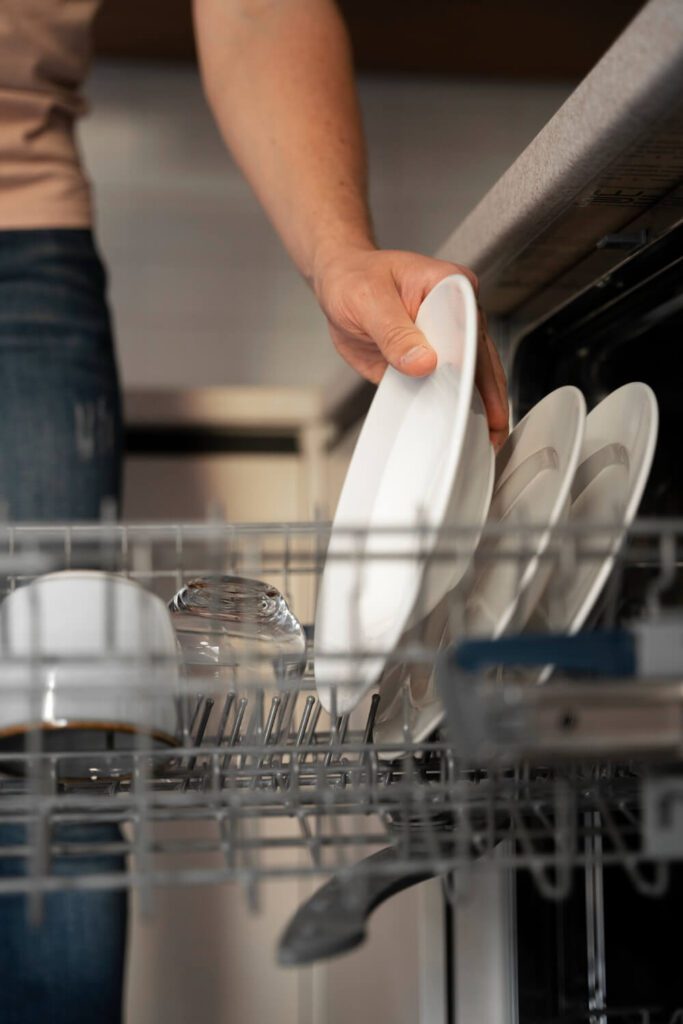
The dishwasher, the hard drive, and what counts as progress when your child survives school
My son unloaded the dishwasher today without being asked. This is the first chore I can remember him doing of his own accord since he was a toddler—before school taught him that compliance means danger, before demand avoidance became the fortress protecting what remained of his autonomy, before each day required such total depletion that…
-

On subjectivity, vicarious belonging, and institutional violence
Winter light, girls singing, a boy listening from the front seat. A mother tries to witness without interpreting what nine months of isolation cost.
-
Discipline outcomes and statistics in BC school districts: what the statistics reveal about institutional protection
Schools are quick to label children as dysregulated when they struggle to process harm, respond slowly under stress, or push back against systems that have failed them. These labels carry consequences. What is less often examined is how institutions respond when they behave in the same way. A note I support parents making complaints when…
-
When your child has problems at school in BC: a guide for newcomer parents
On the surface, BC schools seem to welcome diversity, but the day-to-day experience of parents negotiating with schools for access tells another story. This plain language guide is meant to demystify access.
-
The cost of saying ‘change costs nothing’
Long before it became common sense, the spherical shape of the Earth was already known. Astronomers, mathematicians, and navigators across multiple ancient cultures—within the Hellenic world, in ancient India, in Islamic scholarship—had measured the Earth’s curvature, calculated its circumference with remarkable accuracy, and built navigational systems that depended on that knowledge. This was not speculative…
-
Collective punishment at Vancouver School Board: when one disabled child’s behaviour closes the playground
On December 20, 2017, my kindergarten child Robin went onto an ice field during recess at his school in Vancouver. Robin loved ice—the sensory experience, the visual shimmer, the way it cracked and moved under small feet. The school had asked all students to stay away from the ice for safety reasons throughout the morning,…
-
When schools ask disabled children to accept being hurt
I used to have a pretty good dialogue with my kids, before they experienced a lot of institutional harm. The conversations flow less freely now and less seldom, but back then, we chatted a lot and I often recorded the conversations, for proof, having experienced enough gaslighting from the district to know I wouldn’t be…
-

When evidence changes nothing: what 2,842 families reveal about institutional refusal
The International Council of Multiple Birth Organisations published a study in 2020 examining school placement decisions for twins and higher-order multiples across eighteen countries, surveying 2,842 families whose children had attended school for at least one year. The findings confirm what families of multiples already know from lived experience: schools operate placement policies that prioritise…
-
A school advocacy vocabulary
What families experience in schools is often described as a series of unfortunate incidents: a meltdown here, a missed accommodation there, a relationship breakdown framed as “complex family dynamics.” But these events are not random, isolated, or accidental. They are patterned. They recur across schools, districts, and provinces. They follow recognisable logics, deploy familiar language,…
-
When provincial bodies dismiss parental expertise: POPARD, sticker charts, and the refusal of heterogeneity
In the previous essay, I examined neuroimaging research demonstrating that autism and ADHD are not internally homogeneous diagnostic categories but rather contain multiple neurologically distinct subgroups, often with opposite patterns of brain structure alterations relative to controls. The Pecci-Terroba study reveals what categorical intervention logic refuses to accommodate: diagnosis alone cannot determine whether a specific…
-
The material costs of educational harm
My son no longer attends school. He no longer wants anything the education system offers. He has taught himself programming, navigates Linux with expertise that exceeds my own knowledge, learns alone in his room because learning with others became too expensive to survive. The district asks affectionately how he is, suggests I login to their…
-

How collective punishment turns provincial funding failure into disabled children’s “behavioural failure”
Many years ago, my kindergarten child Robin went onto an ice field during recess. Robin was seeking sensory input—the visual shimmer, the cracking sound, the tactile feedback their nervous system required. The school had told students to avoid the ice for safety reasons. Robin’s support worker redirected them repeatedly; Robin kept returning. Eventually the principal…
-

Truth is never negative: on becoming the voice a system tried to silence
I have come to understand that my role in this landscape exists because every public system that touches disabled children in British Columbia carries a quiet, shared expectation: families will smooth the rough edges, soften the evidence, dilute the language, and narrate harm as misunderstanding or miscommunication rather than what it is—the predictable outcome of…
-
Finding my voice here
I speak in long sentences because I have waited long enough to say what I mean, because I think in spirals, and because the shape of my truth requires breath, pregnant pauses, and circling. I write the way I do because it is the way my thoughts arrive—rich, recursive, precise, emotional, and unwilling to fragment…
-
Kamloops mother speaks after district ignored daughter’s dyslexia for thirteen years
‘She was failed’: Mother speaks out after Kamloops student’s dyslexia ignored tell the story of Heather Morrison. She spent thirteen years asking teachers and principals to assess her daughter for learning disabilities, watching her child move through kindergarten to graduation while reading at an elementary level, her distress mounting with each deflection, each dismissal, each…
-
The return of functioning labels: How austerity turns advocacy into competition
A parent recently posted about profound autism, describing the experience of having her son’s reality erased when people say that “profound autism” doesn’t exist. Her frustration is legitimate—parents of children with intensive, lifelong support needs face profound institutional abandonment, and “profound autism” names a reality that deserves recognition and resources. But her post also illustrates…
-

Why I won’t stop in 2026
The principal used collective punishment against my child almost two years ago, and yet I remain unreconciled to what she did. People suggest moving on, starting fresh, forgiving. Schools are obsessed with ‘fresh starts,’ framing each September as reset opportunity, as though institutional harm dissolves at arbitrary calendar boundaries. My daughter carries what happened in…
-
The principal’s casualness reveals authorisation to harm
When a principal cancelled my daughter’s volleyball game with bureaucratic ease, her comfort while causing harm revealed systematic institutional authorisation.
-

Your child’s teacher crossed a line. The school shrugged. Now what?
Every time my phone lights up with a call or email from the school, my stomach drops. I brace automatically: Is it another subtle threat? Another criticism of my parenting disguised as “concern”? Another make-work task to “fix” a problem they created? After years of this, I’ve learned to navigate school communication in a state…
-
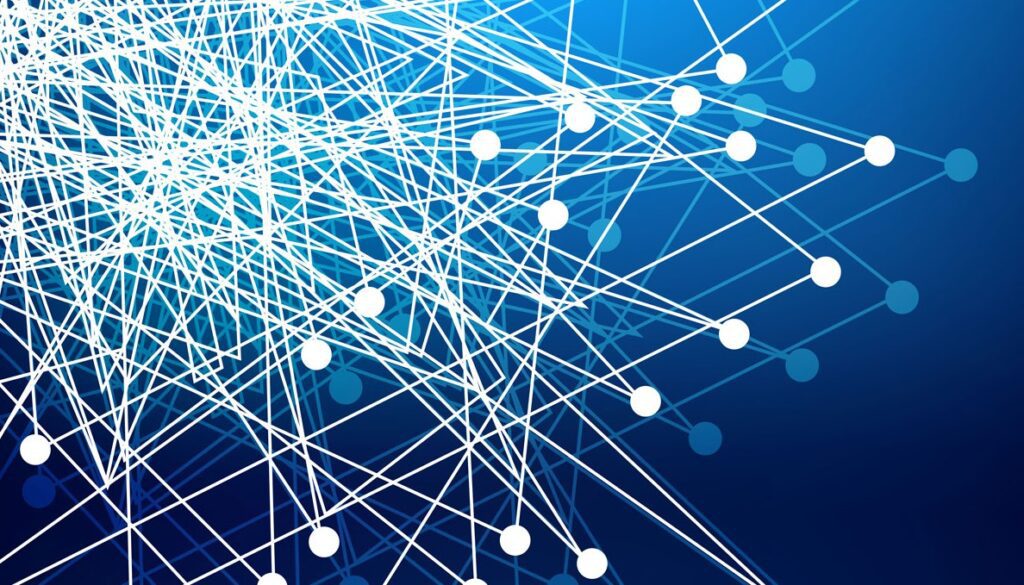
From trauma to topology: the grotesque work of quantifying institutional denial
When institutional harm accumulates in childhood—in objects confiscated, spaces denied, bodies excluded—the evidence lives first in memory and affect. The saucer eyes of a humiliated or frightened child. The sting in the sobs of a child who just wants to be with her friends at the volleyball game. The physical weight of a garbage bag…