Before my kids were hurt at school and i was left to pick up the pieces, I tried to make things easier for everyone—packing lovely lunches, remembering birthdays, sending notes to teachers, keeping the peace. I thought that being organised and kind could protect us. I thought that if I stayed composed, things would stay contained. I brought a charcuterie plate to a meeting once, thinking food could build trust, that sharing something beautiful might ease what felt like tension under the surface. I did not yet know it was a war, not a picnic.
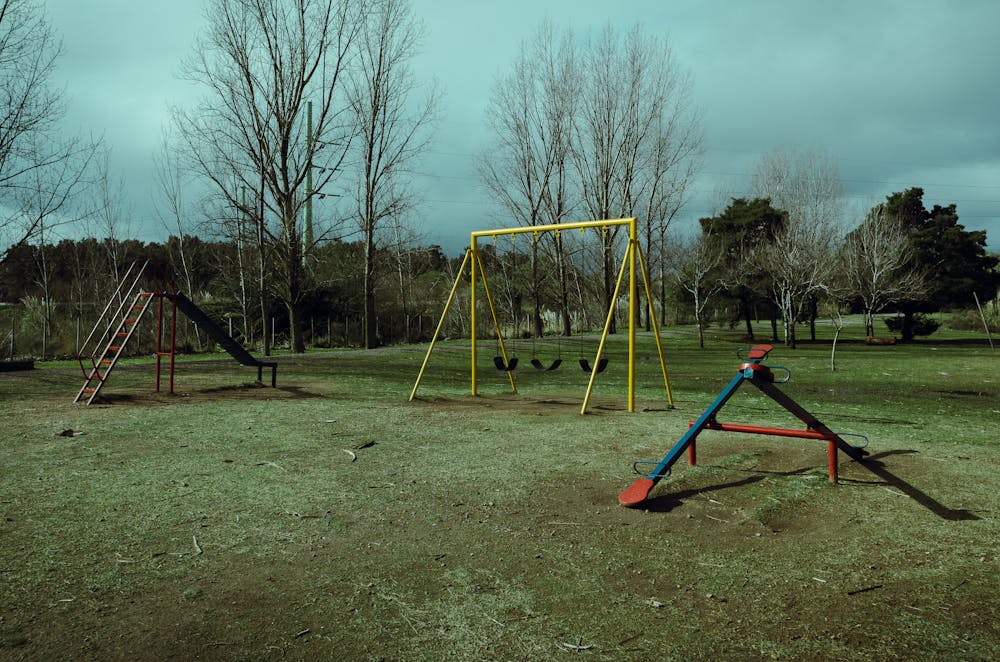
Long before that, there was the daycare. The first betrayal. I learned through a licensing investigation that staff had paired my son with a child who hurt him every day. They said the boys had “similar play styles.” Bureaucratic phrasing for negligence. This child threw a rock at my son’s head, pushed him from the playground structure, and the adults ignored this. Reading that report, I felt something primal, ungovernable. I wanted harm to come to that other child. The feeling was terrifying. And I knew his mother. We were friends. It revealed how harm between children awakens something unspoken in parents—the wild instinct to protect, the shame of wanting vengeance, the grief that follows when you see your own love turn feral.
Later, when a school mom told me that another family was keeping their child home from kindergarten because of mine, I thought about that daycare mother. I remembered wishing that she had withdrawn her son, punished him, done anything to stop the hurting. And now I was her. My son was the one being feared, the one whose name travelled through whispers. It was a perfect symmetry—two mothers bound by the same system, each imagining the other as the problem, each trying to protect a child inside structures that offered no protection at all.
At the time, I was in the kindergarten shuffle—an impossible dance of working full-time, reeling from the daycare trauma, and living inside a collapsing relationship. Every day was survival. I believed the things that my ex said about me were true. That I wasn’t trying hard enough and sometimes I was mean. When you live under that kind of pressure, choice dissolves. You adapt. You shrink yourself so the world doesn’t punish you further. School meetings felt the same way—smiling through fear, managing perception, begging to be believed.
The educator as casualty
There was the teacher who was strangled by my son in kindergarten. The one who had to pull his small hands from her neck while the class stood frozen, a room full of horrified children. She kept breathing. She came back the next morning, perhaps trembling, and stood again in front of dozens of children searching her face for how to react. I think about her often. I think about what it takes to return after something like that—to stand in the same room, to make eye contact with the same faces, to teach again while knowing that anything could happen. I imagine the silence that followed when the children went home, and how she might have sat alone and wondered about the future.
She did not have enough support in that room. The system asked her to absorb more than any person should have to. It told her to move on. It asked her to act calm so that everyone else could stay comfortable. She lived the same contradiction as I did—trying to be good inside a system that punished, trying to protect children inside a structure that endangers them all.
Over the years, I have watched teachers break. Two went on stress leave. Others cried gently in meetings or went silent. I have seen kindness turn into despair, and despair harden into distance. One teacher confessed she spent seventy percent of her time on one child and looked terrified the moment the words left her mouth. She knew what that confession meant—that compassion itself could be treated as a liability. In this system, empathy has become risky, fairness subversive. Teachers are forced to hide what they know, to manage harm quietly, to survive by disassociating from their own care.
I have seen the ones who keep trying and the ones who stop. The ones who still fight to see the child through the chaos, and the ones who turn away before heartbreak can touch them. All the contradictions. I have raged at teachers and grieved for them. My children have loved them, spent more waking hours with them than with me. Love was there, real and fragile. But love in a house of neglect is complicated.
-

The role of infighting in maintaining scarcity, hierarchies, and exclusion
This piece is unfinished, but it feels necessary. I am still learning how to move through anger toward something that might resemble repair or solidarity. I am not writing a strategy or a manifesto; I am writing what I see, what keeps happening, and how it feels to live inside it. The truth, when spoken […]
The cupcake moms
I used to really relate to the “cupcake moms”—the parents who arrive with trays of sweets and newsletters full of cheer, who see school as a small civic family held together by kindness and participation. They want everything to be sweet and safe and beautiful. I wanted those things too before. I wanted to believe that if I showed grace, it would be returned. That if I was calm and pleasant, things would stay steady. I did not yet know that the system feeds on mothers like us, on our politeness, our careful tone, our willingness to clean up what others destroy.
Ethically, these mothers occupy what philosophers might call moral innocence within unjust systems. Their optimism sustains the appearance of harmony. It is easy to dismiss them as privileged, but their moral labour—the maintenance of hope—keeps the school’s fragile community intact. Their comfort does not erase their moral standing; it shows how institutions depend on unpaid emotional governance.
I envy the cupcakes moms still sometimes, and I forgive them for wanting things to be easy. They are living in the before—the place I once lived, where you still believe decency can be negotiated. They are not my enemies. They are proof of what we all long for before we understand what safety actually costs. They are still holding the illusion I once carried: that love and reason could help our children if only we performed them hard enough.
The ethics of care and containing contradiction
What remains beneath all of this is an ethical question—what do we owe one another when the system itself fails to uphold care? An ethicist might say that each participant holds a distinct but interdependent moral duty: teachers owe children safety, compassion, and the limits of honest self-knowledge; parents owe truth, collaboration, and recognition of educators’ human limits; institutions owe the conditions that make ethical action possible. None of these duties can be fulfilled in isolation. Each collapses without the others.
The teacher in the story fulfilled her obligation as best she could. She showed up when the system had already abandoned her. Her act of returning was a moral gesture toward duty, distorted by impossible context. Parents, too, carry the moral residue of impossible choices. We are expected to believe, to forgive, to keep showing up even after harm has occurred. The ethics of parenthood inside this structure are built on triage—whose suffering is acknowledged, whose is deferred, whose is denied. And the so-called cupcake mothers perform another moral function entirely: they keep the world running on optimism, believing in a version of school that still holds beauty. They are easy to mock but they are sustaining an illusion that once protected all of us. In philosophical terms, they are performing the moral labour of hope.
Empathy, then, is not only feeling; it is an ethical stance. It asks us to recognise suffering without grading it, to resist hierarchies of pain. The teacher, the parent, the administrator, and the child each inhabit moral roles shaped by scarcity, but none are excused from moral responsibility. The question is how to act humanely when the institution’s design makes humane action appear naïve or impossible.
I hold all of it now—the teacher who wept, the one who turned cold, the parent who feared my child, the one whose child hurt mine. I no longer need to separate them into villains and saints. We are all inside the same machinery, learning to survive scarcity that disguises itself as fairness. I write this as someone who has carried fury and mercy, blame and forgiveness, reverence and disillusionment. What remains ethical, in the end, is to see each other clearly and to keep insisting that recognition itself is a moral act.
-
Too afraid to see: why the BC government doesn’t track exclusion
Data is the scaffolding of democratic accountability. Without shared facts, policy becomes theatre and suffering becomes rumour. That is why regimes that fear transparency always tamper with the census, and why bureaucracies that fear criticism cling to privacy as a shield rather than as a right. When governments decline to track exclusion, they are not […]
-
Counting crisis: data, distrust, and the false choice between safety and inclusion
Across British Columbia, the launch of Surrey DPAC’s Room Clear Tracker has ignited a storm of debate among parents, educators, and disability advocates. Some view it as a necessary step toward transparency; others fear it will reinforce stigma or justify segregation. Beneath the surface of this argument runs a deeper fracture—between those who seek safety […]