If you’d told me last year that a man would feel emboldened to stand up in the UN and call the UN special rapporteur a witch and accuse her of trying to ‘curse Israel with lies and hatred’ I would have Googled to see if it was fake news! But then with the second presidency of Spray-tan, things have been getting really weird—like watching satire turn into the evening news, with everyone pretending it makes sense. Lately the Daily Show makes more sense than the news. So what about Truth in an upside down world?
Many young people—watching that same UN moment and hearing adults argue over whether truth itself is polite—must be wondering what to make of the world they are inheriting. The stories that fill their feeds and classrooms can feel like a strange inversion of fairness itself—almost as if the moral compass has been spun backward, with former guardians of democracy selling merch out the back door and the honest voices treated as threats.
It can seem bewildering to see public truth-tellers mocked or condemned while those who commit genocide speak about safety. Yet this confusion is itself a kind of education, which teaches how power protects itself—by distorting meaning until harm appears as order and silence as respect.
And if you are a young reader here, I want you to remember that this feeling of confusion is part of your moral growth, not a flaw in your understanding. The world you are inheriting has been arranged to reward silence and to punish clarity, and your questions, your disbelief, and your outrage are exactly what the world most needs now.
-

What is an example of collective punishment?
Collective punishment is when a group is penalised for the actions of a few, regardless of individual responsibility. This practice is often framed as a form of discipline, yet it fails both ethically and pedagogically. It is rooted in control, not justice. Consider…

The moral rehearsal of collective punishment
Francesca Albanese’s vilification is part of a broader pattern: a backlash against moral clarity itself. The discrediting of those who tell the truth functions as a kind of social control, signalling that conviction is dangerous when it challenges the market’s logic or the military’s story. This is the rehearsal that teaches obedience through spectacle and shame.
Across history, societies have often targeted those who speak uncomfortable truths. Truth-tellers who challenge power are accused of extremism, madness, or danger to order. Women were burnt at the stake by the 1000s as witches! Francesca Albanese’s experience is one vivid example—when she was called a “witch” for exposing genocide, it showed how systems punish those who speak clearly about violence. Her story reveals how moral courage is twisted into deviance and how truth itself becomes a threat to the order that violence protects.
The news has been filled with harrowing stories lately: whole neighbourhoods destroyed, refugee camps attacked, food and water cut off. In Sudan, in Palestine, and in many other places, the same words repeat—security, necessity, deterrence. Each word flips meaning, turning destruction into duty, and cruelty into order. The people giving the orders say they are protecting peace, defending against terrorism.
Every act of collective punishment begins with a lesson in what kind of harm is acceptable. People learn to see deprivation as discipline, displacement as consequence, and silence as respect, a reversal that signals the twilight of unfettered capitalism and teaches us that fear is the easiest currency for power to spend. Once those lessons take hold, big violence stops feeling shocking. It begins to look like just another part of how the world works.
From siege to school
The connection between war and school rules can be easy to miss because one feels so large and the other feels close to home. Yet both depend on the same idea: that control creates safety. When an army starves a town to make people surrender, it mirrors the teacher who takes away recess because one child acted out. Both actions rely on fear. Both claim that fairness means everyone should pay.
It is how some groups maintain order—by teaching that peace depends on compliance and silence. Schools are often where this moral training begins.
The role of scarcity
Scarcity often begins as a feeling before it becomes an excuse. People under strain start to believe there is only so much safety, patience, or compassion to go around, and that someone must always go without. This is the foundation of many injustices: the quiet assumption that fairness is a finite resource and that some lives must be traded to protect others. Genocide, exclusion, and schoolyard punishment all draw power from this same illusion of shortage.
When societies or classrooms run on too little—too few teachers, too few homes, too little food—the fear of insufficiency begins to shape behaviour. Control starts to replace care, and withholding begins to look like discipline. The belief that harm can secure order turns into policy, rule, and habit.
In schools, scarcity becomes an invisible teacher. When adults feel unsupported, compassion feels costly. They ration patience as if it were money and measure worthiness by obedience. Fairness becomes something to be earned rather than something to be ensured. The habit of punishing many for the actions of one is born from this false economy—the idea that safety can only exist if someone else pays its price.
Scarcity teaches that survival depends on compliance, gratitude, and quiet endurance. It tells both nations and classrooms that there is never enough help, never enough trust, never enough time. Yet this arithmetic is wrong. There is always enough dignity to go around. What runs out is the willingness to share it.
-
To the kid looking for answers about collective punishment
Hey, If you found your way here, maybe it’s because something happened at school that didn’t sit right. Maybe you searched for “why did my whole class get punished” or “it wasn’t my fault but we all lost recess.” Maybe a grown-up sent…
The scapegoat, the witch
Francesca Albanese’s public vilification can feel confusing and frightening to witness, especially for young people still learning when it is safe to speak about injustice. Treatment by global power circles shows this at work: her moral clarity was treated as excess, and she was symbolically punished for exceeding her allowed share of truth. Her public vilification echoes what happens to any voice that speaks too plainly against systemic cruelty.
Every institution has a ledger. A parent who asks too many questions is marked as difficult. A journalist who tells too much truth is shut out. A worker who speaks up loses favour. It is the same pattern across all scales of power: the punishment of Gaza mirrors the punishment of the outspoken parent. Both are told they have crossed a line. Both are taught that survival depends on compliance and silence.
the vilification of Francesca Albanese absolutely takes up the moral and political space where meaningful action should happen. Scapegoating her transforms moral clarity into controversy, allowing institutions and governments to perform outrage rather than respond to the substance of her claims. When a truth-teller becomes the story, the violence she names gets pushed to the margins; media cycles fill with personality debates instead of policy change, and moral energy that could move toward justice gets absorbed by defending her right to speak. This is precisely how power deflects accountability — by making courage look like disruption and shifting public focus from victims to optics. Her treatment is a textbook case of moral displacement: the accusation replaces the atrocity, and condemnation masquerades as debate. In that vacuum, real lives continue to be lost while the world rehearses its civility.
If you are a student reading this, remember that your instinct to question this scapegoating is courage. When you sense that something is unfair or illogical, you are witnessing the moment where moral learning begins. Hold on to that impulse—it will be your compass when authority tries to confuse you.
The moral contagion of bureaucracy
Fear travels faster than truth. Both adults and children live inside a world that constantly teaches them when it feels safe to speak. Online spaces, classrooms, and news feeds deliver this lesson in real time. When people see truth-tellers insulted, fired, or silenced, they begin to weigh every word. They learn to measure honesty against risk. Each click, post, or silence becomes a small moral decision. This caution spreads quietly, shaping how we think and act.
This fear functions as curriculum. It teaches that safety lies in restraint rather than integrity. Children watching adults hold back learn that being careful earns more approval than being truthful. Adults who have grown up in that same pattern repeat it, confusing diplomacy for justice. In this way, bureaucracy and social life become classrooms of silence, where lessons about fairness, courage, and belonging are absorbed without words.
Yet this silence also hides a false economy. In British Columbia, vast public funds flow toward oil and gas subsidies while classrooms lose counsellors, libraries, and aides. The lights flicker above chipped desks, books grow outdated, and hallways echo with the fatigue of overworked teachers and hungry children. They sit in crowded rooms and hear there is no money for their needs, while corporations receive millions in incentives. They are told to be patient, grateful, and quiet—to accept austerity as inevitability—when the scarcity is engineered. This moral distortion teaches that wealth deserves reward and need deserves restraint. It tells children that their suffering balances someone else’s profit, that their silence sustains order. But fairness cannot grow in an economy built on extraction. The real deficit is moral, not fiscal.
The refusal that remains
To refuse collective punishment—in classrooms, in governments, or in war—requires courage deeper than empathy. It asks us to dismantle the belief that care must be earned, that suffering can ever be deserved. It calls on teachers, leaders, and citizens to reject the moral math of scarcity, to reject compliance as virtue, and to refuse fear as order.
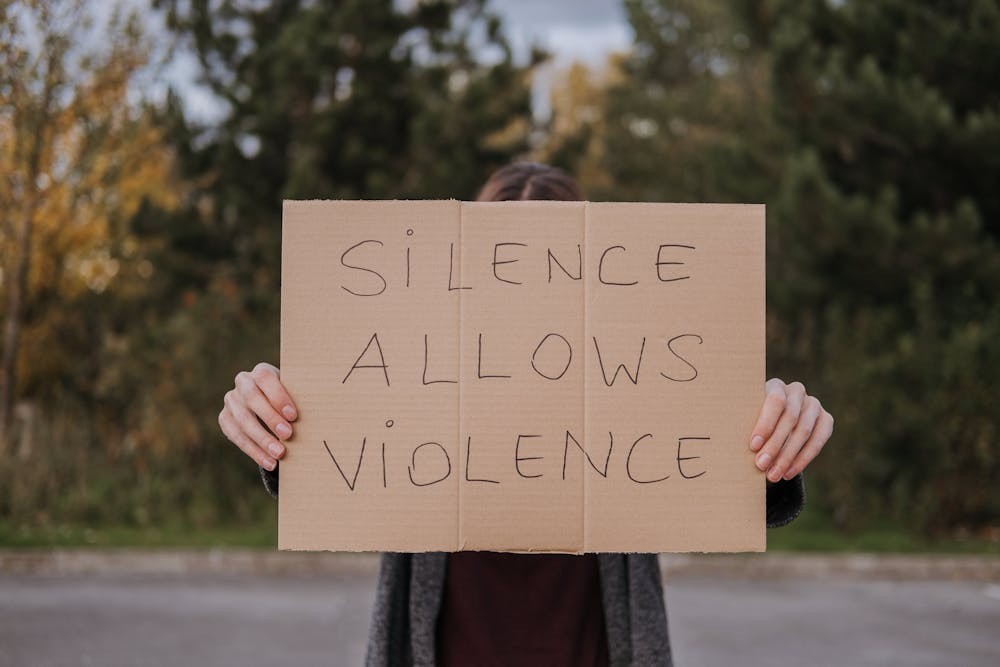
Francesca’s ordeal reminds us that truth-telling is rarely welcomed by those who depend on confusion for power. When truth becomes dangerous, silence becomes complicity, and each person must decide whether to protect comfort or conscience. The world changes when ordinary people choose to speak anyway.
In British Columbia, that same decision faces us daily. The province pours wealth into oil and gas projects while withholding what children need to learn, grow, and belong. This imbalance is not fate; it is design. The courage to challenge it begins with acknowledging that fairness cannot thrive in a system built on waste and extraction.
The larger story unfolding—across nations and economies—is one of reckoning. The promises of endless growth and military might no longer hold. These are the death throes of an exhausted order, clinging to control as its justifications erode. What follows may be uncertain, yet within that uncertainty lies possibility: the chance to build systems grounded in cooperation rather than competition.
If you are young and reading this, you belong to that possibility. Your voice carries weight in the moral future of your community. Each question you ask, each act of care, each refusal to look away becomes part of a different inheritance—one that measures strength by generosity rather than control. You are the authors of a world where peace no longer depends on another’s suffering, and where dignity is treated as the only true wealth.
-
A survival guide for children in schools that don’t keep them safe
“If no one listens, go to the bathroom and call me. I will always come.” This isn’t just parenting. It’s crisis management. When schools become unsafe—when accommodations are denied, when support staff are missing, when harmful adults are brought back again and again—families…