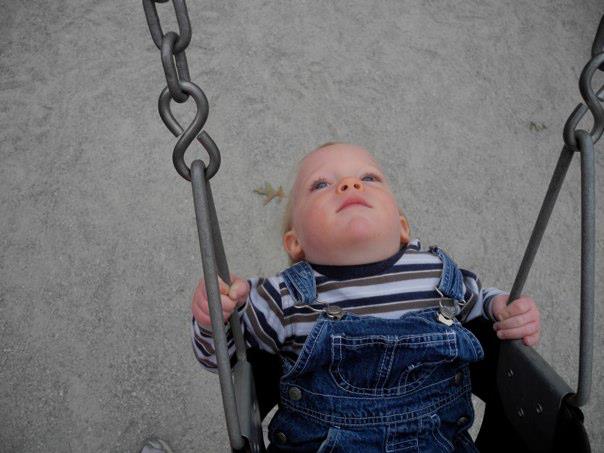
Pathological Demand Avoidance (PDA) might sound like just another clinical term, but for many families it represents a daily struggle that is anything but trivial. PDA is a profile on the autism spectrum characterised by an extreme, anxiety-driven avoidance of everyday demands, even those the child wants to comply with drdonnahenderson.com reframingautism.org.au.
This isn’t mere stubbornness or “bratty” behaviour – it’s a deep-rooted physiological and emotional response. As clinical psychologist Dr. Donna Henderson explains, the core of PDA is an anxiety-fueled need for autonomy, a “persistent drive for control” over one’s life drdonnahenderson.com charlotteautism.com.
Even seemingly small requests – “Put on your shoes,” “Let’s get ready for bed” – can trigger a fight, flight, or freeze panic response in a child with PDA reframingautism.org.au. These kids often feel “I can’t, I just can’t” when demands press in on them, no matter how gently delivered.
And when such intense anxiety is misunderstood, the consequences can be dire. In fact, research has shown that autistic individuals (especially when their needs go unsupported) face alarmingly high rates of mental health crises; one study found they are up to 10 times more likely to die by suicide than the general population thetransmitter.org. In the words of PDA advocate Kirsty Forbes, “PDA is so much more than not doing what we’re told” – getting it wrong can literally become a life-or-death matter for these children and teens kristyforbes.com.au thetransmitter.org.
An anxiety storm fuelled by neuroscience
Why are everyday demands so combustible for PDA kids? Modern neuroscience offers some clues. Dr. Stephen Porges’ Polyvagal Theory tells us that our autonomic nervous system is constantly scanning the environment for safety or danger – a subconscious process he calls “neuroception.”
In children with PDA, this system seems to be set on a hair trigger. Their nervous system perceives threats where others might not pdanorthamerica.org. “Demands in life are everywhere and cumulative,” notes one PDA guide; for a PDA brain, even ordinary demands can flood the system with a sense of peril pdanorthamerica.org pdanorthamerica.org.
The result is a switch into survival mode: the child’s physiology hijacks them into fight, flight, freeze, or even “fawn” (appeasing) behaviours pdanorthamerica.org pdanorthamerica.org. Crucially, this reaction is reflexive, not deliberate.
As Forbes, an autistic adult with PDA, describes from lived experience: “My PDA neurobiology perceives my excitement as danger, as a threat… My own joy, my own hobbies are also demands. My brain misunderstands any type of arousal as a threat and…shuts [it] down” kristyforbes.com.au kristyforbes.com.au.
Even positive activities can trip the wire! During these moments the child is literally in survival brain. Neuroscientists emphasise that when a person is in a dysregulated “fear brain” state (fight/flight/freeze/faw), the thinking parts of the brain go offline chosen.care. No amount of reasoning or discipline will get through – as the saying goes, “Never in the history of calming down has anyone calmed down by being told to calm down.” chosen.care Instead, the first imperative is to restore a sense of safety.
Dr. Bruce Perry
Dr. Bruce Perry, a trauma specialist who has seen how adversity affects children’s brains, emphasizes a simple but profound sequence: Regulate, Relate, Reason chosen.care. First help the child regulate their physical and emotional state (through calming sensory input, reduced demands, a safe space); next relate to them – show empathy, connect, help them feel understood; only then is the child biologically ready to reason, to engage in learning or problem-solving chosen.care chosen.care. In PDA, where the child’s day-to-day existence can feel like an adversity loop of constant anxiety, this trauma-informed approach is essential. Dr. Perry’s framework reminds us that no child can learn or comply while in panic – our first job is to defuse the panic.
Misunderstood masks and the toll on families
One of the cruel ironies of PDA is how invisible it can appear to outsiders. Many PDA children appear socially skilled on the surface – they might make eye contact, chat engagingly, even use charm or humour to deflect demands drdonnahenderson.com drdonnahenderson.com. This often leads teachers, relatives, and clinicians to dismiss the possibility of autism or PDA, or to label the child “manipulative” or oppositional when they erupt after holding it together all day. Dr. Henderson notes that PDA individuals can look like Jekyll-and-Hyde: capable and compliant one moment, then suddenly overwhelmed the next, which makes it “look like their behaviour is entirely volitional (it isn’t)” drdonnahenderson.com.
Importantly, many PDAers can mask their distress for short periods or in certain settings (often school) and then unleash it in a “safe” environment (often home) drdonnahenderson.com. This chameleon-like behaviour confounds professionals and exhausts parents.
Years of living in fight-or-flight mode take a heavy toll: children with PDA frequently accumulate layers of trauma, anxiety, and depression from being persistently misunderstood or pushed beyond their capacity drdonnahenderson.com.
Families, too, suffer greatly – home can feel like a war zone ruled by the child’s volatility. As Henderson observes, the entire household can become dominated by walking on eggshells, with parents “[trying] everything…to no avail, leaving them feeling hopeless, helpless, and incredibly frustrated” drdonnahenderson.com.
Siblings may feel overshadowed or unsafe; marriages can be strained to breaking. This is not a case of “poor parenting” – it’s a perfect storm of a child in constant anxiety and a world that doesn’t yet know how to accommodate them.
The stakes could not be higher. When society fails these kids, the outcomes can be tragic. Consider the story (far too common) of an autistic teen overwhelmed by school demands who begins talking about wanting to die thetransmitter.org thetransmitter.org. His parents wisely concluded, “no math or science was worth his life.” thetransmitter.org They pulled him out of the environment that was breaking him.
Not all are so lucky to have understanding support. The hard truth is that suicidal ideation and self-harm are alarmingly prevalent among autistic youth, often fuelled by chronic anxiety and feelings of failure or alienation thetransmitter.org. PDA amplifies those risks: a child who is continually forced into compliance by teachers or therapies that see only “behaviour” can end up traumatised, shut down, or aggressive to the point of exclusion. As one PDA parent put it bluntly, these approaches aren’t just ineffectual – they can “mean the difference between a child who survives or one who doesn’t.”
From compliance to connection: new strategies emergent
Amid this daunting picture, a new understanding is emerging – one that replaces confrontation with collaboration. A diverse range of experts (many of them neurodivergent themselves) are pioneering approaches that honour the child’s need for autonomy while still guiding and supporting them.
Sally Cat
A recurring theme is a shift in communication style. Sally Cat, a researcher and author who has written extensively on PDA, advocates using declarative language to talk with demand-avoidant kids. Declarative language means making statements or observations rather than asking direct questions or giving commands. For example, instead of the imperative “Go brush your teeth now,” a parent might simply observe, “Hmm, I see your toothbrush on the counter and wonder if your teeth feel fuzzy.” Or instead of, “Put on a coat, it’s cold out,” one might comment, “Brr, I’m feeling cold. I’m going to put my coat on”. This subtle shift can be remarkably disarming.
Direct commands can trigger a PDA child’s panic – it signals their brain that they have no choice, raising the internal pressure pdanorthamerica.org. A neutral statement, by contrast, shares information without cornering the child into compliance, inviting them to respond (or not) on their own terms pdanorthamerica.org pdanorthamerica.org.
Over time, this approach not only avoids eruptions but actively builds the child’s capacity for self-regulation and social understanding. By hearing adults model their own feelings, thoughts, and problem-solving out loud (e.g. “I’m really curious what would happen if we tried…” or “I’m feeling hungry; I think I’ll make a sandwich”), the child learns to recognise and articulate emotions without the weight of expectation thechildhoodcollective.com thechildhoodcollective.com.
In a 2014 article in Good Autism Practice, Sally Cat reported that using such declarative statements consistently reduced anxiety and enhanced social engagement in children with PDA. Freed from a cycle of demands and defences, children could finally let their guard down enough to reflect on feelings – theirs and others’ – fostering the empathy and flexible thinking that rigid anxiety had been impeding.
Kirsty Forbes
Another cornerstone strategy is the creation of a consistently low-demand environment—not as a way of indulging the child, but as a therapeutic baseline from which trust, connection, and genuine growth can begin to take root. Australian educator and consultant Kirsty Forbes, who writes and teaches from her own lived experience as an autistic person with a PDA profile, describes the necessity of reducing demands as an act of neurological compassion—a way of working with, rather than against, the child’s deeply rooted drive for autonomy. In these environments, schedules become predictable and flexible, choices are offered without strings attached, autonomy is maximised, and traditional compliance-based discipline is replaced with collaborative problem-solving, humour, and attunement.
The logic is clear: when a child no longer feels perpetually under siege, when their body is no longer bracing for the next invisible pressure point, their nervous system can begin to down-regulate out of survival mode, and only then do the conditions for learning or emotional integration emerge. As Forbes explains, even after sustained reduction of demands, many families find their child continues to avoid daily tasks or resists new activities—and this can feel bewildering. But, as she writes, “The truth is, we will always be demand avoidant. This is our neurobiology… a persistent, pervasive drive for autonomy.” In this context, a low-demand approach is not a temporary accommodation but a long-term relational adjustment—one that respects the architecture of the child’s brain, rather than trying to override it.
The goal is not to eliminate demands entirely, but to create a landscape in which the child can begin to anticipate safety more often than threat. From that predictability, new capacities emerge—not through pressure, but through partnership. Forbes often returns to the importance of co-regulation, where the caregiver remains calm, present, and emotionally available through the child’s storm—not as a passive bystander, but as an anchor of attunement. Within the PDA space, we place a lot of focus on the PDA child requiring consistent co-regulation with a preferred parent, she writes—meaning the parent becomes the tether point around which the child’s nervous system learns to return to safety. Tools like visual supports, sensory regulation, humour, flexibility, and choice-making are not accessories—they are core ingredients of that safety. When a child learns that adults will not rush, override, or punish their resistance, they begin to inch closer to shared rhythm. And from rhythm, trust grows.
Mona Delahooke
Clinical psychologist Mona Delahooke adds another crucial layer: a developmental, compassionate lens that looks underneath behaviours. In her book Beyond Behaviours and related work, Delahooke urges parents and professionals to view a child’s outbursts or refusals not as wilful misconduct but as the tip of an iceberg monadelahooke.com. Below the surface might be sensory overload, confusion, fatigue, or fear. “Again and again,” she notes, “I have observed empathic, loving parents and professionals attempt to reason in vain with children about behaviours that stem from causes beyond their awareness or comprehension.” monadelahooke.com
We have to stop fighting the behaviour and instead meet the need that’s driving it. Is the child hitting because the noise in the room is physically painful to their hypersensitive ears? Are they refusing school because the social demands trigger panic? Once we identify those triggers, we can adapt the environment or teach the child coping skills before a meltdown occurs. Delahooke’s mantra is “look beyond the surface – see the behaviour as an adaptation, not an opposition”. When we do that, “new pathways open for seeing the child’s behaviours as adaptations to internal needs, resulting in more compassion and less blame.” monadelahooke.com
In practical terms, this might mean providing noise-cancelling headphones, allowing movement breaks, using softer lighting – or simply acknowledging the child’s distress (validating their feelings rather than dismissing them). It also means prioritising the relationship: “Warm, positive emotions support all learning and development,” Delahooke reminds us monadelahooke.com. A child steeping in shame or feeling chronically misunderstood cannot blossom; a child who feels respected and safe can slowly build resilience. Delahooke and others promote a “bottom-up” approach – working on regulating the body and emotions first – very much in line with Dr. Perry’s 3 Rs.
It’s another point of consensus among these experts: you can’t simply reward and consequence a child out of PDA. In fact, traditional behaviourist programs (like strict sticker charts or punishments for non-compliance) often backfire horribly, layering trauma on top of an already overwhelmed nervous system neuroqueer.com neuroqueer.com. As one PDA parent wryly noted, “All the star charts in the world won’t touch underlying anxiety.” The new approaches recognise that the anxiety is the issue – and helping the child feel understood is a far more effective salve than enforcing obedience.
Toward a paradigm shift: acceptance, not “fixing”
Underpinning all these insights is a powerful call for a paradigm shift in how we, as a society, view neurodivergent children. For decades, the default approach to autism (and by extension PDA) has been the “pathology paradigm” – essentially treating the child as disordered and in need of correction neuroqueer.com neuroqueer.com.
Nick Walker
Autistic scholar and educator Nick Walker argues that this paradigm has caused immense harm. By obsessing over making autistic/PDA kids appear “normal” – extinguishing their stims, forcing eye contact, drilling compliance – we have ignored the voice of autistic people themselves and often inflicted trauma under the guise of therapy neuroqueer.com neuroqueer.com. “The choice to frame the lives of autistic people in terms of pathology…is merely a cultural value judgment,” Walker writes, not an objective truth neuroqueer.com neuroqueer.com. In fact, he and other neurodiversity advocates highlight that many so-called “challenging behaviours” are actually forms of communication or self-defense – the child is communicating distress the only way they can, or defending their autonomy when it feels under attack. Walker calls for embracing a “neurodiversity paradigm,” which understands neurological differences as a natural part of human diversity, “similar to…racial diversity or diversity of gender” neuroqueer.com. In this view, the problem is not the autistic or PDA child themselves; the problem is the mismatch between the child’s nervous system and a world set up for a different neurotype, as well as the attitudes that label the child broken instead of accommodating their needs neuroqueer.com neuroqueer.com.
The neurodiversity paradigm insists that our focus should shift from trying to “fix” the child to changing the environment – removing barriers, offering supports, and fiercely respecting the individual’s dignity and choices. Walker doesn’t mince words about what’s at stake: continuing in the old pathology mindset will only perpetuate “ignorance and bigotry,” leading to “self-perpetuating cycle[s] of abuse” like the coercive therapies that have traumatised generations neuroqueer.com neuroqueer.com. “Only a fundamental shift … from the pathology paradigm to the neurodiversity paradigm is likely to create any substantial improvement,” he concludes neuroqueer.com neuroqueer.com. In plain terms: we have to change our minds before we can truly help these kids. This means challenging our own internalised narratives and biases, as Walker and others have pointed out. Do we see a child’s refusal as a personal affront, or do we see a terrified child in need of help? Do we prize compliance over happiness? Can we let go of the notion that a “good” child is one who sits still and never says no? These are uncomfortable questions, but answering them honestly is part of the work. Acceptance, as Forbes puts it, “means letting go of everything we think we know”and being open to a new way – one led by empathy, flexibility, and respect kristyforbes.com.au.
In the end, the measure of our society will be how we respond to those who challenge our norms the most. PDA kids, with their out-of-the-box brains and intense spirits, are challenging – they challenge us to be better adults. To slow down, to truly connect, to abandon power struggles and build partnerships with our neurodivergent youth. The experts we’ve highlighted – from Sally Cat’s compassionate communication strategies to Bruce Perry’s trauma-informed framework, from Mona Delahooke’s “below the iceberg” vision to Nick Walker’s rallying cry for paradigm shift – all point to a future where these children are understood and supported on their own terms. As you read on in this series, keep in mind the gravity behind every tip: for a PDA child, being handled with understanding versus misunderstanding can make all the difference in the world drdonnahenderson.com thetransmitter.org. This is more than a set of parenting tricks; it’s a matter of emotional survival. And when you see a child go from melting down in terror to finally feeling safe enough to learn, to play, to say “No” and know they’ll still be loved – you’ll understand why those of us in this field speak with such passion. The stakes are high, but the payoff is a child’s life reclaimed. Let’s get started.
-

Pathological Demand Avoidance (PDA)
Pathological Demand Avoidance is a neurobiological profile of autism rooted in anxiety, autonomy, and nervous system threat perception. For children with PDA, even simple requests can register as danger. A question, a suggestion, a cheerful invitation—all of these may activate a survival response, because the child’s nervous system experiences demand as threat. When this pattern […]